
BuddhistCatholicContemplativeEvangelicalGeneral ChristianHinduJewishLatter-day SaintMuslimNew VisionsProgressive Christian
Beliefs
- Buddhist
- Catholic
- Contemplative
- Evangelical
- General Christian
- Hindu
- Jewish
- Latter-day Saint
- More Voices
- Muslim
- New Visions
- Pagan
- Progressive Christian
Topics
- Religion News
- Food and Religion
- Sports and Religion
- Religious Art
- Religious Music and Entertainment
- Religious Events
- History and Religion
- Style and Religion
- Politics and Religion
- Women in Religion
- Recreation Outdoors and Religion
- Business Finance and Religion
- Careers Workplace and Religion
- Education and Religion
- Family Parenting and Religion
- Health Fitness and Religion
- Home and Religion
- Relationships and Religion
- Technology and Religion
- Travel and Religion
Columnists
- Buddhist Columnists
- Business Finance and Religion Columnists
- Careers Workplace and Religion Columnists
- Catholic Columnists
- Contemplative Columnists
- Education and Religion Columnists
- Evangelists Columnists
- Family Parenting and Religion Columnists
- General Christian Columnists
- Health Fitness and Religion Columnists
- Hindu Columnists
- History and Religion Columnists
- Home and Religion Columnists
- Jewish Columnists
- More Voices Columnists
- Latter Day Columnists
- Muslim Columnists
- New Visions Columnists
- Nonreligious Columnists
- Pagan Columnists
- Politics and Religion Columnists
- Progressive Columnists
- Recreation Outdoors and Religion Columnists
- Relationships and Religion Columnists
- Religion News Columnists
- Religious Art Columnists
- Religious Events Columnists
- Religious Music and Entertainment Columnists
- Sports and Religion Columnists
- Style and Religion Columnists
- Technology and Religion Columnists
- Travel and Religion Columnists
- Women in Religion Columnists
Resource Library
- 2026 Calendar
- Library of World Religions
- The 100 Most Holy Places on Earth
- Patheos Answers
- Podcasts
- Videos
- Faith Leaders Database
- Anglican Episcopalian
- Bahai
- Baptist
- Buddhism
- Christianity
- Confucianism
- Eastern Orthodoxy
- Hinduism
- Holiness and Pentecostal
- ISKCON
- Islam
- Judaism
- Lutheran
- Methodist
- The Church of Jesus Christ of Latter-day Saints
- New Age
- Paganism
- Presbytarian and Reformed
- Protestantism
- Religion Behind the Scenes
- Roman Catholic
- Scientology
- Shia Islam
- Sikhism
- Sufism
- Sunni Islam
- Taoism
- Zen
- See all religions
Research Tools
 Ad-Free & Subscriber Log-In Subscription Support
Ad-Free & Subscriber Log-In Subscription Support
Follow Patheos 

- Trending:
- Forgiveness
- |
- Marriage
- |
- Consciousness
- |
- Death Penalty
- |
- Election
- |
- Halloween

- Home
- Religion News
- The Black Church has been getting ‘souls to the polls’ for more than 60 years
The Black Church has been getting ‘souls to the polls’ for more than 60 years
Last updated on: November 1, 2020 at 11:48 am by The Conversation
The Black Church has been getting ‘souls to the polls’ for more than 60 years 2020-11-01T11:48:16-04:00 The Conversation
Patheos Explore the world's faith through different perspectives on religion and spirituality! Patheos has the views of the prevalent religions and spiritualities of the world.
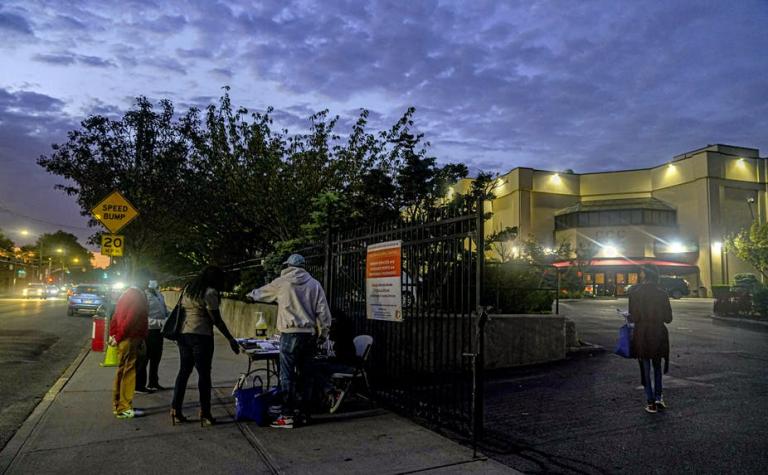
Volunteers outside the Christian Cultural Center in New York register new voters as part of the ‘Souls to the Polls’ initiative. (AP Photo/Bebeto Matthews)
By David D. Daniels III, McCormick Theological Seminary
At Black churches up and down the U.S., religious slogans have been supplanted with another message in the run up to Nov. 3: Vote!
The landscape of the 2020 general election has been dotted with efforts by the Black Church – churches that have traditionally had predominantly African American congregation – to encourage voter registration, mobilization and protect against efforts to suppress the vote.
Under slogans including “Souls to the Polls,” “AME Voter Alert” and “COGIC Counts,” Black denominations and national bodies such as the Conference of National Black Churches have partnered with civil rights organizations including the NAACP in a concerted effort to increase voter turnout among African Americans.
The push comes amid deliberate tactics to make it harder for Black and Latino Americans to vote, including purges of voter rolls in communities of color, strict voter ID rules and restrictions on polling places. As a historian, I know these tactics are nothing new – nor is the role of Black Churches in countering these moves.
Black Church-led campaigns to expand and protect voting among African American reaches back to the years following the Civil War. At political forums held in churches, clergy educated congregants on political issues, regularly running for elected office themselves.
‘Give us the ballot’
Modern efforts picked up momentum during the years after World War II, especially during the era of the civil rights movement in the 1950s and 1960s. Most African Americans were denied the right to vote prior to the 1965 Voting Rights Act being signed into law. As a result, Black Americans were grossly underrepresented in the political system while simultaneously marginalized within the economy and social order through racial segregation laws.
In 1957, churches and civil rights organizations got together to sponsor the “Prayer Pilgrimage of Freedom” demonstration in Washington D.C. Organized to celebrate the third anniversary of the Supreme Court’s Brown v. Board of Education decision, which ruled school segregation unconstitutional, the event became a rallying cry for voting rights.
Speaking at the Lincoln Memorial, Martin Luther King Jr. framed the issue of voting, racial progress, and democracy in these terms:
“Give us the ballot and we shall no longer have to worry the Federal government about our basic rights.
“Give us the ballot and we will by the power of our vote write the laws on…the statute books of the southern states and bring to an end the dastardly acts of the hooded perpetrators of violence.
“Give us the ballot and we will fill our legislative halls with men of goodwill.
“Give us the ballot and we will place judges on the benches of the South who will do justly and have mercy.”
The speech came at a time when barriers to Black voting ranged from poll taxes, literacy tests to the use of voter intimidation.
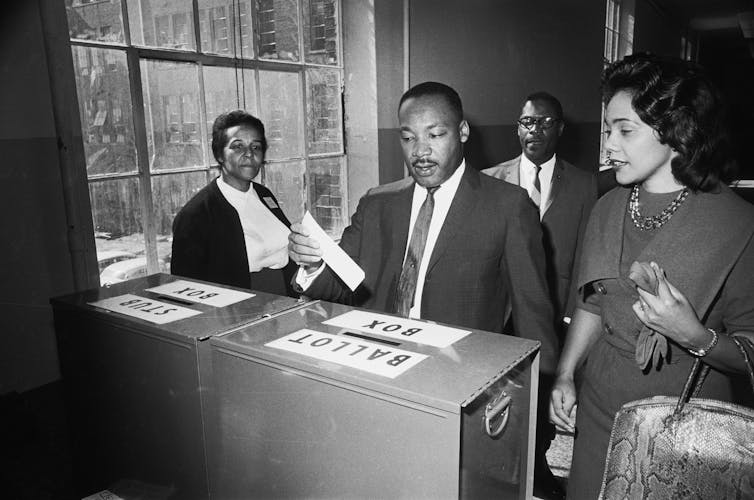
Martin Luther King Jr. saw the Black Church as a key player in encouraging voter registration.
Bettmann/Getty Images
To King and other civil rights leaders, the Black Church was a key institution within the pro-democracy movement. They believed its reach could be harnessed to eradicate the barriers to voting and expand accessibility of voting and enlarge the number of voters.
Rise of the PACs
A lot of Black Church-based voter registration efforts in the following decades took place under the Voter Education Project, which lasted from 1962 to 1992. The project sponsored citizenship education, voter registration and mobilization, as well as research on voting among African Americans.
Black denominations such as the African Methodist Episcopal Church also worked alongside black sororities and fraternities, civil rights agencies, masonic lodges and labor unions in voter projects such as “Operation Big Vote” and “Wake Up, Black America” to encourage voter turnout.
Meanwhile churches often served as locations for voter registration strategy meeting and forums.
In addition to the Voter Education Project, churches and civil rights organizations worked together to set up political action committees to push for voting rights. Political scientist Ronald E. Brown has described how in cities like Detroit, The Black Slate Political Action Committee and The Fannie Lou Hamer Political Action Committee were established as “church-based political action committees” advocating “on behalf of the poor and powerless during electoral campaigns.”
These PACs emerged during the 1970s and 1980s. They led voter registration and turn-out campaigns, provided education on political issues and endorsed candidates. Both remained active even into the 2020 general election cycle.
The “Souls to the Polls” movement began in Florida during the 1990s. The concept was to organize caravans after church service on the Sunday prior to Election Day to transport Black congregants to early voting locations. By the early 2000s, the NAACP, Black denominations and other organizations had transformed “Souls to the Polls” into a national movement.
Record turnout
Such initiatives along with the passing of the Civil Rights Act helped increase national Black voter turnout from 40% in 1960 to 60% in 1984, according to political scientist Zulema Blair.
Obama’s re-election garnered the highest percentage of Black voter turnout, reaching 66.6% of eligible Black voters in 2012. This was 1 percentage point higher than the actual white voter turnout – a new threshold for Black voter mobilization.
But with the U.S. Supreme Court eliminating part of the Voting Rights Act in 2013, Black Church-based voter registration and “turnout the votes” campaigns have been hampered by voter suppression efforts that have included new voter ID requirements, the reducing of early voting days, the ending of same-day registration, the disenfranchisement of citizens with felony records , and the closing of over 1,600 polling sites across the nation.
[Deep knowledge, daily. Sign up for The Conversation’s newsletter.]
The voter suppression has kick-started a renewed focus on protecting the right to vote in addition to voter registration and mobilization spearheaded by organizations such as the Black Church PAC and Black denominations such as the African Methodist Episcopal, Full Gospel Baptist, Church of God in Christ, and Church of Our Lord Jesus Christ. Meanwhile, the Conference of National Black Churches along with advocacy groups the National Action Network and The Collective have launched “Black Church 75” – which aims to get 75% of all Black church members registered to vote.
With a dual approach of concentrating on the 2020 general election and future planning for the 2022 and 2024 elections, the Black Church continues to work to expand and strengthen democracy in the United States, tapping into its rich history of securing voting rights for all U.S. citizens.

This article is republished from The Conversation under a Creative Commons license. Read the original article.

About David D. Daniels III
Dr. David D. Daniels III is Professor of Church History, at McCormick Theological Seminary, a member of the Association of Theological Schools. You can read more about the author here.
Next Post
November 10, 2020 Who are patron saints and why do Catholics venerate them?
Browse Our Archives
Select a Category Buddhism Christianity Hinduism Islam Judaism Religion and society Uncategorized
Select a Month July 2024 March 2024 February 2024 January 2024 December 2023 November 2023 October 2023 September 2023 August 2023 July 2023 January 2023 August 2022 July 2022 April 2022 February 2022 January 2022 October 2021 July 2021 June 2021 May 2021 April 2021 March 2021 February 2021 January 2021 December 2020 November 2020 October 2020 September 2020 August 2020 July 2020 June 2020 May 2020
Follow Us!
TAKE THE
Religious Wisdom Quiz
What does "Jericho" mean in Hebrew?
Select your answer to see how you score.
Place of salt Place of fragrance Mount of olives Dry ground
Related posts from The Conversation


Electing A Virtuous President Would Make Immunity Irrelevant

How Christians Hold Differing Views On The Resurrection
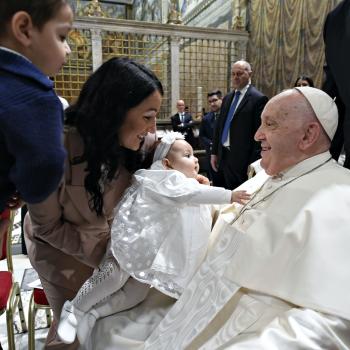
Pope Francis called surrogacy ‘deplorable’
TRENDING AT PATHEOS Religion News

Catholic Integralists believe that religious values – specifically Christian ones – should...

Electing A Virtuous President Would Make Immunity Irrelevant
Presidential immunity can bring with it many risks. So how can we...

Why The Olympic Games Are A ‘Civil Religious’...
Sporting events form a vital space where Americans display their 'civil religious...

After more than a decade of news, research updates, and insights on...

Q: Why do Southern Baptists and like-minded Protestants...
THE RELIGION GUY’S ANSWER: Why? Simple. Because they believe that’s what the...

THE QUESTION: Is gambling evil? THE RELIGION GUY’S ANSWER: Analysts anticipate a...
view all Religion News blogs
Ad-Free & Subscriber Log-In Subscription Support
- About Us
- 2026 Calendar
- Videos
- Podcasts
- Library of World Religions
- Faith In Media Tracker
- Advertise With Us
- Write for Us
- Privacy Policy
- Terms of Service
- Do Not Sell My Data
- Contact Us
- Radiant Digital
- Manage Newsletter Subscriptions
- Unsubscribe From Notifications
- Sitemap
Copyright 2008-2026, Patheos. All rights reserved.
Subscription Support Ad-Free & Subscriber Log-In
Follow Patheos