
BuddhistCatholicContemplativeEvangelicalGeneral ChristianHinduJewishLatter-day SaintMuslimNew VisionsProgressive Christian
Beliefs
- Buddhist
- Catholic
- Contemplative
- Evangelical
- General Christian
- Hindu
- Jewish
- Latter-day Saint
- More Voices
- Muslim
- New Visions
- Pagan
- Progressive Christian
Topics
- Religion News
- Food and Religion
- Sports and Religion
- Religious Art
- Religious Music and Entertainment
- Religious Events
- History and Religion
- Style and Religion
- Politics and Religion
- Women in Religion
- Recreation Outdoors and Religion
- Business Finance and Religion
- Careers Workplace and Religion
- Education and Religion
- Family Parenting and Religion
- Health Fitness and Religion
- Home and Religion
- Relationships and Religion
- Technology and Religion
- Travel and Religion
Columnists
- Buddhist Columnists
- Business Finance and Religion Columnists
- Careers Workplace and Religion Columnists
- Catholic Columnists
- Contemplative Columnists
- Education and Religion Columnists
- Evangelists Columnists
- Family Parenting and Religion Columnists
- General Christian Columnists
- Health Fitness and Religion Columnists
- Hindu Columnists
- History and Religion Columnists
- Home and Religion Columnists
- Jewish Columnists
- More Voices Columnists
- Latter Day Columnists
- Muslim Columnists
- New Visions Columnists
- Nonreligious Columnists
- Pagan Columnists
- Politics and Religion Columnists
- Progressive Columnists
- Recreation Outdoors and Religion Columnists
- Relationships and Religion Columnists
- Religion News Columnists
- Religious Art Columnists
- Religious Events Columnists
- Religious Music and Entertainment Columnists
- Sports and Religion Columnists
- Style and Religion Columnists
- Technology and Religion Columnists
- Travel and Religion Columnists
- Women in Religion Columnists
Resource Library
- 2026 Calendar
- Library of World Religions
- The 100 Most Holy Places on Earth
- Patheos Answers
- Podcasts
- Videos
- Faith Leaders Database
- Anglican Episcopalian
- Bahai
- Baptist
- Buddhism
- Christianity
- Confucianism
- Eastern Orthodoxy
- Hinduism
- Holiness and Pentecostal
- ISKCON
- Islam
- Judaism
- Lutheran
- Methodist
- The Church of Jesus Christ of Latter-day Saints
- New Age
- Paganism
- Presbytarian and Reformed
- Protestantism
- Religion Behind the Scenes
- Roman Catholic
- Scientology
- Shia Islam
- Sikhism
- Sufism
- Sunni Islam
- Taoism
- Zen
- See all religions
Research Tools
 Ad-Free & Subscriber Log-In Subscription Support
Ad-Free & Subscriber Log-In Subscription Support
Follow Patheos 

- Trending:
- Forgiveness
- |
- Marriage
- |
- Consciousness
- |
- Death Penalty
- |
- Election
- |
- Halloween
 The Christian Revolution
- Home
- Evangelical
- We All Worship Something
We All Worship Something
Last updated on: June 3, 2018 at 7:56 pm by Taylor S. Brown
We All Worship Something 2018-06-03T19:56:38-06:00 Taylor S. Brown
Patheos Explore the world's faith through different perspectives on religion and spirituality! Patheos has the views of the prevalent religions and spiritualities of the world.
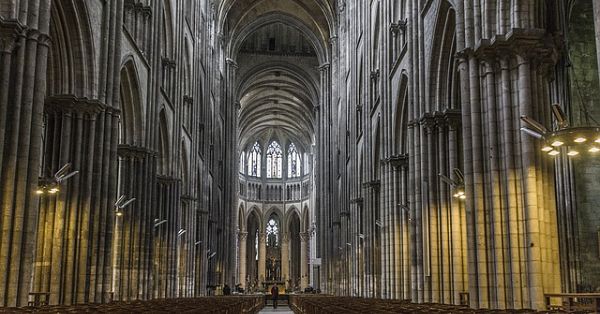
Over at The Atlantic, there is an interesting article by Sigal Samuel about the religious nature of many atheists in America. Yes, you read that right, religious atheists. Of course, there is a good bit of provocative overstatement in the title. The actual demographic that Samuel is referring to is the much-discussed “nones” category. This is a larger umbrella term for anybody who does not subscribe to a defined religious tradition or denomination. Atheists, agnostics, apatheists (those are simply apathetic about the divine), and the spiritual-but-not-religious crowd all fall under this umbrella. While it easy to assign people to one of two categories of belief, either occupying a defined religion/denomination or an atheist/agnostic, the actual distribution of religious belief in the Western world is much more complex; indeed much messier.
As Samuel notes in the article:
First, researchers confirmed the widely known fact that, overall, Americans are much more religious than Western Europeans. They gauged religious commitment using standard questions, including “Do you believe in God with absolute certainty?” and “Do you pray daily?”
Second, the researchers found that American “nones”—those who identify as atheist, agnostic, or nothing in particular—are more religious than European nones. The notion that religiously unaffiliated people can be religious at all may seem contradictory, but if you disaffiliate from organized religion it does not necessarily mean you’ve sworn off belief in God, say, or prayer.
First of all some of the questions in the research survey are problematic in their wording. For example: believing in God with “absolute certainty.” From an epistemological standpoint here is hardly anything that we as finite humans can hold with 100% certainty aside from logical and mathematical axioms and that Friends is an objectively worse show than Seinfeld. We live and interact on the basis of trust and reasonable confidence in our lives. This includes everything from trusting that our friends and family will continue to love us when we wake up tomorrow, to the very fact that our mental faculties represent the world to us in a generally accurate sense. Humans live and think on the basis of trust and gradations of confidence. Thus a better way of wording such a question would be something along the lines of “Do you believe in God with a strong/reasonable amount of trust/confidence?” This would potentially expand the amount of people in religious demographics as it allows for people who experience doubts and uncertainties to still identify as religious. But I digress about the riveting topic of census data.
The more important point of the aforementioned quote from Samuel comes in the last line: “The notion that religiously unaffiliated people can be religious at all may seem contradictory, but if you disaffiliate from organized religion it does not necessarily mean you’ve sworn off belief in God, say, or prayer.” Part of this has to do with the strange nature of American religiosity. Despite what many fundamentalists might say, America has never been an officially Christian nation. All but a handful of the signers of the Declaration of Independence were deists, Unitarians, or some stripe of heterodox religionists. The very wording of the Declaration makes reference only to a general “Creator” or “God.” It says nothing about the Triune God of orthodox Christian confession.
While America is not a Christian nation, it has always been a very religious nation. The enshrinement of religious liberty in the First Amendment of the Constitution bears witness to this. The rise of offshoot heterodox religious sects and traditions (the Shakers, Jehovah’s Witnesses, Mormons) as well as spiritualist movements (everything from Transcendentalism to the seance craze of the 19th and early 20th centuries) bears witness to the fusion of religiosity and the pluralistic marketplace in America. This religiosity, it seems, persists even with many professes non-believers. Again, Samuel:
America is a country so suffused with faith that religious attributes abound even among the secular. Consider the rise of “atheist churches,” which cater to Americans who have lost faith in supernatural deities but still crave community, enjoy singing with others, and want to think deeply about morality. It’s religion, minus all the God stuff. This is a phenomenon spreading across the country, from the Seattle Atheist Church to the North Texas Church of Freethought. The Oasis Network, which brings together non-believers to sing and learn every Sunday morning, has affiliates in nine U.S. cities.
All of this American religiosity is in stark contrast to Europe, where all demographics, both religious and “none,” are fare less religiously and spiritually inclined. Indeed, as Samuel notes in the article, many Europeans identify as Christians more out of ethnic loyalties and origins (paradoxical as that is for a faith born out Second Temple Judaism, that worships a Galilean carpenter, and that was distinctive in the ancient world for its diminution of existing ethnic categories) than out of actual religious belief. Again, Samuel:
The Pew survey found that although most Western Europeans still identify as Christians, for many of them, Christianity is a cultural or ethnic identity rather than a religious one. Sahgal calls them “post-Christian Christians,” though that label may be a bit misleading: The tendency to conceptualize Christianity as an ethnic marker is at least as old as the Crusades, when non-Christian North Africans and Middle Easterners were imagined as “others” relative to white, Christian Europeans. The survey also found that 11 percent of Western Europeans now call themselves “spiritual but not religious.”
So what it is the takeaway from all of this for those of us who are confessing orthodox Christians of one stripe or another? First of all it is important to understand what all of this entails for Christian witness and mission. It means that we cannot address the post-Christendom West as though it were simply a non-believing culture. Instead we have to reckon with a spiritual landscape that is both secular and religiously pluralistic. The way Christians bore witness to their faith in the religiously-diverse Roman world is a better model for us than that of 17th, 18th, and 19th century missions. Second, it reminds that everyone, be they atheist, Christian, spiritual-but-not-religious, etc. worships in some way. It is actually innate for humans to be religious in some form; it is secularism and non-belief that must be learned.
David Foster Wallace, the famed and tragic late writer, spoke very eloquently of this in his famed Kenyon College commencement speech in 2005. It has been quoted often since then, but it is worth quoting again in relation to this article:
Because here’s something else that’s true. In the day-to-day trenches of adult life, there is actually no such thing as atheism. There is no such thing as not worshipping. Everybody worships. The only choice we get is what to worship. And an outstanding reason for choosing some sort of God or spiritual-type thing to worship — be it J.C. or Allah, be it Yahweh or the Wiccan mother-goddess or the Four Noble Truths or some infrangible set of ethical principles — is that pretty much anything else you worship will eat you alive. If you worship money and things — if they are where you tap real meaning in life — then you will never have enough. Never feel you have enough. It’s the truth. Worship your own body and beauty and sexual allure and you will always feel ugly, and when time and age start showing, you will die a million deaths before they finally plant you. On one level, we all know this stuff already — it’s been codified as myths, proverbs, clichés, bromides, epigrams, parables: the skeleton of every great story. The trick is keeping the truth up-front in daily consciousness. Worship power — you will feel weak and afraid, and you will need ever more power over others to keep the fear at bay. Worship your intellect, being seen as smart — you will end up feeling stupid, a fraud, always on the verge of being found out. And so on.
What DFW spoke then, and what this recent survey Sigal Samuel reports on now, reminds us that everyone worships. The question then is not “Should we worship?” but “What/Whom should we worship?”
Next Post
June 13, 2018 How Christianity "Destroyed" The Darkness of the Ancient World
Browse Our Archives
Select a Category Uncategorized
Select a Month July 2019 April 2019 January 2019 December 2018 November 2018 October 2018 September 2018 August 2018 July 2018 June 2018 May 2018 April 2018 March 2018 February 2018 January 2018 December 2017 November 2017 October 2017 September 2017 August 2017 July 2017 June 2017 May 2017 April 2017 March 2017 February 2017 January 2017 December 2016
Follow Us!
TAKE THE
Religious Wisdom Quiz
Who was the Roman governor at the trial of Jesus?
Select your answer to see how you score.
Caesar Herod Alexander Pilate
Related posts from The Christian Revolution


A Post After Some Time Away....And a Big...

The Christian Response to Nation-States

TRENDING AT PATHEOS Evangelical

The REST of Your Life: A Creative Wrestles...
This week I had a conversation with a good friend from church....

How the author of the world's best hymn...
I've been working with John Newton for a while now. This makes...

Long before this Lectio Divina, Psalm 130 - the song - started...

What About the Trees? Another Living Parable
After I finished writing the last article about falling leaves as a...

Why Classical Education Is a Conversation, Not a...
Come and Read: Joy in Classical Education When I was a little...

Cornell University has received a great deal of negative publicity and intense...
view all Evangelical blogs
Ad-Free & Subscriber Log-In Subscription Support
- About Us
- 2026 Calendar
- Videos
- Podcasts
- Library of World Religions
- Faith In Media Tracker
- Advertise With Us
- Write for Us
- Privacy Policy
- Terms of Service
- Do Not Sell My Data
- Contact Us
- Radiant Digital
- Manage Newsletter Subscriptions
- Unsubscribe From Notifications
- Sitemap
Copyright 2008-2026, Patheos. All rights reserved.
Subscription Support Ad-Free & Subscriber Log-In
Follow Patheos