
BuddhistCatholicContemplativeEvangelicalGeneral ChristianHinduJewishLatter-day SaintMuslimNew VisionsProgressive Christian
Beliefs
- Buddhist
- Catholic
- Contemplative
- Evangelical
- General Christian
- Hindu
- Jewish
- Latter-day Saint
- More Voices
- Muslim
- New Visions
- Pagan
- Progressive Christian
Topics
- Religion News
- Food and Religion
- Sports and Religion
- Religious Art
- Religious Music and Entertainment
- Religious Events
- History and Religion
- Style and Religion
- Politics and Religion
- Women in Religion
- Recreation Outdoors and Religion
- Business Finance and Religion
- Careers Workplace and Religion
- Education and Religion
- Family Parenting and Religion
- Health Fitness and Religion
- Home and Religion
- Relationships and Religion
- Technology and Religion
- Travel and Religion
Columnists
- Buddhist Columnists
- Business Finance and Religion Columnists
- Careers Workplace and Religion Columnists
- Catholic Columnists
- Contemplative Columnists
- Education and Religion Columnists
- Evangelists Columnists
- Family Parenting and Religion Columnists
- General Christian Columnists
- Health Fitness and Religion Columnists
- Hindu Columnists
- History and Religion Columnists
- Home and Religion Columnists
- Jewish Columnists
- More Voices Columnists
- Latter Day Columnists
- Muslim Columnists
- New Visions Columnists
- Nonreligious Columnists
- Pagan Columnists
- Politics and Religion Columnists
- Progressive Columnists
- Recreation Outdoors and Religion Columnists
- Relationships and Religion Columnists
- Religion News Columnists
- Religious Art Columnists
- Religious Events Columnists
- Religious Music and Entertainment Columnists
- Sports and Religion Columnists
- Style and Religion Columnists
- Technology and Religion Columnists
- Travel and Religion Columnists
- Women in Religion Columnists
Resource Library
- 2026 Calendar
- Library of World Religions
- The 100 Most Holy Places on Earth
- Patheos Answers
- Podcasts
- Videos
- Faith Leaders Database
- Anglican Episcopalian
- Bahai
- Baptist
- Buddhism
- Christianity
- Confucianism
- Eastern Orthodoxy
- Hinduism
- Holiness and Pentecostal
- ISKCON
- Islam
- Judaism
- Lutheran
- Methodist
- The Church of Jesus Christ of Latter-day Saints
- New Age
- Paganism
- Presbytarian and Reformed
- Protestantism
- Religion Behind the Scenes
- Roman Catholic
- Scientology
- Shia Islam
- Sikhism
- Sufism
- Sunni Islam
- Taoism
- Zen
- See all religions
Research Tools
 Ad-Free & Subscriber Log-In Subscription Support
Ad-Free & Subscriber Log-In Subscription Support
Follow Patheos 

- Trending:
- Forgiveness
- |
- Marriage
- |
- Consciousness
- |
- Death Penalty
- |
- Election
- |
- Halloween
 The Christian Revolution
- Home
- Evangelical
- John Piper (Mis)Speaks Ex Cathedra
John Piper (Mis)Speaks Ex Cathedra
Last updated on: January 30, 2018 at 8:01 am by Taylor S. Brown
John Piper (Mis)Speaks Ex Cathedra 2018-01-30T08:01:16-06:00 Taylor S. Brown
Patheos Explore the world's faith through different perspectives on religion and spirituality! Patheos has the views of the prevalent religions and spiritualities of the world.
Another day, another statement by one of American evangelicalism’s most inflammatory pundits. Yes, John Piper is at it again folks. Just when you think he can’t top himself by questioning if women can be police officers or by stating that he believes double predestination is a “sixth point” of Calvinism, Piper manages to impress.
This time Piper has sat in the Desiring God chair and made a Puritan-papal pronouncement that women should not be seminary professors. Yes folks you heard that right. Not only can women definitely not be in leadership or teaching positions in a local church (sorry Phoebe and Junia; I know St. Paul calls you both a deaconess and notable among the the apostles, respectively, in Romans 16, but Piper says you’re sinning against God), they shouldn’t even teach in a Christian academic or vocational setting. It seems that some of the top scholars in biblical studies, theology, preaching, and pastoral practice should pack up and go home to be “Leave It To Beaver” style housewives.
As you can tell by the sarcasm-drenched prose, I am quite angry about this. I shouldn’t be as angry about it as a I am. Piper has been doing this for years. The man has built a ministry that—among many younger, conservative evangelicals—has taken on the role of an informal magisterium. His interpretation of Scripture is law and if one is truly devoted to Christ (or in Piper’s terms, a “Christian hedonist,” which is really a terrible title) then one must fall in line with his Neo-Puritan, Neo-Jonathan Edwards brand of pseudo-fundamentalist (thats right I said it) Calvinist theology.
The problem of course is that Piper is not the Pope (I’d gladly read the works of John Paul II, Joseph Ratzinger, or Francis) nor is his interpretation of Scripture or Christian tradition authoritative; its not even particularly good. Indeed, I’ve found many of Piper’s arguments for various theological positions quite lacking.
Take the the most recent one about female seminary professors (at this point you should read through the whole of the linked article above or listen to the audio form to track with what I’m about to write).
In the post, Piper’s arguments essentially breaks down as follows:
Premise #1: Seminaries are meant for the training of pastors.
Premise #2: Seminary professors should embody the pastoral call.
Premise #3: Only men should be in pastoral and/or leadership positions in the local church.
Conclusion: Only men should be seminary professors.
Now on the surface there seems to be a tight logical consistency to this right? Yes, but only on the surface. When you begin to delve into the reasoning underlying Piper’s premises however, you begin to see the structural weakness of the argument.
Let’s start with Premise #1. Piper believes that a seminary is designed for the training of pastors. Here is a quote from the post:
Namely, seminary is not just the transfer of information. Machines can do that. But machines can’t form a man for the pastoral role by being those who, in their teaching, embody that role and model that role and inspire for that role through their active involvement as elder-qualified men in the church.
That’s my belief about what makes for the best seminary teaching. When a student with the pastoral call arrives at the level of seminary preparation, something is different from what was happening in college education and high school education (at least, usually it is). Not only has he moved beyond the adolescent years of transition from boyhood to manhood, but he is now submitting himself to a community of teachers who, by their precept and example, are called to shape his mind and his heart for vocational pastoral ministry.
Now there is a bit of truth to this. Seminaries do, in fact train pastors. I just recently graduated from one and can attest to this. The problem with Piper’s reasoning is that it is so narrow that it excludes any other vocations beyond that of the conventional/traditional pastoral ones. This would not only exclude me and my calling as a teacher and theologian/scholar for the Church, but also those who have vocational callings to missions work, recovery ministry, service to the poor, racial reconciliation, counseling, and so on. While it is correct to say that a seminary is primarily designed for the training of pastors, it is wrong to limit the institution’s purview to that singular vocation. As Jake Meador over at Mere Orthodoxy observes:
The biggest problem behind the debate is that it is not clear what we expect from seminaries within the current evangelical context. Ostensibly they are pastoral training programs, but then many seminaries are now also awarding academic degrees and counseling degrees, neither of which are necessary for ordination.
This leads naturally into the problems with the second premise of Piper’s argument. With Premise #2, Piper believes that the role of the seminary professor is under the same general purview as that of the pastor. Here is Piper:
Samuel Miller, one of the founders of Princeton Seminary, said, “A professor’s example as a devoted, laborious, faithful minister, was above all else a record of requisite for his successful training of ministers.” Now, this implies that seminary teachers be more than competent historians, competent linguists, competent exegetes, educators, or theologians. The proper demand on the seminary teacher is to be an example, a mentor, a guide, an embodiment of the pastoral office in preparing men to fill the pastoral office.
But is this really the case? I would argue that it isn’t as Piper delineates it. While I do think it incredibly important that a seminary professor embody Christ-like love and practice in their lives and teaching (as every Christian, male or female, should), it does not follow that they must embody pastoral practices and qualities. One need not embody pastoral practice to be an excellent teacher of biblical languages, theology, or missional anthropology. Indeed, the training and skills necessary to be a professor are vastly different than that of a conventional pastor. Again, Jake Meador rightly contests Piper’s (and by extension Samuel Miller’s) assumption here:
Moreover, even the elements of training for pastoral ministry can be broken down into separate components because of the large and eclectic skill set a pastor needs to possess. Much of what is expected is academic knowledge—a clear handle of dogmatics, a correct understanding of Greek and Hebrew, and so on. Piper’s case seems to be contingent on the assumption that the work of the pastor and the work of the person training the pastor are similar enough that we should have the same standards for both. But that seems manifestly false to me, as the skills required to be a good Greek professor are quite distinct from the skills needed to be a good pastor. Indeed, the differences are significant enough that I don’t see why our requirements for the former should be the same as the latter, though I’d be curious to hear Piper say more about that.
These problematic premises alone are why even complementarian Christians (of whom I believe Meador is a part, but I am happy to be corrected there) are criticizing Piper’s post. Bethany Jenkins of The Gospel Coalition (an organization that is no friend of egalitarian thought) exemplifies this:
https://twitter.com/BethanyJenkins/status/955871011873968129
However, I am not a complementarian. I am an egalitarian; I believe that women can serve in pastoral and leadership roles in the local church. I went to an egalitarian seminary (Asbury Seminary) and studied under both male and female professors. My Th.M. advisor, Ben Witherington, wrote his doctoral thesis on the leadership roles of women in the New Testament.
I say all this as a full disclosure of my own stance. However, I came to this position not through sentiment, but through the study of Scripture itself. And thus we come to the problem with the third, foundational premise of Piper’s argument. Piper takes a hardline stance on complementarianism based on his interpretation of Scripture. However, I (and many other biblical scholars who are far more credentialed than me) think that his interpretation is deeply wrong. More to the point, I believe that Piper’s interpretation of the key texts in the debate does not sufficiently understand the ancient socio-historical context in which said texts were written.
Now we could look at the whole of the New Testament here. We could go into detail about how women were the first ones to proclaim the empty tomb, and thus the first humans to proclaim (e.g., preach) the gospel message (Matt. 28:1-15; Luke 24:1-12). We could go into detail about how, given the oral-aural culture of the time, written letters had to have someone read them out and explain them to audiences, and how Phoebe—the deaconess mentioned in Romans 16:1-2—was very likely the one who did this with the Epistle to the Romans, thus becoming one of the first expositors of Paul’s gospel message. We could even go into detail about how the Junia (if your translation says “Junias” it is based on outdated manuscript evidence) mentioned in Romans 16:7 as “prominent among the apostles” was a female apostle, a witness to the risen Jesus and thus entrusted with the gospel.
We could even get into the nitty-gritty of why supposed complementarian “pillar texts” like 1 Cor. 14:33-36 and 1 Tim. 2:9-15 are not meant to be universal declarations, but rather are specific injunctions given to ancient churches dealing with historically-particularized problems in the ancient Greco-Roman world. If you don’t believe me, go read both Craig Keener’s Paul, Women, and Wives: Marriage and Ministry in the Letters of Paul (Hendrickson, 1992) and Ben Witherington’s Women and the Genesis of Christianity (Cambridge University Press, 1990). They’re quite good and written by two of the most Christ-like teachers I’ve ever studied under.
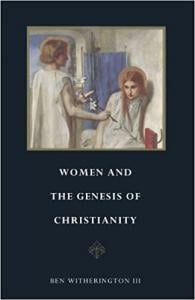
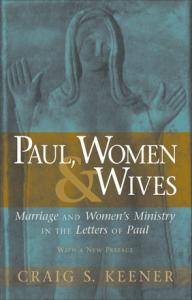
image description
We could get into all of that, but I’ll defer to the actual female professors and theologians on such issues (and of course the aforementioned male professors who use their platforms to speak up for their female colleagues). They can defend themselves and their callings against John Piper’s poor arguments far better than I can.
I’ll end this by saying that I give thanks to God for the female pastors and seminary professors who have taught and shaped me. They have challenged me to not only be a better writer, thinker, and scholar, but most importantly to be more Christ-like. Thanks be to God for female pastors and seminary professors!
Previous Post

January 17, 2018
The Myths That Make Us
Next Post

February 11, 2018 Alt-Right Paganism
Browse Our Archives
Select a Category Uncategorized
Select a Month July 2019 April 2019 January 2019 December 2018 November 2018 October 2018 September 2018 August 2018 July 2018 June 2018 May 2018 April 2018 March 2018 February 2018 January 2018 December 2017 November 2017 October 2017 September 2017 August 2017 July 2017 June 2017 May 2017 April 2017 March 2017 February 2017 January 2017 December 2016
Follow Us!
TAKE THE
Religious Wisdom Quiz
True or False: King Saul was anointed by the prophet Nathan.
Select your answer to see how you score.
FALSE TRUE
Related posts from The Christian Revolution


A Post After Some Time Away....And a Big...

The Christian Response to Nation-States

TRENDING AT PATHEOS Evangelical

The REST of Your Life: A Creative Wrestles...
This week I had a conversation with a good friend from church....

How the author of the world's best hymn...
I've been working with John Newton for a while now. This makes...

Long before this Lectio Divina, Psalm 130 - the song - started...

What About the Trees? Another Living Parable
After I finished writing the last article about falling leaves as a...

Why Classical Education Is a Conversation, Not a...
Come and Read: Joy in Classical Education When I was a little...

Cornell University has received a great deal of negative publicity and intense...
view all Evangelical blogs
Ad-Free & Subscriber Log-In Subscription Support
- About Us
- 2026 Calendar
- Videos
- Podcasts
- Library of World Religions
- Faith In Media Tracker
- Advertise With Us
- Write for Us
- Privacy Policy
- Terms of Service
- Do Not Sell My Data
- Contact Us
- Radiant Digital
- Manage Newsletter Subscriptions
- Unsubscribe From Notifications
- Sitemap
Copyright 2008-2026, Patheos. All rights reserved.
Subscription Support Ad-Free & Subscriber Log-In
Follow Patheos