
BuddhistCatholicContemplativeEvangelicalGeneral ChristianHinduJewishLatter-day SaintMuslimNew VisionsProgressive Christian
Beliefs
- Buddhist
- Catholic
- Contemplative
- Evangelical
- General Christian
- Hindu
- Jewish
- Latter-day Saint
- More Voices
- Muslim
- New Visions
- Pagan
- Progressive Christian
Topics
- Religion News
- Food and Religion
- Sports and Religion
- Religious Art
- Religious Music and Entertainment
- Religious Events
- History and Religion
- Style and Religion
- Politics and Religion
- Women in Religion
- Recreation Outdoors and Religion
- Business Finance and Religion
- Careers Workplace and Religion
- Education and Religion
- Family Parenting and Religion
- Health Fitness and Religion
- Home and Religion
- Relationships and Religion
- Technology and Religion
- Travel and Religion
Columnists
- Buddhist Columnists
- Business Finance and Religion Columnists
- Careers Workplace and Religion Columnists
- Catholic Columnists
- Contemplative Columnists
- Education and Religion Columnists
- Evangelists Columnists
- Family Parenting and Religion Columnists
- General Christian Columnists
- Health Fitness and Religion Columnists
- Hindu Columnists
- History and Religion Columnists
- Home and Religion Columnists
- Jewish Columnists
- More Voices Columnists
- Latter Day Columnists
- Muslim Columnists
- New Visions Columnists
- Nonreligious Columnists
- Pagan Columnists
- Politics and Religion Columnists
- Progressive Columnists
- Recreation Outdoors and Religion Columnists
- Relationships and Religion Columnists
- Religion News Columnists
- Religious Art Columnists
- Religious Events Columnists
- Religious Music and Entertainment Columnists
- Sports and Religion Columnists
- Style and Religion Columnists
- Technology and Religion Columnists
- Travel and Religion Columnists
- Women in Religion Columnists
Resource Library
- 2026 Calendar
- Library of World Religions
- The 100 Most Holy Places on Earth
- Patheos Answers
- Podcasts
- Videos
- Faith Leaders Database
- Anglican Episcopalian
- Bahai
- Baptist
- Buddhism
- Christianity
- Confucianism
- Eastern Orthodoxy
- Hinduism
- Holiness and Pentecostal
- ISKCON
- Islam
- Judaism
- Lutheran
- Methodist
- The Church of Jesus Christ of Latter-day Saints
- New Age
- Paganism
- Presbytarian and Reformed
- Protestantism
- Religion Behind the Scenes
- Roman Catholic
- Scientology
- Shia Islam
- Sikhism
- Sufism
- Sunni Islam
- Taoism
- Zen
- See all religions
Research Tools
 Ad-Free & Subscriber Log-In Subscription Support
Ad-Free & Subscriber Log-In Subscription Support
Follow Patheos 

- Trending:
- Forgiveness
- |
- Marriage
- |
- Consciousness
- |
- Death Penalty
- |
- Election
- |
- Halloween
 The Christian Revolution
- Home
- Evangelical
- Bethel, Miracles, and Modern Syncretism
Bethel, Miracles, and Modern Syncretism
Last updated on: October 16, 2017 at 2:55 pm by Taylor S. Brown
Bethel, Miracles, and Modern Syncretism 2017-10-16T14:55:04-06:00 Taylor S. Brown
Patheos Explore the world's faith through different perspectives on religion and spirituality! Patheos has the views of the prevalent religions and spiritualities of the world.

I’m not usually one to read BuzzFeed News. In fact, most of the time I find their stuff to just barely fit into the category of “news.” I prefer more well-written (and admittedly somewhat more snooty) sources like the New York Times and The Atlantic. However, BuzzFeed News just recently posted a fascinating article.
It isn’t fascinating for the quality of its writing or the deep nuance of its insight. I actually find it to be somewhat stilted in its prose and style. An even bigger problem though is just how openly it wears its “we’re-super-woke-secular-millennials-who-sneer-a-little-bit-at-those-silly-religious-people” badge on its sleeve.
No, it isn’t fascinating because of its prose or style. It is fascinating because of the subject it covers: the infamous Bethel Church of Redding, CA and its attached, unaccredited school, the Bethel School of Supernatural Ministry (BSSM). The article, written by Molly Hensley-Clancy and titled “Meet The ‘Young Saints’ Of Bethel Who Go To College To Perform Miracles,” explores the practices and idiosyncrasies of Bethel and more specifically the Bethel School of Supernatural Ministry and the students it trains in Redding.
Again, the tone of the article is downright grating to me. It seems somewhat elitist and incredulous toward religious belief (again, it is BuzzFeed News). This makes it all the more strange though how much I resonate with many of the fears and trepidations the author raises in her time at the school. She speaks of how the BSSM instills in its students how miraculous healings and works of power are necessary for the spread of Christianity. As Hensley-Clancy notes near the beginning of the article:
The basic theological premise of the School of Supernatural Ministry is this: that the miracles of biblical times — the parted seas and burning bushes and water into wine — did not end in biblical times, and the miracle workers did not die out with Jesus’s earliest disciples. In the modern day, prophets and healers don’t just walk among us, they are us.
To Bethel students, learning, seeing, and performing these “signs and wonders” — be it prophesying about things to come or healing the incurable — aren’t just quirks or side projects of Christianity. They are, in fact, its very center.
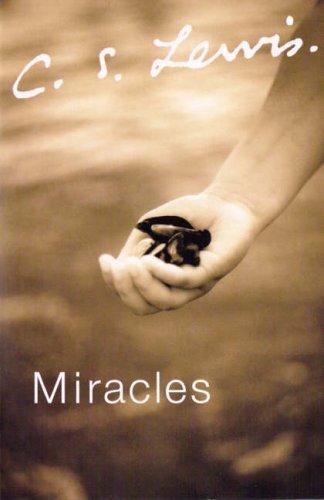
Of course, I agree that miracles can and do still happen. Even from a purely philosophical standpoint, one cannot rule out the possibility of the miraculous, despite what David Hume’s viciously circular assertions on the matter. If you don’t believe me, go and read the 1960 revised edition of C. S. Lewis’s book Miracles: A Preliminary Study, specifically chapter eight, “Miracles and the Laws of Nature” and chapter thirteen, “On Probability.”
But just because miracles are possible—and even occasionally happen—that does not mean that we should seek them out as the primary motivator of evangelism or ongoing faith development. And this is simply because oftentimes, miracles don’t occur when we want them to.
We pray for a job and nothing turns up.
We ask for an illness to be healed and it isn’t.
We ask for a loved one to be saved from death, and yet they die.
This is one of the perplexing mysteries that we face in a fallen world. Why do our prayers for miracles go unanswered? And further still, why are some answered and some not? The Bible itself asks this question far better than any modern secular thinker in my opinion. You’d be hard-pressed to find a more hard-hitting questioning of God’s goodness and deafness to the cries of the righteous than the book of Job or the lament psalms in the Psalter. The Bible and Christian faith are not scared of such questions. So why then are so many Western Christians (particularly younger, millennial evangelicals) seeking so desperately to avoid the questions that Job, David, and a large swath of Christian saints ask, and instead flock to what I can only describe as a sort of syncretistic, quasi-pagan form of divination?
The stories that Hensley-Clancy details in the article speak of how students at BSSM essentially seek to manipulate miracles as practically a form of magic. And not “magic” in the whimsical Harry Potter-esque meaning of the word. No, I mean “magic” in the technical sense of practices designed to coerce the gods/mystical beings/spiritual realm/etc. into acting and bestowing power upon the practitioners. Think of a shaman in an animistic religion who seeks to call forth the power of a particular deity or spirit to serve his, or a client’s, own ends. At its core in the realm of comparative religion, that is what magic aims to do: manipulate the spiritual world around oneself to serve a particular end or desire for power.
While I don’t for a minute believe that either the staff or the students of Bethel are intentionally seeking to use prayer as a form of magic or coercion of the divine, I do think that many of the practices that Bethel teaches its students to engage in unintentionally end up coming dangerously close to similar ends. Miracles are not simply something that we can coerce at a whim and desire, even if they are sought after for good ends, such as healing. Miracles, instead, are acts of the Creator God Himself in history, appointed and performed at certain key junctures in salvation-history. Events like the Exodus and the Resurrection of Jesus. They are the acts of the Creator God, who is unconstrained and uncoerced by anything. As C. S. Lewis notes on the matter at the end of his book Miracles:
You are probably quite right in thinking that you will never see a miracle done: you are probably equally right in thinking that there was a natural explanation of anything in your past life which seemed, at the first glance, to be “rum” or “odd.” God does not shake miracles into Nature at random as if from a pepper-caster. They come on great occasions: they are found at the great ganglions of history—not of political or social history, but of that spiritual history which cannot be fully known by men. If your own life does not happen to be near one of those great ganglions, how should you expect to see one? If we were heroic missionaries, apostles, or martyrs, it would be a different matter. But why you or I? Unless you live near a railway, you will not see trains go past your windows. How likely is it that you or I will be present when a peace-treaty is signed, when a great scientific discovery is made, when a dictator commits suicide? That we should see a miracle is even less likely. Nor, if we understand, shall we be anxious to do so. “Nothing almost sees miracles but misery.” Miracles and martyrdoms tend to bunch about the same areas of history—areas we have naturally no wish to frequent. Do not, I earnestly advise you, demand an ocular proof unless you are already perfectly certain that it is not forthcoming. (p. 273)
Is Bethel and Redding at the hinge point of some major part of salvation-history? It is obviously impossible for any human to say, but I would ere on the side of skepticism. The thing I fear most though about Bethel as an organization is that it is teaching many young Christians, who are looking desperately for belonging and some sort of communion with the divine, to think of miracles as pepper from a pepper-caster. And what happens to these passionate and impressionable young souls when they see that the pepper-shaker—and the emotional and spiritual high that it gives them—is beginning to run out?
Previous Post

September 20, 2017
Frederick Buechner on History
Next Post
October 30, 2017 Mixed Feelings on the Reformation at 500
Browse Our Archives
Select a Category Uncategorized
Select a Month July 2019 April 2019 January 2019 December 2018 November 2018 October 2018 September 2018 August 2018 July 2018 June 2018 May 2018 April 2018 March 2018 February 2018 January 2018 December 2017 November 2017 October 2017 September 2017 August 2017 July 2017 June 2017 May 2017 April 2017 March 2017 February 2017 January 2017 December 2016
Follow Us!
TAKE THE
Religious Wisdom Quiz
Who carried Jesus' cross after He could no longer?
Select your answer to see how you score.
Pilate John Peter Simon of Cyrene
Related posts from The Christian Revolution


A Post After Some Time Away....And a Big...

The Christian Response to Nation-States

TRENDING AT PATHEOS Evangelical

The REST of Your Life: A Creative Wrestles...
This week I had a conversation with a good friend from church....

How the author of the world's best hymn...
I've been working with John Newton for a while now. This makes...

Long before this Lectio Divina, Psalm 130 - the song - started...

What About the Trees? Another Living Parable
After I finished writing the last article about falling leaves as a...

Why Classical Education Is a Conversation, Not a...
Come and Read: Joy in Classical Education When I was a little...

Cornell University has received a great deal of negative publicity and intense...
view all Evangelical blogs
Ad-Free & Subscriber Log-In Subscription Support
- About Us
- 2026 Calendar
- Videos
- Podcasts
- Library of World Religions
- Faith In Media Tracker
- Advertise With Us
- Write for Us
- Privacy Policy
- Terms of Service
- Do Not Sell My Data
- Contact Us
- Radiant Digital
- Manage Newsletter Subscriptions
- Unsubscribe From Notifications
- Sitemap
Copyright 2008-2026, Patheos. All rights reserved.
Subscription Support Ad-Free & Subscriber Log-In
Follow Patheos