
BuddhistCatholicContemplativeEvangelicalGeneral ChristianHinduJewishLatter-day SaintMuslimNew VisionsProgressive Christian
Beliefs
- Buddhist
- Catholic
- Contemplative
- Evangelical
- General Christian
- Hindu
- Jewish
- Latter-day Saint
- More Voices
- Muslim
- New Visions
- Pagan
- Progressive Christian
Topics
- Religion News
- Food and Religion
- Sports and Religion
- Religious Art
- Religious Music and Entertainment
- Religious Events
- History and Religion
- Style and Religion
- Politics and Religion
- Women in Religion
- Recreation Outdoors and Religion
- Business Finance and Religion
- Careers Workplace and Religion
- Education and Religion
- Family Parenting and Religion
- Health Fitness and Religion
- Home and Religion
- Relationships and Religion
- Technology and Religion
- Travel and Religion
Columnists
- Buddhist Columnists
- Business Finance and Religion Columnists
- Careers Workplace and Religion Columnists
- Catholic Columnists
- Contemplative Columnists
- Education and Religion Columnists
- Evangelists Columnists
- Family Parenting and Religion Columnists
- General Christian Columnists
- Health Fitness and Religion Columnists
- Hindu Columnists
- History and Religion Columnists
- Home and Religion Columnists
- Jewish Columnists
- More Voices Columnists
- Latter Day Columnists
- Muslim Columnists
- New Visions Columnists
- Nonreligious Columnists
- Pagan Columnists
- Politics and Religion Columnists
- Progressive Columnists
- Recreation Outdoors and Religion Columnists
- Relationships and Religion Columnists
- Religion News Columnists
- Religious Art Columnists
- Religious Events Columnists
- Religious Music and Entertainment Columnists
- Sports and Religion Columnists
- Style and Religion Columnists
- Technology and Religion Columnists
- Travel and Religion Columnists
- Women in Religion Columnists
Resource Library
- 2026 Calendar
- Library of World Religions
- The 100 Most Holy Places on Earth
- Patheos Answers
- Podcasts
- Videos
- Faith Leaders Database
- Anglican Episcopalian
- Bahai
- Baptist
- Buddhism
- Christianity
- Confucianism
- Eastern Orthodoxy
- Hinduism
- Holiness and Pentecostal
- ISKCON
- Islam
- Judaism
- Lutheran
- Methodist
- The Church of Jesus Christ of Latter-day Saints
- New Age
- Paganism
- Presbytarian and Reformed
- Protestantism
- Religion Behind the Scenes
- Roman Catholic
- Scientology
- Shia Islam
- Sikhism
- Sufism
- Sunni Islam
- Taoism
- Zen
- See all religions
Research Tools
 Ad-Free & Subscriber Log-In Subscription Support
Ad-Free & Subscriber Log-In Subscription Support
Follow Patheos 

- Trending:
- Forgiveness
- |
- Marriage
- |
- Consciousness
- |
- Death Penalty
- |
- Election
- |
- Halloween
 The Christian Revolution
- Home
- Evangelical
- Thinking About Gentrification and Church Plants
Thinking About Gentrification and Church Plants
Last updated on: June 20, 2017 at 1:30 pm by Taylor S. Brown
Thinking About Gentrification and Church Plants 2017-06-20T13:30:49-06:00 Taylor S. Brown
Patheos Explore the world's faith through different perspectives on religion and spirituality! Patheos has the views of the prevalent religions and spiritualities of the world.
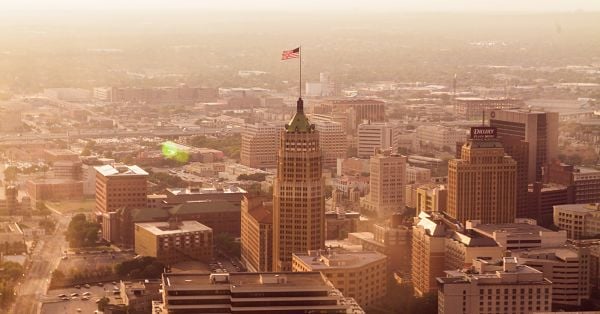
I have several friends who are heavily involved in church planting. While I myself have never had a particularly strong call toward being a church planter (though who knows if God will change that in the future), I have a deep appreciation for those who are called to such a vocation.
That being said, a recent article in Sojourners has caused me to reflect on the nature of church planting as it is often practiced in evangelical circles. Admittedly, I have mixed perceptions about Sojourners. Sometimes I find their articles to veer a little too far to the left ideologically. On the other hand, they sometimes have very good, thought-provoking articles that convict me as a Christian. D.L. Mayfield’s recent piece, “Church Planting and the Gospel of Gentrification,” falls into the latter group.
While the whole article is well worth a read, the general thrust revolves around Mayfield’s argument that most of the authoritative books and practices on planting churches in secularized cities presuppose a gentrified populace. She gives an example of how one of the most popular books on urban church growth, Tim Keller’s Center Church (Zondervan, 2012), barely even mentions gentrification:
These theologies talk a lot about moving in and contributing to the flourishing of a city, but say little on the negative disruption that these moves can make in the existing community. For instance, in his large book on urban church planting, Center Church: Doing Balanced, Gospel-Centered Ministry in Your City , Keller has nearly 400 pages describing right doctrine and theology but only a few paragraphs about gentrification. Even more troubling is the lack of emphasis on the importance of learning from those Christians already at work in churches in the neighborhood (including people of color who’ve been there for decades). The unspoken assumption in the books, sermons, and conferences targeting missional-minded evangelicals is that the city—prior to white, hip church planters—is a foreign mission field, pristine and untouched by the work of the Lord.
Mayfield goes on to discuss how some notable church plants (think megachurches planting new campuses here) only happen after an area has been largely gentrified. She quotes fellow writer Nate Lee on a Hillsong church plant announcement:
Writer Nate J. Lee, responding to a video put out by Hillsong church to announce their intention to plant a church in San Francisco (including the phrases “God has great plans for this city” and “San Fran, the best is yet to come!”), wrote this: “Any kind of language that implies that God’s work or God’s plan starts when we arrive … is indicative not only of terrible theology, but of white Christian exceptionalism, the oppressive belief that the correct kind salvation and healing can only be facilitated through us, on our terms with our methods—and us always happens to be white missionaries, white pastors, and white churches.”
Now make no mistake, Mayfield is not against church planting, at least as far as I can tell. What she seems to be trying to do is bring to the forefront the consequences that occur with predominantly-white, gentrification-related church planting: the disruption of existing minority and low-income churches doing good, gospel-centered work in existing communities. It is not that gentrification-related church planting is problematic simply because hating gentrification is trendy. It is because such church-planting that takes no thought for existing, non-gentrified churches and the communities they are ministering to actually harms evangelism and ministry.
I am no church planting expert. I do not have an answer to the potential problems that can arise with gentrification-related church plants. However, I do think articles like Mayfield’s help all of us who are active in ministry in some way to be more cognizant of just how interconnected our actions are with regard to other churches and communities. This is especially true for those of us who are in predominantly white, middle/upper-middle class churches. The Body of Christ is very large and diverse. While it is not wrong to model our church plants on Tim Keller’s advice, we need to do so whilst being aware of how it impacts our minority brothers and sisters who are also in ministry in the city.
Previous Post
June 12, 2017
Cultural Liturgies and the Power of Nationalism
Next Post

June 28, 2017 The Bible's Literary Styles
Browse Our Archives
Select a Category Uncategorized
Select a Month July 2019 April 2019 January 2019 December 2018 November 2018 October 2018 September 2018 August 2018 July 2018 June 2018 May 2018 April 2018 March 2018 February 2018 January 2018 December 2017 November 2017 October 2017 September 2017 August 2017 July 2017 June 2017 May 2017 April 2017 March 2017 February 2017 January 2017 December 2016
Follow Us!
TAKE THE
Religious Wisdom Quiz
What Christian group believes in "Anabaptism"?
Select your answer to see how you score.
Lutherans Anglicans Mennonites Presbyterians
Related posts from The Christian Revolution


A Post After Some Time Away....And a Big...

The Christian Response to Nation-States

TRENDING AT PATHEOS Evangelical

The REST of Your Life: A Creative Wrestles...
This week I had a conversation with a good friend from church....

How the author of the world's best hymn...
I've been working with John Newton for a while now. This makes...

Long before this Lectio Divina, Psalm 130 - the song - started...

What About the Trees? Another Living Parable
After I finished writing the last article about falling leaves as a...

Why Classical Education Is a Conversation, Not a...
Come and Read: Joy in Classical Education When I was a little...

Cornell University has received a great deal of negative publicity and intense...
view all Evangelical blogs
Ad-Free & Subscriber Log-In Subscription Support
- About Us
- 2026 Calendar
- Videos
- Podcasts
- Library of World Religions
- Faith In Media Tracker
- Advertise With Us
- Write for Us
- Privacy Policy
- Terms of Service
- Do Not Sell My Data
- Contact Us
- Radiant Digital
- Manage Newsletter Subscriptions
- Unsubscribe From Notifications
- Sitemap
Copyright 2008-2026, Patheos. All rights reserved.
Subscription Support Ad-Free & Subscriber Log-In
Follow Patheos