
BuddhistCatholicContemplativeEvangelicalGeneral ChristianHinduJewishLatter-day SaintMuslimNew VisionsProgressive Christian
Beliefs
- Buddhist
- Catholic
- Contemplative
- Evangelical
- General Christian
- Hindu
- Jewish
- Latter-day Saint
- More Voices
- Muslim
- New Visions
- Pagan
- Progressive Christian
Topics
- Religion News
- Food and Religion
- Sports and Religion
- Religious Art
- Religious Music and Entertainment
- Religious Events
- History and Religion
- Style and Religion
- Politics and Religion
- Women in Religion
- Recreation Outdoors and Religion
- Business Finance and Religion
- Careers Workplace and Religion
- Education and Religion
- Family Parenting and Religion
- Health Fitness and Religion
- Home and Religion
- Relationships and Religion
- Technology and Religion
- Travel and Religion
Columnists
- Buddhist Columnists
- Business Finance and Religion Columnists
- Careers Workplace and Religion Columnists
- Catholic Columnists
- Contemplative Columnists
- Education and Religion Columnists
- Evangelists Columnists
- Family Parenting and Religion Columnists
- General Christian Columnists
- Health Fitness and Religion Columnists
- Hindu Columnists
- History and Religion Columnists
- Home and Religion Columnists
- Jewish Columnists
- More Voices Columnists
- Latter Day Columnists
- Muslim Columnists
- New Visions Columnists
- Nonreligious Columnists
- Pagan Columnists
- Politics and Religion Columnists
- Progressive Columnists
- Recreation Outdoors and Religion Columnists
- Relationships and Religion Columnists
- Religion News Columnists
- Religious Art Columnists
- Religious Events Columnists
- Religious Music and Entertainment Columnists
- Sports and Religion Columnists
- Style and Religion Columnists
- Technology and Religion Columnists
- Travel and Religion Columnists
- Women in Religion Columnists
Resource Library
- 2026 Calendar
- Library of World Religions
- The 100 Most Holy Places on Earth
- Patheos Answers
- Podcasts
- Videos
- Faith Leaders Database
- Anglican Episcopalian
- Bahai
- Baptist
- Buddhism
- Christianity
- Confucianism
- Eastern Orthodoxy
- Hinduism
- Holiness and Pentecostal
- ISKCON
- Islam
- Judaism
- Lutheran
- Methodist
- The Church of Jesus Christ of Latter-day Saints
- New Age
- Paganism
- Presbytarian and Reformed
- Protestantism
- Religion Behind the Scenes
- Roman Catholic
- Scientology
- Shia Islam
- Sikhism
- Sufism
- Sunni Islam
- Taoism
- Zen
- See all religions
Research Tools
 Ad-Free & Subscriber Log-In Subscription Support
Ad-Free & Subscriber Log-In Subscription Support
Follow Patheos 

- Trending:
- Forgiveness
- |
- Marriage
- |
- Consciousness
- |
- Death Penalty
- |
- Election
- |
- Halloween
 The Christian Revolution
- Home
- Evangelical
- The God Who Exceeds All Our Concepts
The God Who Exceeds All Our Concepts
Last updated on: May 8, 2017 at 6:20 pm by Taylor S. Brown
The God Who Exceeds All Our Concepts 2017-05-08T18:20:01-06:00 Taylor S. Brown
Patheos Explore the world's faith through different perspectives on religion and spirituality! Patheos has the views of the prevalent religions and spiritualities of the world.
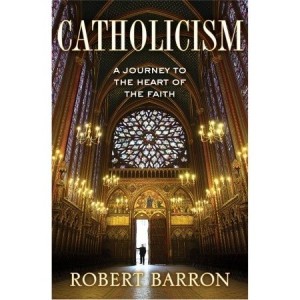
I’ve been on a bit of a Catholic reading and listening kick lately. I think of it as my way of engaging in ecumenical dialogue. One of these books has been Bishop Robert Barron’s Catholicism: A Journey to the Heart of the Faith (Image: 2011). The book is intended to be both an introduction to Roman Catholic Christianity (though so far it has served as a good intro to little “c” catholic Christianity) and a companion to Bishop Barron’s Catholicism TV series. Part of this introduction includes understanding what we mean when we talk about God. While I am much more amenable to Aquinas’s understanding of God as the Subsistent Act of Being (as is Barron himself), Bishop Barron provides a very nuanced way of understanding Anselm’s ontological conception of God. In fact, Anselm’s definition is probably more logically coherent than many modern attempts to reformulate it:
Saint Anselm of Canterbury, one of the greatest of the early medieval theologians, described God as “that than which nothing greater can be thought.” At first blush this seems straightforward enough: God is the highest conceivable thing. But the longer one meditates on Anselm’s description, the stranger it becomes. If God were simply the supreme being—the biggest reality among many—then God plus the world would be greater than God alone. But in that case he would not be that than which nothing greater can be thought. Zeus, for example, was, in ancient mythology, the supreme deity, but clearly Zeus plus the other gods, or Zeus plus the world of nature, would be greater than Zeus alone. Thus the God whom Anselm is describing is not like this at all. Though it is a very high paradox, the God whom Anselm describes added to the world as we know it is not greater than God alone.
This means that the true God exceeds all of our concepts, all of our language, all of our loftiest ideas. God (YHWH) is essentially mysterious, a term, by the way, derived from the Greek muein (to shut one’s mouth). How often the prophets and mystics of the Old Testament rail against idolatry, which is nothing other than reducing the true God to some creaturely object that we can know and hence try to control. The twentieth-century theologian Karl Rahner commented that “God” is the last sound we should make before falling silent, and Saint Augustine, long ago, said, “si comprehendis, non est Deus” (if you understand, that isn’t God). All of this formal theologizing is but commentary on that elusive and confounding voice from the burning bush: “I am who am.” (Kindle Locations 888-900).
Next Post

May 11, 2017 Aquinas on Faith and Reason
Browse Our Archives
Select a Category Uncategorized
Select a Month July 2019 April 2019 January 2019 December 2018 November 2018 October 2018 September 2018 August 2018 July 2018 June 2018 May 2018 April 2018 March 2018 February 2018 January 2018 December 2017 November 2017 October 2017 September 2017 August 2017 July 2017 June 2017 May 2017 April 2017 March 2017 February 2017 January 2017 December 2016
Follow Us!
TAKE THE
Religious Wisdom Quiz
What Christian holiday celebrates the descent of the Holy Spirit?
Select your answer to see how you score.
Easter Christmas Good Friday Pentecost
Related posts from The Christian Revolution


A Post After Some Time Away....And a Big...

The Christian Response to Nation-States

TRENDING AT PATHEOS Evangelical

The REST of Your Life: A Creative Wrestles...
This week I had a conversation with a good friend from church....

How the author of the world's best hymn...
I've been working with John Newton for a while now. This makes...

Long before this Lectio Divina, Psalm 130 - the song - started...

What About the Trees? Another Living Parable
After I finished writing the last article about falling leaves as a...

Why Classical Education Is a Conversation, Not a...
Come and Read: Joy in Classical Education When I was a little...

Cornell University has received a great deal of negative publicity and intense...
view all Evangelical blogs
Ad-Free & Subscriber Log-In Subscription Support
- About Us
- 2026 Calendar
- Videos
- Podcasts
- Library of World Religions
- Faith In Media Tracker
- Advertise With Us
- Write for Us
- Privacy Policy
- Terms of Service
- Do Not Sell My Data
- Contact Us
- Radiant Digital
- Manage Newsletter Subscriptions
- Unsubscribe From Notifications
- Sitemap
Copyright 2008-2026, Patheos. All rights reserved.
Subscription Support Ad-Free & Subscriber Log-In
Follow Patheos