
BuddhistCatholicContemplativeEvangelicalGeneral ChristianHinduJewishLatter-day SaintMuslimNew VisionsProgressive Christian
Beliefs
- Buddhist
- Catholic
- Contemplative
- Evangelical
- General Christian
- Hindu
- Jewish
- Latter-day Saint
- More Voices
- Muslim
- New Visions
- Pagan
- Progressive Christian
Topics
- Religion News
- Food and Religion
- Sports and Religion
- Religious Art
- Religious Music and Entertainment
- Religious Events
- History and Religion
- Style and Religion
- Politics and Religion
- Women in Religion
- Recreation Outdoors and Religion
- Business Finance and Religion
- Careers Workplace and Religion
- Education and Religion
- Family Parenting and Religion
- Health Fitness and Religion
- Home and Religion
- Relationships and Religion
- Technology and Religion
- Travel and Religion
Columnists
- Buddhist Columnists
- Business Finance and Religion Columnists
- Careers Workplace and Religion Columnists
- Catholic Columnists
- Contemplative Columnists
- Education and Religion Columnists
- Evangelists Columnists
- Family Parenting and Religion Columnists
- General Christian Columnists
- Health Fitness and Religion Columnists
- Hindu Columnists
- History and Religion Columnists
- Home and Religion Columnists
- Jewish Columnists
- More Voices Columnists
- Latter Day Columnists
- Muslim Columnists
- New Visions Columnists
- Nonreligious Columnists
- Pagan Columnists
- Politics and Religion Columnists
- Progressive Columnists
- Recreation Outdoors and Religion Columnists
- Relationships and Religion Columnists
- Religion News Columnists
- Religious Art Columnists
- Religious Events Columnists
- Religious Music and Entertainment Columnists
- Sports and Religion Columnists
- Style and Religion Columnists
- Technology and Religion Columnists
- Travel and Religion Columnists
- Women in Religion Columnists
Resource Library
- 2026 Calendar
- Library of World Religions
- The 100 Most Holy Places on Earth
- Patheos Answers
- Podcasts
- Videos
- Faith Leaders Database
- Anglican Episcopalian
- Bahai
- Baptist
- Buddhism
- Christianity
- Confucianism
- Eastern Orthodoxy
- Hinduism
- Holiness and Pentecostal
- ISKCON
- Islam
- Judaism
- Lutheran
- Methodist
- The Church of Jesus Christ of Latter-day Saints
- New Age
- Paganism
- Presbytarian and Reformed
- Protestantism
- Religion Behind the Scenes
- Roman Catholic
- Scientology
- Shia Islam
- Sikhism
- Sufism
- Sunni Islam
- Taoism
- Zen
- See all religions
Research Tools
 Ad-Free & Subscriber Log-In Subscription Support
Ad-Free & Subscriber Log-In Subscription Support
Follow Patheos 

- Trending:
- Forgiveness
- |
- Marriage
- |
- Consciousness
- |
- Death Penalty
- |
- Election
- |
- Halloween
 The Christian Revolution
- Home
- Evangelical
- Bishop Robert Barron on Catholics, Protestants, and Why Nominalism is No Good
Bishop Robert Barron on Catholics, Protestants, and Why Nominalism is No Good
Last updated on: May 4, 2017 at 3:18 pm by Taylor S. Brown
Bishop Robert Barron on Catholics, Protestants, and Why Nominalism is No Good 2017-05-04T15:18:41-06:00 Taylor S. Brown
Patheos Explore the world's faith through different perspectives on religion and spirituality! Patheos has the views of the prevalent religions and spiritualities of the world.
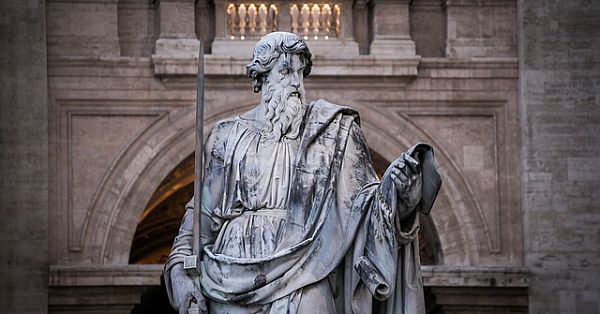
I am a Protestant. Granted, I am a Wesleyan with strong Anglican leanings, especially in my view of the sacraments and theology. But I am, nevertheless, still a child of the Reformation; the English Reformation anyway. That being said, I have really come to enjoy reading and listening to Roman Catholic theologians and biblical scholars. Both Raymond Brown and Joseph Fitzmyer are two of my heroes in the realm of New Testament studies (among their many other excellent writings, Brown’s commentary on the Epistles of John and Fitzmyer’s commentary on Romans are two some of the best commentaries one can get on those respective books).
I also really enjoy reading and listening to Bishop Robert Barron. Barron has the rare ability to think deeply and theologically, and then condense his thought for quality popular-level consumption. His Word on Fire videos and other media has consistently been some of the best and most well-researched Christian video content I’ve seen in recent years.
Barron’s most recent video is particularly interesting to me as a Protestant, as he discusses the Reformation and some of its implications on the eve of its 500-year anniversary.
As an Anglican-ish Wesleyan, whose roots are in the English Reformation rather than the Lutheran or Calvinist wings of the Reformation, I actually found myself agreeing with the majority of Barron’s video. In particular, I think he is dead-on in his assessment of the nominalism that Luther inherited from figures like William of Ockham. Nominalism fundamentally misconceived God as one being (albeit a super being) among other beings, rather than the more classical school of thought (represented by thinkers like Irenaeus of Lyons and Thomas Aquinas, and I would argue, St. Paul) that rightly thinks of God as the Source and Ground of Being Himself. Rather than being in ontological competition with God (a la nominalism), our very agency and life as creatures (and as Christians) is graciously gifted to us by participating in being, created and upheld by God Himself as (in the words of Aquinas) *ipsum esse subsistens, “*the Subsistent Act of To Be.”
As John M. G. Barclay, an Anglican New Testament scholar notes in his magisterial book, Paul and the Gift (Grand Rapids: Eerdmans, 2015):
The fact that the believer’s life is best described as ‘Christ living in me’ (Gal. 2:20; 4:19) complicates notions of agency in Pauline thought. The presence of Christ within as ‘the Spirit’ means that believer-agency is by no means self-generated or independent, let alone autonomous…At the same time, Paul has no hesitation in speaking of believers as agents…The alternation of agencies in 2:20 (‘It is no longer I who live, but Christ who lives in me; and the life I now live . . .”) should have alerted us to the fact that agency is no simple matter for Paul: neither monergism nor the synergism of independent actors will do justice to his varying expressions…There is no doubt that ‘life in Christ’ is sourced and constituted in the Christ-event, but the believer is thereby created, not diminished, as an actor. Paul’s language requires us to banish ‘zero-sum’ calculations of agency (the more God, the less human), it seems better to speak of a pattern of ‘energism’ in Pauline agency. His paraenesis points simultaneously to divine- and believer-agency, as the expression and realization of the good news. (pp. 441-42, emphasis added)
Thus, the debate between monergism (Calvinists) and synergism (Arminians) is one that can only really exist on the flawed principles of nominalism. As for me, I am a Protestant who, along with Bishop Barron, thinks that nominalism is no good.
Previous Post
April 29, 2017
Book Review: Salvation by Allegiance Alone
Next Post

May 8, 2017 The God Who Exceeds All Our Concepts
Browse Our Archives
Select a Category Uncategorized
Select a Month July 2019 April 2019 January 2019 December 2018 November 2018 October 2018 September 2018 August 2018 July 2018 June 2018 May 2018 April 2018 March 2018 February 2018 January 2018 December 2017 November 2017 October 2017 September 2017 August 2017 July 2017 June 2017 May 2017 April 2017 March 2017 February 2017 January 2017 December 2016
Follow Us!
TAKE THE
Religious Wisdom Quiz
I am a small member of the body, yet I boast great things. I am a fire, a world of iniquity. What am I?
Select your answer to see how you score.
The heart The hand The tongue The eye
Related posts from The Christian Revolution


A Post After Some Time Away....And a Big...

The Christian Response to Nation-States

TRENDING AT PATHEOS Evangelical

The REST of Your Life: A Creative Wrestles...
This week I had a conversation with a good friend from church....

How the author of the world's best hymn...
I've been working with John Newton for a while now. This makes...

Long before this Lectio Divina, Psalm 130 - the song - started...

What About the Trees? Another Living Parable
After I finished writing the last article about falling leaves as a...

Why Classical Education Is a Conversation, Not a...
Come and Read: Joy in Classical Education When I was a little...

Cornell University has received a great deal of negative publicity and intense...
view all Evangelical blogs
Ad-Free & Subscriber Log-In Subscription Support
- About Us
- 2026 Calendar
- Videos
- Podcasts
- Library of World Religions
- Faith In Media Tracker
- Advertise With Us
- Write for Us
- Privacy Policy
- Terms of Service
- Do Not Sell My Data
- Contact Us
- Radiant Digital
- Manage Newsletter Subscriptions
- Unsubscribe From Notifications
- Sitemap
Copyright 2008-2026, Patheos. All rights reserved.
Subscription Support Ad-Free & Subscriber Log-In
Follow Patheos