
BuddhistCatholicContemplativeEvangelicalGeneral ChristianHinduJewishLatter-day SaintMuslimNew VisionsProgressive Christian
Beliefs
- Buddhist
- Catholic
- Contemplative
- Evangelical
- General Christian
- Hindu
- Jewish
- Latter-day Saint
- More Voices
- Muslim
- New Visions
- Pagan
- Progressive Christian
Topics
- Religion News
- Food and Religion
- Sports and Religion
- Religious Art
- Religious Music and Entertainment
- Religious Events
- History and Religion
- Style and Religion
- Politics and Religion
- Women in Religion
- Recreation Outdoors and Religion
- Business Finance and Religion
- Careers Workplace and Religion
- Education and Religion
- Family Parenting and Religion
- Health Fitness and Religion
- Home and Religion
- Relationships and Religion
- Technology and Religion
- Travel and Religion
Columnists
- Buddhist Columnists
- Business Finance and Religion Columnists
- Careers Workplace and Religion Columnists
- Catholic Columnists
- Contemplative Columnists
- Education and Religion Columnists
- Evangelists Columnists
- Family Parenting and Religion Columnists
- General Christian Columnists
- Health Fitness and Religion Columnists
- Hindu Columnists
- History and Religion Columnists
- Home and Religion Columnists
- Jewish Columnists
- More Voices Columnists
- Latter Day Columnists
- Muslim Columnists
- New Visions Columnists
- Nonreligious Columnists
- Pagan Columnists
- Politics and Religion Columnists
- Progressive Columnists
- Recreation Outdoors and Religion Columnists
- Relationships and Religion Columnists
- Religion News Columnists
- Religious Art Columnists
- Religious Events Columnists
- Religious Music and Entertainment Columnists
- Sports and Religion Columnists
- Style and Religion Columnists
- Technology and Religion Columnists
- Travel and Religion Columnists
- Women in Religion Columnists
Resource Library
- 2026 Calendar
- Library of World Religions
- The 100 Most Holy Places on Earth
- Patheos Answers
- Podcasts
- Videos
- Faith Leaders Database
- Anglican Episcopalian
- Bahai
- Baptist
- Buddhism
- Christianity
- Confucianism
- Eastern Orthodoxy
- Hinduism
- Holiness and Pentecostal
- ISKCON
- Islam
- Judaism
- Lutheran
- Methodist
- The Church of Jesus Christ of Latter-day Saints
- New Age
- Paganism
- Presbytarian and Reformed
- Protestantism
- Religion Behind the Scenes
- Roman Catholic
- Scientology
- Shia Islam
- Sikhism
- Sufism
- Sunni Islam
- Taoism
- Zen
- See all religions
Research Tools
 Ad-Free & Subscriber Log-In Subscription Support
Ad-Free & Subscriber Log-In Subscription Support
Follow Patheos 

- Trending:
- Forgiveness
- |
- Marriage
- |
- Consciousness
- |
- Death Penalty
- |
- Election
- |
- Halloween
 The Christian Revolution
- Home
- Evangelical
- Thinking Clearly About the Christian Faith
Thinking Clearly About the Christian Faith
Last updated on: March 20, 2017 at 2:50 pm by Taylor S. Brown
Thinking Clearly About the Christian Faith 2017-03-20T14:50:29-06:00 Taylor S. Brown
Patheos Explore the world's faith through different perspectives on religion and spirituality! Patheos has the views of the prevalent religions and spiritualities of the world.

I am recording an email conversation that a fellow seminary student and I had a few days ago. As you will read below, “John” (I’ve changed his name for privacy purposes) and I discussed why deep study of systematic and dogmatic theology seems to be lacking in Wesleyan circles. Of course, my response here is influenced by my own context within conservative, predominantly Methodist, Wesleyan circles. People in other contexts will of course have slightly different—though not utterly contradictory—experiences.
John’s Initial Question:
Taylor,
I’ve been taking Theology of John Wesley this semester and in one class the matter of systematic theology or lack thereof was raised. It was observed that the Wesleyan tradition is profoundly lacking in the area of systematic theology, while strong in biblical theology. I have heard that this is an area which you are passionate about. My curiosity is what is the role/purpose of systematic theology, and how should those from a Wesleyan tradition come to engage systematic theology?
If you have the time to respond I would appreciate it. If it would be easier to explain in person over lunch or something I am open to that as well. Thank you and have a great day!
-John
My Response:
Hey John!
Yes, Wesleyan’s are known for being quite lacking in the field of systematic theology and quite strong in biblical exegesis and theology. I say this with an important qualifier however. It is largely the American Wesleyan tradition that historically lacks in the area of systematic and dogmatic theology. Historically, British Methodism, particularly in 19th century, produced very strong and robust systematic theologians such as William Burt Pope (3-volume A Compendium of Christian Theology) and Richard Watson (Theological Institutes). There were also some American Methodist theologians of note as well: John Miley wrote a noted 2 volume systematics titled simply Systematic Theology, and Thomas O. Summers produced the 2-volume Systematic Theology:A Complete Body of Wesleyan Arminian Divinity.
Nazarenes have done some noteworthy systematic and dogmatic work. H. Orton Wiley’s 3-volume Christian Theology was written in the mid twentieth century and, along with Oden’s systematics, is still one of the best broadly Wesleyan systematic theologies.
I write all of this to contest the oft-pronounced claim that Wesleyans simply don’t do systematic theological work because (1) it’s just not part of the tradition (the works above show that historically was) or (2) John Wesley never wrote any systematic theology. This is a bit of a red-herring for the simple fact that, as an Anglican, Wesley stood on a gigantic tradition of systematic and dogmatic theological thinking and felt no need to write what he would have viewed as an Anglican dogmatics. Thus, to infer that simply because Wesley didn’t write a systematic theology we don’t have to either is simply a non sequitur. Luther didn’t write a systematic theology either, and that hardly stopped Lutherans.
Systematic/Dogmatic theology is necessary precisely because it helps us to think and speak clearly about the Christian faith. By working out an orderly exposition of the Christian faith—starting with theology proper (the doctrine of God) and moving on logically to the categories which it grounds—we allow not simply our theologians, but also our pastors to think clearly about how the Christian faith encompasses a holistic picture of reality. It is fundamentally an integrative exercise that fosters the cohesive and constructive framing of a worldview for the church. Of course no systematic theological system will ever be completely perfect or comprehensive, for the simple reasons that humans are fallible and finite, and so we will never be able to totally comprehend the Infinite. That does not mean we are excused from working toward ordering our theological thought though. God, as the personal Ground of Being, is fundamentally rational and disorder is fundamentally not of God. God is the one who brings order out of chaos in Genesis 1 and the Church models its whole life after the supreme, Triune Orderer (1 Cor. 14:26-40).
As to how Wesleyans should engage systematic theology, one of the best ways is to simply start reading it. Of course this doesn’t mean you have to start with Karl Barth’s Church Dogmatics. There are some great, accessible one-volume systematics out there that are very amenable to Wesleyan thought. One of best ones that I’d recommend is Stanley Grenz’s Theology for the Community of God. Grenz was an Arminian Baptist who studied under Wolfhart Pannenberg, and so most of what he writes is write on track with Wesleyan sensibilities. You can also start with primers to systematic theology, such as Grenz’s and Roger Olson’s Who Needs Theology? An Invitation to the Study of God. Another good place to start is with books on the systematic-theological doctrine of God. Fred Sanders’ little book, The Deep Things of God: How the Trinity Changes Everything, is great (and he is an Asbury grad!).
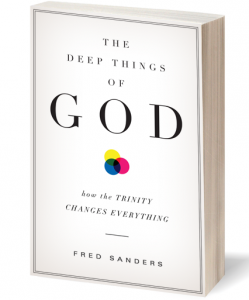
Now I will say that one advantage that Wesleyans have when coming to the study of systematic theology is their biblical theological grounding. We are trained to always start with the witness of Scripture and constantly check our theological formulations and categories against it. This helps to prevent the holding of idolatries of systematic categories (such as the hard core Calvinist holding of limited atonement or double-predestination) against overwhelming biblical and theological evidence to the contrary.
I hope that all helps! If you want to talk more in the future, let me know!
Grace and Peace,
Taylor
John:
Taylor,
Thank you so much for taking the time to offer a thorough and thoughtful response. What you have said makes a lot of sense. I will now see if I can’t get my hands on some of the titles you’ve mentioned. I will let you know if I have any questions in the future. Again, thank you.
Blessings,
John
Me:
You’re very welcome John!
Previous Post

March 16, 2017
America's Secular Paganism
Next Post

March 25, 2017 "Hear, O Israel!"
Browse Our Archives
Select a Category Uncategorized
Select a Month July 2019 April 2019 January 2019 December 2018 November 2018 October 2018 September 2018 August 2018 July 2018 June 2018 May 2018 April 2018 March 2018 February 2018 January 2018 December 2017 November 2017 October 2017 September 2017 August 2017 July 2017 June 2017 May 2017 April 2017 March 2017 February 2017 January 2017 December 2016
Follow Us!
TAKE THE
Religious Wisdom Quiz
What does the Bible say about pride?
Select your answer to see how you score.
It goes before a fall It's ignored It's always good Pride is the best
Related posts from The Christian Revolution


A Post After Some Time Away....And a Big...

The Christian Response to Nation-States

TRENDING AT PATHEOS Evangelical

The REST of Your Life: A Creative Wrestles...
This week I had a conversation with a good friend from church....

How the author of the world's best hymn...
I've been working with John Newton for a while now. This makes...

Long before this Lectio Divina, Psalm 130 - the song - started...

What About the Trees? Another Living Parable
After I finished writing the last article about falling leaves as a...

Why Classical Education Is a Conversation, Not a...
Come and Read: Joy in Classical Education When I was a little...

Cornell University has received a great deal of negative publicity and intense...
view all Evangelical blogs
Ad-Free & Subscriber Log-In Subscription Support
- About Us
- 2026 Calendar
- Videos
- Podcasts
- Library of World Religions
- Faith In Media Tracker
- Advertise With Us
- Write for Us
- Privacy Policy
- Terms of Service
- Do Not Sell My Data
- Contact Us
- Radiant Digital
- Manage Newsletter Subscriptions
- Unsubscribe From Notifications
- Sitemap
Copyright 2008-2026, Patheos. All rights reserved.
Subscription Support Ad-Free & Subscriber Log-In
Follow Patheos