
BuddhistCatholicContemplativeEvangelicalGeneral ChristianHinduJewishLatter-day SaintMuslimNew VisionsProgressive Christian
Beliefs
- Buddhist
- Catholic
- Contemplative
- Evangelical
- General Christian
- Hindu
- Jewish
- Latter-day Saint
- More Voices
- Muslim
- New Visions
- Pagan
- Progressive Christian
Topics
- Religion News
- Food and Religion
- Sports and Religion
- Religious Art
- Religious Music and Entertainment
- Religious Events
- History and Religion
- Style and Religion
- Politics and Religion
- Women in Religion
- Recreation Outdoors and Religion
- Business Finance and Religion
- Careers Workplace and Religion
- Education and Religion
- Family Parenting and Religion
- Health Fitness and Religion
- Home and Religion
- Relationships and Religion
- Technology and Religion
- Travel and Religion
Columnists
- Buddhist Columnists
- Business Finance and Religion Columnists
- Careers Workplace and Religion Columnists
- Catholic Columnists
- Contemplative Columnists
- Education and Religion Columnists
- Evangelists Columnists
- Family Parenting and Religion Columnists
- General Christian Columnists
- Health Fitness and Religion Columnists
- Hindu Columnists
- History and Religion Columnists
- Home and Religion Columnists
- Jewish Columnists
- More Voices Columnists
- Latter Day Columnists
- Muslim Columnists
- New Visions Columnists
- Nonreligious Columnists
- Pagan Columnists
- Politics and Religion Columnists
- Progressive Columnists
- Recreation Outdoors and Religion Columnists
- Relationships and Religion Columnists
- Religion News Columnists
- Religious Art Columnists
- Religious Events Columnists
- Religious Music and Entertainment Columnists
- Sports and Religion Columnists
- Style and Religion Columnists
- Technology and Religion Columnists
- Travel and Religion Columnists
- Women in Religion Columnists
Resource Library
- 2026 Calendar
- Library of World Religions
- The 100 Most Holy Places on Earth
- Patheos Answers
- Podcasts
- Videos
- Faith Leaders Database
- Anglican Episcopalian
- Bahai
- Baptist
- Buddhism
- Christianity
- Confucianism
- Eastern Orthodoxy
- Hinduism
- Holiness and Pentecostal
- ISKCON
- Islam
- Judaism
- Lutheran
- Methodist
- The Church of Jesus Christ of Latter-day Saints
- New Age
- Paganism
- Presbytarian and Reformed
- Protestantism
- Religion Behind the Scenes
- Roman Catholic
- Scientology
- Shia Islam
- Sikhism
- Sufism
- Sunni Islam
- Taoism
- Zen
- See all religions
Research Tools
 Ad-Free & Subscriber Log-In Subscription Support
Ad-Free & Subscriber Log-In Subscription Support
Follow Patheos 

- Trending:
- Forgiveness
- |
- Marriage
- |
- Consciousness
- |
- Death Penalty
- |
- Election
- |
- Halloween
 The Christian Revolution
- Home
- Evangelical
- Fleming Rutledge on Apocalyptic Participation
Fleming Rutledge on Apocalyptic Participation
Last updated on: February 2, 2017 at 9:42 am by Taylor S. Brown
Fleming Rutledge on Apocalyptic Participation 2017-02-02T09:42:29-06:00 Taylor S. Brown
Patheos Explore the world's faith through different perspectives on religion and spirituality! Patheos has the views of the prevalent religions and spiritualities of the world.
I’m continuing to (slowly) work my way through Fleming Rutledge’s excellent book, The Crucifixion: Understanding the Death of Jesus Christ. It really is living up to all of the accolades that it has received. It’s dense, but extremely well argued and very rewarding. Eerdmans even put out an interview with her in anticipation of the release of the paperback edition of the book.
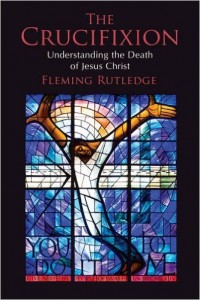
Rutledge is very consciously thinking and writing from the perspective of an apocalyptic theological perspective, particularly in relation to the writings of the Apostle Paul. For those who are unaware, the school of thought known as “Apocalyptic” is a tradition of theological thought that places primary emphasis on the in-breaking action of the God who is fundamentally Other than all of creation, especially from human culture, power structures, and “religion” (which is used to mean those human attempts to try and reach the divine).
So if you think “Apocalyptic” has primarily to do with a genre of movies dealing with the collapse of civilization, sorry but you’ve been misinformed.
As with many theological schools of thought, Apocalyptic is far from monolithic. The best parts of the tradition emphasize the fundamental, ontological difference between God and humanity, and the fact that deliverance from evil and death is fully an act from God, not from us. The worst parts of the tradition can so emphasize the discontinuity between God’s action in the Christ event that they tend to relativize continuity between God’s prior action in the salvation-history of Israel.
Thankfully, Fleming Rutledge embodies the best of the Apocalyptic tradition. She rightly emphasizes the Otherness and discontinuity of God’s action in Christ without completely disconnecting it from God’s prior action in the history of Israel. She strikes a good balance of continuity and discontinuity when it comes to describing God’s action in Israel and Christ.
In this vein, Rutledge provides one of the best working definitions of what “apocalyptic” means, and why it is important for us as Christians to remember:
The key apocalyptic idea…is the sovereign intervention of God, with a corresponding displacement of the capacity human beings to bring that intervention about. It must be said in the strongest possible terms: in no way does this emphasis on the divine agency mean that there is nothing for us to do, or that our activity is meaningless. What it means, rather, is that human activity points to the future reign of God and participates in it proleptically (prolepsis, “to anticipate”). It does not, however, make it come to fruition; only God can complete his purpose. At no time doe the Bible suggest that we are, in the currently popular phrase, “co-creators with God”; rather we are graciously called and moved to be participants in what God alone is able to create. The word “eschatology” does not necessarily make this distinction clear; it is possible to refer to the “last things” and thus speak eschatologically, without being careful to show that God alone will cause those last things to come to pass—the emphasis that is the hallmark of apocalyptic. The role of the people of God is participation in what God is already doing (p. 222).
Previous Post

January 31, 2017
The Political Idolatry of Eric Metaxas
Next Post

February 7, 2017 Final Semesters and Apocalypses
Browse Our Archives
Select a Category Uncategorized
Select a Month July 2019 April 2019 January 2019 December 2018 November 2018 October 2018 September 2018 August 2018 July 2018 June 2018 May 2018 April 2018 March 2018 February 2018 January 2018 December 2017 November 2017 October 2017 September 2017 August 2017 July 2017 June 2017 May 2017 April 2017 March 2017 February 2017 January 2017 December 2016
Follow Us!
TAKE THE
Religious Wisdom Quiz
What does "Pentateuch" mean in Greek?
Select your answer to see how you score.
First law Five scrolls Book of peace Stories of heroes
Related posts from The Christian Revolution


A Post After Some Time Away....And a Big...

The Christian Response to Nation-States

TRENDING AT PATHEOS Evangelical

The REST of Your Life: A Creative Wrestles...
This week I had a conversation with a good friend from church....

How the author of the world's best hymn...
I've been working with John Newton for a while now. This makes...

Long before this Lectio Divina, Psalm 130 - the song - started...

What About the Trees? Another Living Parable
After I finished writing the last article about falling leaves as a...

Why Classical Education Is a Conversation, Not a...
Come and Read: Joy in Classical Education When I was a little...

Cornell University has received a great deal of negative publicity and intense...
view all Evangelical blogs
Ad-Free & Subscriber Log-In Subscription Support
- About Us
- 2026 Calendar
- Videos
- Podcasts
- Library of World Religions
- Faith In Media Tracker
- Advertise With Us
- Write for Us
- Privacy Policy
- Terms of Service
- Do Not Sell My Data
- Contact Us
- Radiant Digital
- Manage Newsletter Subscriptions
- Unsubscribe From Notifications
- Sitemap
Copyright 2008-2026, Patheos. All rights reserved.
Subscription Support Ad-Free & Subscriber Log-In
Follow Patheos