
BuddhistCatholicContemplativeEvangelicalGeneral ChristianHinduJewishLatter-day SaintMuslimNew VisionsProgressive Christian
Beliefs
- Buddhist
- Catholic
- Contemplative
- Evangelical
- General Christian
- Hindu
- Jewish
- Latter-day Saint
- More Voices
- Muslim
- New Visions
- Pagan
- Progressive Christian
Topics
- Religion News
- Food and Religion
- Sports and Religion
- Religious Art
- Religious Music and Entertainment
- Religious Events
- History and Religion
- Style and Religion
- Politics and Religion
- Women in Religion
- Recreation Outdoors and Religion
- Business Finance and Religion
- Careers Workplace and Religion
- Education and Religion
- Family Parenting and Religion
- Health Fitness and Religion
- Home and Religion
- Relationships and Religion
- Technology and Religion
- Travel and Religion
Columnists
- Buddhist Columnists
- Business Finance and Religion Columnists
- Careers Workplace and Religion Columnists
- Catholic Columnists
- Contemplative Columnists
- Education and Religion Columnists
- Evangelists Columnists
- Family Parenting and Religion Columnists
- General Christian Columnists
- Health Fitness and Religion Columnists
- Hindu Columnists
- History and Religion Columnists
- Home and Religion Columnists
- Jewish Columnists
- More Voices Columnists
- Latter Day Columnists
- Muslim Columnists
- New Visions Columnists
- Nonreligious Columnists
- Pagan Columnists
- Politics and Religion Columnists
- Progressive Columnists
- Recreation Outdoors and Religion Columnists
- Relationships and Religion Columnists
- Religion News Columnists
- Religious Art Columnists
- Religious Events Columnists
- Religious Music and Entertainment Columnists
- Sports and Religion Columnists
- Style and Religion Columnists
- Technology and Religion Columnists
- Travel and Religion Columnists
- Women in Religion Columnists
Resource Library
- 2026 Calendar
- Library of World Religions
- The 100 Most Holy Places on Earth
- Patheos Answers
- Podcasts
- Videos
- Faith Leaders Database
- Anglican Episcopalian
- Bahai
- Baptist
- Buddhism
- Christianity
- Confucianism
- Eastern Orthodoxy
- Hinduism
- Holiness and Pentecostal
- ISKCON
- Islam
- Judaism
- Lutheran
- Methodist
- The Church of Jesus Christ of Latter-day Saints
- New Age
- Paganism
- Presbytarian and Reformed
- Protestantism
- Religion Behind the Scenes
- Roman Catholic
- Scientology
- Shia Islam
- Sikhism
- Sufism
- Sunni Islam
- Taoism
- Zen
- See all religions
Research Tools
 Ad-Free & Subscriber Log-In Subscription Support
Ad-Free & Subscriber Log-In Subscription Support
Follow Patheos 

- Trending:
- Forgiveness
- |
- Marriage
- |
- Consciousness
- |
- Death Penalty
- |
- Election
- |
- Halloween
 The Christian Revolution
- Home
- Evangelical
- Silence, Suffering, and Redemption
Silence, Suffering, and Redemption
Last updated on: January 2, 2017 at 9:15 pm by Taylor S. Brown
Silence, Suffering, and Redemption 2017-01-02T21:15:41-06:00 Taylor S. Brown
Patheos Explore the world's faith through different perspectives on religion and spirituality! Patheos has the views of the prevalent religions and spiritualities of the world.
I just finished reading Shūsaku Endō’s powerful novel, Silence. After hearing about the book from Makoto Fujimura in an interview about his own book interacting with Endō’s work, Silence and Beauty: Hidden Faith Born of Suffering, and seeing that Martin Scorcese was making a film adaptation (which I can’t wait to see when gets a nationwide release on Jan. 13th), I figured I should read the book for myself. All the acclaim surrounding Endō’s novel is true.
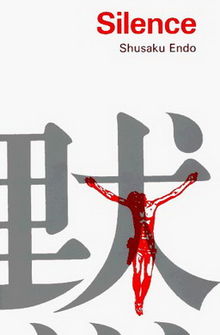
Endō was a Japanese Catholic, and he wrote and reflected deeply on his own minority status. Not only was Endō a Japanese Christian (already statistical minority), we was a Japanese Roman Catholic Christian, an even smaller minority of people who had to deal with their own country’s dark history of oppression of their faith under the 17th century Tokugawa shogunate.
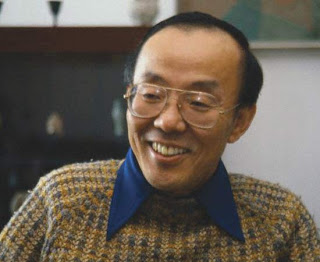
Shūsaku Endō
It was out of this lifelong process of reflecting on his Catholic and Japanese identities that Endō produced Silence. The story of the novel follows two fictional Portuguese Jesuits, Fr. Sebastião Rodrigues (based on the historical, but little known, Jesuit, Giuseppe Chiara) and Fr. Francisco Garrpe, as they go to Japan both to investigate reports of their fallen mentor, Fr. Cristóvão Ferreira, and to preach the gospel.
From there the two priests engage in a harrowing and ultimately fruitless flight from the Japanese authorities under the command of an old, anti-Catholic samurai, Ionue (presumably based on the real figure of the shogun, Tokugawa Ieyasu). Without giving away too much of the book (or the forthcoming movie), Rodrigues ends up being put in the position of having to choose whether or not to trample on a fumi-e, a carved representation of either Christ or the Virgin Mar. Tokugawa officials made people trample upon these fumi-e to see whether or not they were secretly Christians. If Rodrigues chooses to trample upon the image, then he will save indigenous Japanese Christians from brutal torture and execution by Ionue, but at the expense of apostasy. If he refuses to trample upon the fumi-e then more Japanese Christians will suffer and die. Without giving away what Rodrigues chooses to do (you’ll have to read the book or watch the upcoming movie to find out), in the midst of his decision, Christ appears to Rodrigues in a vision, assuring him in the midst of his anguish (whether it is truly Christ or only in Rodrigues’s head, Endō seems to intentionally leave ambiguous):
“It was to be trampled on by men that I was born into this world. It was to share men’s pain that I carried my cross.”
Endō’s novel is a spectacular and very convicting to read. It speaks of deep suffering and the (seeming) silence of God in such suffering. Yet ultimately, the book is about a form of redemption born on the far end of such pain. Endō leaves the reader with very few clear-cut answers. Rather, he wants us to wrestle through the pain of what it means to truly suffer for one’s faith, especially on behalf of others. Silence is a book that I think all serious Christians should read and wrestle through. Here’s hoping that Scorcese’s film adaptation does it justice.
Previous Post

December 29, 2016
The Religious Illiteracy of American Politics
Next Post
January 9, 2017 Vanhoozer on Grace Alone and Faith Alone
Browse Our Archives
Select a Category Uncategorized
Select a Month July 2019 April 2019 January 2019 December 2018 November 2018 October 2018 September 2018 August 2018 July 2018 June 2018 May 2018 April 2018 March 2018 February 2018 January 2018 December 2017 November 2017 October 2017 September 2017 August 2017 July 2017 June 2017 May 2017 April 2017 March 2017 February 2017 January 2017 December 2016
Follow Us!
TAKE THE
Religious Wisdom Quiz
What is the main theme of Galatians?
Select your answer to see how you score.
Love above faith Justification by faith Spiritual gifts Church discipline
Related posts from The Christian Revolution


A Post After Some Time Away....And a Big...

The Christian Response to Nation-States

TRENDING AT PATHEOS Evangelical

The REST of Your Life: A Creative Wrestles...
This week I had a conversation with a good friend from church....

How the author of the world's best hymn...
I've been working with John Newton for a while now. This makes...

Long before this Lectio Divina, Psalm 130 - the song - started...

What About the Trees? Another Living Parable
After I finished writing the last article about falling leaves as a...

Why Classical Education Is a Conversation, Not a...
Come and Read: Joy in Classical Education When I was a little...

Cornell University has received a great deal of negative publicity and intense...
view all Evangelical blogs
Ad-Free & Subscriber Log-In Subscription Support
- About Us
- 2026 Calendar
- Videos
- Podcasts
- Library of World Religions
- Faith In Media Tracker
- Advertise With Us
- Write for Us
- Privacy Policy
- Terms of Service
- Do Not Sell My Data
- Contact Us
- Radiant Digital
- Manage Newsletter Subscriptions
- Unsubscribe From Notifications
- Sitemap
Copyright 2008-2026, Patheos. All rights reserved.
Subscription Support Ad-Free & Subscriber Log-In
Follow Patheos