
BuddhistCatholicContemplativeEvangelicalGeneral ChristianHinduJewishLatter-day SaintMuslimNew VisionsProgressive Christian
Beliefs
- Buddhist
- Catholic
- Contemplative
- Evangelical
- General Christian
- Hindu
- Jewish
- Latter-day Saint
- More Voices
- Muslim
- New Visions
- Pagan
- Progressive Christian
Topics
- Religion News
- Food and Religion
- Sports and Religion
- Religious Art
- Religious Music and Entertainment
- Religious Events
- History and Religion
- Style and Religion
- Politics and Religion
- Women in Religion
- Recreation Outdoors and Religion
- Business Finance and Religion
- Careers Workplace and Religion
- Education and Religion
- Family Parenting and Religion
- Health Fitness and Religion
- Home and Religion
- Relationships and Religion
- Technology and Religion
- Travel and Religion
Columnists
- Buddhist Columnists
- Business Finance and Religion Columnists
- Careers Workplace and Religion Columnists
- Catholic Columnists
- Contemplative Columnists
- Education and Religion Columnists
- Evangelists Columnists
- Family Parenting and Religion Columnists
- General Christian Columnists
- Health Fitness and Religion Columnists
- Hindu Columnists
- History and Religion Columnists
- Home and Religion Columnists
- Jewish Columnists
- More Voices Columnists
- Latter Day Columnists
- Muslim Columnists
- New Visions Columnists
- Nonreligious Columnists
- Pagan Columnists
- Politics and Religion Columnists
- Progressive Columnists
- Recreation Outdoors and Religion Columnists
- Relationships and Religion Columnists
- Religion News Columnists
- Religious Art Columnists
- Religious Events Columnists
- Religious Music and Entertainment Columnists
- Sports and Religion Columnists
- Style and Religion Columnists
- Technology and Religion Columnists
- Travel and Religion Columnists
- Women in Religion Columnists
Resource Library
- 2026 Calendar
- Library of World Religions
- The 100 Most Holy Places on Earth
- Patheos Answers
- Podcasts
- Videos
- Faith Leaders Database
- Anglican Episcopalian
- Bahai
- Baptist
- Buddhism
- Christianity
- Confucianism
- Eastern Orthodoxy
- Hinduism
- Holiness and Pentecostal
- ISKCON
- Islam
- Judaism
- Lutheran
- Methodist
- The Church of Jesus Christ of Latter-day Saints
- New Age
- Paganism
- Presbytarian and Reformed
- Protestantism
- Religion Behind the Scenes
- Roman Catholic
- Scientology
- Shia Islam
- Sikhism
- Sufism
- Sunni Islam
- Taoism
- Zen
- See all religions
Research Tools
 Ad-Free & Subscriber Log-In Subscription Support
Follow Patheos 

- Trending:
- Advent
- |
- Forgiveness
- |
- Thanksgiving
- |
- Election
- |
- Seasonal Holidays
- |
- Marriage

- Home
- General Christian
- History and Religion
- The Case Against Conversion
The Case Against Conversion
Last updated on: August 15, 2024 at 9:13 am by Katherine Kelaidis
The Case Against Conversion 2024-08-15T09:13:41-06:00 Katherine Kelaidis
Patheos Explore the world's faith through different perspectives on religion and spirituality! Patheos has the views of the prevalent religions and spiritualities of the world.
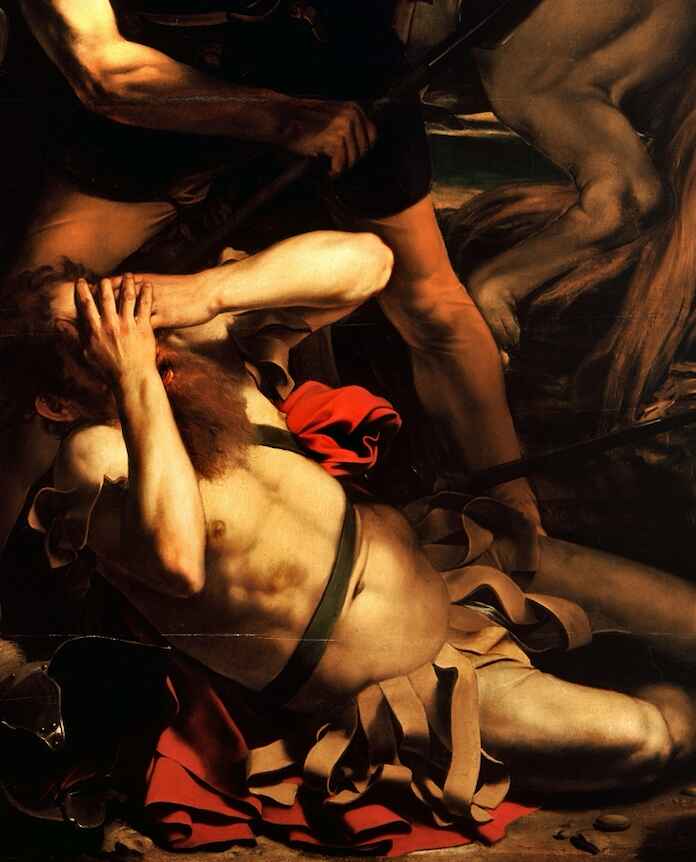
The Conversion of Saint Paul by Caravaggio (1571–1610)/ Image courtesy of Wikimedia Commons
It took me a while to write this first piece for Patheos. Nearly four months, which is crazy for someone who prides herself, for better or worse, on being a quick writer. It took me so long, because I was not sure what to write. The personal, and often confessional, nature of writing at Patheos put me off. I have managed to write about the personal a handful of times: a friend’s suicide, my eating disorder. On every occasion, it has seemed awkward and needlessly exhibitionist. Lived experience is the most highly valued claim to authority in our time. I, however, have no desire (it turns out) to deploy mine to persuasive ends.
Because I had to write something, I began to think about what I wanted to do here. While that list is still a bit undeveloped, I know the one thing I do not want to do: I did not want to convert anyone. It is my firm hope that no one reads something I have written about the Orthodox Christian faith I love and decides to “check out” his local Orthodox church.
This is because, I do not think anyone should be converting, particularly if the pool of would-be converts is from within the wider Christian world. As a note, my argument here leaves aside the question of converting non-Christians to Christianity, I think the scriptural tradition makes that case much more difficult. This is not to say that I would actively try to convert non-Christians either. I just am not interested in making the case as to why others should not.
But in the case of those who have already accepted the Christian faith, I think the case is clear: Christians should not be seeking to convert one another nor should we be seeking to convert from one Christian church to another. To do so is to both cause further division within the Body of Christ and to rob the convert (whether that convert is ourselves or someone else) of the important spiritual insight that Christianity is not a faith of the individual but of the community.
Wounding the Body of Christ
Let us begin with the obvious problem of poaching the faithful from different parts of the Christian family. Division within the Christian Church is many things. It is an accident of history and the result of human failure. It most certainly is contrary to the message of the Gospel. Every division within the church is artificial and painfully man-made. The Christian witness to the world relies upon us overcoming and healing these divisions. This is why the work of ecumenical dialogue is such important, fundamental work for the Church in the world. It is also why the recent epidemic of schisms within Christian traditions over issues of gender and sexuality is all the more tragic.
Make no mistake: Division is the worst thing that can happen in Christianity. “I pray that they will all be one, just as you and I are one—as you are in me, Father, and I am in you. And may they be in us so that the world will believe you sent me,” says Christ in the Gospel of John (17:21-24). Conversions within Christianity, in every instance, proclaim that these divisions are more real, more important, and more incumbent upon us than the unity we must find in Christ.
Christianity a Team Sport
This wounding of the Body of Christ should be enough to convince us that a hiatus on intra-Christian conversion is in order. However, it is worth noting that we harm not only the Body but the members that are harmed when we go selling and shopping within the Christian tradition. Christianity is a team sport, not an individual effort. This is despite what some contemporary purveyors of its American flavors might want you to believe.
Christianity is not about assenting to a series of intellectual propositions or discovering the argument you find most persuasive. Christianity is about relationships. While contemporary Christianity gives plenty of (worthy) attention to the relationship between the individual believer and God, it seems less interested in the relationship among those in the community of believers.
Perhaps because the former is so often much easier than the latter. We have too easily given in to an individualistic, consumerist vision of religion that imagines that we are alone on a spiritual pilgrimage. As long as we find this elusive truth nothing else matters. It does not matter if we no longer worship with our families, our friends, or our communities. There is no problem if we no longer know the prayers or liturgies of our grandparents. It is progress if we no longer keep the traditions of our ancestors. As long as we do what we want to do. All is well as long as we have been persuaded.
It is a strange, and I would argue, ultimately a barren way to look at the spiritual journey. One that prioritizes our individual intellectual and emotional comfort over the people who surround us.
Holy Envy and the Resistance to Consumerist Religion
This is not to say we cannot learn from other traditions. “Holy Envy” (a phrase first coined by Krister Stendahl when he was the Church of Sweden Bishop of Stockholm) is the ability to find in other traditions elements you admire and wish might be found in your own. It is a vital part of any honest spiritual life. It is an important way in which we grow as people and communities.
But at the moment holy envy becomes not admiration and instruction but a desire to make one’s own, it ceases to be holy. It makes the sacred just another item for sale in the Age of Consumerism. And it gives the “buyer” the false sense that he got a deal no one else has. It is hard to not think that the converted zeal is not, at least a little bit, born of arrogance.
The research backs this up, by the way. Religious radicalism, while not exclusive to converts, is disproportionately present among them, regardless of the faith tradition under examination. Conversion, it seems, does something to people, and it’s generally not good.
This is all not to say, I have not been tempted. Orthodox Christianity is the faith of my childhood, my ancestors, my family, and community, but it has not always been an easy fit. It still is not. I have a lot of holy (and, perhaps from time to time, not-so-holy) envy. Yet, I know I am better for not jumping ship. I grow because I stay put. And, if you are asking me, I think you should stay put too–wherever that is.
There is more. I will keep writing here. I think I finally have some ideas–and none of them involve converting you.
Progressive Christian
Home and Religion

About Katherine Kelaidis
Katherine Kelaidis is the Director of Research and Content at the National Hellenic Museum in Chicago and a Research Fellow at the Institute of Christian Studies, Cambridge. Her first book Holy Russia? Holy War?: Why the Russian Church is Backing Putin Against Ukraine is available now from SPCK Press. You can read more about the author here.
Previous Post

August 3, 2024
The Outrage Olympics and Putin's Russia
Next Post

February 24, 2024 The Deaconess Debate and Magic
Recent Comments
Browse Our Archives
Select a Category Uncategorized
Select a Month August 2024 July 2024 February 2024 November 2023
TAKE THE
Religious Wisdom Quiz
What was the occupation of Lydia, the first European convert in Acts?
Select your answer to see how you score.
Seller of purple cloth Tentmaker Baker Fisherwoman
Related posts from The Christian East: Explained

The Outrage Olympics and Putin's Russia

The Sex Lives of Bishops and Priests (and...
The Deaconess Debate and Magic
TRENDING AT PATHEOS General Christian

Pilgrims' Problems Produced Blessings
On Thanksgiving, Americans celebrate good things such as health, family, and a...

How Thoughts Shape Our Lives - Even Lies
She wakes up with a familiar heaviness. Nothing troubling is happening yet,...

The Thanksgiving Hymn Born in a Plague-Ravaged Town
The Impossible Story of “Now Thank We All Our God" It’s an...
Does Islam Teach the Subjugation of Christians and...
“There is no compulsion in religion.” When discussions about Islam's relationship...

The Church calendar begins Advent this year on Sunday November 29....

Apples of Gold: Words Around the Thanksgiving Table
There is a verse in Proverbs that I think every mother should...
view all General Christian blogs
Ad-Free & Subscriber Log-In Subscription Support
- About Us
- 2026 Calendar
- Videos
- Podcasts
- Library of World Religions
- Faith In Media Tracker
- Advertise With Us
- Write for Us
- Privacy Policy
- Terms of Service
- Do Not Sell My Data
- Contact Us
- Radiant Digital
- Manage Newsletter Subscriptions
- Unsubscribe From Notifications
- Sitemap
Copyright 2008-2026, Patheos, part of the Radiant Digital network of media brands. All rights reserved.
Subscription Support Ad-Free & Subscriber Log-In
Follow Patheos