
BuddhistCatholicContemplativeEvangelicalGeneral ChristianHinduJewishLatter-day SaintMuslimNew VisionsProgressive Christian
Beliefs
- Buddhist
- Catholic
- Contemplative
- Evangelical
- General Christian
- Hindu
- Jewish
- Latter-day Saint
- More Voices
- Muslim
- New Visions
- Pagan
- Progressive Christian
Topics
- Religion News
- Food and Religion
- Sports and Religion
- Religious Art
- Religious Music and Entertainment
- Religious Events
- History and Religion
- Style and Religion
- Politics and Religion
- Women in Religion
- Recreation Outdoors and Religion
- Business Finance and Religion
- Careers Workplace and Religion
- Education and Religion
- Family Parenting and Religion
- Health Fitness and Religion
- Home and Religion
- Relationships and Religion
- Technology and Religion
- Travel and Religion
Columnists
- Buddhist Columnists
- Business Finance and Religion Columnists
- Careers Workplace and Religion Columnists
- Catholic Columnists
- Contemplative Columnists
- Education and Religion Columnists
- Evangelists Columnists
- Family Parenting and Religion Columnists
- General Christian Columnists
- Health Fitness and Religion Columnists
- Hindu Columnists
- History and Religion Columnists
- Home and Religion Columnists
- Jewish Columnists
- More Voices Columnists
- Latter Day Columnists
- Muslim Columnists
- New Visions Columnists
- Nonreligious Columnists
- Pagan Columnists
- Politics and Religion Columnists
- Progressive Columnists
- Recreation Outdoors and Religion Columnists
- Relationships and Religion Columnists
- Religion News Columnists
- Religious Art Columnists
- Religious Events Columnists
- Religious Music and Entertainment Columnists
- Sports and Religion Columnists
- Style and Religion Columnists
- Technology and Religion Columnists
- Travel and Religion Columnists
- Women in Religion Columnists
Resource Library
- 2026 Calendar
- Library of World Religions
- The 100 Most Holy Places on Earth
- Patheos Answers
- Podcasts
- Videos
- Faith Leaders Database
- Anglican Episcopalian
- Bahai
- Baptist
- Buddhism
- Christianity
- Confucianism
- Eastern Orthodoxy
- Hinduism
- Holiness and Pentecostal
- ISKCON
- Islam
- Judaism
- Lutheran
- Methodist
- The Church of Jesus Christ of Latter-day Saints
- New Age
- Paganism
- Presbytarian and Reformed
- Protestantism
- Religion Behind the Scenes
- Roman Catholic
- Scientology
- Shia Islam
- Sikhism
- Sufism
- Sunni Islam
- Taoism
- Zen
- See all religions
Research Tools
 Ad-Free & Subscriber Log-In Subscription Support
Ad-Free & Subscriber Log-In Subscription Support
Follow Patheos 

- Trending:
- Forgiveness
- |
- Marriage
- |
- Consciousness
- |
- Death Penalty
- |
- Election
- |
- Halloween
 The Catholic Working Mother
- Home
- Catholic
- Book Review: “Can We Be Friends?” by Rebecca Frech
Book Review: “Can We Be Friends?” by Rebecca Frech
Last updated on: September 7, 2018 at 1:56 pm by JoAnna Wahlund
Book Review: “Can We Be Friends?” by Rebecca Frech 2018-09-07T13:56:19-08:00 JoAnna Wahlund
Patheos Explore the world's faith through different perspectives on religion and spirituality! Patheos has the views of the prevalent religions and spiritualities of the world.
Please note: This post contains affiliate links. You can read my full affiliate disclosure here.
I originally read Rebecca Frech’s newest book, “Can We Be Friends?” this past May. I reread it this past week in preparation for this review, and it was just as good the second time around!
This book is basically a handbook about friends and friendship for shy, socially awkward introverts (although I think extroverts can get a lot out of it, too!). Frech discusses the purpose and importance of friendship, different types of friends, and how to foster and facilitate good friendships.
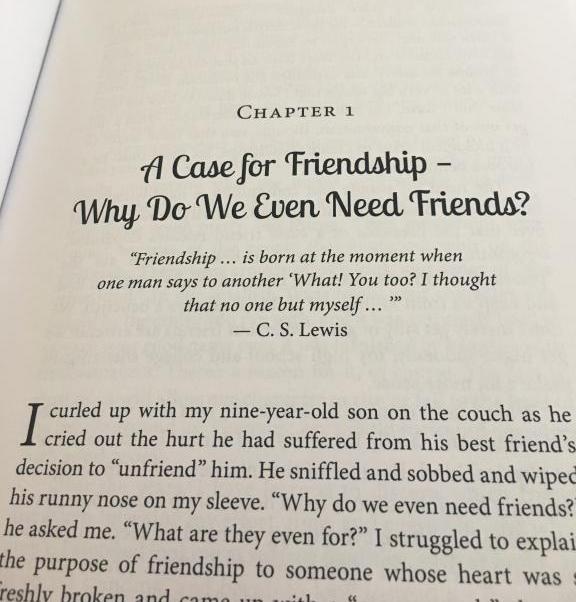
I loved Chapter 13, “In Praise of Virtual Friends,” because while I have a few “real life” friends, I’d say the bulk of my friends are people I’ve met online — and even though I’ve never met those friends “in person,” their friendships are just as real and valuable to me. I will never forget using the Internet for the first time around age 14 (yes, I’m old, now get off my lawn) and realizing, with shocked delight, that I was not the only teenager in the world who loved Star Trek. As Frech notes in Chapter 1 with this fabulous C.S. Lewis quote:
I eventually formed an online Star Trek fan club, comprised of then-teenage girls like myself, and those friendships have lasted through the years. Several members attended my wedding 17 years ago, and we’re also in the planning stages for a reunion next summer.
Chapter 19, “Saying Goodbye,” was also very helpful. Frech discusses how to cut off a friendship that may be unhealthy or toxic (and she describes various types of unhealthy friendships to help you evaluate if you might be involved in one). She makes an important point when she says,
Depending on the depth of the relationship, it can be as serious a loss in your life as a divorce or a death. That’s because our friendships give us a feeling of being valued, important, and understood. They root us within a community and provide us with a safety net. The closest of friends can be closer to us than our relatives. For many of us, they become a family that we have chosen for ourselves. So why isn’t the loss of friendship treated like the big deal that it is? And why are so many of us flat-footed when it comes to finding closure?
It’s so true that that the loss of a friendship can be very painful, and it’s a pain that’s not often acknowledged — especially if the person in question is “just” an online friend. Personally, I’ve lost more than a few friends due to my beliefs as a faithful Catholic, especially when I share what I believe about abortion or same-sex marriage. I’ve also lost friends because I refused to support Donald Trump. It really hurt. I have told myself to just get over it because they weren’t “real” friends anyway, but I think I did myself a disservice to try and minimize or dismiss the pain I felt when I lost those friendships. Frech gave me a lot to think about, especially regarding attempting to reach out to my former friends in an attempt to repair those friendships.
You can buy Frech’s book through Amazon or at Our Sunday Visitor. I highly recommend it!
Stay tuned for my review of Haley Stewart’s new book, The Grace of Enough: Pursuing Less and Living More in a Throwaway Culture. My copy is due to arrive on Wednesday!
Previous Post

August 31, 2018
Guest Post: Vulnerability Is a Superpower
Next Post

September 11, 2018 Remembering September 11
Browse Our Archives
Select a Category Abortion Abuse Scandal Advent Book News Book Reviews Catholic Teaching Catholic Witness Chesterton Christmas Commuting Cooking Cosplay CWM Profiles Daycare Family Gender at Work Giveaways Good Friday History Household Management Humor Instant Pot Life as a Catholic Working Mother Marriage and Family Maternity Leave Meal Planning Media Recommendations Miscarriage NFP Politics Pregnancy Pro-Life Pro-Life Pumping Racism Religious Education Reluctantly Working Rules and Regulations Sacraments Saints Scams TV Show Review Uncategorized Vocation Working for the Church
Select a Month January 2020 November 2019 October 2019 September 2019 August 2019 July 2019 June 2019 May 2019 April 2019 March 2019 February 2019 January 2019 December 2018 November 2018 October 2018 September 2018 August 2018 July 2018 June 2018 May 2018 April 2018 March 2018 February 2018 January 2018 November 2017 October 2017 July 2017 May 2017 April 2017 March 2017 October 2016 May 2016 April 2016 February 2016 December 2015 November 2015 September 2015 August 2015 July 2015 June 2015 May 2015 April 2015
Follow Us!
TAKE THE
Religious Wisdom Quiz
Vanity of vanities! Everything is fleeting and meaningless. Where is this pessimistic proclamation found?
Select your answer to see how you score.
Ecclesiastes Psalms Proverbs Job
Related posts from The Catholic Working Mother
Book Review: Peggy Weber's "Enough as You Are"

Book Review: "Around the Year with the von...

Give Yourself the Gift of “A Christmas Carol”
TRENDING AT PATHEOS Catholic

The Parable Of The Sower And The Word...
One of Christ’s most famous parables is that of the sower who...

Rejecting Doom: Christian Hope And Human Action
Christianity is a religion of hope. We are to have hope and...

Why I Choose the Eucharist Over the Sermon
Choose the Eucharist, Not the Sermon What are we supposed to get...

5 Design Elements Found in Spiritually Rooted Homes
Putting Spirituality Into Home Decor Our homes are more than our living...

Credo: A Story of God Told with the...
About 10 years ago, I began to imagine a personal "Credo" that...

The Anatomy of Divine Revelation in Catholic Thought
The claim that God has made Himself known to human beings is...
view all Catholic blogs
Ad-Free & Subscriber Log-In Subscription Support
- About Us
- 2026 Calendar
- Videos
- Podcasts
- Library of World Religions
- Faith In Media Tracker
- Advertise With Us
- Write for Us
- Privacy Policy
- Terms of Service
- Do Not Sell My Data
- Contact Us
- Radiant Digital
- Manage Newsletter Subscriptions
- Unsubscribe From Notifications
- Sitemap
Copyright 2008-2026, Patheos. All rights reserved.
Subscription Support Ad-Free & Subscriber Log-In
Follow Patheos