
BuddhistCatholicContemplativeEvangelicalGeneral ChristianHinduJewishLatter-day SaintMuslimNew VisionsProgressive Christian
Beliefs
- Buddhist
- Catholic
- Contemplative
- Evangelical
- General Christian
- Hindu
- Jewish
- Latter-day Saint
- More Voices
- Muslim
- New Visions
- Pagan
- Progressive Christian
Topics
- Religion News
- Food and Religion
- Sports and Religion
- Religious Art
- Religious Music and Entertainment
- Religious Events
- History and Religion
- Style and Religion
- Politics and Religion
- Women in Religion
- Recreation Outdoors and Religion
- Business Finance and Religion
- Careers Workplace and Religion
- Education and Religion
- Family Parenting and Religion
- Health Fitness and Religion
- Home and Religion
- Relationships and Religion
- Technology and Religion
- Travel and Religion
Columnists
- Buddhist Columnists
- Business Finance and Religion Columnists
- Careers Workplace and Religion Columnists
- Catholic Columnists
- Contemplative Columnists
- Education and Religion Columnists
- Evangelists Columnists
- Family Parenting and Religion Columnists
- General Christian Columnists
- Health Fitness and Religion Columnists
- Hindu Columnists
- History and Religion Columnists
- Home and Religion Columnists
- Jewish Columnists
- More Voices Columnists
- Latter Day Columnists
- Muslim Columnists
- New Visions Columnists
- Nonreligious Columnists
- Pagan Columnists
- Politics and Religion Columnists
- Progressive Columnists
- Recreation Outdoors and Religion Columnists
- Relationships and Religion Columnists
- Religion News Columnists
- Religious Art Columnists
- Religious Events Columnists
- Religious Music and Entertainment Columnists
- Sports and Religion Columnists
- Style and Religion Columnists
- Technology and Religion Columnists
- Travel and Religion Columnists
- Women in Religion Columnists
Resource Library
- 2026 Calendar
- Library of World Religions
- The 100 Most Holy Places on Earth
- Patheos Answers
- Podcasts
- Videos
- Faith Leaders Database
- Anglican Episcopalian
- Bahai
- Baptist
- Buddhism
- Christianity
- Confucianism
- Eastern Orthodoxy
- Hinduism
- Holiness and Pentecostal
- ISKCON
- Islam
- Judaism
- Lutheran
- Methodist
- The Church of Jesus Christ of Latter-day Saints
- New Age
- Paganism
- Presbytarian and Reformed
- Protestantism
- Religion Behind the Scenes
- Roman Catholic
- Scientology
- Shia Islam
- Sikhism
- Sufism
- Sunni Islam
- Taoism
- Zen
- See all religions
Research Tools
 Ad-Free & Subscriber Log-In Subscription Support
Ad-Free & Subscriber Log-In Subscription Support
Follow Patheos 

- Trending:
- Forgiveness
- |
- Marriage
- |
- Consciousness
- |
- Death Penalty
- |
- Election
- |
- Halloween
 The Catholic Working Mother
- Home
- Catholic
- Harry Potter Is Not a Gateway to the Occult
Harry Potter Is Not a Gateway to the Occult
Last updated on: May 7, 2018 at 11:34 am by JoAnna Wahlund
Harry Potter Is Not a Gateway to the Occult 2018-05-07T11:34:26-08:00 JoAnna Wahlund
Patheos Explore the world's faith through different perspectives on religion and spirituality! Patheos has the views of the prevalent religions and spiritualities of the world.
I’m a faithful Catholic who also loves the Harry Potter series of books (heck, I met my husband in a web club called Harry Potter for Grown Ups), and as such I get rather annoyed when I see other Catholics insist that Harry Potter is a gateway to the occult — meaning that people who enjoy the books and/or the movies are starting on a path that ends in full-fledged devil worship.
I actually converted to Catholicism while obsessively re-reading the first four books. I had my first date with my husband on the day “Goblet of Fire” came out in 2000 (we went to a release party on our date), and we jointly converted one month before “Order of the Phoenix” was released in 2003.
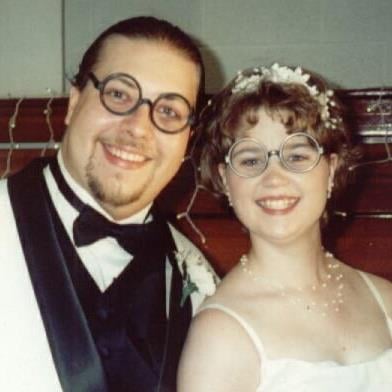
We even had a Harry Potter-themed wedding dance.
I’ve been Catholic and reading Harry Potter ever since, and so far, no devil worship.
I’d like to address some of the more preposterous claims I’ve seen about the Harry Potter books and movies, which are usually made by people who haven’t bothered to actually read or watch them.
The fictional magic in Harry Potter is not the same as the occult.
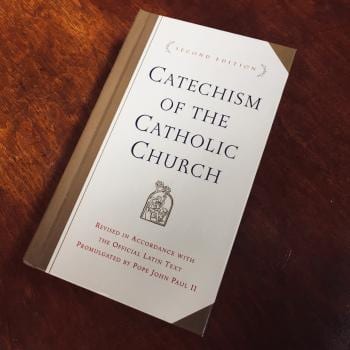
The Catechism of the Catholic Church states,
2117 All practices of magic or sorcery, by which one attempts to tame occult powers, so as to place them at one’s service and have a supernatural power over others – even if this were for the sake of restoring their health – are gravely contrary to the virtue of religion. These practices are even more to be condemned when accompanied by the intention of harming someone, or when they have recourse to the intervention of demons. Wearing charms is also reprehensible. Spiritism often implies divination or magical practices; the Church for her part warns the faithful against it. Recourse to so-called traditional cures does not justify either the invocation of evil powers or the exploitation of another’s credulity.
In the Harry Potter world, magic is not an “attempt to tame occult powers.” It is an inborn, inherent genetic ability. A person has no choice as to if they are a witch or a wizard — they are either born with magical power, or they are not. No characters in the series, even the most evil of them, “have recourse to the intervention of demons.”
Do the evil characters misuse their magic gifts? Yes, they do, and that is clearly condemned by the protagonists of the series — and the evil characters are very clearly breaking Wizard law by committing evil actions.
No, there is not a “satanic worship book” featured in one of the Harry Potter movies.
I spent nearly an hour on Google trying to track down more information about this claim. I even sent a private Facebook message to the person I heard it from. She did respond and said she would get me the information, but as of publication time (over 48 hours later), she hasn’t yet provided it to me. If she does, or if someone else knows where this claim originates and posts that info in the combox, I’ll update this post accordingly.
This claim isn’t even included in the Wikipedia article “Religious debates about the Harry Potter series,” which is a very thorough overview of various accusations of that type.
No, there aren’t “real names of demons” in the Harry Potter series.
I found this particular claim here:
“Harry also learns a new vocabulary, including such words as Azkaban, Circe, Dracho, Erised, Hermes, Slytherin, all of which are names of real devils or demons. These are no characters of fiction.”
J.K. Rowling, the author of the Harry Potter books, has been quite transparent about how she came up with the various names in the books.
Azkaban, a prison for evil wizards, is a combination of the words “Alcatraz” and “Abbadon.” Per J.K. Rowling herself,
The name ‘Azkaban’ derives from a mixture of the prison ‘Alcatraz’, which is its closest Muggle equivalent, being set on an island, and ‘Abaddon’, which is a Hebrew word meaning ‘place of destruction’ or ‘depths of hell’.
Circe is a name from of a goddess in Greek mythology.
“Draco” (not “Dracho”) is after the constellation of the same name.
“Erised” is “Desire” spelled backwards. In the books, the Mirror of Erised is inscribed with this words “erised stra ehru oyt ube cafru oyt on wohsi,” which, spelled backwards, says, “I show not your face but your heart’s desire.” Accordingly, it is a magical mirror that shows one’s deepest desire. When Harry looks into the mirror, he does not see himself as a high priest in the Church of Satan — he seems himself reunited with his dead parents. So demonic, eh?
“Hermes” is another name of a god in Greek mythology.
“Slytherin” is “basically ‘slithering’ minus the ‘g,’ and the snake is the symbol for Slytherin house.”
I hate snakes, personally, but I don’t think they are demons. (The very first snake in the garden of Eden notwithstanding.)
Additionally, I can find no record of these “demon or devil names” that predate the HP series (that is, I can’t find the source that J.K. Rowling would have used to name her characters if this claim was accurate).
It seems more likely that demons or devils took their names *from* the HP series in order to mislead fallible exorcists, which would hardly be J.K. Rowling’s fault. If a demon chose to name itself Gandalf or Aslan, would that mean that the Lord of the Rings or Narnia books are inherently evil?
No, the spells in Harry Potter are not “real spells.”
I also keep hearing that the spells featured in the Harry Potter books are “real spells,” by which I understand to mean that people who practice Wicca and/or Satanism actually use the incantations found in the book to perform occultic acts.
That isn’t true. The spells in the book are modified Latin words.
For example, the Summoning Charm, which is used to summon objects (not demons!) to the caster, uses the word “Accio.” Accio is an actual Latin word that means “I call” or “I summon.”
The Flying Charm, which is used to make objects levitate, uses the words “Wingardium Leviosa.”
Per the Harry Potter Wiki,
“Wingardium” almost certainly contains English wing, meaning “fly,” and Latin arduus, meaning “high.”
“Leviosa” probably originates from Latin levis, meaning “light.”
If simply saying Latin words constituted a “real spell,” then the entirety of the Latin Mass would be nothing but spellwork.
It’s no different than a child waving a stick and saying, “Abracadabra!” Or standing in front of a door and saying the Elvish word for friend. Or trying to get to Narnia through a wardrobe.
There is no evidence that Satanism among children or even adults has risen due to the popularity of the Harry Potter books.
This claim seems to have come from two articles, one from The Onion (a satire site) and another from a satirical column in the National Post.
J.K. Rowling (who is a Christian herself) has stated that not one child has ever told her that he or she became a practicing witch as a direct result of reading the Harry Potter books.
Many years ago (around the same time the Harry Potter books became popular), my mother worked as a librarian in a small elementary school. The family of one of her students asked her to remove the Harry Potter books from the library for religious reasons. You see, this family practiced witchcraft as their religion, and they didn’t want children getting the wrong idea about witchcraft from the books! Apparently they felt the books misrepresented their religion.
I solemnly swear that I am not making this up.
My mother declined their request, but this same family demanded that the school not celebrate Halloween for the same reason, and as a result the school had a “Harvest Festival” celebration instead.
Have you heard any other dubious claims about Harry Potter that you’d like me to debunk? Let me know in the comments!
Featured image credit: By Oxyman [GFDL, CC-BY-SA-3.0 or CC BY 2.5], from Wikimedia Commons

Previous Post
May 4, 2018
Book Review: "One Beautiful Dream" by Jennifer Fulwiler
Next Post
May 9, 2018 Catholic Cosplay Goes Mainstream
Browse Our Archives
Select a Category Abortion Abuse Scandal Advent Book News Book Reviews Catholic Teaching Catholic Witness Chesterton Christmas Commuting Cooking Cosplay CWM Profiles Daycare Family Gender at Work Giveaways Good Friday History Household Management Humor Instant Pot Life as a Catholic Working Mother Marriage and Family Maternity Leave Meal Planning Media Recommendations Miscarriage NFP Politics Pregnancy Pro-Life Pro-Life Pumping Racism Religious Education Reluctantly Working Rules and Regulations Sacraments Saints Scams TV Show Review Uncategorized Vocation Working for the Church
Select a Month January 2020 November 2019 October 2019 September 2019 August 2019 July 2019 June 2019 May 2019 April 2019 March 2019 February 2019 January 2019 December 2018 November 2018 October 2018 September 2018 August 2018 July 2018 June 2018 May 2018 April 2018 March 2018 February 2018 January 2018 November 2017 October 2017 July 2017 May 2017 April 2017 March 2017 October 2016 May 2016 April 2016 February 2016 December 2015 November 2015 September 2015 August 2015 July 2015 June 2015 May 2015 April 2015
Follow Us!
TAKE THE
Religious Wisdom Quiz
What Christian tradition has a worldwide leader known as the Ecumenical Patriarch?
Select your answer to see how you score.
Eastern Orthodox Anglican Lutheran Catholic
Related posts from The Catholic Working Mother
What Does the Roman Catechism Teach about Working...

Fr. Ripperger Reduces Fathers to a Penis and...
Tips for Making a Good Confession
Common Misconceptions: The Difference Between Grave Sin and...
TRENDING AT PATHEOS Catholic

Creation, Preservation, and Teleology in Catholic Theology
As I write this, it is very early Monday morning. Like millions...

The Parable Of The Sower And The Word...
One of Christ’s most famous parables is that of the sower who...

Rejecting Doom: Christian Hope And Human Action
Christianity is a religion of hope. We are to have hope and...

Why I Choose the Eucharist Over the Sermon
Choose the Eucharist, Not the Sermon What are we supposed to get...

5 Design Elements Found in Spiritually Rooted Homes
Putting Spirituality Into Home Decor Our homes are more than our living...

Credo: A Story of God Told with the...
About 10 years ago, I began to imagine a personal "Credo" that...
view all Catholic blogs
Ad-Free & Subscriber Log-In Subscription Support
- About Us
- 2026 Calendar
- Videos
- Podcasts
- Library of World Religions
- Faith In Media Tracker
- Advertise With Us
- Write for Us
- Privacy Policy
- Terms of Service
- Do Not Sell My Data
- Contact Us
- Radiant Digital
- Manage Newsletter Subscriptions
- Unsubscribe From Notifications
- Sitemap
Copyright 2008-2026, Patheos. All rights reserved.
Subscription Support Ad-Free & Subscriber Log-In
Follow Patheos