
BuddhistCatholicContemplativeEvangelicalGeneral ChristianHinduJewishLatter-day SaintMuslimNew VisionsProgressive Christian
Beliefs
- Buddhist
- Catholic
- Contemplative
- Evangelical
- General Christian
- Hindu
- Jewish
- Latter-day Saint
- More Voices
- Muslim
- New Visions
- Pagan
- Progressive Christian
Topics
- Religion News
- Food and Religion
- Sports and Religion
- Religious Art
- Religious Music and Entertainment
- Religious Events
- History and Religion
- Style and Religion
- Politics and Religion
- Women in Religion
- Recreation Outdoors and Religion
- Business Finance and Religion
- Careers Workplace and Religion
- Education and Religion
- Family Parenting and Religion
- Health Fitness and Religion
- Home and Religion
- Relationships and Religion
- Technology and Religion
- Travel and Religion
Columnists
- Buddhist Columnists
- Business Finance and Religion Columnists
- Careers Workplace and Religion Columnists
- Catholic Columnists
- Contemplative Columnists
- Education and Religion Columnists
- Evangelists Columnists
- Family Parenting and Religion Columnists
- General Christian Columnists
- Health Fitness and Religion Columnists
- Hindu Columnists
- History and Religion Columnists
- Home and Religion Columnists
- Jewish Columnists
- More Voices Columnists
- Latter Day Columnists
- Muslim Columnists
- New Visions Columnists
- Nonreligious Columnists
- Pagan Columnists
- Politics and Religion Columnists
- Progressive Columnists
- Recreation Outdoors and Religion Columnists
- Relationships and Religion Columnists
- Religion News Columnists
- Religious Art Columnists
- Religious Events Columnists
- Religious Music and Entertainment Columnists
- Sports and Religion Columnists
- Style and Religion Columnists
- Technology and Religion Columnists
- Travel and Religion Columnists
- Women in Religion Columnists
Resource Library
- 2026 Calendar
- Library of World Religions
- The 100 Most Holy Places on Earth
- Patheos Answers
- Podcasts
- Videos
- Faith Leaders Database
- Anglican Episcopalian
- Bahai
- Baptist
- Buddhism
- Christianity
- Confucianism
- Eastern Orthodoxy
- Hinduism
- Holiness and Pentecostal
- ISKCON
- Islam
- Judaism
- Lutheran
- Methodist
- The Church of Jesus Christ of Latter-day Saints
- New Age
- Paganism
- Presbytarian and Reformed
- Protestantism
- Religion Behind the Scenes
- Roman Catholic
- Scientology
- Shia Islam
- Sikhism
- Sufism
- Sunni Islam
- Taoism
- Zen
- See all religions
Research Tools
 Ad-Free & Subscriber Log-In Subscription Support
Ad-Free & Subscriber Log-In Subscription Support
Follow Patheos 

- Trending:
- Forgiveness
- |
- Marriage
- |
- Consciousness
- |
- Death Penalty
- |
- Election
- |
- Halloween
 The Capstone
- Home
- Catholic
- Pluralism or catholicity?
Pluralism or catholicity?
Last updated on: November 12, 2015 at 11:08 am by Tim Muldoon
Pluralism or catholicity? 2015-11-12T11:08:26-04:00 Tim Muldoon
Patheos Explore the world's faith through different perspectives on religion and spirituality! Patheos has the views of the prevalent religions and spiritualities of the world.
 Nicholas Kristof reflects intelligently on the problems faced by campuses like the University of Missouri and Yale, highlighting the balance between free speech and the embrace of pluralism. Of these problems, he writes:
One is a concern for minority or marginalized students and faculty members, who are often left feeling as outsiders in ways that damage everyone’s education. (…)
But moral voices can also become sanctimonious bullies.
This second observation points to what Nietzsche called ressentiment: a feeling of moral outrage toward those who hold power. For Nietzsche, though, as for any who deny a moral framework in human affairs, there can be no such moral outrage.
(T)he problem with the other origin of the “good,” of the good man, as the person of ressentiment has thought it out for himself, demands some conclusion. It is not surprising that the lambs should bear a grudge against the great birds of prey, but that is no reason for blaming the great birds of prey for taking the little lambs. And when the lambs say among themselves, “These birds of prey are evil, and he who least resembles a bird of prey, who is rather its opposite, a lamb,—should he not be good?” then there is nothing to carp with in this ideal’s establishment, though the birds of prey may regard it a little mockingly, and maybe say to themselves, “We bear no grudge against them, these good lambs, we even love them: nothing is tastier than a tender lamb.”
What we are seeing in the kinds of debates at Mizzou and Yale are a clash of moral frameworks. First: there is a remnant Christian morality, which favors the poor, the outcast, the sinner, as Jesus did. The Civil Rights Movement depended on this framework, as is very clear from the writings of Martin Luther King. Second: there is a lurking libertarianism, driven by laissez faire economic systems which always favor the wealthy and the powerful. Universities have long histories, deep pockets, and institutional and cultural inertia which can tend to favor the powerful. This is the movement that the third framework really wants to attack. It is a liberal ressentiment, rooted in a remnant of Christian morality but divorced from the theological language that gives it its meaning and power. Kristof points to the limitations of this framework:
This is sensitivity but also intolerance, and it is disproportionately an instinct on the left.
Discourse becomes shrill, angry, and even violent; it is no longer tempered with the virtues that the Civil Rights leaders worked so hard to form in their movement.
The problem I see is that these shrill voices can sometimes conflate the first two frameworks, identifying the Christian and libertarian frameworks such that the critique is turned toward God and any moral language attached to Christian belief. There are many reasons for this conflation that I won’t elaborate on here, but I will observe that the fallout of this conflation is that universities have become disproportionately liberal, as Kristof recognizes:
More broadly, academia — especially the social sciences — undermines itself by a tilt to the left. We should cherish all kinds of diversity, including the presence of conservatives to infuriate us liberals and make us uncomfortable. Education is about stretching muscles, and that’s painful in the gym and in the lecture hall.
Consequently, universities are left in a kind of moral vacuum. Kristof points to an irreducible pluralism as the consequence of this state of affairs:
My favorite philosopher, the late Sir Isaiah Berlin, argued that there was a deep human yearning to find the One Great Truth. In fact, he said, that’s a dead end: Our fate is to struggle with a “plurality of values,” with competing truths, with trying to reconcile what may well be irreconcilable.
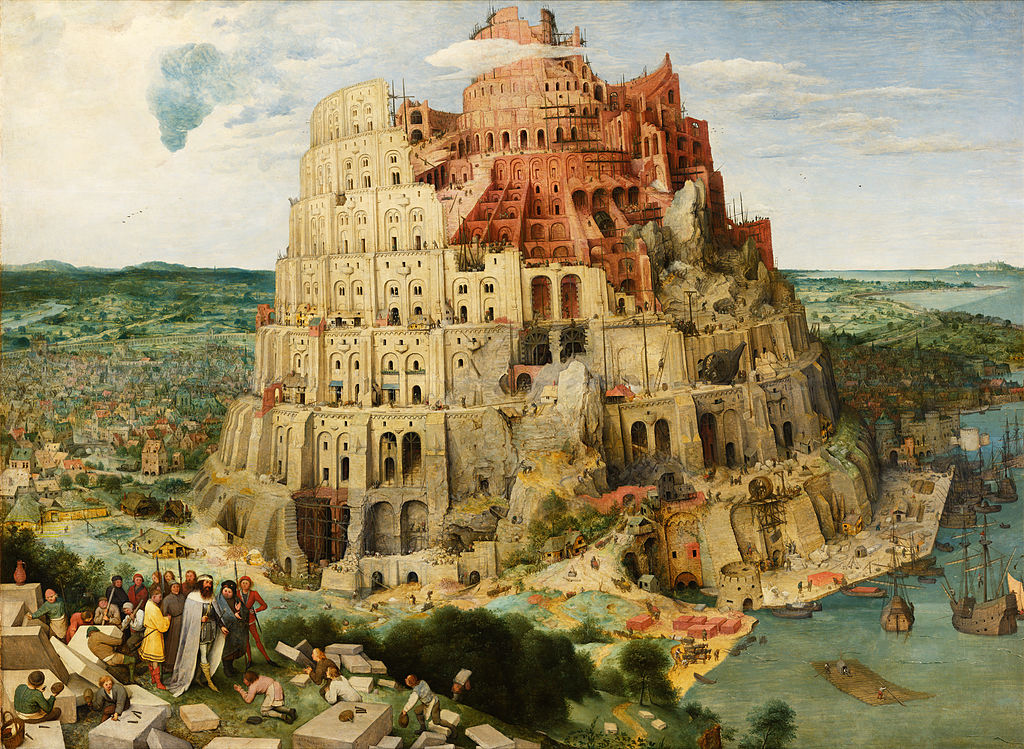
But on this last point, I disagree. A plurality of values–a Babel (“G-d decided to destroy their arrogance by destroying their ability to understand one another.”)–is not our fate. There is another way: a way of civility. The Christian moral framework which gave rise to universities in the first place involves being rooted in intellectual humility, willingness to listen to the other, and willing to embrace a heuristic of the shared search for truth.
In a word, catholicity as an alternative to pluralism. For catholicity is seeking to see things “according to the whole” (kata holos in Greek), rather than as isolated individuals. In this sense, the university is the place where we practice this way of seeing, working hard to invite those who have been marginalized.
Catholic intellectual tradition
Previous Post

October 16, 2015
The long view
Next Post
November 24, 2015 Transcendence
Browse Our Archives
Select a Category academic freedom Catholic intellectual tradition epigenetics humanities mission politics science teaching Theology Uncategorized university life
Select a Month November 2015 October 2015 September 2015 August 2015 July 2015 June 2015 May 2015 April 2015 March 2015 February 2015 January 2015 December 2014 November 2014 October 2014 September 2014 August 2014
Follow Us!
TAKE THE
Religious Wisdom Quiz
What does the Hebrew word "Chokmah", often used in Proverbs, mean?
Select your answer to see how you score.
Fear Wisdom Strength Knowledge
Related posts from The Capstone



Pope Francis address at Pontifical Catholic University of...

Guest post: two concepts of rationality, Francis M....
TRENDING AT PATHEOS Catholic

Rejecting Doom: Christian Hope And Human Action
Christianity is a religion of hope. We are to have hope and...

It’s What Comes From Within Which Matters
One of the most difficult things for us to understand is why...

Why I Choose the Eucharist Over the Sermon
Choose the Eucharist, Not the Sermon What are we supposed to get...

5 Design Elements Found in Spiritually Rooted Homes
Putting Spirituality Into Home Decor Our homes are more than our living...

Credo: A Story of God Told with the...
About 10 years ago, I began to imagine a personal "Credo" that...

The Anatomy of Divine Revelation in Catholic Thought
The claim that God has made Himself known to human beings is...
view all Catholic blogs
Ad-Free & Subscriber Log-In Subscription Support
- About Us
- 2026 Calendar
- Videos
- Podcasts
- Library of World Religions
- Faith In Media Tracker
- Advertise With Us
- Write for Us
- Privacy Policy
- Terms of Service
- Do Not Sell My Data
- Contact Us
- Radiant Digital
- Manage Newsletter Subscriptions
- Unsubscribe From Notifications
- Sitemap
Copyright 2008-2026, Patheos. All rights reserved.
Subscription Support Ad-Free & Subscriber Log-In
Follow Patheos