
BuddhistCatholicContemplativeEvangelicalGeneral ChristianHinduJewishLatter-day SaintMuslimNew VisionsProgressive Christian
Beliefs
- Buddhist
- Catholic
- Contemplative
- Evangelical
- General Christian
- Hindu
- Jewish
- Latter-day Saint
- More Voices
- Muslim
- New Visions
- Pagan
- Progressive Christian
Topics
- Religion News
- Food and Religion
- Sports and Religion
- Religious Art
- Religious Music and Entertainment
- Religious Events
- History and Religion
- Style and Religion
- Politics and Religion
- Women in Religion
- Recreation Outdoors and Religion
- Business Finance and Religion
- Careers Workplace and Religion
- Education and Religion
- Family Parenting and Religion
- Health Fitness and Religion
- Home and Religion
- Relationships and Religion
- Technology and Religion
- Travel and Religion
Columnists
- Buddhist Columnists
- Business Finance and Religion Columnists
- Careers Workplace and Religion Columnists
- Catholic Columnists
- Contemplative Columnists
- Education and Religion Columnists
- Evangelists Columnists
- Family Parenting and Religion Columnists
- General Christian Columnists
- Health Fitness and Religion Columnists
- Hindu Columnists
- History and Religion Columnists
- Home and Religion Columnists
- Jewish Columnists
- More Voices Columnists
- Latter Day Columnists
- Muslim Columnists
- New Visions Columnists
- Nonreligious Columnists
- Pagan Columnists
- Politics and Religion Columnists
- Progressive Columnists
- Recreation Outdoors and Religion Columnists
- Relationships and Religion Columnists
- Religion News Columnists
- Religious Art Columnists
- Religious Events Columnists
- Religious Music and Entertainment Columnists
- Sports and Religion Columnists
- Style and Religion Columnists
- Technology and Religion Columnists
- Travel and Religion Columnists
- Women in Religion Columnists
Resource Library
- 2026 Calendar
- Library of World Religions
- The 100 Most Holy Places on Earth
- Patheos Answers
- Podcasts
- Videos
- Faith Leaders Database
- Anglican Episcopalian
- Bahai
- Baptist
- Buddhism
- Christianity
- Confucianism
- Eastern Orthodoxy
- Hinduism
- Holiness and Pentecostal
- ISKCON
- Islam
- Judaism
- Lutheran
- Methodist
- The Church of Jesus Christ of Latter-day Saints
- New Age
- Paganism
- Presbytarian and Reformed
- Protestantism
- Religion Behind the Scenes
- Roman Catholic
- Scientology
- Shia Islam
- Sikhism
- Sufism
- Sunni Islam
- Taoism
- Zen
- See all religions
Research Tools
 Ad-Free & Subscriber Log-In Subscription Support
Ad-Free & Subscriber Log-In Subscription Support
Follow Patheos 

- Trending:
- Forgiveness
- |
- Marriage
- |
- Consciousness
- |
- Death Penalty
- |
- Election
- |
- Halloween
 The Capstone
- Home
- Catholic
- Excarnation and teaching
Excarnation and teaching
Last updated on: September 4, 2014 at 3:55 pm by Tim Muldoon
Excarnation and teaching 2014-09-04T15:55:40-04:00 Tim Muldoon
Patheos Explore the world's faith through different perspectives on religion and spirituality! Patheos has the views of the prevalent religions and spiritualities of the world.
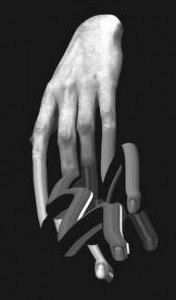
JESSE DRAXLER, NEW YORK TIMES
My Boston College colleague Richard Kearney has written a thoughtful piece in the New York Times, “Losing our Touch.” He laments the loss of physicality, of the body, in the collective consciousness of our society.
Are we perhaps entering an age of “excarnation,” where we obsess about the body in increasingly disembodied ways? For if incarnation is the image become flesh, excarnation is flesh become image. Incarnation invests flesh; excarnation divests it.
Among students, sex is increasingly mediated by the virtual world, through online dating or pornography. He traces this tendency from Plato’s disembodied world of forms, and Aristotle’s response, positing that touch is the most universal human sense. Plato won the day in Western philosophy; “I see” is now our way of saying “I understand” (rather than, say “I feel”).
Something is lost here, Kearney writes.
Full humanity requires the ability to sense and be sensed in turn: the power, as Shakespeare said, to “feel what wretches feel” — or, one might also add, what artists, cooks, musicians and lovers feel. We need to find our way in a tactile world again.
If education is only about “taking a look,” (as Kant might have it), then education is disembodied. Minds can study during the week; bodies can party on the weekend (you know, that period from Wednesday evening to late Monday afternoon). What will a robust education of mens sana in corpore sano really look like in a world of iCloud and a nearly completed Circle?
Previous Post

September 3, 2014
The discerning university
Next Post
September 8, 2014 College and citizenship
Browse Our Archives
Select a Category academic freedom Catholic intellectual tradition epigenetics humanities mission politics science teaching Theology Uncategorized university life
Select a Month November 2015 October 2015 September 2015 August 2015 July 2015 June 2015 May 2015 April 2015 March 2015 February 2015 January 2015 December 2014 November 2014 October 2014 September 2014 August 2014
Follow Us!
TAKE THE
Religious Wisdom Quiz
I built a 75-foot gallows for my enemy, but I was hanged on it instead. Who am I?
Select your answer to see how you score.
Bigthana Haman Mordecai Ahasuerus
Related posts from The Capstone



Peer review and the sin of pride

Pope Francis address at Pontifical Catholic University of...
TRENDING AT PATHEOS Catholic

Rejecting Doom: Christian Hope And Human Action
Christianity is a religion of hope. We are to have hope and...

It’s What Comes From Within Which Matters
One of the most difficult things for us to understand is why...

Why I Choose the Eucharist Over the Sermon
Choose the Eucharist, Not the Sermon What are we supposed to get...

5 Design Elements Found in Spiritually Rooted Homes
Putting Spirituality Into Home Decor Our homes are more than our living...

Credo: A Story of God Told with the...
About 10 years ago, I began to imagine a personal "Credo" that...

The Anatomy of Divine Revelation in Catholic Thought
The claim that God has made Himself known to human beings is...
view all Catholic blogs
Ad-Free & Subscriber Log-In Subscription Support
- About Us
- 2026 Calendar
- Videos
- Podcasts
- Library of World Religions
- Faith In Media Tracker
- Advertise With Us
- Write for Us
- Privacy Policy
- Terms of Service
- Do Not Sell My Data
- Contact Us
- Radiant Digital
- Manage Newsletter Subscriptions
- Unsubscribe From Notifications
- Sitemap
Copyright 2008-2026, Patheos. All rights reserved.
Subscription Support Ad-Free & Subscriber Log-In
Follow Patheos