
BuddhistCatholicContemplativeEvangelicalGeneral ChristianHinduJewishLatter-day SaintMuslimNew VisionsProgressive Christian
Beliefs
- Buddhist
- Catholic
- Contemplative
- Evangelical
- General Christian
- Hindu
- Jewish
- Latter-day Saint
- More Voices
- Muslim
- New Visions
- Pagan
- Progressive Christian
Topics
- Religion News
- Food and Religion
- Sports and Religion
- Religious Art
- Religious Music and Entertainment
- Religious Events
- History and Religion
- Style and Religion
- Politics and Religion
- Women in Religion
- Recreation Outdoors and Religion
- Business Finance and Religion
- Careers Workplace and Religion
- Education and Religion
- Family Parenting and Religion
- Health Fitness and Religion
- Home and Religion
- Relationships and Religion
- Technology and Religion
- Travel and Religion
Columnists
- Buddhist Columnists
- Business Finance and Religion Columnists
- Careers Workplace and Religion Columnists
- Catholic Columnists
- Contemplative Columnists
- Education and Religion Columnists
- Evangelists Columnists
- Family Parenting and Religion Columnists
- General Christian Columnists
- Health Fitness and Religion Columnists
- Hindu Columnists
- History and Religion Columnists
- Home and Religion Columnists
- Jewish Columnists
- More Voices Columnists
- Latter Day Columnists
- Muslim Columnists
- New Visions Columnists
- Nonreligious Columnists
- Pagan Columnists
- Politics and Religion Columnists
- Progressive Columnists
- Recreation Outdoors and Religion Columnists
- Relationships and Religion Columnists
- Religion News Columnists
- Religious Art Columnists
- Religious Events Columnists
- Religious Music and Entertainment Columnists
- Sports and Religion Columnists
- Style and Religion Columnists
- Technology and Religion Columnists
- Travel and Religion Columnists
- Women in Religion Columnists
Resource Library
- 2026 Calendar
- Library of World Religions
- The 100 Most Holy Places on Earth
- Patheos Answers
- Podcasts
- Videos
- Faith Leaders Database
- Anglican Episcopalian
- Bahai
- Baptist
- Buddhism
- Christianity
- Confucianism
- Eastern Orthodoxy
- Hinduism
- Holiness and Pentecostal
- ISKCON
- Islam
- Judaism
- Lutheran
- Methodist
- The Church of Jesus Christ of Latter-day Saints
- New Age
- Paganism
- Presbytarian and Reformed
- Protestantism
- Religion Behind the Scenes
- Roman Catholic
- Scientology
- Shia Islam
- Sikhism
- Sufism
- Sunni Islam
- Taoism
- Zen
- See all religions
Research Tools
 Ad-Free & Subscriber Log-In Subscription Support
Ad-Free & Subscriber Log-In Subscription Support
Follow Patheos 

- Trending:
- Forgiveness
- |
- Marriage
- |
- Consciousness
- |
- Death Penalty
- |
- Election
- |
- Halloween
 The Buddha Said
- Home
- Buddhist
- What is Nikaya Buddhism?
What is Nikaya Buddhism?
Last updated on: September 22, 2020 at 5:50 pm by Dr. Jay N. Forrest
What is Nikaya Buddhism? 2020-09-22T17:50:03+06:00 Dr. Jay N. Forrest
Patheos Explore the world's faith through different perspectives on religion and spirituality! Patheos has the views of the prevalent religions and spiritualities of the world.

The Buddha said:
“The true Dhamma does not disappear all at once in the way a ship sinks. There are, Kassapa, five detrimental things that lead to the decay and disappearance of the true Dhamma. What are the five? Here the bhikkhus, the bhikkhunīs, the male lay followers, and the female lay followers dwell without reverence and deference towards the Teacher; they dwell without reverence and deference towards the Dhamma; they dwell without reverence and deference towards the Saṅgha; they dwell without reverence and deference towards the training; they dwell without reverence and deference towards concentration. These, Kassapa, are the five detrimental things that lead to the decay and disappearance of the true Dhamma (SN 16.13 Bodhi).
The true Dhamma disappears when monastic and lay Buddhists “dwell without reverence and deference towards the Dhamma.” And where do you find the “true Dhamma”? In the monastic rules and discourses of the Buddha. So you could say that the Buddha’s true teachings will disappear when his followers “lack respect and reverence for” the Buddhist scriptures (SN 16.13 Sujato).
True Dharma
We are not used to hearing such things as a true Dharma and a counterfeit Dharma. “But when a counterfeit of the true Dhamma arises in the world, then the true Dhamma disappears” (SN 16.13 Bodhi). I am afraid that much that is called Buddhism does not originate with the historical Buddha. No current tradition is pure in this regard.
The advantage we have today is that scholarship is opening the door to a better understanding of the texts and their transmission. We know that the Mahayana sutras are not authentic. They originated many hundreds of years after the Buddha’s passing. We also know that they altered the teachings of the Buddha.
But Theravada Buddhism, which is the oldest tradition dating back to the Buddha’s times, is not pure either. There are texts, traditions, and commentaries that are post-Buddha. We also know that there were some errors that have crept into the texts. What does a person do who wants to “maintain respect and reverence for the Teacher” and his Dharma?
Understanding Nikaya Buddhism
Nikaya Buddhism is my term for a modern lay Buddhism that attempts to “maintain respect and reverence for the” Dharma as preserved in the Early Buddhist Texts, especially the Nikayas.
Nikaya Buddhism is a term that was coined by Masatoshi Nagatomi. It was an attempt to come up with a neutral substitute for the derogatory term Hinayana (lower vehicle). It is used to refer to those who follow one of the early Buddhist schools. That is not the meaning of the term as I am using it.
According to The Princeton Dictionary of Buddhism, the word nikaya literally means “group” or “collection.” The Encyclopedia of Buddhism explains that “‘the nikayas’ refers to the early sutras.” Bhikkhu Bodhi writes, “The Sutta Pitaka, which contains the records of the Buddha’s discourses and discussions, consists of five collections called Nikayas” (In the Buddha’s Words 11).
Nikaya Buddhism, then, is a lay Buddhism based upon and derived from the Nikayas. To be a little more concise, Nikaya Buddhism is based only upon the early material in the Nikayas. This includes the bulk of the discourses in the main four Pali Nikayas, and “a small portion of the Khuddaka Nikaya, consisting of the significant parts of the Sutta Nipata, Udana, Itivuttaka, Dhammapada, and Thera- and Theri Gatha” (Sujato and Brahmali 11-12). Although some Vinaya material from the khandhakas is authentic, it is not as relevant to lay Buddhists.
Scripture and Tradition
In Nikaya Buddhism, the Buddhist scriptures are our primary authority for the Dharma. Scriptures in Nikaya Buddhism are the Digha Nikaya, the Majjhima Nikaya, the Samyutta Nikaya, the Anguttara Nikaya, the Dhammapada, the Udana, the Itivuttaka, the Suttanipata, the Theragatha, and the Therigatha. Everything else in the Pali canon is tradition, as well as commentaries and other texts.
Tradition is of secondary authority. The Dharma was passed down orally to the monks and nuns. This oral tradition has been recorded primarily by the Theravada branch of Buddhism. They are the only branch of Buddhism that can be traced back to the historical Buddha.
Tradition can be trusted as long as it doesn’t contradict the scriptures, dates from the early times of Buddhism, and was pretty much universally accepted as true. Why do we give preference to the Theravada branch of Buddhism? First, because they can prove close association to those who had personal contact with the Buddha. Second, because they actually recited the suttas together and maintained unity, indicating general agreement. Third, because the Theravada is the oldest continual Buddhist school in existence. Fourth, the Theravada tradition spoke the same or a very similar language to the Buddha. And fifth, they had the longest string of fully awakened monastics (Arahants).
Not Original Buddhism
Nikaya Buddhism should not be confused with original Buddhism. We don’t have the resources to reconstruct original Buddhism. Whatever original Buddhism was, it is gone. The closest we can get is in the Early Buddhist Texts that have come down to us.
Nikaya Buddhism is an attempt by lay Buddhists, both scholars and practitioners, to get as close to the original Buddhist teaching as the Early Buddhist Texts allow (cf. Sujato and Brahmali). This includes not only accepting the best texts but also following the best tradition.
It must be understood that we should not cherry pick and try to conform the scriptures to our liking, but allow the texts to speak for themselves. As Bhikkhu Bodhi illustrates, it is far too early to misinterpret the scriptures in an effort to “salvage the authentic vision of the Buddha,” and then when we run “up against principles taught by the Buddha that collide with” our own agenda, we might not “hesitate to discard them” (Investigating the Dhamma 85).
Not Buddhist Modernism
Evan Thompson is right, “We shouldn’t conflate Buddhist modernism and Buddhism in the modern world” (20). David L. McMahan says that “By ‘Buddhist modernism’ I do not mean all Buddhism that happens to exist in the modern era but, rather, forms of Buddhism that have emerged out of an engagement with the dominant culture and intellectual forces of modernity” (6). He then quotes approvingly of Heinz Bechert’s definition of Buddhist modernism as “a movement that reinterpreted Buddhism as a ‘rational way of thought’ that stressed reason, meditation, and the rediscovery of canonical texts” (7).
David L. McMahan lists three aspects of modernization that characterize Buddhist modernism: detraditionalization, demythologization, and psychologization (42-59). Nikaya Buddhism honors tradition, though giving it a secondary place. It does not discard karma, rebirth, and the five realms. And, although I affirm the psychological efficacy of Buddhism, it cannot be reduced to a psychology. It is a religion that shows us the way of complete liberation from the conditioned realm.
In one sense, Nikaya Buddhism is traditional Buddhism using modern tools to better understand the Early Buddhist Texts. And from this understanding, try to regain an understanding of the Dharma as it would be understood in that culture and time. Only after gaining such a historical-grammatical understanding would one move to application in the modern world.
One last thing I should mention. Nikaya Buddhism is a lay movement, but is deeply respectful of the monastics and supportive of the ordained Sangha. Utmost respect is given to those who have dedicated their lives to the Dharma. Nikaya Buddhism is easily wedded to the Theravada school and fine fruitful interconnection with them. Nikaya Buddhism would be a neo-Theravadin movement if the monastics took up the cause. Many have, but I would hate to in any way say anything about the Theravada school, since I am not a Bhikkhu.
Longevity of the True Dhamma
The Buddha said:
There are five things, Kassapa, that lead to the longevity of the true Dhamma, to its nondecay and nondisappearance. What are the five? Here the bhikkhus, the bhikkhunīs, the male lay followers, and the female lay followers dwell with reverence and deference towards the Teacher; they dwell with reverence and deference towards the Dhamma; they dwell with reverence and deference towards the Saṅgha; they dwell with reverence and deference towards the training; they dwell with reverence and deference towards concentration. These, Kassapa, are the five things that lead to the longevity of the true Dhamma, to its nondecay and nondisappearance (SN 16.13 Bodhi).
I want to just focus on this part, “they dwell with reverence and deference towards the Dhamma.” The Dharma is in the Buddhist scriptures, so we should “respect and reverence” them (SN 16.13 Sujato). Mrs. C.A.F. Rhys Davids translates this phrase as “they live in reverence and docility towards” it. Another translation has, “They live with respect, with deference, for the Dhamma” (Thanissaro).
To respect the Dharma means “to hold in esteem or honor” (Dictionary.com). And deference means “respectful submission or yielding to the judgment, opinion, will, etc., of another” (Dictionary.com). Honor the Dharma and yield to its guidance. This seems contrary to the understanding of many Buddhists who want to trust their personal experience.
The Dharma is the map that guides you to awakening. It is not awakening, but it is the map. “This is the only way; there is none other for the purification of insight” (Dhp 274 Buddharakkhita). You will not find it on your own. Your experience will verify if you are on the path, but experience cannot lead you. Truth leads, experience follows. Don’t get confused.
Works Cited
References for Translations can be found on the Translations Used page.
- Bodhi, Bhikkhu. In the Buddha’s Words: An Anthology of Discourses from the Pali Canon. Boston: Wisdom Publications, 2005.
- Bodhi, Bhikkhu. Investigating the Dhamma: A Collection of Papers by Bhikkhu Bodhi. Kandy, Sri Lanka: Buddhist Publication Society, 2015.
- Encyclopedia of Buddhism. Edward A. Irons, ed. New York: Checkmark Books, 2008. Print.
- McMahan, David L. The Making of Buddhist Modernism. New York: Oxford University Press, 2008.
- Princeton Dictionary of Buddhism, The. “Nikaya.” Robert E. Busswell, Jr. and Donald S. Lopez J. eds. Princeton, NJ: Princeton University Press, 2014. Print.
- Sujato, Bhikkhu and Bhikkhu Brahmali. The Authenticity of the Early Buddhist Texts. Kandy, Sri Lanka: Buddhist Publication Society, 2014. Print.
- Thompson, Evan. Why I Am Not a Buddhist. New Haven, CT: Yale University Press, 2020.
Copyright © 2020 Jay N. Forrest. All Rights Reversed.
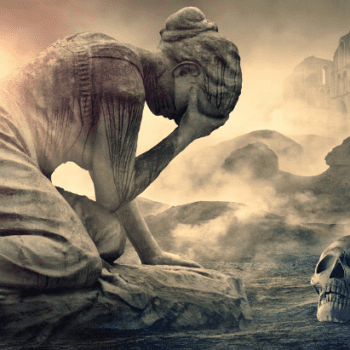
Image by Alejandro Rojas via Flickr (CC BY 2.0)
About Jay N. Forrest
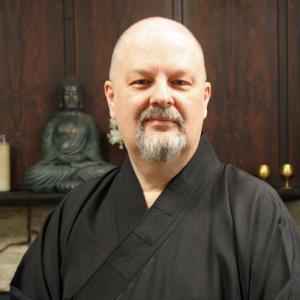
Dr. Jay N. Forrest is an American Buddhist teacher, an Ordained Humanist Minister, a Certified Meditation Teacher, and the author of over a dozen books. He is the host of the podcast “5 Minute Dharma” and a writer at Patheos. Following closely the Theravada tradition and the Pali Canon, Dr. Forrest gives you a reliable guide to the transforming truths of the historical Buddha. You can read more about the author here.
Previous Post
September 11, 2020
Buddhist Hermeneutics
Next Post
September 18, 2020 Three Levels of Buddhism
Browse Our Archives
Select a Category Buddhism
Select a Month October 2020 September 2020 August 2020
Follow Us!
TAKE THE
Religious Wisdom Quiz
What Christian denomination emphasizes "believer’s baptism"?
Select your answer to see how you score.
Presbyterians Catholics Lutherans Baptists
Books by This Author Books by Dr. Jay N. Forrest
Related posts from The Buddha Said

Making a Business of the Dharma

Moral Character and Intention in the Dhammapada
The Unawakened Life Sucks - The First Noble...
TRENDING AT PATHEOS Buddhist

On Taking Refuge in the Dharma
(Here I continue the feature of sharing talks and essays by teachers...

(Continuing my intention to share talks and essays by other members of Empty...
The Subtle Art of Bowing: A Dharma Discourse
(This presentation was first offered by my dear friend Dharma Holder Tom...

Internal Family Systems Can Heal you Mentally &...
How IFS Helped Me Stop Fighting Myself Internal Family Systems (IFS) is...

The Bible No One Spoke About: A Family’s...
A mysterious family Bible, unspoken faith, and a journey from curiosity to...

How Uncertainty Can Transform Your Life in 2025
Embracing Uncertainty: A New Year’s Resolution for the Brave As 2025 approaches,...
view all Buddhist blogs
Ad-Free & Subscriber Log-In Subscription Support
- About Us
- 2026 Calendar
- Videos
- Podcasts
- Library of World Religions
- Faith In Media Tracker
- Advertise With Us
- Write for Us
- Privacy Policy
- Terms of Service
- Do Not Sell My Data
- Contact Us
- Radiant Digital
- Manage Newsletter Subscriptions
- Unsubscribe From Notifications
- Sitemap
Copyright 2008-2026, Patheos. All rights reserved.
Subscription Support Ad-Free & Subscriber Log-In
Follow Patheos