
BuddhistCatholicContemplativeEvangelicalGeneral ChristianHinduJewishLatter-day SaintMuslimNew VisionsProgressive Christian
Beliefs
- Buddhist
- Catholic
- Contemplative
- Evangelical
- General Christian
- Hindu
- Jewish
- Latter-day Saint
- More Voices
- Muslim
- New Visions
- Pagan
- Progressive Christian
Topics
- Religion News
- Food and Religion
- Sports and Religion
- Religious Art
- Religious Music and Entertainment
- Religious Events
- History and Religion
- Style and Religion
- Politics and Religion
- Women in Religion
- Recreation Outdoors and Religion
- Business Finance and Religion
- Careers Workplace and Religion
- Education and Religion
- Family Parenting and Religion
- Health Fitness and Religion
- Home and Religion
- Relationships and Religion
- Technology and Religion
- Travel and Religion
Columnists
- Buddhist Columnists
- Business Finance and Religion Columnists
- Careers Workplace and Religion Columnists
- Catholic Columnists
- Contemplative Columnists
- Education and Religion Columnists
- Evangelists Columnists
- Family Parenting and Religion Columnists
- General Christian Columnists
- Health Fitness and Religion Columnists
- Hindu Columnists
- History and Religion Columnists
- Home and Religion Columnists
- Jewish Columnists
- More Voices Columnists
- Latter Day Columnists
- Muslim Columnists
- New Visions Columnists
- Nonreligious Columnists
- Pagan Columnists
- Politics and Religion Columnists
- Progressive Columnists
- Recreation Outdoors and Religion Columnists
- Relationships and Religion Columnists
- Religion News Columnists
- Religious Art Columnists
- Religious Events Columnists
- Religious Music and Entertainment Columnists
- Sports and Religion Columnists
- Style and Religion Columnists
- Technology and Religion Columnists
- Travel and Religion Columnists
- Women in Religion Columnists
Resource Library
- 2026 Calendar
- Library of World Religions
- The 100 Most Holy Places on Earth
- Patheos Answers
- Podcasts
- Videos
- Faith Leaders Database
- Anglican Episcopalian
- Bahai
- Baptist
- Buddhism
- Christianity
- Confucianism
- Eastern Orthodoxy
- Hinduism
- Holiness and Pentecostal
- ISKCON
- Islam
- Judaism
- Lutheran
- Methodist
- The Church of Jesus Christ of Latter-day Saints
- New Age
- Paganism
- Presbytarian and Reformed
- Protestantism
- Religion Behind the Scenes
- Roman Catholic
- Scientology
- Shia Islam
- Sikhism
- Sufism
- Sunni Islam
- Taoism
- Zen
- See all religions
Research Tools
 Ad-Free & Subscriber Log-In Subscription Support
Ad-Free & Subscriber Log-In Subscription Support
Follow Patheos 

- Trending:
- Forgiveness
- |
- Marriage
- |
- Consciousness
- |
- Death Penalty
- |
- Election
- |
- Halloween
 The Buddha Said
- Home
- Buddhist
- Are the Mahayana Sutras Authentic?
Are the Mahayana Sutras Authentic?
Last updated on: September 22, 2020 at 5:51 pm by Dr. Jay N. Forrest
Are the Mahayana Sutras Authentic? 2020-09-22T17:51:07+06:00 Dr. Jay N. Forrest
Patheos Explore the world's faith through different perspectives on religion and spirituality! Patheos has the views of the prevalent religions and spiritualities of the world.
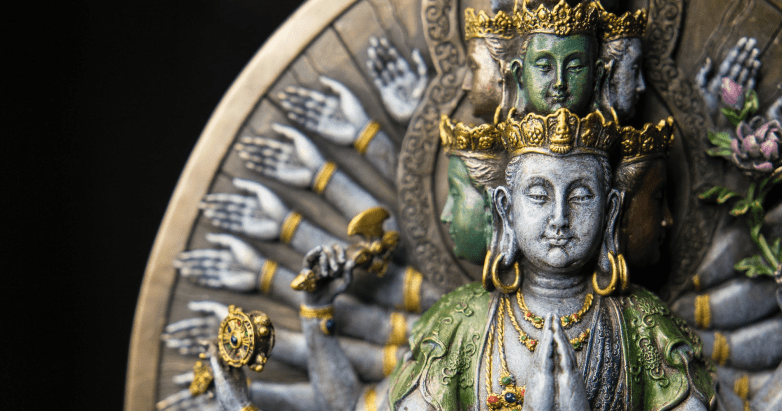
If you are a Buddhist you should be interested in what the Buddha said. But it might surprise you to find out that it is a controversial question. But the evidence is clear.
We have to be clear what question we are asking. I am not asking if the Mahayana sutras are true, helpful, insightful, or inspiring. What I am asking is, do the Mahayana sutras originate with the historical Buddha? This is what I mean by asking if they are authentic.
The Mahayana Movement
The Princeton Dictionary of Buddhism says that the Mahayana “began some four centuries after the Buddha’s death, marked by the composition of texts that purport to be his words.” As Peter Harvey explains, “Anyone accepting the new literature as genuine Sutras – authoritative discourses of the Buddha – thereby belonged to the new movement” (109). It is these texts that are the subject of our investigation.
It should already be clear that the Mahayana sutras were the point of contention between the schools of original Buddhism and this “new” movement. And it should be understood that it was a movement, not a school. In fact, there were many different schools, each usually formed around a particular text.
There is much more that could be said about the Mahayana movement, but here we want to just focus on the texts. I think that there can be made a good case for the need for Buddhism to adjust and adapt to changing conditions. My sole focus is on whether the Mahayana sutras originated with the historical Buddha.
Original Composition
The first question to ask is, “In what form were the Mahayana sutras composed?” Were they originally oral or written? The evidence suggests that they were originally written texts rather than oral recitations. From the evidence I have seen, it appears that the texts were recited from the written texts.
This actually makes sense if you realize that written languages did not arise in India until about one or two hundred years before the Mahayana movement began. In fact, you could make a good case that it was writing that helped form the Mahayana movement. It explains how different Mahayana groups started to form around a particular sutra. This requires a written book.
This, however, gives us a clue on when the Mahayana sutras came into existence. They arose with the spread of written language. Which means they did not exist before then, and therefore, could not have originated with the historical Buddha. Written language was unknown in India during, and for hundreds of years after, the life and death of the Buddha.
Evidence Against Authenticity
As it stands today, there are three canons. The Theravada Pali canon (which we discussed in another article), the Mahayana, and the Tibetan. The Mahayana and the Tibetan canons contain parts of the Pali canon. It is those extra parts that are at issue here. These sutras do not originate with the historical Buddha and do not necessarily convey the Buddhism that the Buddha himself taught.
Huston Smith and Philip Novak say that the Theravada claim “to represent original Buddhism, the Buddhism taught by Gautama himself. The claim is justified if we confine ourselves to the explicit teachings of the Buddha as they are recorded in the earliest texts, the Pali Canon, for on the whole those texts do support the Theravada position. But this fact has not discouraged Mahayanists from their counterclaim that it is they who represent the true line of succession” (66).
Edward Conze does a good job of summarizing the situation. He states that, “About 100 BC a number of Buddhists felt that the existing statements of the doctrine had become stale and useless. In the conviction that the Dharma required ever new reformulations so as to meet the needs of new ages, new populations and new social circumstances, they set out to produce a new literature…. So far the Mayayanistic attitude seems quite logical. What is more difficult to understand is that they insisted in presenting these new writings, manifestly composed centuries after the Buddha’s death, as the very words of the Buddha himself” (31).
Please notice those words, the Mahayana sutras were “manifestly composed centuries after the Buddha’s death.” That means that they are not authentic. “Most Mahayanists,” writes Paul Williams, “consider that the Mahayana sutras were preached by the Sakyamuni Buddha, the ‘historical’ Buddha, and the sutras themselves almost invariably start with Ananda’s phrase “Thus have I heard at one time’, plus the geographical location of the discourse. However, source-critical and historical awareness has made it impossible for the modern scholar to accept this traditional account” (29).
The “false historical claim the Mahayanist has foolishly made,” writes Richard H. Robinson and Willard L. Johnson is that “that their Sutras were from the mouth of the Buddha” (88). They were not, “from the mouth of the Buddha”, and the writers of these sutras, who are all anonymous, knew this when they wrote them. Why did they do this? “This is probably to give the appearance of a ‘discourse’ (sutra),” writes David J. Kalupahana, “which would carry more authority than a philosophical treatise compiled by an individual” (242). This is especially true since, as Peter Harvey points out, “The Mahayanists remained a minority among Indian Buddhists for some time” (109).
Edward Conze further explains, “Not content with this, the Mahayanists tried to link their own new writings with the historical Buddha by a number of mythological fictions” (32). “The new Sutras were very different in style and tone,” writes Peter Harvey, “but were defended as ‘the word of the Buddha’ through various devices…. Each explanation saw the Sutras as arising, directly or indirectly, from meditative experience” (109). This became the only way to defend the new sutras. For even this early they knew that they were not orally handed down from generation of monks to generation of monks.
Even though the Buddha had entered Nirvana and was out of touch forever, yet they still channeled the Buddha. What is the result of this? As Peter Harvey explains, “The new perspective on scriptural legitimacy led to the Mahayana having an open, ongoing ‘revelation’, which produced a huge outpouring of new Sutras in India in the period up to around 650 CE” (110). Rupert Gethin adds, “The production of Mahayana sutras spans a period of some six or seven centuries” (57).
Now clearly the Mahayana sutras are not authentic, in that they did not originate with the historical, earthly Buddha, Shakyamuni Gautama. Any honest assessment of the evidence can reach no other conclusion. Several Chinese monks, even as early as the 5th century, rejected some or all of the Mahayana sutras (Mizuno 3).
This leads us to the obvious question, “so what?” If Theravada, Mahayana, and Vajrayana traditions are pretty much the same, what difference does it make? The fact is, they are not “pretty much the same.”
A Different Kind of Buddhism
Peter Harvey states, “There developed a new orientation to traditional Buddhist teachings and the upsurge of novel interpretations, whose gradual systematization established the Mahayana as a movement with an identity of its own” (108). These “novel interpretations” were not just minor. I would argue that Mahayana is as different from the Theravada as the Catholics are different from the Protestants, and for similar reasons. Both Theravada Buddhists and Protestant Christians want to stay true to the words of their founder and his immediate disciples.
As the book The Buddhist Tradition states, “From about the first or second century A.D. onwards, a new and very different kind of Buddhism arose in India” (De Bary 73). Mahayana is not just a change of emphasis, it is “new and very different.” It is not the Buddhism that the Buddha taught. If the Early Buddhist Texts of the Pali canon are the word of the Buddha, then Mahayana Buddhism is a departure from this. Instead of a turning of the wheel, it is an unwinding of it.
Noble Ross Reat gives an example, “The incorporation of supernatural savor figures into the originally self-reliant religion of the historical Buddha is an outright heresy from the standpoint of Nikaya Buddhism. Mahayana Buddhism appears to have undertaken the radical departure from earlier Buddhism in order to enhance the popular appeal of the religion” (55).
Mahayana Sutras as Commentary
Although I don’t agree with everything he says, I do agree with Brian Ruhe that, “The Pali sutras have primacy. All of the Mahayana and the Vajrayana must fall in line behind that. The very best of the Mahayana, Tibetan, Zen and all other traditions of Buddhism are commentary upon the original Buddhist tradition agreed upon at the first council” (149).
It is not my desire to attack the Mahayana tradition. I personally discovered Buddhism through Zen, and still find many of its writings helpful. But if I want to know what the Buddha said, I have to turn to the Early Buddhist Texts in the Pali canon. That has been the point of this whole article. It explains why I have limited myself to these texts alone. I hope people understand.
Works Cited
- Conze, Edward. Buddhism: A Short History. Oxford: Oneworld, 2008.
- De Bary, Wm. Theodore. The Buddhist Tradition in India, China & Japan. With Yoshito Hakeda, Philip Yampolsky, A.L. Basham, Leon Hurvitz, and Ryusaku Tsunoda. New York: The Modern Library, 1969.
- Gethin, Rupert. The Foundations of Buddhism. New York: Oxford University Press, 1998. Print.
- Harvey, Peter. An Introduction to Buddhism: Teachings, History and Practices, 2nd ed. New /york: Cambridge University Press, 2013.
- Kalupahana, David J. A History of Buddhist Philosophy: Continuities and Discontinuities. Honolulu: University of Hawaii Press, 1992.
- Mizuno, Kogen. Buddhist Sutras: Origin, Development, Transmission. Tokyo: Kosei, 1982.
- Reat, Noble Ross. Buddhism: A History. Fremont, CA: Jain Publishing Company, 1994.
- Robinson, Richard H. and Willard L. Johnson. The Buddhist Religion: A Historical Introduction. 2nd ed. Encino, CA: Dickenson Publishing Company, 1977.
- Ruhe, Brian. |Freeing the Buddha: Diversity on a Sacred Path – Large Scale Concerns. Delhi, India: Motilal Banarsidass Publishers, 2005.
- Smith, Huston and Philip Novak. Buddhism: A Concise Introduction. New York: Harper San Francisco, 2003. Print.
- Williams, Paul. Mahayana Buddhism: The Doctrinal Foundations. New York: Routledge, 1998.
Copyright © 2020 Jay N. Forrest. All Rights Reversed.
Image by petr sidorov on Unsplash

About Jay N. Forrest
Dr. Jay N. Forrest is an American Buddhist teacher, an Ordained Humanist Minister, a Certified Meditation Teacher, and the author of over a dozen books. He is the host of the podcast “5 Minute Dharma” and a writer at Patheos. Following closely the Theravada tradition and the Pali Canon, Dr. Forrest gives you a reliable guide to the transforming truths of the historical Buddha. You can read more about the author here.
Previous Post
August 8, 2020
They Say the Buddha Said
Next Post

August 13, 2020 Understanding the Noble Quest
Browse Our Archives
Select a Category Buddhism
Select a Month October 2020 September 2020 August 2020
Follow Us!
TAKE THE
Religious Wisdom Quiz
A gentle answer turns away wrath, but harsh words stir up what?
Select your answer to see how you score.
Strife Anger Trouble Hatred
Books by This Author Books by Dr. Jay N. Forrest
Related posts from The Buddha Said

Making a Business of the Dharma

Moral Character and Intention in the Dhammapada
The Unawakened Life Sucks - The First Noble...
TRENDING AT PATHEOS Buddhist

On Taking Refuge in the Dharma
(Here I continue the feature of sharing talks and essays by teachers...

(Continuing my intention to share talks and essays by other members of Empty...
The Subtle Art of Bowing: A Dharma Discourse
(This presentation was first offered by my dear friend Dharma Holder Tom...

Internal Family Systems Can Heal you Mentally &...
How IFS Helped Me Stop Fighting Myself Internal Family Systems (IFS) is...

The Bible No One Spoke About: A Family’s...
A mysterious family Bible, unspoken faith, and a journey from curiosity to...

How Uncertainty Can Transform Your Life in 2025
Embracing Uncertainty: A New Year’s Resolution for the Brave As 2025 approaches,...
view all Buddhist blogs
Ad-Free & Subscriber Log-In Subscription Support
- About Us
- 2026 Calendar
- Videos
- Podcasts
- Library of World Religions
- Faith In Media Tracker
- Advertise With Us
- Write for Us
- Privacy Policy
- Terms of Service
- Do Not Sell My Data
- Contact Us
- Radiant Digital
- Manage Newsletter Subscriptions
- Unsubscribe From Notifications
- Sitemap
Copyright 2008-2026, Patheos. All rights reserved.
Subscription Support Ad-Free & Subscriber Log-In
Follow Patheos