
BuddhistCatholicContemplativeEvangelicalGeneral ChristianHinduJewishLatter-day SaintMuslimNew VisionsProgressive Christian
Beliefs
- Buddhist
- Catholic
- Contemplative
- Evangelical
- General Christian
- Hindu
- Jewish
- Latter-day Saint
- More Voices
- Muslim
- New Visions
- Pagan
- Progressive Christian
Topics
- Religion News
- Food and Religion
- Sports and Religion
- Religious Art
- Religious Music and Entertainment
- Religious Events
- History and Religion
- Style and Religion
- Politics and Religion
- Women in Religion
- Recreation Outdoors and Religion
- Business Finance and Religion
- Careers Workplace and Religion
- Education and Religion
- Family Parenting and Religion
- Health Fitness and Religion
- Home and Religion
- Relationships and Religion
- Technology and Religion
- Travel and Religion
Columnists
- Buddhist Columnists
- Business Finance and Religion Columnists
- Careers Workplace and Religion Columnists
- Catholic Columnists
- Contemplative Columnists
- Education and Religion Columnists
- Evangelists Columnists
- Family Parenting and Religion Columnists
- General Christian Columnists
- Health Fitness and Religion Columnists
- Hindu Columnists
- History and Religion Columnists
- Home and Religion Columnists
- Jewish Columnists
- More Voices Columnists
- Latter Day Columnists
- Muslim Columnists
- New Visions Columnists
- Nonreligious Columnists
- Pagan Columnists
- Politics and Religion Columnists
- Progressive Columnists
- Recreation Outdoors and Religion Columnists
- Relationships and Religion Columnists
- Religion News Columnists
- Religious Art Columnists
- Religious Events Columnists
- Religious Music and Entertainment Columnists
- Sports and Religion Columnists
- Style and Religion Columnists
- Technology and Religion Columnists
- Travel and Religion Columnists
- Women in Religion Columnists
Resource Library
- 2026 Calendar
- Library of World Religions
- The 100 Most Holy Places on Earth
- Patheos Answers
- Podcasts
- Videos
- Faith Leaders Database
- Anglican Episcopalian
- Bahai
- Baptist
- Buddhism
- Christianity
- Confucianism
- Eastern Orthodoxy
- Hinduism
- Holiness and Pentecostal
- ISKCON
- Islam
- Judaism
- Lutheran
- Methodist
- The Church of Jesus Christ of Latter-day Saints
- New Age
- Paganism
- Presbytarian and Reformed
- Protestantism
- Religion Behind the Scenes
- Roman Catholic
- Scientology
- Shia Islam
- Sikhism
- Sufism
- Sunni Islam
- Taoism
- Zen
- See all religions
Research Tools
 Ad-Free & Subscriber Log-In Subscription Support
Ad-Free & Subscriber Log-In Subscription Support
Follow Patheos 

- Trending:
- Forgiveness
- |
- Marriage
- |
- Consciousness
- |
- Death Penalty
- |
- Election
- |
- Halloween
 The Balancing Path
- Home
- Pagan
- Discussing Animism with Mistery’s Mystical Cupboard
Discussing Animism with Mistery’s Mystical Cupboard
Last updated on: January 3, 2022 at 9:25 pm by Sidney Eileen
Discussing Animism with Mistery’s Mystical Cupboard 2022-01-03T21:25:16-08:00 Sidney Eileen
Patheos Explore the world's faith through different perspectives on religion and spirituality! Patheos has the views of the prevalent religions and spiritualities of the world.
On April 31, 2021, I was a guest on the Mistery’s Mystical Cupboard podcast. The discussion prompt was animism. We talked a lot about reincarnation, the differences I see between souls and spirits, souls of places like homes and objects like cell phones, enculturation and learning to dismiss animism, and the influence of both nature and nurture on who we are as people. In defining what animism is, we also ended up discussing tangential topics like ghosts and hauntings.
Early on in the video we talked about ghosts and hauntings. The first little story I relate is about an encounter I had with a ghost in a shop space a friend was renting, where I was doing sewing. This is the only encounter I have ever had with a ghost where I felt it was the best course of action to encourage the soul to move on to the afterlife, as generally I am inclined to let souls, spirits, and ghost be, to conduct whatever business they need to before moving on. Back in October of 2020 I posted the full story about my encounter with that particular soul in an article titled An Unexpected Encounter with the Dead: A Ghost Story.
I also recounted an abbreviated version of A Story of Ghost Cats, the full story of which I posted to The Balancing Path following the podcast.
I also spent some time defining some terms that I use when discussing noncorporeal entities and animism. I often mean different things by the terms “soul” and “spirit”, where spirit is an umbrella term that includes any metaphysical entities, fragments, archetypes, memories, and more, and soul is specifically a metaphysical entity that experiences embodied reincarnation.
The souls that reincarnate as different kinds of things are very different from each other. The nested and layered souls of spaces are especially different from the kinds of souls that incarnate as humans (i.e., you and me). The nature of place souls is such that if a soul of a place does not like you (or maybe if it does like you), it can affect its space in such a way as to seem like a haunting. That is, it can affect its own energy and engage in haunting-like actions to either discourage or encourage humans to exist within itself.
If you are trying to sort out whether or not a haunting is happening, there are quite a few things that need to be considered. It can be the soul that is the space, which I do not consider a haunting, but can manifest in extremely similar ways. It also might be a soul which is not the space, and yet is attached to it for some reason. It also might be an echo or a remnant of a past event that made a huge impression on the space, and so manifests as a haunting, especially if the haunting is very specific or happens only under very specific circumstances.
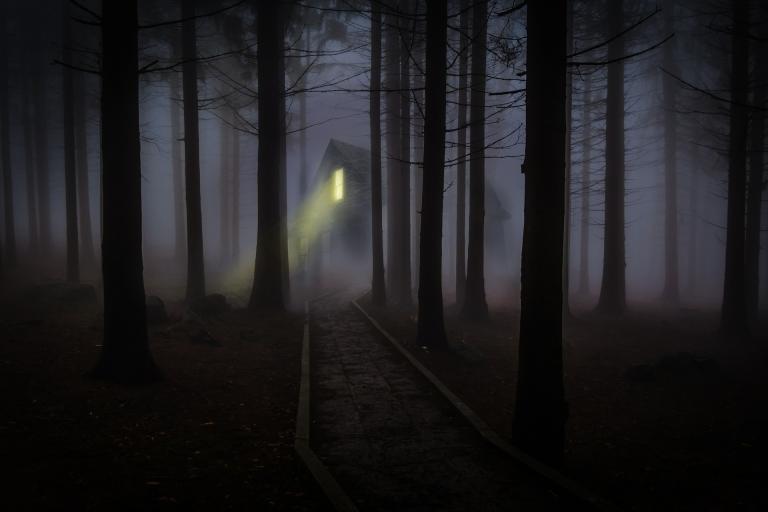
Is the haunting a result of an unembodied ghost, an echo of past events, or the very soul of the place acting out. Image by Brigitte makes custom works from your photos, thanks a lot from Pixabay
Souls of objects and places can and do reincarnate, as reincarnation is not strictly limited to humans, or even to animals, plants, and other organic living beings. My partner’s phone loves her. Its soul has consistently moved into each upgraded phone along with all the data. Of course, it is never exactly the same, just as we are not exactly the same in each incarnation, but it is definitely the same soul.
Animism and reincarnation are very intertwined concepts in how I experience the world and interpret the natures of souls. Lifespans for different souls can vary from minutes (some bacteria or insects) to millions (mountains and oceans) or even billions of years (stars and planets). It might seem sad that some souls are very short-lived, but we humans would not be suited to living lives that last for thousands of years, let alone millions. By the same token, those short-lived souls are suited to that existence, or they probably would not be reincarnated as such short-lived beings.
We also touched on the influence of nature and nurture on personality, and how the soul is part of our natures. This is a topic that I very much intend to write about on its own in the future.
The Question of Cultural Appropriation
Towards the end of the podcast we also discussed whether or not animism is cultural appropriation, and I had trouble finding the right words to describe exactly why animism, in and of itself, is not cultural appropriation.
That is a reasonable question to ask, since animism is widely practiced in indigenous religions, and it is believed by anthropologists to be a central component of ancient religions and spiritual practices. Shinto is the only major world religion (an established hierarchical religion practiced by millions of people) which is animistic. That means the majority of us (especially those of us of European descent) are raised in non-animistic cultures. Those individuals who are raised with animism are usually part of a marginalized and colonized culture that has retained animistic practices, or are Japanese (and probably specifically raised in Japan).
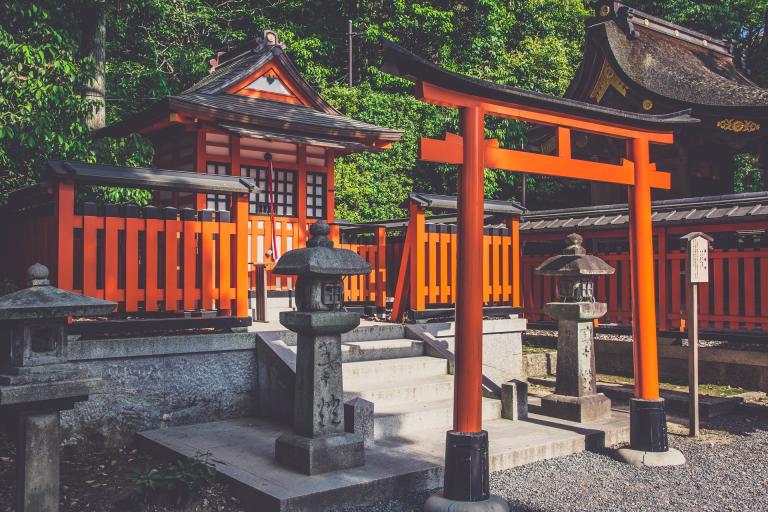
Shinto is the only animistic major world religion currently, but most indigenous religions are animistic, and it is believed that most ancient religions were as well. Image by Igor Ovsyannykov from Pixabay
However, animism as a concept is not cultural appropriation, because it is too large and widespread, and instead of indicating a specific practice you can do, it indicates a perspective on the nature of reality that underpins a way of understanding reality. Animism is anything but unique to one culture or culture group, but instead is found around the world and throughout history. Trying to claim that animism is cultural appropriation would be exactly like trying to claim that polytheism was cultural appropriation. Just like with polytheism, there are enough similarities between different animistic traditions, paths, and religions that we can confidently call them animistic, but the specific practices on how to deal with animistically recognized souls and spirits can vary dramatically.
When you are talking about animism, you need to be careful of cultural appropriation if you are taking inspiration from a specific tradition in how to interact with souls and spirits. Generally, guidelines about how to be polite are not a problem, because we should all know how to be polite, and there are multiple ways to be polite and respectful. But, if you are wanting to cherry-pick specific rituals or practices from a specific culture or tradition, it is important to determine if doing so would be culturally insensitive or cultural appropriation.
For my part, I have learned to interact with the souls around me by paying attention to how they respond to things, and by applying general principles of consent and respect. As I had no access to teaching on animism growing up, I had to figure it out for myself. I took what inspiration I could from the world around me, but lacked any opportunity to adopt specific practices from any particular culture until after my personal animistic practices were well established.
I do want to write more about animism, and I welcome your questions. Image by Daniel Hannah from Pixabay
In Conclusion
I do want to write more about animism. I know quite a few other witches and pagans who are actively animistic, but I think all of us have a tendency to just assume others know what we mean by that. Given the prevalence of anti-animism in Western Culture, and especially the dominant monotheistic religions that preach that out of all creation only humans have souls, animism can seem incredibly counterintuitive or confusing.
Animism is one of those things that, when you fully grasp the concept, it can seem incredibly obvious, to the point that it can be difficult to convey to others who do not understand what animism means. I can say until I am blue in the face that, “animism means recognizing that souls inhabit all things that exist, be they animals, plants, objects, or places,” but what does that mean? What are the ramifications of recognizing individuality and autonomy in the things that we use and so often disregard? How can a pebble have a soul, when it cannot breath or see or even move? How do you determine when life begins and ends, and in doing so, when the soul becomes embodied or moves on to its next life?
Animism is a huge and complex topic, even when you are not diving into specific practices from a specific tradition, and it has profound ramifications for how to approach energy work, magic, and spellwork.
So, if you have any questions you would like me to write about relating to animism, please ask. I will do my best to answer them.
———
Want email notification for things I write or create, here and elsewhere? Sign up for blog notifications at SidneyEileen.com ———
SidneyEileen.com Facebook * Instagram * Twitter
———
Previous Post

April 15, 2021
A Story of Ghost Cats
Next Post

April 27, 2021 Making Room for Anger in Your Life and Practice
Browse Our Archives
Select a Category Magical Tips Pathfinding Retrospective Review Sigils Social Justice Story Time Words Have Power
Select a Month January 2022 May 2021 April 2021 March 2021 February 2021 January 2021 December 2020 November 2020 October 2020 September 2020 August 2020 July 2020 June 2020
TAKE THE
Religious Wisdom Quiz
True or False: Rahab was a prostitute who helped the Israelite spies in Jericho.
Select your answer to see how you score.
FALSE TRUE
Related posts from The Balancing Path
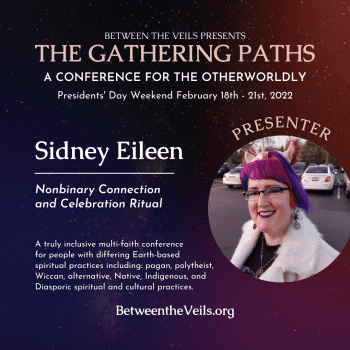
Presenting at The Gathering Paths Conference
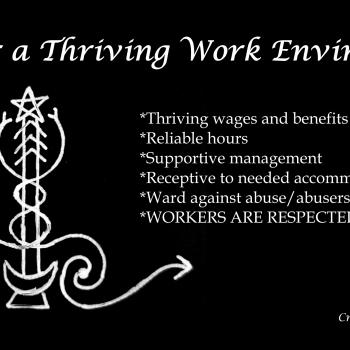
Sigil For a Thriving Work Environment
Nonbinary Magic for All at BTV Conference

Making Room for Anger in Your Life and...
TRENDING AT PATHEOS Pagan

I was recently chatting with someone on Instagram. She asked me what...

While there are many people who share their results, the end of...

On July 23, I saw Christopher Nolan's The Odyssey which is Homer’s...

As I write this two big events have just finished up. One...

Restoring the Watershed of Divine Love
Perhaps cooperation is not something we manufacture through legislation, ideology, or moral...

Many UUs don’t pray because of bad experiences in a previous religion,...
view all Pagan blogs
Ad-Free & Subscriber Log-In Subscription Support
- About Us
- 2026 Calendar
- Videos
- Podcasts
- Library of World Religions
- Faith In Media Tracker
- Advertise With Us
- Write for Us
- Privacy Policy
- Terms of Service
- Do Not Sell My Data
- Contact Us
- Radiant Digital
- Manage Newsletter Subscriptions
- Unsubscribe From Notifications
- Sitemap
Copyright 2008-2026, Patheos. All rights reserved.
Subscription Support Ad-Free & Subscriber Log-In
Follow Patheos