
BuddhistCatholicContemplativeEvangelicalGeneral ChristianHinduJewishLatter-day SaintMuslimNew VisionsProgressive Christian
Beliefs
- Buddhist
- Catholic
- Contemplative
- Evangelical
- General Christian
- Hindu
- Jewish
- Latter-day Saint
- More Voices
- Muslim
- New Visions
- Pagan
- Progressive Christian
Topics
- Religion News
- Food and Religion
- Sports and Religion
- Religious Art
- Religious Music and Entertainment
- Religious Events
- History and Religion
- Style and Religion
- Politics and Religion
- Women in Religion
- Recreation Outdoors and Religion
- Business Finance and Religion
- Careers Workplace and Religion
- Education and Religion
- Family Parenting and Religion
- Health Fitness and Religion
- Home and Religion
- Relationships and Religion
- Technology and Religion
- Travel and Religion
Columnists
- Buddhist Columnists
- Business Finance and Religion Columnists
- Careers Workplace and Religion Columnists
- Catholic Columnists
- Contemplative Columnists
- Education and Religion Columnists
- Evangelists Columnists
- Family Parenting and Religion Columnists
- General Christian Columnists
- Health Fitness and Religion Columnists
- Hindu Columnists
- History and Religion Columnists
- Home and Religion Columnists
- Jewish Columnists
- More Voices Columnists
- Latter Day Columnists
- Muslim Columnists
- New Visions Columnists
- Nonreligious Columnists
- Pagan Columnists
- Politics and Religion Columnists
- Progressive Columnists
- Recreation Outdoors and Religion Columnists
- Relationships and Religion Columnists
- Religion News Columnists
- Religious Art Columnists
- Religious Events Columnists
- Religious Music and Entertainment Columnists
- Sports and Religion Columnists
- Style and Religion Columnists
- Technology and Religion Columnists
- Travel and Religion Columnists
- Women in Religion Columnists
Resource Library
- 2026 Calendar
- Library of World Religions
- The 100 Most Holy Places on Earth
- Patheos Answers
- Podcasts
- Videos
- Faith Leaders Database
- Anglican Episcopalian
- Bahai
- Baptist
- Buddhism
- Christianity
- Confucianism
- Eastern Orthodoxy
- Hinduism
- Holiness and Pentecostal
- ISKCON
- Islam
- Judaism
- Lutheran
- Methodist
- The Church of Jesus Christ of Latter-day Saints
- New Age
- Paganism
- Presbytarian and Reformed
- Protestantism
- Religion Behind the Scenes
- Roman Catholic
- Scientology
- Shia Islam
- Sikhism
- Sufism
- Sunni Islam
- Taoism
- Zen
- See all religions
Research Tools
 Ad-Free & Subscriber Log-In Subscription Support
Ad-Free & Subscriber Log-In Subscription Support
Follow Patheos 

- Trending:
- Forgiveness
- |
- Marriage
- |
- Consciousness
- |
- Death Penalty
- |
- Election
- |
- Halloween
 The Balancing Path
- Home
- Pagan
- Why “Haters Mean I am Doing Something Right” Is Wrong
Why “Haters Mean I am Doing Something Right” Is Wrong
Last updated on: January 3, 2022 at 10:00 pm by Sidney Eileen
Why “Haters Mean I am Doing Something Right” Is Wrong 2022-01-03T22:00:12-08:00 Sidney Eileen
Patheos Explore the world's faith through different perspectives on religion and spirituality! Patheos has the views of the prevalent religions and spiritualities of the world.
I think it is safe to say that everyone has at some point seen someone declare, “Haters mean I am doing something right!” In person it is usually stated with a puffed-up chest and a proud, egotistical smile. Online it is usually written in response to criticism, or pandered to followers and friends who are likely to shower the statement with enthusiastic approval. This is a concept which is applied by people in any area of interest, and paganism and witchcraft are not exceptions. The problem is, this is an ego-driven false equivalency. Sure, haters do not inherently mean you are doing something wrong, but they also do not inherently mean you are doing something right.

Having haters does not inherently mean you are doing something right, or that you are doing something wrong. Image by Tumisu from Pixabay
The Kernel of Truth
Being criticized is hard, and can hurt. Being hated on can be a tremendous blow to self-confidence and self-worth. Believing that haters mean you are doing something right feels damned good.
It is true that haters are not necessarily correct just because they exist. Different people have different issues, different ways of doing things, different ideas or dogmas, different backgrounds, different experiences, different traumas, different capabilities, different skills, and more. No matter what you say or do or write, there are going to be people who disagree, or who it does not apply to. Sometimes people just have bad days, or interactions just go wrong, are misinterpreted, or rub someone the wrong way. Also, malicious trolls do exist, and will hate on other people regardless of any merit.
It is correct to say, “Haters do not necessarily mean I am doing something wrong,” but that is not at all the same sentiment as, “Haters mean I am doing something right.” Going from “not necessarily wrong” to “right”, especially in such an absolutist manner, is more than a little bit of a stretch. Making that cognitive leap ignores those times when you might be wrong, and it ignores those times when a difference of opinion cannot be quantified by rightness or wrongness.

Ego trips give an overinflated sense of righteousness which is lacking in solidity and substance. Image by Zoltán Fáth from Pixabay
The Ego Trip
Countering negativity with automatic self-inflation may be an effective way to avoid damaging blows to self-confidence, but it comes at a price. Keep it up long enough, and it can help transform anyone into that egomaniacal asshole (if they were not one to begin with). You know, the one who thinks they can do no wrong and/or are inherently better than everyone else.
Even if the person declaring, “I must be doing something right,” acknowledges the possibility that they might be doing something wrong, it sweeps any wrongdoing under the rug by emphasizing that there is “rightness” happening as well. That perception of rightness is the overriding ego trip, whose best friend is the statement, “All attention is good attention.”
I suppose “all attention is good attention” if someone is solely interested in engagement metrics, but placing that idea on a pedestal of highest achievement is nothing more than blatant self-aggrandizement. It says that attention of any kind is of infinitely greater importance than any harm which is created. That, my friends, is a complete and utter failure to be a decent human being, let alone a compassionate one.
Have Some Humility, Not Hubris
There is a balance between the asshole hubris of believing you are inherently right, and the crushing defeat of thinking every hater is right. The key to finding that middle ground is humility and compassion. It is important to recognize that everyone makes mistakes and will be wrong now and again, even you and me.
When it is obvious that someone is a troll, is engaging in conspiracy theories, is making personal accusations or insults, or is reacting out of proud prejudice, then I believe you are under no obligation to give their criticisms a second thought. When I post about anything relating to inclusion or diverse genders, it tends to draw at least a couple such criticisms, and I am fine with that. In this case, it does mean I am doing something right if it upsets the transphobes, bigots, and racists, because their core principles are directly at odds with my core principles.

Most of the time it is important to give criticisms some thought and consideration, even if you decide you disagree. Image by 20672 from Pixabay
The rest of the time, though, it is usually important to give the criticisms some thought. If it is just one isolated hater, that probably says more about them than you, but there still might be something to learn by carefully considering it. There also might not be anything to learn. That is where the compassion and humility come in. Humility acknowledges that we do not know everything and we could be wrong, either in part or in whole. Compassion tells us that the other person has a right to be upset, even if we ultimately do not agree with them.
When we take the time to consider criticisms (while trying not to take them personally), we can broaden our understanding of other perspectives. We can try to understand where other people are coming from, and so improve how we communicate with and interact with them, even when we do not see eye to eye. It also gives us a chance to look at our own beliefs through a different lens. By looking at our beliefs from a new perspective, we can find weaknesses and strengths we may not have realized before. After careful consideration, we may decide that the criticism has some valid points or was wholly correct, and that our own words, beliefs, and practices would be improved by changing them, whether in tiny ways or huge ways. We also might decide that changing is unnecessary or unwarranted. Sometimes, we might owe an apology if unintentional harm was caused.
When receiving the same criticism from multiple people, it is still possible that you are doing nothing wrong, but it becomes even more important to carefully consider any possible validity to those criticisms. There are many reasons why large groups of people may have good cause to criticize something, but there are also times when going against the grain is valuable even if it upsets lots of people. Most social justice work upsets a lot of people, but it is still worth doing.
Are you ruffling feathers by bucking tradition and forging a new path which upsets established ideas of How to Do Things? Are you voicing a valid perspective which is poorly understood, and likely to make people uncomfortable? Did you make a genuine mistake or engage in problematic or harmful rhetoric? Are you just being an asshole?
If a large number of people are all criticizing you about the same thing, it is extra important to put in the effort to understand where they are coming from. If you are “right”, having an understanding of where they are coming from will help you to address the criticisms more effectively. If you are “wrong”, it is the humble and compassionate thing to figure it out, apologize, make amends as needed, and do better in the future. Denying that you messed up does not make your mistakes magically disappear, and we all make mistakes from time to time.

It is particularly important to pay attention to criticisms which point out appropriation or prejudice. Image by Vytalis Arnoldus from Pixabay
Accusations of Prejudice and Appropriation
It is particularly important to pay attention to criticisms which are pointing out appropriation or prejudices (racism, bigotry, transphobia, sexism, xenophobia, ableism, antisemitism, religious superiority, etc.), especially when that criticism is coming from someone in the marginalized group. Even if you try your best to avoid doing any of those things, prejudices are a part of the background noise and baseline culture in the United States and other countries. We all unintentionally engage in prejudice and must be continually vigilant to avoid doing it. However, no matter how mindful and careful we are, we all make mistakes now and again, at a minimum out of ignorance.
Is every accusation of appropriation or prejudice going to require you to make changes? Not every single one, no. But most of the time, yes. It is important to consider the criticism, where it is coming from, and how it relates to your beliefs, words, and actions. It is important to understand the harm you are causing, in what way, and to who. It is important to understand how that criticism relates to your beliefs and practices, and figure out if it genuinely has merit in relation to what you are doing.
One Accusation of Prejudice
A few months ago I was accused of “blatant transphobia” for writing about the benefits of claiming full ownership of your own body. The commenter believed that gender exists solely in the mind and heart, and they were clearly terrified that any effort to embrace the physical body was going to devolve into gender essentialism. That one comment was coming from a sincere place for that person, but it erased the lived experiences of other trans people like myself, who do love and claim ownership of their bodies despite being transgender.
In other words, I disagreed with the criticism that my writing was transphobic, because my writing was inclusive of multiple expressions of transness. Also, even if the topic was not relevant to their personal experience, it did not negate their personal experience. Denial of physical form is one way to deal with dysphoria, but it is not the only way, and it is a way that was unrelated to the topic of the article. Because I am also a member of that minority group, I could easily weigh the criticism and come to a firm conclusion, but I still needed to take the time to weight the criticism. My experience of transness is not the same as other people’s experiences, and it is possible to unintentionally write or do something which is harmful to others in that minority even if it is not harmful to me.

It is important to be open to criticisms. Image by Gerd Altmann from Pixabay
Be Open to Criticisms
If the criticism does not immediately make sense to you, it can be difficult to determine whether or not you are in the wrong or have made a mistake. Instead of responding defensively, take some time to check for writings on the topic from people who are in that minority group, especially if the criticism is coming from someone who is not in that minority group. Sometimes privileged people are genuinely taking on the emotional labor of calling out bad behavior, and other times they are acting as unnecessary gatekeepers or do not fully understand the criticism they are offering. Do your research to figure it out, and ask other applicable people if possible, rather than dismissing those concerns out of hand.
If the criticism is coming from someone in the minority group, best practice is to take it very seriously, even if they are not “polite” about it. It is exhausting to deal with prejudice, microaggressions, and appropriation day in and day out. It could make anyone cranky, and their firsthand experiences will make them much more conscious of problematic things you may be overlooking.
The Complicated Question of Cultural Appropriation
Cultural appropriation is an incredibly complicated topic, further complicated by the blurry lines to cultural appreciation and cultural exchange. There is nothing genuinely new under the sun, and we cannot help but be influenced by the people and cultures around us. Most concepts and ideas are not specific to one single culture or tradition, but specific practices and rituals usually are. When we take beliefs, practices, and rituals out of context or use them inappropriately, it can be incredibly harmful, especially when those beliefs, practices, and rituals originate in marginalized and colonized groups.
Smoke cleansing, for example, is a practice used by cultures around the world. White sage is a specific herb which grows in specific regions of North America, and is a very important part of traditional practices of indigenous people who originate in those regions. There are some people from those indigenous groups who believe it is OK for people from other cultures to use white sage, provided they do not mimic the indigenous smudging practices and they either have their own plant to harvest from or purchase their white sage from a native who is harvesting it sustainably and properly. Some believe it is OK for non-indigenous people to use smudging practices if they are respectful and have been fully trained in those practices by an indigenous person. Others believe no one outside their ethnic group should use white sage on their own, for any reason.
All three views have merit, and as a white outsider with no training in any native practices, it is not my place to decide who is right or wrong. My best practice is to be respectful of the strictest perspective, never mimic smudging practices, and use other herbs and incenses for my smoke cleansing. Even those natives who want all use of white sage to be closed to outsiders recognize that smoke cleansing as a concept is not unique to the American Southwest. I have never seen someone protest incense, or even European sage, as cultural appropriation, and it would be ridiculous if they did, because their use has always been open to all.
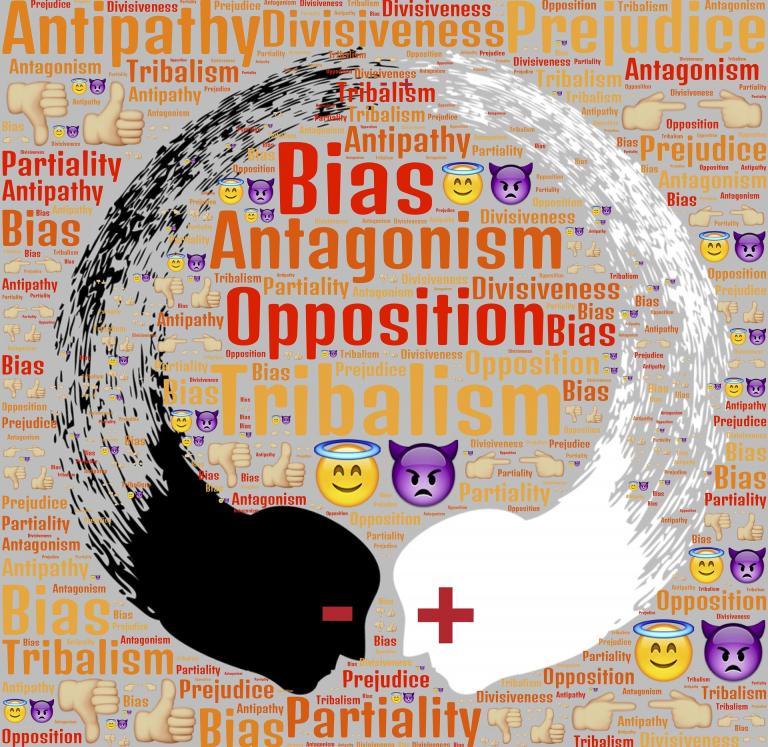
It is best practice to avoid doing things which are definitely or arguably appropriation. Image by John Hain from Pixabay
There are some situations, though, where accusations of cultural appropriation are misguided, or even completely unfounded. I have most often seen such accusations happen as a result of misunderstanding the practices being accused of appropriation (ex: Wicca is nothing but cultural appropriation), embracing racist stereotypes (ex: tarot is a closed system belonging to the Romani), and straight-up trolls looking to start trouble among the “snowflake lib-t**ds”.
Be cautious, though! Think critically before jumping to the conclusion that something is not cultural appropriation, because the majority of criticisms of cultural appropriation are valid and should be heeded. Thanks to colonialism and white supremacy, there is an astounding amount of cultural appropriation which happens, often without us even realizing we are doing it.
Cultural appropriation can happen with any closed (usually initiatory) tradition, regardless of the cultural origins of the tradition. However, by the same token you cannot declare a practice closed if it historically was not. The Greek, Roman, Germanic, and Norse religions, for example, were all open to anyone when they developed. If you were a traveler and went into those areas, you were likely to find yourself learning about and included in religious observations which happened while you were present.
The Romans in particular actively sought to teach locals their religion as they conquered new areas, at the very least by drawing equivalencies between Roman deities and the local ones. Those they conquered were welcome to continue worshiping their local deities, but were encouraged to also observe the Roman ones. In Hellenistic Greece travelers would come to Athens from anywhere in the known world, go to the temple, give offerings, and ask for aid from Athena. Same for those seeking the wisdom of Apollo through the Cybil, or any other Greek deities at their respective temples. Those pilgrims were welcome to buy tokens and pray to the Greek deities even after they went home, same as any Greeks.
That means forms of those religions may be practiced by anyone who has an interest, even though there were and are also initiatory versions of those religions, like Hellenistic mystery traditions. Any practices of those closed traditions which are distinct from the public forms of the religion, are, of course, limited to those people deemed appropriate by the tradition, but the existence of those closed traditions does not change the open nature of the pantheons they revere.
Efforts to entirely “close” open religions are typically based in racism, regardless of superficial justifications. For example, people declaring heathenism to be a closed system are doing so in an effort to advance a racist agenda, and wrongly equating DNA to religion, even as they cry about cultural purity. Their hypocrisies are evident in the fact that folkish heathens will happily take in a white man from a tiny Christian mid-western USA town, but deny a black person who grew up in Norway. I think it is easy to see who is more grounded in an applicable culture, but culture can be learned at any age, by anyone.
Generally, best practice is to avoid doing things which are pointed out to be appropriation by minorities and members of closed practices, especially if you have alternatives which are not problematic. If you are not sure, the responsible thing is to do your research.
It is outside the scope of this article to go into much depth on how to figure out what is and is not appropriation, so I recommend these articles for additional reading on that topic:
- Cultural Appropriation Vs Appreciation: A Primer For Pagans, Polytheists, And Occultists, by River Enodian
- Cross and Crossroads: Understanding & Identifying Cultural Appropriation, by Allen Cross
- Closed Traditions, Cultural Appropriation, and Race, by Sidney Eileen
- Wicca & Cultural Appropriation, by Jason Mankey
- Tarot and Cultural Appropriation, by The Homebrew Witch
- Pan-Celtic Hoofbeats: Think Before You Appropriate, by Kris Hughes
- Cultural Appropriation has nothing to do with “race”, by Yvonne Aburrow
Be Thoughtful, Not an Egomaniac
Whether you are right or wrong, or even if there is a right or wrong, has nothing to do with whether or not you have haters. There are far healthier ways to deal with the trauma of trolls than dismissing everyone out of hand and declaring yourself infallible. Personally, I am a fan of unfriending, blocking, and banning, and using those actions for magical applications, and there is a skill to accepting criticisms without taking things personally. If you cannot handle criticisms, at a bare minimum ignore and do not read the comments, but do so with the understanding that you may still offend or hurt people despite good intentions.
Also, how do you define “haters”? The more generous you are with your definition of “hater”, the more likely it is that you are reading more into their emotional investment than exists. Someone who takes the time to let you know something you said or wrote or did is problematic, is probably not thinking about you ten minutes later, let alone investing enough in you to genuinely hate you. On the other hand, someone who shows up repeatedly to throw personal insults or write mean-spirited rebuttal essays might genuinely hate you.
So, how do you define “haters”? Are your “haters” anyone who criticizes you in the slightest way? Are they people who openly threaten you? Are they people who repeatedly return to your social media, blog, or channel, and pick apart everything you do? Are they people who make personal accusations or throw personal insults? Are they anyone who is critical of your ideas, or do they graduate to “hater” status when they tell you they are upset about your dismissiveness of concerns? Are you being overly generous in who you consider a “hater” so you can play the victim in your own narrative?

There is a balance between crippling anxiety over every criticism, and the hubris of thinking you are always right. Image by Comfreak from Pixabay
There is a balance between crippling anxiety over every criticism, and the hubris of thinking you are always right. Exactly where that balance is, and how to achieve it, is different for every person. For me, that involves reading all the comments, deleting trolls and the proudly prejudiced, and taking the time to consider the rest of the criticisms, whether or not I directly reply to them. Just because you read a comment, does not mean you must always reply. If you do reply, it is important to know when to walk away if things get out of hand.
Read up on and contemplate how different people handle criticisms. Formulate plans for how you want to handle it, and try those plans out. Trial and error will likely be your best tool for determining exactly what does and does not work for you. What works for me may not work for you, and vice versa.
If you are having a very hard time taking criticisms as anything other than a personal attack, I highly recommend doing shadow work to address the roots behind that reaction. If you consciously understand the what and why of your reactions to criticisms, it will be much easier to formulate a functional plan for how to handle criticisms in a healthy and productive way.
No matter what you do, though, do not be one of those people who dismisses all criticisms out of hand by buying into the idea that “haters mean I am doing it right.” If you take that attitude, I guarantee you are doing something wrong.
———
Want email notification for things I write or create, here and elsewhere? Sign up for blog notifications at SidneyEileen.com ———
SidneyEileen.com Facebook * Instagram * Twitter
———
Previous Post

December 30, 2020
The Paradox of Estrangement in the Time of COVID-19
Next Post

January 11, 2021 Practicing Loving Honesty Instead of Brutal Honesty
Browse Our Archives
Select a Category Magical Tips Pathfinding Retrospective Review Sigils Social Justice Story Time Words Have Power
Select a Month January 2022 May 2021 April 2021 March 2021 February 2021 January 2021 December 2020 November 2020 October 2020 September 2020 August 2020 July 2020 June 2020
TAKE THE
Religious Wisdom Quiz
Which feast was reinstituted with great joy, reading the Law daily for seven days?
Select your answer to see how you score.
Passover Purim Day of Atonement Feast of Tabernacles
Related posts from The Balancing Path
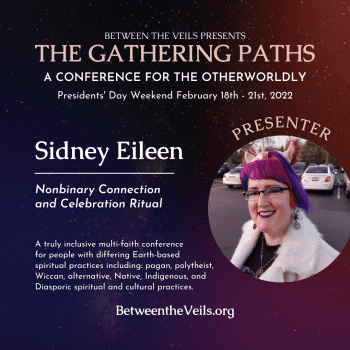
Presenting at The Gathering Paths Conference
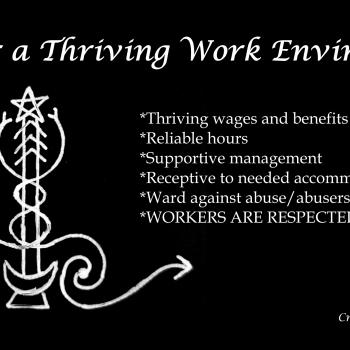
Sigil For a Thriving Work Environment

Nonbinary Magic for All at BTV Conference

Making Room for Anger in Your Life and...
TRENDING AT PATHEOS Pagan

I was recently chatting with someone on Instagram. She asked me what...

While there are many people who share their results, the end of...

On July 23, I saw Christopher Nolan's The Odyssey which is Homer’s...

As I write this two big events have just finished up. One...

Restoring the Watershed of Divine Love
Perhaps cooperation is not something we manufacture through legislation, ideology, or moral...

Many UUs don’t pray because of bad experiences in a previous religion,...
view all Pagan blogs
Ad-Free & Subscriber Log-In Subscription Support
- About Us
- 2026 Calendar
- Videos
- Podcasts
- Library of World Religions
- Faith In Media Tracker
- Advertise With Us
- Write for Us
- Privacy Policy
- Terms of Service
- Do Not Sell My Data
- Contact Us
- Radiant Digital
- Manage Newsletter Subscriptions
- Unsubscribe From Notifications
- Sitemap
Copyright 2008-2026, Patheos. All rights reserved.
Subscription Support Ad-Free & Subscriber Log-In
Follow Patheos