
BuddhistCatholicContemplativeEvangelicalGeneral ChristianHinduJewishLatter-day SaintMuslimNew VisionsProgressive Christian
Beliefs
- Buddhist
- Catholic
- Contemplative
- Evangelical
- General Christian
- Hindu
- Jewish
- Latter-day Saint
- More Voices
- Muslim
- New Visions
- Pagan
- Progressive Christian
Topics
- Religion News
- Food and Religion
- Sports and Religion
- Religious Art
- Religious Music and Entertainment
- Religious Events
- History and Religion
- Style and Religion
- Politics and Religion
- Women in Religion
- Recreation Outdoors and Religion
- Business Finance and Religion
- Careers Workplace and Religion
- Education and Religion
- Family Parenting and Religion
- Health Fitness and Religion
- Home and Religion
- Relationships and Religion
- Technology and Religion
- Travel and Religion
Columnists
- Buddhist Columnists
- Business Finance and Religion Columnists
- Careers Workplace and Religion Columnists
- Catholic Columnists
- Contemplative Columnists
- Education and Religion Columnists
- Evangelists Columnists
- Family Parenting and Religion Columnists
- General Christian Columnists
- Health Fitness and Religion Columnists
- Hindu Columnists
- History and Religion Columnists
- Home and Religion Columnists
- Jewish Columnists
- More Voices Columnists
- Latter Day Columnists
- Muslim Columnists
- New Visions Columnists
- Nonreligious Columnists
- Pagan Columnists
- Politics and Religion Columnists
- Progressive Columnists
- Recreation Outdoors and Religion Columnists
- Relationships and Religion Columnists
- Religion News Columnists
- Religious Art Columnists
- Religious Events Columnists
- Religious Music and Entertainment Columnists
- Sports and Religion Columnists
- Style and Religion Columnists
- Technology and Religion Columnists
- Travel and Religion Columnists
- Women in Religion Columnists
Resource Library
- 2026 Calendar
- Library of World Religions
- The 100 Most Holy Places on Earth
- Patheos Answers
- Podcasts
- Videos
- Faith Leaders Database
- Anglican Episcopalian
- Bahai
- Baptist
- Buddhism
- Christianity
- Confucianism
- Eastern Orthodoxy
- Hinduism
- Holiness and Pentecostal
- ISKCON
- Islam
- Judaism
- Lutheran
- Methodist
- The Church of Jesus Christ of Latter-day Saints
- New Age
- Paganism
- Presbytarian and Reformed
- Protestantism
- Religion Behind the Scenes
- Roman Catholic
- Scientology
- Shia Islam
- Sikhism
- Sufism
- Sunni Islam
- Taoism
- Zen
- See all religions
Research Tools
 Ad-Free & Subscriber Log-In Subscription Support
Ad-Free & Subscriber Log-In Subscription Support
Follow Patheos 

- Trending:
- Forgiveness
- |
- Marriage
- |
- Consciousness
- |
- Death Penalty
- |
- Election
- |
- Halloween
 The Balancing Path
- Home
- Pagan
- Why to Appreciate, and How to Be, a Good Teacher
Why to Appreciate, and How to Be, a Good Teacher
Last updated on: January 4, 2022 at 12:07 am by Sidney Eileen
Why to Appreciate, and How to Be, a Good Teacher 2022-01-04T00:07:49-08:00 Sidney Eileen
Patheos Explore the world's faith through different perspectives on religion and spirituality! Patheos has the views of the prevalent religions and spiritualities of the world.
In the United States there tends to be an overwhelming disdain for teachers. For those who teach our children, that disdain manifests itself in ignoring the efforts they put into teaching, viewing them as glorified babysitters, and in a general willingness to offer them up to COVID-19 as sacrificial lambs. All teachers, though, experience this social disdain to some level, whether it is through the dismissal of the time and effort that goes into preparing lessons, disregard for the skill involved in being a good teacher, or balking at prices on the grounds that they are charging too much.
There are a tremendous number of issues which have played into this disdain for teachers over the course of the past 80 years or so in the United States, but there is one phrase which I think captures the heart of that dismissal rather well.

There is a commonly held perception that teaching, as a profession, is mostly populated with people who had no other employment options. Image by Gerd Altmann from Pixabay
“Those Who Can’t, Teach.”
The idea behind this sentiment is that if someone is not “good enough” to get a “real job” in their field, they will turn to teaching as a way to make ends meet. It frames teaching as a last-resort career, performed only by those who are so incompetent that they are unable to “make it” in their field of study. It implies that teaching is something anyone can do, with relative ease, and that only abject failures would want to do it.
Does that happen now and again? Sure. But that is a significant minority of teachers, and I would wager that the teachers which have that perspective usually resent the career they find themself in, and are probably bad at teaching as well.
Teaching is a Skill Unto Itself
We have all had bad teachers. In all likelihood, you have had a lot of bad teachers throughout your life. Unfortunately, most people take that as proof of the above sentiment. It adds to the general disregard for teachers, but that is a false equivalency. Those teachers are bad because teaching is a skill unto itself, and those teachers are bad at that skill. In an educational setting it really does not matter how much of an expert the teacher is in their field, if they are incapable of effectively passing along that knowledge to their students.
If you cannot effectively explain all the details and lead someone through the process with clarity and patience, you are not going to be able to teach them. On the other hand, if you are skilled at teaching, you can make a basic study of a subject and be able to teach an introductory level of what you have learned, without becoming a full expert.
You probably had at least one teacher along the way who was very skilled at teaching. They made the subject enjoyable and engaging, and were able to explain it in ways that were clear and easy to understand.

Teaching is a skill that must be developed in order for the teacher to clearly convey information. Image by John Hain from Pixabay
It is important to recognize that teaching is a separate skill from the subject being taught, and skill with teaching is necessary to be a good teacher. Different people will be better or worse at it, just like with any other skill. Have compassion for those who are just learning how to teach, and have higher standards for what you expect of teachers. Teachers who are bad at teaching should not be allowed to continue teaching, especially in settings like public school. Teachers who are good at teaching should be rewarded and appreciated.
Tutors, Mentors, and Workshops
Teaching skills also come into play when you are talking about more intimate or informal learning settings.
Most tutors do not need to figure out a lesson plan and creating learning materials, but they do need to be able to adapt to whatever materials the student has been given by their primary teacher. They need to be able to figure out what the point of the lesson is, and then clearly convey that information in a way that is understood by the student. Were your parents able to help you with your schoolwork growing up? If not, then they were not good at this particularly challenging and unpredictable area of teaching.
Mentors are similar, but they tend to be far more informal. Whether the mentor is paid or not, they are usually someone who is an expert, or has been there and done that, and can help to guide someone down a path. This tends to be a long-term relationship, based in journeying rather than learning specific things. This is a person who can be turned to for insight and advice. There are a lot of mentors in pagan, pagan-tangential, and occult circles who do exactly that, and it is another subset of teaching skill which some people are amazingly good at, and others not so much.

A huge amount of teaching in pagan and occult circles comes in the form of workshops. Image by Gerd Altmann from Pixabay
A huge amount of teaching in pagan, pagan-tangential, and occult circles comes in the form of workshops and other one-off classes. No matter how many or how few students attend, whether it is paid or free, it requires the same preparatory work on the part of the teacher. Depending upon what is being taught, they might need to work out a full teaching plan along with creating educational materials, or they may just need to have a really good idea of what they will be talking about. Even if the situation is the latter, they have invested a lot of time and energy becoming knowledgeable enough about the subject to be capable of teaching about it effectively.
Respect for Experience, Skill, and Knowledge
It is important to respect teachers for the right things. Just because someone is offering themselves as a teacher, does not automatically mean that they have the experience, skill, and knowledge necessary to effectively teach. While this may not necessarily be a problem when teaching beginner subjects, it can be problematic when they are teaching on intermediate or advanced subjects.
If someone is teaching, they should be willing to give their qualifications. They don’t necessarily need to have been formally taught, or have a diploma, but they should be able to say what they have done, and in what way they are experienced enough, skilled enough, and/or knowledgeable enough to teach.
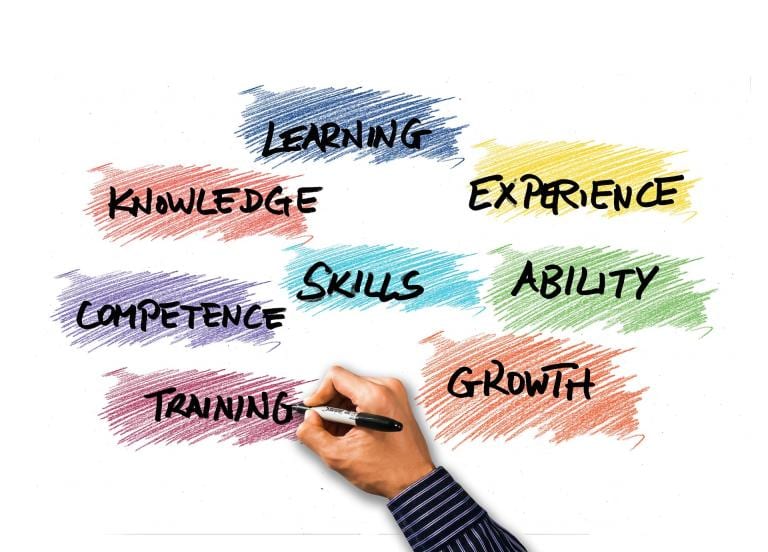
Teachers should be willing and able to explain their experience and qualifications. Image by Gerd Altmann from Pixabay
For example, if they are teaching about a specific tradition, they should be able to say how many years they have been practicing that tradition, what their personal focus is, how they came to be part of that tradition, and how they are currently involved in the tradition. If they cannot or will not answer those questions, it is doubtful they are actually qualified, and may not even be a part of that tradition, instead seeking to cash in on a trend. Unless the knowledge you are gaining comes from someone who is qualified in the tradition, all of it is suspect, and likely inaccurate. Do the research to make certain they are legitimate, especially if you plan to pay them money.
If someone is teaching about the basics of magical tools, especially if it is structured as a general introduction to the concept, it may be enough for the teacher to have simply been practicing for a couple years.
If someone is teaching about a new kind of path or way of approaching work, they should be able to say how long they have been developing their techniques, and why they have created the new system.
Respect the level of experience, knowledge, and skill that your teacher has, when it is presented with sincerity and humility. We are all continually learning, and no one knows everything. Most people are qualified and capable of teaching about some things, but not other things, no matter if they are relatively new, or have been practicing for decades. The other side of the token is that they may or may not be skilled at teaching, no matter their other qualifications. Unfortunately, it is much harder to determine if someone is a good teacher until they try to teach you.

Teaching can be profoundly educational for the teacher as well. Image by Gerd Altmann from Pixabay
Teaching Helps You Learn
If you are inclined to teach, the act of teaching is profoundly educational for the teacher as well. When we are engaged in our own practices, we are completely immersed in our own perspectives. When you teach, you must learn how to explain the subject in ways that can be understood from different perspectives, which increases your depth of understanding about the subject.
There are visual learners, auditory learners, and tactile learners. Some people think analytically or need minutely detailed instructions. Some people need to understand the mechanisms behind it before they will be able to remember the processes. Some people love lists and rote memorization. Some people will never effectively retain rote knowledge. Some people need special accommodations due to learning disabilities or neurodiversity.
We also all come at subjects with different backgrounds of knowledge and experience. Much of the impetus for general education in college is to ensure that more advanced students share a body of knowledge. This saves the professors from needing to explain that background knowledge, and allows them to jump straight into more advanced material.
Effective teachers will be able to discern what missing background knowledge is needed, and be able to adjust the lesson accordingly. Include too much background knowledge, and you bore your student. Include too little, and you quickly lose your student. Pay attention to the students, and you can gauge if they are yawning and look bored, or if they look confused. Do not be afraid to ask them what they need clarification on, or at what point it stopped making sense.

Education is universal, and never stops, but it can take work, compassion, and patience to find your way to where you want to be. Image by Jan Alexander from Pixabay
Through teaching, you can gain a greater comprehension of exactly what background knowledge factors into the subject, strengthening the foundations of your own knowledge. Most people do not think about the foundations of what they are learning, but when you are teaching, those foundations cannot be ignored.
If you have reached a plateau in your own education, teaching others about the subject can help to reignite your own learning. Be mindful of the fact that you must develop your teaching skills, and be mindful of what you are qualified to teach. Then, have at. The more sincere you are about teaching effectively, the more benefit it will have to your own knowledge and understanding.
How Qualified is Qualified Enough to Teach?
Hopefully, you have enough humility to ask yourself if you are actually qualified to teach. Generally, in informal settings like workshops, if you have enough knowledge to easily fill a one-hour class on the subject, you are probably qualified to teach. You do not need to know the details about obscure herbs from a different continent if you are going to be talking about common garden herbs in the local area.

Teaching is ideally a way forward, both for the teacher and the student. Image by Mabel Amber from Pixabay
Approach it with enough humility to briefly state your qualifications (a step I have a tendency to forget because I get excited about teaching and want to jump straight in), and to admit when you do not know the answers to questions your students have. If possible, refer them to resources where they may find the answers to their question, or take down their name and info if you are inclined to do the research on their behalf.
Will students get upset if you do not have all the answers? Maybe, but most likely they will be fine with your honest answer. No one knows everything, and not all questions can be anticipated. Part of being a good student is understanding those facts, accepting your teacher for their confident level of knowledge, and a willingness to look elsewhere for the answers to questions they cannot answer. Multiple teachers will provide broader knowledge than any one teacher can ever be capable of, and self-teaching is valid and helpful.
A Question of Money
When someone offers to teach you for free, they are giving you an incredible gift. They are giving you, not just the time they physically spend teaching you, but all the time they spent creating learning materials, planning out what to teach, and in becoming knowledgeable enough about the subject to be capable of teaching it. They also may have overhead costs, or materials costs, and potentially travel expenses.
When someone asks for money, trust that they have their own solid reasons for charging the prices they do. If they seem to be asking for an exorbitant amount of money, be extra careful that they are genuinely qualified, and not just a charlatan milking people of their money. If you suspect they are not legitimate, walk away and look for another teacher. If you find proof that they are not legitimate, warn your friends.
If at all possible, be willing to compensate your teachers for the valuable job they do enriching your life, and the lives of others. Image by naobim from Pixabay
Private education, especially religious and occult education, is a personal choice. It is likely to be offered for a price, because without that price the teacher is unlikely to be capable of teaching. Very few teachers will have their efforts funded by an established religious group. At a minimum, most teachers will need to recoup the money lost to overhead, travel, and materials. Most also need some amount of compensation for their time, both in preparation for teaching, and for the class itself. The more they want to teach, the more important it is to receive monetary compensation, so that they have the freedom to focus on teaching and still have free time, instead of worrying about holding down other jobs or working themselves to death.
Those Who Can, Teach
The worst teachers are going to be those which lack empathy, compassion, and patience. Those are the teachers who say, “Just do it,” instead of explaining reasoning or processes. Those are the teachers who throw materials at the students and expect them to figure it out. Those are the teachers who belittle and bully students who do not catch on immediately. Those are the teachers who have a single way of presenting a subject, and refuse to explain it in other ways. Those are the teachers who imply or tell students that they are incapable of learning, or a waste of time.
Developing skills with teaching is an excellent way to develop skills with empathy and compassion and patience. It requires that you shift your view, and try to see the world from another person’s perspective. It recognizes that everyone is capable of learning, and if that is not happening, then the teacher needs to reframe the material in new and different ways until understanding is achieved. It takes time, compassion, and patience, but there is nothing in the world like helping someone to achieve that “Ah-Ha!” moment of realization and understanding. Such moments make the world a brighter place.
———
Want email notification for things I write or create, here and elsewhere? Sign up for blog notifications at SidneyEileen.com ———
SidneyEileen.com Facebook * Instagram * Twitter
———
Previous Post

August 12, 2020
The Magic of Unfriending, Blocking, and Banning on Social Media
Next Post

August 25, 2020 Menstrual Magic for Uterus-Owners of All Genders
Browse Our Archives
Select a Category Magical Tips Pathfinding Retrospective Review Sigils Social Justice Story Time Words Have Power
Select a Month January 2022 May 2021 April 2021 March 2021 February 2021 January 2021 December 2020 November 2020 October 2020 September 2020 August 2020 July 2020 June 2020
TAKE THE
Religious Wisdom Quiz
Love is patient, love is kind. Love does not _____ or boast...
Select your answer to see how you score.
Fail Envy Scream Brag
Related posts from The Balancing Path
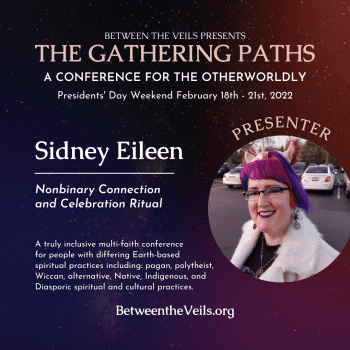
Presenting at The Gathering Paths Conference
Sigil For a Thriving Work Environment
Nonbinary Magic for All at BTV Conference

Making Room for Anger in Your Life and...
TRENDING AT PATHEOS Pagan

I was recently chatting with someone on Instagram. She asked me what...

While there are many people who share their results, the end of...

On July 23, I saw Christopher Nolan's The Odyssey which is Homer’s...

As I write this two big events have just finished up. One...

Restoring the Watershed of Divine Love
Perhaps cooperation is not something we manufacture through legislation, ideology, or moral...

Many UUs don’t pray because of bad experiences in a previous religion,...
view all Pagan blogs
Ad-Free & Subscriber Log-In Subscription Support
- About Us
- 2026 Calendar
- Videos
- Podcasts
- Library of World Religions
- Faith In Media Tracker
- Advertise With Us
- Write for Us
- Privacy Policy
- Terms of Service
- Do Not Sell My Data
- Contact Us
- Radiant Digital
- Manage Newsletter Subscriptions
- Unsubscribe From Notifications
- Sitemap
Copyright 2008-2026, Patheos. All rights reserved.
Subscription Support Ad-Free & Subscriber Log-In
Follow Patheos