
BuddhistCatholicContemplativeEvangelicalGeneral ChristianHinduJewishLatter-day SaintMuslimNew VisionsProgressive Christian
Beliefs
- Buddhist
- Catholic
- Contemplative
- Evangelical
- General Christian
- Hindu
- Jewish
- Latter-day Saint
- More Voices
- Muslim
- New Visions
- Pagan
- Progressive Christian
Topics
- Religion News
- Food and Religion
- Sports and Religion
- Religious Art
- Religious Music and Entertainment
- Religious Events
- History and Religion
- Style and Religion
- Politics and Religion
- Women in Religion
- Recreation Outdoors and Religion
- Business Finance and Religion
- Careers Workplace and Religion
- Education and Religion
- Family Parenting and Religion
- Health Fitness and Religion
- Home and Religion
- Relationships and Religion
- Technology and Religion
- Travel and Religion
Columnists
- Buddhist Columnists
- Business Finance and Religion Columnists
- Careers Workplace and Religion Columnists
- Catholic Columnists
- Contemplative Columnists
- Education and Religion Columnists
- Evangelists Columnists
- Family Parenting and Religion Columnists
- General Christian Columnists
- Health Fitness and Religion Columnists
- Hindu Columnists
- History and Religion Columnists
- Home and Religion Columnists
- Jewish Columnists
- More Voices Columnists
- Latter Day Columnists
- Muslim Columnists
- New Visions Columnists
- Nonreligious Columnists
- Pagan Columnists
- Politics and Religion Columnists
- Progressive Columnists
- Recreation Outdoors and Religion Columnists
- Relationships and Religion Columnists
- Religion News Columnists
- Religious Art Columnists
- Religious Events Columnists
- Religious Music and Entertainment Columnists
- Sports and Religion Columnists
- Style and Religion Columnists
- Technology and Religion Columnists
- Travel and Religion Columnists
- Women in Religion Columnists
Resource Library
- 2026 Calendar
- Library of World Religions
- The 100 Most Holy Places on Earth
- Patheos Answers
- Podcasts
- Videos
- Faith Leaders Database
- Anglican Episcopalian
- Bahai
- Baptist
- Buddhism
- Christianity
- Confucianism
- Eastern Orthodoxy
- Hinduism
- Holiness and Pentecostal
- ISKCON
- Islam
- Judaism
- Lutheran
- Methodist
- The Church of Jesus Christ of Latter-day Saints
- New Age
- Paganism
- Presbytarian and Reformed
- Protestantism
- Religion Behind the Scenes
- Roman Catholic
- Scientology
- Shia Islam
- Sikhism
- Sufism
- Sunni Islam
- Taoism
- Zen
- See all religions
Research Tools
 Ad-Free & Subscriber Log-In Subscription Support
Ad-Free & Subscriber Log-In Subscription Support
Follow Patheos 

- Trending:
- Forgiveness
- |
- Marriage
- |
- Consciousness
- |
- Death Penalty
- |
- Election
- |
- Halloween
 The Atheist Rabbi
- Home
- Nonreligious
- Teach Torah Honestly!
Teach Torah Honestly!
Last updated on: June 9, 2015 at 7:34 am by Jeffrey L. Falick
Teach Torah Honestly! 2015-06-09T07:34:30-05:00 Jeffrey L. Falick
Patheos Explore the world's faith through different perspectives on religion and spirituality! Patheos has the views of the prevalent religions and spiritualities of the world.
Sometimes I feel like I must be missing some kind of Jewish gene that enables so many other liberal Jews to comprehend ideas that seem completely meaningless to me. This is how I felt while reading the Forward’s latest installment of “Godology,” a conversation between columnist Elissa Strauss and Scott Perlo, a Conservative rabbi. “Godology” is a monthly series “in which they explore what it means to be ‘Godish’ – to kind of, sort of, believe in God.”
The first thing I did was to Google “Godish.” I feel so lost when I read these kinds of exchanges that I wanted to make sure that I wasn’t also missing out on some brand-new exciting theological trend. Unfortunately, the internets have not heard about it. A search for “Godish” got me only as far as Dish TV (“Go Dish!”).
Their back-and-forth dealt with one of my favorite topics: the meaning of the Torah. Elissa asked how – given that we more or less know who wrote the Torah, why, and under what circumstances – she was supposed to celebrate Shavuot. After talking about the basic irrelevance of the holiday’s meaning for her, she tells Rabbi Perlo:
…this isn’t to say that I don’t love the text, because I do. It’s just that, for me, its gravitas comes not from divine-inspiration, but from our attempt to infuse it with divinity for so long. Basically, it feels holy because we have used it to pursue the divine for so long – not because it was divinely inspired.
Rabbi Perlo acknowledges the fact that the Torah is a composite text. He even recommends Richard Elliott Friedman’s Who Wrote the Bible? Yet somehow, even in the face of this acceptance, he can still say this:
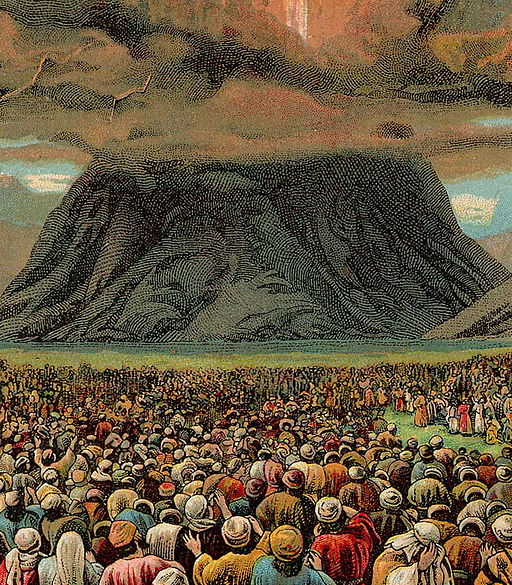
… it is our ancestors’ [emphasis in original] best attempt to communicate what happened at Sinai. I believe, as an aside, that the Divine did reveal itself to us at Sinai, and that the Torah is our attempt to capture the experience and the intent.
If you’re going to accept the findings of biblical criticism and archeology, you cannot simultaneously believe that there was a revelation at Sinai. It did not happen.
He goes on to talk about the importance of “Oral Torah,” the interpretive process invented by the ancient rabbis which they claimed to be a parallel Sinaitic revelation. This process of interpretation, also known as midrash, was the rabbis’ way of projecting their values onto the text. I understand that this is religiously meaningful to him and most rabbis, but for me and many other modern Jews, this process does not make the study of Torah and other Jewish texts more compelling.
I don’t mean to say that studying Torah is not interesting. It is profoundly interesting because in a certain kind of way it is revelation. Not revelation of God’s word. Revelation of how our ancestors – philosophically and scientifically unsophisticated though they were – teased meaning out of texts that they believed were divinely inspired. This has historical significance. And it is the reason why I spend so much time on these texts. (I teach many classes about the Jewish interpretive process and about who wrote the Bible and why.) It informs us about the past in some very significant ways.
It is the practice of using these texts to find answers to our modern-day questions that eludes me and so many others. The rabbi explains how it works for him:
…I think that not to seriously, reverentially incorporate our historic spiritual connection into contemporary spirituality is, well, to somehow cut off the new buds from the roots. But more to your question, I think that reading, for Jews, is a fundamentally holy act. Many people meditate, many pray, but in Judaism, reading is reverence. Interpretation itself brings us to God.
I agree with him that reading is very important to Jews and knowing these texts really can help us feel connected to our roots. Amos Oz and Fania Oz-Salzberger wrote eloquently about this in Jews and Words, a book about how secular Jews might appreciate our literature. What confounds me is this rabbi’s desire to play in a pre-modern sandbox as if we were pre-modern people.
Literature has the power to transform our ways of seeing the world. Whether we are reading fiction (like the Torah) or tendentious history (like much of the rest of the Bible) ancient literature helps us understand who came before us, what they considered important, and how they dealt with their own very different realities.
But I think we actually demean our ancestors and ourselves when we infuse our literary treasures with the magical “Divine” power to guide our search for answers to the big questions of our day. Are they going to teach us how our society should relate to women? To lesbians, gays and trans people? Are they going to teach us the importance of proper sex education? Will they help us to understand how to construct fair and equitable economic systems? To save our environment? To fashion a sensible foreign policy for our nation?
We have before us many more relevant paths to travel as we consider these questions. The answers will not be found in the stories and interpretations of ancient Israelites or the rabbis who succeeded them. Maybe it’s because I’m not seeking closeness to God, but I really do think that we could generate a lot more interest among contemporary Jews in learning about Torah and other Jewish texts if we taught them as the wonderful artifacts of history that they are and stop trying to dig meaning out of them for 21st-century Jews.
I wonder if any of these modern rabbis with their acceptance of the sole human authorship of these texts ever stop to consider that they’re employing the wrong educational approach, at least for many people. I know that they look at the polling data on how Jews feel about “religion.” So why can’t they embrace an alternative? Even if such an approach doesn’t serve their own need for “reverence,” what they are doing is obviously not working for a lot of Jews.
Previous Post

June 5, 2015
Gallup: Moral Attitudes Shifting to the Left
Next Post

June 10, 2015 How to Lose Friends and Alienate Allies
Browse Our Archives
Select a Category Blog Entries
Select a Month January 2017 August 2016 July 2016 June 2016 May 2016 April 2016 February 2016 January 2016 December 2015 November 2015 October 2015 September 2015 August 2015 July 2015 June 2015 May 2015 March 2015 December 2014 February 2014 December 2013 October 2013 June 2013 May 2013 April 2013 March 2013 February 2013 January 2013 December 2012 September 2012 August 2012 June 2012 May 2012 April 2012 March 2012 February 2012 January 2012 December 2011 November 2011 October 2011 September 2011 July 2011 June 2011 May 2011 April 2011 March 2011 February 2011 January 2011 December 2010 November 2010 October 2010 September 2010
Follow Us!
TAKE THE
Religious Wisdom Quiz
How many people did Jesus feed with five loaves and two fish?
Select your answer to see how you score.
About 12 About 5000 men About 100 About 7000
Related posts from The Atheist Rabbi

Trumpism Unites Neo-Nazis, Jewish Defense League



Jewish Community: Black Lives Matter No Matter What
TRENDING AT PATHEOS Nonreligious

Dethroning Jesus and Enthroning Yourself
Jesus Never Asked to Be Worshipped. He Asked to Be Understood. Christianity...

Why Most Christians are Really Paulians and Jobians
I Don't Care, But It Matters Let's get this out of the...

Essential Tips to Successfully Navigate the Selling Process
Selling a house can feel overwhelming, but it doesn’t have to be....

To Make Remote Work Effective, Think About Others
The COVID-19 pandemic forced many companies to rapidly transition to remote work....

Flexibility Is Key to Solving Problems of Tomorrow
The world of work is undergoing a dramatic transformation. The COVID-19 pandemic...
view all Nonreligious blogs
Ad-Free & Subscriber Log-In Subscription Support
- About Us
- 2026 Calendar
- Videos
- Podcasts
- Library of World Religions
- Faith In Media Tracker
- Advertise With Us
- Write for Us
- Privacy Policy
- Terms of Service
- Do Not Sell My Data
- Contact Us
- Radiant Digital
- Manage Newsletter Subscriptions
- Unsubscribe From Notifications
- Sitemap
Copyright 2008-2026, Patheos. All rights reserved.
Subscription Support Ad-Free & Subscriber Log-In
Follow Patheos