
BuddhistCatholicContemplativeEvangelicalGeneral ChristianHinduJewishLatter-day SaintMuslimNew VisionsProgressive Christian
Beliefs
- Buddhist
- Catholic
- Contemplative
- Evangelical
- General Christian
- Hindu
- Jewish
- Latter-day Saint
- More Voices
- Muslim
- New Visions
- Pagan
- Progressive Christian
Topics
- Religion News
- Food and Religion
- Sports and Religion
- Religious Art
- Religious Music and Entertainment
- Religious Events
- History and Religion
- Style and Religion
- Politics and Religion
- Women in Religion
- Recreation Outdoors and Religion
- Business Finance and Religion
- Careers Workplace and Religion
- Education and Religion
- Family Parenting and Religion
- Health Fitness and Religion
- Home and Religion
- Relationships and Religion
- Technology and Religion
- Travel and Religion
Columnists
- Buddhist Columnists
- Business Finance and Religion Columnists
- Careers Workplace and Religion Columnists
- Catholic Columnists
- Contemplative Columnists
- Education and Religion Columnists
- Evangelists Columnists
- Family Parenting and Religion Columnists
- General Christian Columnists
- Health Fitness and Religion Columnists
- Hindu Columnists
- History and Religion Columnists
- Home and Religion Columnists
- Jewish Columnists
- More Voices Columnists
- Latter Day Columnists
- Muslim Columnists
- New Visions Columnists
- Nonreligious Columnists
- Pagan Columnists
- Politics and Religion Columnists
- Progressive Columnists
- Recreation Outdoors and Religion Columnists
- Relationships and Religion Columnists
- Religion News Columnists
- Religious Art Columnists
- Religious Events Columnists
- Religious Music and Entertainment Columnists
- Sports and Religion Columnists
- Style and Religion Columnists
- Technology and Religion Columnists
- Travel and Religion Columnists
- Women in Religion Columnists
Resource Library
- 2026 Calendar
- Library of World Religions
- The 100 Most Holy Places on Earth
- Patheos Answers
- Podcasts
- Videos
- Faith Leaders Database
- Anglican Episcopalian
- Bahai
- Baptist
- Buddhism
- Christianity
- Confucianism
- Eastern Orthodoxy
- Hinduism
- Holiness and Pentecostal
- ISKCON
- Islam
- Judaism
- Lutheran
- Methodist
- The Church of Jesus Christ of Latter-day Saints
- New Age
- Paganism
- Presbytarian and Reformed
- Protestantism
- Religion Behind the Scenes
- Roman Catholic
- Scientology
- Shia Islam
- Sikhism
- Sufism
- Sunni Islam
- Taoism
- Zen
- See all religions
Research Tools
 Ad-Free & Subscriber Log-In Subscription Support
Ad-Free & Subscriber Log-In Subscription Support
Follow Patheos 

- Trending:
- Forgiveness
- |
- Marriage
- |
- Consciousness
- |
- Death Penalty
- |
- Election
- |
- Halloween
 The Big Picture
- Home
- Careers, Workplace and Religion
- A great reversal of the church and the welfare state
A great reversal of the church and the welfare state
Last updated on: March 28, 2014 at 11:56 pm by Acton Institute
A great reversal of the church and the welfare state 2014-03-19T15:53:25+00:00 Acton Institute
Patheos Explore the world's faith through different perspectives on religion and spirituality! Patheos has the views of the prevalent religions and spiritualities of the world.
 By Jordan Ballor
Over at the IFWE blog, Elise Amyx takes a look at Brian Fikkert’s argument about the origins of the modern American welfare state:
According to Fikkert, the evangelical church’s retreat from poverty alleviation between 1900 and 1930 encouraged the welfare state to grow to its size today. Church historians refer to this era as the “Great Reversal” because the evangelical church’s shift away from the poor was so dramatic.
In Faithful in All God’s House: Stewardship and the Christian Life, Gerard Berghoef and Lester DeKoster make a similar case. They argue that “the church is largely responsible for the coming of the modern welfare community.” They also cast the hopeful vision that another “Great Reversal” might occur: “The church could be largely responsible for purging welfare of its faults and problems if enough believers caught the vision.”
While Fikkert largely draws on the early twentieth century in America for his argument, Berghoef and DeKoster examine more broadly the Christian perspective on the relationship between faith and works of charity. This dynamic is, after all, is a perennial challenge for Christian social engagement, and the interaction between the Social Gospel and evangelicalism in America is just one example. Another is the reversal over the last century or so in the Netherlands, where there has been a move from Abraham Kuyper’s claim that “all state relief for the poor is a blot on the honor of your Savior” to the Dutch church’s plea “for social security that is not charity but a right that is fully guaranteed by government.”
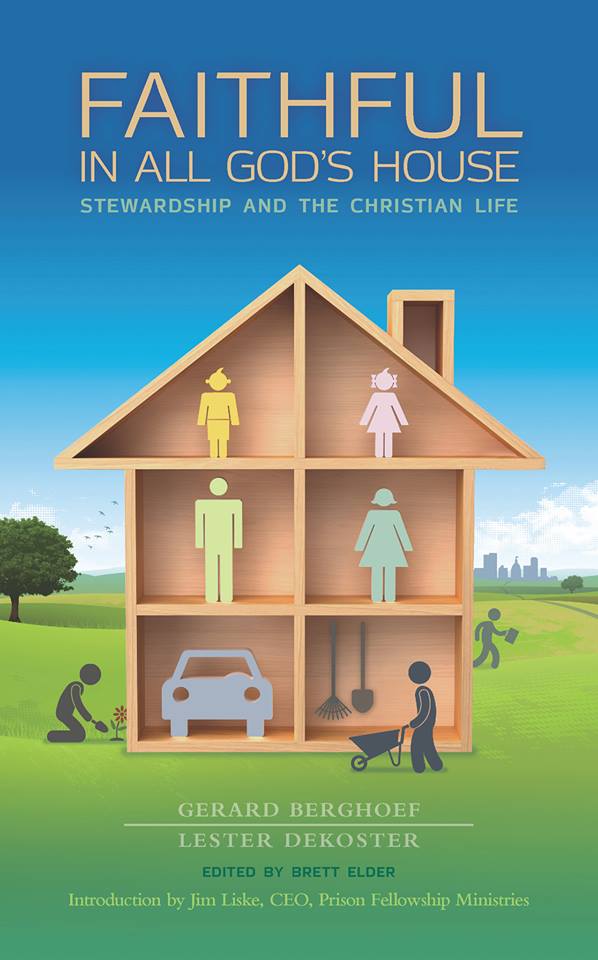 Berghoef and DeKoster point to two basic ways in which the church has given birth to the modern welfare state. The first is by giving life to the idea of a welfare community in the first place:
…the Word that the church proclaims demands charity and justice for the poor. As this Word has permeated at least the Western world, an alerted public conscience has demanded public welfare. The church is the parent of the welfare community.
But, given that the church is made up of fallible humans, the church failed to actualize in full the demands of charity and justice that it espoused. In this way,
because the church did not, and perhaps in some respects could not, measure up to its own ideals not all the starving were fed, not all of the homeless were given shelter, and not all the oppressed and exploited were relieved. The cries of the needy ascended to heaven. The Lord answered with the welfare state.
Berghoef and DeKoster answer the question raised by Amyx, whether Christian withdrawal or government intervention came first. “The government undertakes to do what the church demands and then fails to achieve by itself,” write Berghoef and DeKoster: “Government has undertaken to do what conscience, tutored out of the Scriptures, demands but fails, through the church, entirely to achieve.”
This judgment, broadly shared by Berghoef, DeKoster, and Fikkert, coheres with Kuyper’s own judgment in 1891. After stating that state aid was a “blot” on Christ’s honor, he allowed that state action may be justified when the church fails in its obligations: “It is perfectly true that if no help is forthcoming from elsewhere the state must help. We may let no one starve from hunger as long as bread lies molding in so many cupboards. And when the state intervenes, it must do so quickly and sufficiently.”
As for the second part concerning the hopeful vision for the future, an attempt “to reverse the Great Reversal” as Amyx puts it, Berghoef and DeKoster outline real problems with the welfare state as it exists in the modern world–how the state does not intervene “quickly and sufficiently” in Kuyper’s words. But they also have some intriguing concrete suggestions about how to start to address its defects and its dominance.
They end by pointing to what the “separation of church and state” really means, and conclude: “The common good binds church and state together. What greater contribution, now, to the common good than setting the welfare system back on its feet? Try it, and see.”
From Acton PowerBlog. Images: Drumachose Presbyterian Church and Acton.
Previous Post

March 26, 2014
The foundations of finance are created by God
Next Post

March 31, 2014 A Chicago chicken shop's statement of faith
Browse Our Archives
Select a Category Common Good Economics Entrepreneurship
Select a Month April 2014 March 2014 February 2014 January 2014 December 2013
TAKE THE
Religious Wisdom Quiz
What does Romans say about those who are led by the Spirit of God?
Select your answer to see how you score.
They are saved They will have eternal life They will not sin They are the children of God (or sons of God)
Related posts from The Big Picture

Five myths about the millennial worker

Do you need resources? Of course you do
Does the moral consensus on human trafficking apply...

TRENDING AT PATHEOS Careers, Workplace and Religion

St. Francis by Bill Droel Pope Leo XIV declares 2026 as “Year...

Catholics are schooled in the faith by memorizing dogmatic points and lots...

The Good News of Our Human Limitations -...
After another day of trying to meet deadlines and working on projects,...

Quiet Holy Attentiveness (podcast) with Sarah Clarkson
We know that quiet is an essential aspect of the spiritual life,...

Every Vocation Everywhere All At Once
What is a vocation? How does it endure through the years? Can...

I promise this is not going to become a Taylor Swift Studies...
view all Careers, Workplace and Religion blogs
Ad-Free & Subscriber Log-In Subscription Support
- About Us
- 2026 Calendar
- Videos
- Podcasts
- Library of World Religions
- Faith In Media Tracker
- Advertise With Us
- Write for Us
- Privacy Policy
- Terms of Service
- Do Not Sell My Data
- Contact Us
- Radiant Digital
- Manage Newsletter Subscriptions
- Unsubscribe From Notifications
- Sitemap
Copyright 2008-2026, Patheos. All rights reserved.
Subscription Support Ad-Free & Subscriber Log-In
Follow Patheos