
BuddhistCatholicContemplativeEvangelicalGeneral ChristianHinduJewishLatter-day SaintMuslimNew VisionsProgressive Christian
Beliefs
- Buddhist
- Catholic
- Contemplative
- Evangelical
- General Christian
- Hindu
- Jewish
- Latter-day Saint
- More Voices
- Muslim
- New Visions
- Pagan
- Progressive Christian
Topics
- Religion News
- Food and Religion
- Sports and Religion
- Religious Art
- Religious Music and Entertainment
- Religious Events
- History and Religion
- Style and Religion
- Politics and Religion
- Women in Religion
- Recreation Outdoors and Religion
- Business Finance and Religion
- Careers Workplace and Religion
- Education and Religion
- Family Parenting and Religion
- Health Fitness and Religion
- Home and Religion
- Relationships and Religion
- Technology and Religion
- Travel and Religion
Columnists
- Buddhist Columnists
- Business Finance and Religion Columnists
- Careers Workplace and Religion Columnists
- Catholic Columnists
- Contemplative Columnists
- Education and Religion Columnists
- Evangelists Columnists
- Family Parenting and Religion Columnists
- General Christian Columnists
- Health Fitness and Religion Columnists
- Hindu Columnists
- History and Religion Columnists
- Home and Religion Columnists
- Jewish Columnists
- More Voices Columnists
- Latter Day Columnists
- Muslim Columnists
- New Visions Columnists
- Nonreligious Columnists
- Pagan Columnists
- Politics and Religion Columnists
- Progressive Columnists
- Recreation Outdoors and Religion Columnists
- Relationships and Religion Columnists
- Religion News Columnists
- Religious Art Columnists
- Religious Events Columnists
- Religious Music and Entertainment Columnists
- Sports and Religion Columnists
- Style and Religion Columnists
- Technology and Religion Columnists
- Travel and Religion Columnists
- Women in Religion Columnists
Resource Library
- 2026 Calendar
- Library of World Religions
- The 100 Most Holy Places on Earth
- Patheos Answers
- Podcasts
- Videos
- Faith Leaders Database
- Anglican Episcopalian
- Bahai
- Baptist
- Buddhism
- Christianity
- Confucianism
- Eastern Orthodoxy
- Hinduism
- Holiness and Pentecostal
- ISKCON
- Islam
- Judaism
- Lutheran
- Methodist
- The Church of Jesus Christ of Latter-day Saints
- New Age
- Paganism
- Presbytarian and Reformed
- Protestantism
- Religion Behind the Scenes
- Roman Catholic
- Scientology
- Shia Islam
- Sikhism
- Sufism
- Sunni Islam
- Taoism
- Zen
- See all religions
Research Tools
 Ad-Free & Subscriber Log-In Subscription Support
Ad-Free & Subscriber Log-In Subscription Support
Follow Patheos 

- Trending:
- Forgiveness
- |
- Marriage
- |
- Consciousness
- |
- Death Penalty
- |
- Election
- |
- Halloween
 The Big Picture
- Home
- Careers, Workplace and Religion
- Faith, work, and economics in four evangelical traditions
Faith, work, and economics in four evangelical traditions
Last updated on: February 18, 2014 at 8:10 pm by Oikonomia Network
Faith, work, and economics in four evangelical traditions 2014-02-18T20:10:01+00:00 Oikonomia Network
Patheos Explore the world's faith through different perspectives on religion and spirituality! Patheos has the views of the prevalent religions and spiritualities of the world.
 Whenever people talk about faith, work, and economics, we speak from perspectives within our various faith traditions. While there are important things evangelicals hold in common – the faith once delivered to the saints, the legacy of the Reformation, etc. – there is also important variety across our communities. A robust understanding of our membership in one another (I Corinthians 12) leads us to expect diversity within unity, as well as unity within diversity. What does this mean for the evangelical conversation about faith, work, and economics?
In a new video filmed by the Oikonomia Network, three authors of these books sit down to compare their perspectives on work and economics. They discuss the Holy Spirit and Scripture as guides to work and economics; legacies of entrepreneurship in their respective traditions; the doctrine of vocation; church programs to prepare people for work; the value of economic systems; people coming together across cultural divisions to affirm ethical wealth creation; and how Christian discipleship cultivates creativity for the common good. Watch authors Charlie Self, Patrick Eby, and Chad Brand discuss this issue here.
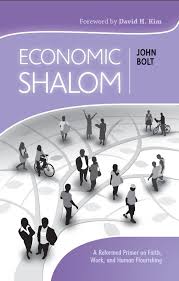
Each tradition brings something important to the table: the Pentecostal emphasis on widely distributed responsibility for discovery and creativity, the Baptist heritage of independent, entrepreneurial church life; the Wesleyan focus on preparing people for the world of virtuous work and economic exchange, and the Reformed emphasis on careful theological integration. In order to draw on strengths and resources from a variety of traditions, the Acton Institute has published a series of four “primers” that introduce faith, work, and economics from four distinct perspectives – Baptist, Pentecostal, Wesleyan, and Reformed. These primers help us truly appreciate the multifaceted nature of the conversation about work and economics.
At the same time, there are large areas of overlap across these books—and traditions: God cares deeply about our work; work is central to good character; the marketplace of economic exchange can be a crucible where we develop virtue and where we flourish. These most basic integrative ideas are a shared heritage.
The authors of these introductory books are key theological leaders in their respective traditions:
-
Baptist primer “Flourishing Faith”
- Chad Brand, Southern Baptist Theological Seminary
- Foreword by Daniel Akin, president of Southeastern Baptist Theological Seminary
-
Pentecostal primer “Flourishing Churches & Communities”
- Charlie Self, Assemblies of God Theological Seminary
- Foreword by George Wood, general superintendent of the Assemblies of God (USA)
-
Wesleyan primer “How God Makes the World a Better Place”
- David Wright, president of Indiana Wesleyan University, et. al.
- Foreword by Jo Anne Lyon, general superintendent of The Wesleyan Church
-
Just Published: Reformed primer “Economic Shalom”
- John Bolt, Calvin Theological Seminary
- Foreword by David Kim, Redeemer Center for Faith and Work
These books have sold 1,100 hard copies and received numerous accolades from denominational and other targeted publications. The Wesleyan Church even distributed 3,000 electronic copies of “How God Makes the World a Better Place” to every pastor in their denomination!
.
From Kern Pastors Network. Image: Courtesy of the Acton Institute.
Previous Post

December 20, 2013
The contested American Dream
Next Post
January 25, 2014 "This is our city": a three-year project on common-good Christianity
Browse Our Archives
Select a Category Common Good Economics Entrepreneurship
Select a Month April 2014 March 2014 February 2014 January 2014 December 2013
TAKE THE
Religious Wisdom Quiz
Who said, "My God, my God, why have you forsaken me?"
Select your answer to see how you score.
Isaiah Jesus Job David
Related posts from The Big Picture

Five myths about the millennial worker
Do you need resources? Of course you do

Does the moral consensus on human trafficking apply...

TRENDING AT PATHEOS Careers, Workplace and Religion

St. Francis by Bill Droel Pope Leo XIV declares 2026 as “Year...

Catholics are schooled in the faith by memorizing dogmatic points and lots...

The Good News of Our Human Limitations -...
After another day of trying to meet deadlines and working on projects,...

Quiet Holy Attentiveness (podcast) with Sarah Clarkson
We know that quiet is an essential aspect of the spiritual life,...

Every Vocation Everywhere All At Once
What is a vocation? How does it endure through the years? Can...

I promise this is not going to become a Taylor Swift Studies...
view all Careers, Workplace and Religion blogs
Ad-Free & Subscriber Log-In Subscription Support
- About Us
- 2026 Calendar
- Videos
- Podcasts
- Library of World Religions
- Faith In Media Tracker
- Advertise With Us
- Write for Us
- Privacy Policy
- Terms of Service
- Do Not Sell My Data
- Contact Us
- Radiant Digital
- Manage Newsletter Subscriptions
- Unsubscribe From Notifications
- Sitemap
Copyright 2008-2026, Patheos. All rights reserved.
Subscription Support Ad-Free & Subscriber Log-In
Follow Patheos