
BuddhistCatholicContemplativeEvangelicalGeneral ChristianHinduJewishLatter-day SaintMuslimNew VisionsProgressive Christian
Beliefs
- Buddhist
- Catholic
- Contemplative
- Evangelical
- General Christian
- Hindu
- Jewish
- Latter-day Saint
- More Voices
- Muslim
- New Visions
- Pagan
- Progressive Christian
Topics
- Religion News
- Food and Religion
- Sports and Religion
- Religious Art
- Religious Music and Entertainment
- Religious Events
- History and Religion
- Style and Religion
- Politics and Religion
- Women in Religion
- Recreation Outdoors and Religion
- Business Finance and Religion
- Careers Workplace and Religion
- Education and Religion
- Family Parenting and Religion
- Health Fitness and Religion
- Home and Religion
- Relationships and Religion
- Technology and Religion
- Travel and Religion
Columnists
- Buddhist Columnists
- Business Finance and Religion Columnists
- Careers Workplace and Religion Columnists
- Catholic Columnists
- Contemplative Columnists
- Education and Religion Columnists
- Evangelists Columnists
- Family Parenting and Religion Columnists
- General Christian Columnists
- Health Fitness and Religion Columnists
- Hindu Columnists
- History and Religion Columnists
- Home and Religion Columnists
- Jewish Columnists
- More Voices Columnists
- Latter Day Columnists
- Muslim Columnists
- New Visions Columnists
- Nonreligious Columnists
- Pagan Columnists
- Politics and Religion Columnists
- Progressive Columnists
- Recreation Outdoors and Religion Columnists
- Relationships and Religion Columnists
- Religion News Columnists
- Religious Art Columnists
- Religious Events Columnists
- Religious Music and Entertainment Columnists
- Sports and Religion Columnists
- Style and Religion Columnists
- Technology and Religion Columnists
- Travel and Religion Columnists
- Women in Religion Columnists
Resource Library
- 2026 Calendar
- Library of World Religions
- The 100 Most Holy Places on Earth
- Patheos Answers
- Podcasts
- Videos
- Faith Leaders Database
- Anglican Episcopalian
- Bahai
- Baptist
- Buddhism
- Christianity
- Confucianism
- Eastern Orthodoxy
- Hinduism
- Holiness and Pentecostal
- ISKCON
- Islam
- Judaism
- Lutheran
- Methodist
- The Church of Jesus Christ of Latter-day Saints
- New Age
- Paganism
- Presbytarian and Reformed
- Protestantism
- Religion Behind the Scenes
- Roman Catholic
- Scientology
- Shia Islam
- Sikhism
- Sufism
- Sunni Islam
- Taoism
- Zen
- See all religions
Research Tools
 Ad-Free & Subscriber Log-In Subscription Support
Ad-Free & Subscriber Log-In Subscription Support
Follow Patheos 

- Trending:
- Forgiveness
- |
- Marriage
- |
- Consciousness
- |
- Death Penalty
- |
- Election
- |
- Halloween
 The Big Picture
- Home
- Careers, Workplace and Religion
- Pastors, seminary students, and economics
Pastors, seminary students, and economics
Last updated on: February 18, 2014 at 8:10 pm by Oikonomia Network
Pastors, seminary students, and economics 2014-02-18T20:10:36+00:00 Oikonomia Network
Patheos Explore the world's faith through different perspectives on religion and spirituality! Patheos has the views of the prevalent religions and spiritualities of the world.
By Scott Rae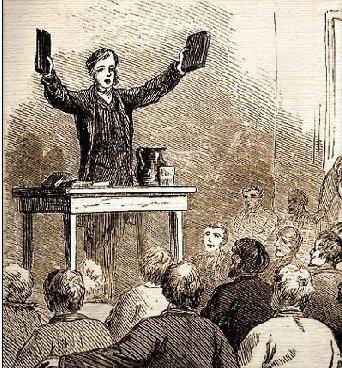
This article was first printed in the Sept. 2013 Oikonomia Network Newsletter.
Why do pastors need to know all that much about economics? My friend and writing partner, Austin Hill, tells the story of a conference he attended as a graduate student where the facilitator posed the provocative question, “Can somebody name for me one area of our lives that has nothing to do with economics?” The group was silent for more than a few moments, as many pondered this for the first time.
Then a student spoke up and said what I suspect many were thinking; “As a Christian, I believe that my eternal salvation has nothing to do with economics.” The group was taken aback by his forthrightness, and the facilitator then rephrased the question this way, “Ok, let’s assume you’re right about that, and let’s assume that one’s eternal destiny has nothing to do with economics (a debatable assumption) – can somebody name a second area of our lives that has nothing to do with economics? He went on to suggest that, “every facet of our earthly lives is impacted on some level by both economic activity and economic conditions.”
Think about how you would answer the facilitator’s question. Can you think of an area of our lives not impacted by economics? Including salvation, in fact, since the Bible actually describes the elements of our eternal salvation in economic terms. In Romans 4, when discussing the notion of justification by faith, salvation is described in terms of an accounting ledger. Our sin is cancelled on the debit side, and the righteousness of Christ is credited to our account as a result of his atoning death for sin. As a result of this transaction, we are declared justified, or acquitted from the guilt of our sin. In addition, the Greek term used in the New Testament when Jesus utters his last words on the cross (“it is finished”) is literally an accounting term, best translated as “paid in full.”
But a further response to the student would suggest that there is much more to a person’s spiritual life than simply the matter of his or her eternal destiny. Life on this side of eternity matters greatly, reflected by the fact that Jesus had much more to say about money and economics than he did about eternity. If we refuse to separate the sacred from the secular, and affirm that all of life is spiritual, then there are few, if any, areas of our spiritual lives that are not impacted by economics.
In my experience, however, this is not enough to convince pastors and seminary students of the importance of economics for their work in the local church. Neither is it enough to suggest that economics, far from being the “dismal science,” actually is permeated with moral issues. The intersection of morality and economics exists because, like politics, economics is fundamentally about how we order our lives together. Much of how we live together in community has significant moral overtones. How we think society’s benefits and burdens should be distributed has significant moral repercussions. But I have found that general statements like these do little to generate interest in economics among pastors and seminary students. So how do educators persuade the next generation of pastors to help people connect their lives with economics?
Connecting the dignity of daily work with pastoral ministry is an obvious starting point. Since most people in the church work for a living in some fashion, the need to connect Sunday and Monday seems self-evident. Unless pastors affirm work as ministry and as service to Christ with intrinsic value, there is not much hope for any other connection between economics and a pastoral ministry.
One of the clearest ways to connect economics and pastoral ministry comes out of the economic context of the Bible. The Bible directly addresses economic life in numerous places in both Old and New Testament. In addition, much of its teaching is set in the specific economic context of the ancient world. It is true that the fundamental issues of economics in the Bible concern the state of a person’s heart. It is also true that the condition of the heart has not changed since the Bible was written. However, it is naïve to teach and preach the Bible without taking into account the profound differences in economic life between the ancient world and a modern industrial/information age.
One of the most important reasons for pastors to be economically literate is so that they can preach and teach the Bible accurately. In particular, this is important so that they can apply the Bible’s teaching on economic life clearly. For example, it is not uncommon to hear teaching on subjects such as the Year of Jubilee (Lev. 25) as requiring wholesale redistribution of wealth. Or to hear the church’s sharing of goods “in common” as a reference to some sort of enforced redistribution of income. Some criticisms of the market system come from misreading the Bible, due to failure to take some of these differences into account. Some also reflect a misunderstanding of economics, such as the common statement, “the rich are getting richer and the poor are getting poorer.” Such statements are often read between the lines as “the rich getting richer are causing the poor to get poorer,” reflecting a zero-sum view of economic life that was characteristic of the ancient world, but not applicable to most of the global economy today.
Too many Christians share the view of the student at the conference; that we can live our lives with our faith in one box and our economic views in another. Changing this perspective is an important step to producing flourishing communities and spiritually whole churches.
Adapted from the Kern Pastors Network. Scott Rae is professor of Philosophy of Religion and Ethics, Talbot School of Theology, Biola University.
Previous Post

December 14, 2013
Business as moral community
Next Post
December 20, 2013 The tragedy of Detroit
Browse Our Archives
Select a Category Common Good Economics Entrepreneurship
Select a Month April 2014 March 2014 February 2014 January 2014 December 2013
TAKE THE
Religious Wisdom Quiz
In 2 Timothy, what did Paul leave with Carpus at Troas?
Select your answer to see how you score.
His letters His cloak and scrolls His money His tent-making tools
Related posts from The Big Picture

Five myths about the millennial worker

Do you need resources? Of course you do
Does the moral consensus on human trafficking apply...

TRENDING AT PATHEOS Careers, Workplace and Religion

St. Francis by Bill Droel Pope Leo XIV declares 2026 as “Year...

Catholics are schooled in the faith by memorizing dogmatic points and lots...

The Good News of Our Human Limitations -...
After another day of trying to meet deadlines and working on projects,...

Quiet Holy Attentiveness (podcast) with Sarah Clarkson
We know that quiet is an essential aspect of the spiritual life,...

Every Vocation Everywhere All At Once
What is a vocation? How does it endure through the years? Can...

I promise this is not going to become a Taylor Swift Studies...
view all Careers, Workplace and Religion blogs
Ad-Free & Subscriber Log-In Subscription Support
- About Us
- 2026 Calendar
- Videos
- Podcasts
- Library of World Religions
- Faith In Media Tracker
- Advertise With Us
- Write for Us
- Privacy Policy
- Terms of Service
- Do Not Sell My Data
- Contact Us
- Radiant Digital
- Manage Newsletter Subscriptions
- Unsubscribe From Notifications
- Sitemap
Copyright 2008-2026, Patheos. All rights reserved.
Subscription Support Ad-Free & Subscriber Log-In
Follow Patheos