
BuddhistCatholicContemplativeEvangelicalGeneral ChristianHinduJewishLatter-day SaintMuslimNew VisionsProgressive Christian
Beliefs
- Buddhist
- Catholic
- Contemplative
- Evangelical
- General Christian
- Hindu
- Jewish
- Latter-day Saint
- More Voices
- Muslim
- New Visions
- Pagan
- Progressive Christian
Topics
- Religion News
- Food and Religion
- Sports and Religion
- Religious Art
- Religious Music and Entertainment
- Religious Events
- History and Religion
- Style and Religion
- Politics and Religion
- Women in Religion
- Recreation Outdoors and Religion
- Business Finance and Religion
- Careers Workplace and Religion
- Education and Religion
- Family Parenting and Religion
- Health Fitness and Religion
- Home and Religion
- Relationships and Religion
- Technology and Religion
- Travel and Religion
Columnists
- Buddhist Columnists
- Business Finance and Religion Columnists
- Careers Workplace and Religion Columnists
- Catholic Columnists
- Contemplative Columnists
- Education and Religion Columnists
- Evangelists Columnists
- Family Parenting and Religion Columnists
- General Christian Columnists
- Health Fitness and Religion Columnists
- Hindu Columnists
- History and Religion Columnists
- Home and Religion Columnists
- Jewish Columnists
- More Voices Columnists
- Latter Day Columnists
- Muslim Columnists
- New Visions Columnists
- Nonreligious Columnists
- Pagan Columnists
- Politics and Religion Columnists
- Progressive Columnists
- Recreation Outdoors and Religion Columnists
- Relationships and Religion Columnists
- Religion News Columnists
- Religious Art Columnists
- Religious Events Columnists
- Religious Music and Entertainment Columnists
- Sports and Religion Columnists
- Style and Religion Columnists
- Technology and Religion Columnists
- Travel and Religion Columnists
- Women in Religion Columnists
Resource Library
- 2026 Calendar
- Library of World Religions
- The 100 Most Holy Places on Earth
- Patheos Answers
- Podcasts
- Videos
- Faith Leaders Database
- Anglican Episcopalian
- Bahai
- Baptist
- Buddhism
- Christianity
- Confucianism
- Eastern Orthodoxy
- Hinduism
- Holiness and Pentecostal
- ISKCON
- Islam
- Judaism
- Lutheran
- Methodist
- The Church of Jesus Christ of Latter-day Saints
- New Age
- Paganism
- Presbytarian and Reformed
- Protestantism
- Religion Behind the Scenes
- Roman Catholic
- Scientology
- Shia Islam
- Sikhism
- Sufism
- Sunni Islam
- Taoism
- Zen
- See all religions
Research Tools
 Ad-Free & Subscriber Log-In Subscription Support
Ad-Free & Subscriber Log-In Subscription Support
Follow Patheos 

- Trending:
- Forgiveness
- |
- Marriage
- |
- Consciousness
- |
- Death Penalty
- |
- Election
- |
- Halloween

- Home
- Catholic
- Politics and Religion
- The Trauma of Israel – From Exile to Exodus
The Trauma of Israel – From Exile to Exodus
Last updated on: October 14, 2024 at 3:30 pm by Laurika Nxumalo
The Trauma of Israel – From Exile to Exodus 2024-10-14T15:30:33+02:00 Laurika Nxumalo
Patheos Explore the world's faith through different perspectives on religion and spirituality! Patheos has the views of the prevalent religions and spiritualities of the world.
On 7th October, Catholics commemorated the feast of Our Lady of the Rosary. The Blessed Virgin Mary is referred to as Our Lady of the Rosary in relation to the Holy Rosary devotion. This title has special significance on October 7, the feast day honoring the Christian armies’ victory at the Battle of Lepanto in 1571. After Pope Pius V urged Catholics to pray for victory, the triumph was credited to the Virgin Mary’s intervention through the recitation of the Rosary. For Catholics, the Rosary is a way of promoting peace, faith, and devotion to God.

Rosary – Photo by Pixabay
The Attack
453 years ago, Christians won a battle, in today’s world, a little over a year ago, a battle began in Israel. On October 7, 2023, when the public were celebrating Simchat Torah, Hamas, the militant organization in control of Gaza launched a major and unprecedented onslaught against Israel. Widespread rocket fire, ground invasions, and hostage-taking were all part of Hamas’ massive attack on southern Israel. Israel quickly responded by declaring a state of war after being taken off guard by the attack. As the battle raged on the ground in southern Israel, the country launched airstrikes in the days that followed the attack – they targeted Hamas infrastructure in Gaza.

At War – Photo by Art Guzman
Several countries condemned the attack on Israel, however, the conflict continued, with no immediate end in sight, raising fears of a broader regional war. This event significantly shifted the dynamics of the Israeli-Palestinian conflict, leading to a humanitarian crisis in Gaza and southern Israel and sparking discussions about security, the role of Hamas, and international responses to terrorism and conflict.
Historical Trauma
Israel’s historical tragedy began long before it was established in 1948. The Jewish people have faced persecution throughout history, from ancient exile to the Crusades, the Spanish Inquisition, and Eastern European pogroms.
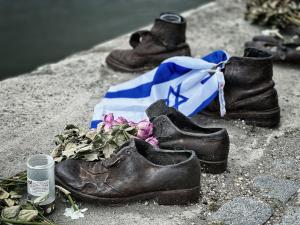
Remembering the Holocaust – Photo by Nemanja Ciric
Following centuries of statelessness, the foundation of Israel was viewed as a shelter and homeland for Jews. However, the process of nation-building was traumatic. The Arab-Israeli War that followed the proclamation of independence resulted in the relocation of hundreds of thousands of Palestinians, dubbed the Nakba (“catastrophe”) in the Arab world. This triggered a comparable trauma among Palestinians, escalating the conflict and contributing to the unresolved tension that still shapes Israeli and Palestinian identities today.
The Palestinian Trauma
The pain of the Palestinian people must also be acknowledged in order to properly understand Israel’s suffering. There is a loop of violence, terror, and anger between Israelis and Palestinians because the conflict stems from deep-seated trauma on both sides. Like how the Holocaust and other conflicts built Israeli identity (both of individuals (Lily Ebert) and the community); the trauma of losing homes, having to live under military occupation, and experiencing brutality forms the collective identity of many Palestinians.
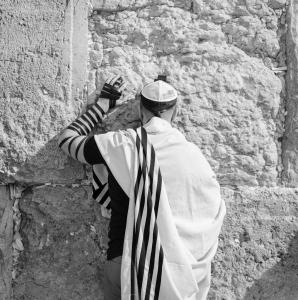
Jewish Man Facing the Wall – Photo by Marik Elikishvili
Due to this shared trauma, there is an unsolvable conflict where both parties see themselves as victims and find it difficult to acknowledge one other’s trauma. This cycle has become unbreakable because every act of violence exacerbates the wounds and feeds the terror narrative. Thus, the trauma of the Israeli-Palestinian conflict is not limited to differences in opinion on politics; rather, it also involves severe psychological injuries that obstruct the path to peace and healing.
A Resilient Nation
Although there is no disputing Israel’s trauma, it is also important to acknowledge the resilience that has emerged as a result of these tragedies. Trauma has become a source of strength for many Israelis and Jews, fueling their determination to survive while maintaining their sense of self and community. The concept of “Tikkun Olam,” or “fixing the world” reflects Jewish confidence that hardship may be overcome and a better, more equal society established.
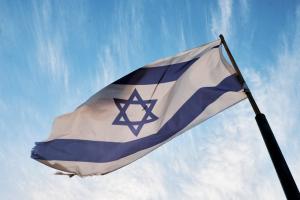
Israel flag – Photo by Thắng-Nhật Trần
Israel’s trauma has also developed a strong feeling of patriotism. For example, joining the military is regarded as a rite of passage for the majority of Israeli residents, as it becomes a way of safeguarding the state and ensuring that the Jewish people are not annihilated again. This tenacity is seen in Israel’s cultural, technological, and economic achievements, which have progressed despite being constantly in conflict.
Furthermore, trauma has affected Israel’s diplomatic and security policies. The “Iron Wall” concept, which emphasizes military power and deterrence, reflects Israel’s profound fear of vulnerability. While this worldview ensured Israel’s existence, it has also been criticized for increasing the conflict with Palestinians and surrounding states.
God’s Chosen Nation
Israel’s history has been one of perseverance and faith, marked by both success and suffering. Despite their suffering the Jewish people preserved their identity, which was founded on the idea that they are a nation chosen by God. The destruction of the Second Temple in 70 AD as well as the subsequent Diaspora, represented a watershed moment in Jewish history, scattering Jews all over the world. For nearly two millennia, the concept of returning to the Promised Land remained a key element in Jewish prayers. Many saw this incident as a fulfillment of the biblical prophecy and a sign of God’s continuing bond with the Jewish people.
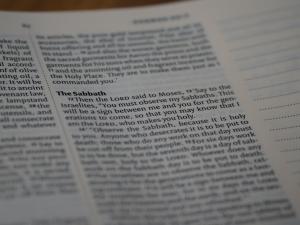
Bible Verse – Photo by Brett Jordan
In the Bible, Israel is portrayed as the nation through whom God would make known His rules, His love, and ultimately His plan of redemption for all of humanity. The prophets described Israel as a people whose fate is interconnected with God’s plan of deliverance, a light to the nations (Isaiah 49:6). Bible verses such as Isaiah 66:8 and Ezekiel 37, promote the belief that God’s ultimate plan for the end times includes restoring Israel.
In today’s world, Israel continues to be viewed by many as a symbol of God’s ongoing faithfulness to His promises. For Jewish people the survival and thriving of Israel are seen as a continuation of their covenant relationship with God. In Christian eschatology, Israel holds a significant place in discussions of the end times, as many believe that key events will center around the nation.
Politics and Religion
Previous Post

October 4, 2024
St. Francis of Assisi's Spirituality and Global Warming
Next Post

October 12, 2024 Ethel Kennedy - A Matriarch Of Strong Faith
Recent Comments
"The Beautiful Game of football is life in full flow. Several Cardinals in Rome are ..."
Professing Faith Through Football
"Participants say they have been truly energized. Synod on Synodality has been a meaningful spiritual ..."
Synod on Synodality – A Response ..."
"Grandmothers are Wisdom Banks. They want their grandchildren to be happy and successful. “May my ..."
The Roots of Pope Francis – ..."
"A few theologians believe clericalism and churchianity are detrimental to the spirit of Christianity as ..."
Clericalism – The Difficult Task Ahead ..."
Browse Our Archives
Select a Category Catechism Church History Current Affairs Emotions Eucharist Faith Home Israel Laudato Si' LGBTQ+ Marriage Mary Pope Emeritus Benedict XVI Pope Francis Pope Leo XIV Prayer Religious Affairs Rosary Sacraments Saints Science Synod on Synodality Trending Topics Trump Uncategorized Vocations Women in the Church
Select a Month October 2026 July 2026 January 2026 June 2025 May 2025 April 2025 February 2025 October 2024 September 2024 April 2024 March 2024 February 2024 November 2023 October 2023 September 2023 June 2023 May 2023 April 2023 March 2023 January 2023 December 2022 October 2022 August 2022 July 2022 June 2022 February 2022 July 2021 February 2021 January 2021
Follow Us!
TAKE THE
Religious Wisdom Quiz
True or False: The Thessalonians were told that the day of the Lord will come like a thief in the night.
Select your answer to see how you score.
TRUE FALSE
Related posts from Tea in Laurika's Garden

5 Design Elements Found in Spiritually Rooted Homes
Synod on Synodality - A Response Of Faith

The Cardinal Taking Over From Pope Francis
The Roots of Pope Francis - The People's...
TRENDING AT PATHEOS Catholic

Rejecting Doom: Christian Hope And Human Action
Christianity is a religion of hope. We are to have hope and...

It’s What Comes From Within Which Matters
One of the most difficult things for us to understand is why...

Why I Choose the Eucharist Over the Sermon
Choose the Eucharist, Not the Sermon What are we supposed to get...

5 Design Elements Found in Spiritually Rooted Homes
Putting Spirituality Into Home Decor Our homes are more than our living...

Credo: A Story of God Told with the...
About 10 years ago, I began to imagine a personal "Credo" that...

The Anatomy of Divine Revelation in Catholic Thought
The claim that God has made Himself known to human beings is...
view all Catholic blogs
What Are Your Thoughts?leave a comment
Ad-Free & Subscriber Log-In Subscription Support
- About Us
- 2026 Calendar
- Videos
- Podcasts
- Library of World Religions
- Faith In Media Tracker
- Advertise With Us
- Write for Us
- Privacy Policy
- Terms of Service
- Do Not Sell My Data
- Contact Us
- Radiant Digital
- Manage Newsletter Subscriptions
- Unsubscribe From Notifications
- Sitemap
Copyright 2008-2026, Patheos. All rights reserved.
Subscription Support Ad-Free & Subscriber Log-In
Follow Patheos