
BuddhistCatholicContemplativeEvangelicalGeneral ChristianHinduJewishLatter-day SaintMuslimNew VisionsProgressive Christian
Beliefs
- Buddhist
- Catholic
- Contemplative
- Evangelical
- General Christian
- Hindu
- Jewish
- Latter-day Saint
- More Voices
- Muslim
- New Visions
- Pagan
- Progressive Christian
Topics
- Religion News
- Food and Religion
- Sports and Religion
- Religious Art
- Religious Music and Entertainment
- Religious Events
- History and Religion
- Style and Religion
- Politics and Religion
- Women in Religion
- Recreation Outdoors and Religion
- Business Finance and Religion
- Careers Workplace and Religion
- Education and Religion
- Family Parenting and Religion
- Health Fitness and Religion
- Home and Religion
- Relationships and Religion
- Technology and Religion
- Travel and Religion
Columnists
- Buddhist Columnists
- Business Finance and Religion Columnists
- Careers Workplace and Religion Columnists
- Catholic Columnists
- Contemplative Columnists
- Education and Religion Columnists
- Evangelists Columnists
- Family Parenting and Religion Columnists
- General Christian Columnists
- Health Fitness and Religion Columnists
- Hindu Columnists
- History and Religion Columnists
- Home and Religion Columnists
- Jewish Columnists
- More Voices Columnists
- Latter Day Columnists
- Muslim Columnists
- New Visions Columnists
- Nonreligious Columnists
- Pagan Columnists
- Politics and Religion Columnists
- Progressive Columnists
- Recreation Outdoors and Religion Columnists
- Relationships and Religion Columnists
- Religion News Columnists
- Religious Art Columnists
- Religious Events Columnists
- Religious Music and Entertainment Columnists
- Sports and Religion Columnists
- Style and Religion Columnists
- Technology and Religion Columnists
- Travel and Religion Columnists
- Women in Religion Columnists
Resource Library
- 2026 Calendar
- Library of World Religions
- The 100 Most Holy Places on Earth
- Patheos Answers
- Podcasts
- Videos
- Faith Leaders Database
- Anglican Episcopalian
- Bahai
- Baptist
- Buddhism
- Christianity
- Confucianism
- Eastern Orthodoxy
- Hinduism
- Holiness and Pentecostal
- ISKCON
- Islam
- Judaism
- Lutheran
- Methodist
- The Church of Jesus Christ of Latter-day Saints
- New Age
- Paganism
- Presbytarian and Reformed
- Protestantism
- Religion Behind the Scenes
- Roman Catholic
- Scientology
- Shia Islam
- Sikhism
- Sufism
- Sunni Islam
- Taoism
- Zen
- See all religions
Research Tools
 Ad-Free & Subscriber Log-In Subscription Support
Ad-Free & Subscriber Log-In Subscription Support
Follow Patheos 

- Trending:
- Forgiveness
- |
- Marriage
- |
- Consciousness
- |
- Death Penalty
- |
- Election
- |
- Halloween

- Home
- Catholic
- Family, Parenting and Religion
- The ‘Yes’ of Mary and the ‘Yes’ of Joseph
The ‘Yes’ of Mary and the ‘Yes’ of Joseph
Last updated on: October 14, 2024 at 3:30 pm by Laurika Nxumalo
The ‘Yes’ of Mary and the ‘Yes’ of Joseph 2024-10-14T15:30:52+02:00 Laurika Nxumalo
Patheos Explore the world's faith through different perspectives on religion and spirituality! Patheos has the views of the prevalent religions and spiritualities of the world.
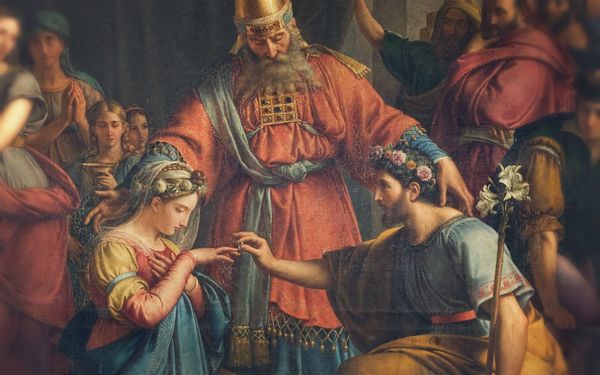
Mary and Joseph Getting Married
The story of Mary and Joseph is one of the most fascinating accounts in the Bible, yet it remains shrouded in mystery. From ancient vows spoken in a humble village to the enduring lessons the world can glean from their journey, the timeless legacy of this couple is nothing short of extraordinary. In an era where relationships are often fleeting and the true meaning of commitment is often lost, their unwavering devotion serves as a beacon of hope.
Jewish Background
In the first century, two distinct stages contracted a Jewish marriage. The first step was to implicitly obtain the couple`s consent, then have them sign the marriage contract, and the bride would then receive the wedding ring. Kiddushin, as it is known in Hebrew, is more than just a promise to marry, which is made through a betrothal or an engagement. According to Mosaic Law, if a woman`s fiancé were to pass away, she would be seen as a widow, and she would have to go through the process of an actual divorce in order to dissolve the bond created by kiddushin. Therefore, kiddushin fundamentally constitutes the institute of marriage.
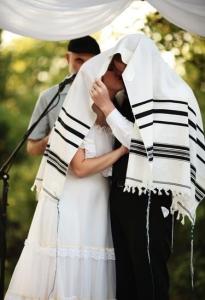
Jewish Wedding
Once kiddushin had taken place, the couple would continue to living apart in order to prepare themselves for their new life together. At times, it would give the husband enough time to save money to pay bride-dowry – sometimes it gave the young bride a chance to become a bit more mature. In some instances, the preparation period would last for a year; however, it is believed that it would take three months. When everything was in place, the husband would officially proceed to his bride`s home and the official procession to his house would follow.
The second step after kiddushin would be for the couple to be intimate (consummation) – which would be followed by a huge celebration similar to the Marriage Feast at Cana (John 2: 1-11). In the Parable of the Ten Virgins (Matthew 25: 1-13), the virgins are waiting for the husband-to-be to arrive at his bride’s home, the waiting is followed by a procession with lights to his house. Therefore, the feast of the Holy Spouses is the celebration of Mary and Joseph’s actual wedding anniversary – it is the celebration of their kiddushin. Catholic teachings make use of the terms “spouses” and “espousal” when referring to Mary and Joseph and their union because traditionally the terms “husband/wife” and “wedding” referred to a lawful marriage that was unconsummated.
When Mary agreed to become the Mother of God, she and Joseph were officially married; therefore, Jesus is legitimately a part of the Holy Family, with all the fulfilled prophecies attached thereto. However, since Jesus was conceived while Mary and Joseph were living apart and not having been intimate (Matthew 1:18), the prophecy of the Immaculate Conception in Isaiah 7:14 (“A virgin shall conceive”) is came true. As Pope Leo XIII once said, “Whereas Adam and Eve were the source of evil which was unleashed on the world, Joseph and Mary are the summits from which holiness spreads all over the earth.”
Courtship of the Holy Couple
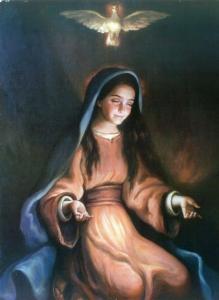
Young Mary In The Temple
After Mary’s parents, Anne and Joachim presented her in the Temple in Jerusalem at the age of three; they left her to live at the temple as a temple virgin devoted to serving God. When Mary was approaching womanhood (upon turning twelve, a Jewish girl would be considered to be of age), Simeon, the high priest pronounced that the time had come for all of the temple virgins who were of age to return to their parents’ homes in order for their marriages to be arranged. However, Mary told the high priest that she could not go back home because she had been dedicated by her parents to serve God and that she had vowed virginity to God.
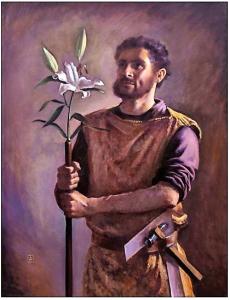
Joseph Holding Flowers
When Simeon asked for guidance from the Lord, all unmarried men from the House of David were called forth by a loud voice; they were instructed to bring a branch to the Temple and lay it on the altar. The voice announced that flowers would blossom from the branches and that a dove, representing the Holy Spirit would rest on the branch. Joseph was among the men of the House of David and he too had put his branch on the Temple`s altar – his branched blossomed immediately into flowers and a dove from Heaven came down and rested on it, thus appointing Joseph as the Virgin Mary`s spouse.
The courtship of the Holy couple is written in two non-canonical gospels, namely the Gospel of Pseudo-Matthew and the Protoevangelium of James. In both gospels, the dove glides over Joseph’s branch, showing that he is Mary’s chosen spouse. Over the years, St. Joseph has been portrayed in paintings and statues holding a branch with budded flowers.
Not much is known about the life of Nazareth’s Holy Family, nor does Scripture give any account of how Mary and Joseph meet. The feast of The Presentation of the Blessed Virgin Mary, which is observed on November 21 to commemorate the Virgin Mary`s presentation by her parents, Saints Anne and Joachim in the Holy Temple when she was three years old – she lived in the Temple until she turned fourteen. It is believed that during her stay at the temple, Mary vowed virginity for herself, something that was rare among Jewish maidens, especially during a period when childlessness was seen as a curse. The Virgin Mary`s response to Archangel Gabriel indirectly substantiates the existence of the vow of virginity.
These reflections indicate that the espousal of Mary and Joseph is an occasion that carries deep significance. When St Bernardine of Siena describes the perfect marriage he says:
“Mary and Joseph were but one heart and soul; they were two in one same mind, one same affection, and each of them was the other’s second half, because Our Lady and he were so to speak, only one person. The heart of Mary with that of Joseph, and the heart of Joseph with that of Mary, who ever could imagine a union so intimate, a grace so great!”
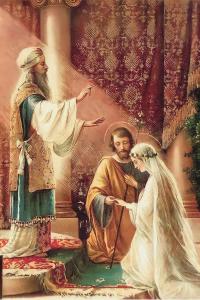
Mary & Joseph Getting Married
The observation of the actual union of Mary and Joseph helps people to comprehend the grace of the Sacrament of Marriage. In Redemptoris Custos, St John Paul II writes, “at the culmination of the history of salvation, when God reveals his love for humanity through the gift of the Word, it is precisely the marriage of Mary and Joseph that brings to realization in full “freedom” the “spousal gift of self” in receiving and expressing such a love.” St John Paul II went on to recall the words of his predecessor, St Pope Paul VI’s, “whereas Adam and Eve were the source of evil which was unleashed on the world, Joseph and Mary are the summit from which holiness spreads all over the earth. The Savior began the work of salvation by this virginal and holy union.”
January 23
The espousal begins a yearlong contemplation on the Holy Family`s early life – the feast of The Espousal of Mary and Joseph (January 23) take place almost two months prior to the Annunciation (March 25). If the kiddushin had happened then, and presuming a three-month gap between the two marriage stages, Mary would have conceived by the power of the Holy Spirit about a month prior to the wedding procession to her spouse’s (Joseph) home.
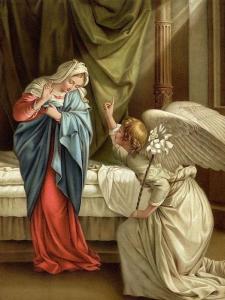
The Visitation of Archangel Gabriel
The Annunciation rearranged the sequence of events and their espousal would not have carried a deeper meaning as it does now. According to Luke 1:39 and Luke 1:56,
Mary hurried to Judea to assist her elderly cousin, Elizabeth and she would only return after the natal of Saint John the Baptist (and probably after his circumcision as well). When Joseph saw Mary after returning from Judea, he could see that she was pregnant. Thankfully, Archangel Gabriel resolved Joseph’s confusion (Matthew 1:20-25), at which point he (Joseph) immediately “took unto him his wife” (Matthew 1:24), that is, the two started living together. A few months after that, Jesus was born, according to the liturgical calendar on December 25.
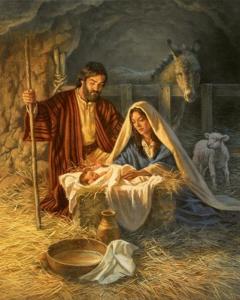
The Holy Family
Mary and Joseph liturgically lived through the expectation of the Savior (Advent), His natal (Christmas), and His circumcision (Christmas Octave), the flight into Egypt, the massacre of infants in Bethlehem (Holy Innocents), and the visit of the Magi (Epiphany). The couple and their son also led a hidden life in Nazareth (Feast of the Holy Family). The Blessed Virgin Mary and Saint Joseph were more than just bride and groom; they were the incarnation of love.
The story of Mary and Joseph’s espousal is beautifully depicted in the Bible, providing us with a glimpse into the depth of their love and the strength of their faith. In the Gospel of Matthew, we learn that Joseph, a righteous man, discovered that Mary was pregnant before they had come together as husband and wife. Initially devastated and contemplating a quiet divorce, an angel appeared to Joseph in a dream, reassuring him of Mary’s purity and the divine nature of the child she carried. Joseph’s unwavering trust in God’s plan and his willingness to embrace his role as the earthly father of Jesus exemplify the power of faith and selflessness. Despite the social stigma and personal sacrifices he would endure, Joseph chose to honor his commitment to Mary and to God, remaining by her side throughout their journey.
Mary also displayed remarkable strength and unwavering faith during this time. Despite the potential consequences she faced as an unwed mother, Mary trusted in God’s plan and willingly accepted the role she was destined to play in the birth of the Messiah. Her obedience and willingness to submit to God’s will serve as an inspiration to countless generations, reminding us of the importance of humility and surrender in our own lives.
Jewish
Family, Parenting and Religion
History and Religion
Next Post

September 26, 2023 The Broad Concept of Restorative Justice in Laudato Si’
Recent Comments
"The Beautiful Game of football is life in full flow. Several Cardinals in Rome are ..."
Professing Faith Through Football
"Participants say they have been truly energized. Synod on Synodality has been a meaningful spiritual ..."
Synod on Synodality – A Response ..."
"Grandmothers are Wisdom Banks. They want their grandchildren to be happy and successful. “May my ..."
The Roots of Pope Francis – ..."
"A few theologians believe clericalism and churchianity are detrimental to the spirit of Christianity as ..."
Clericalism – The Difficult Task Ahead ..."
Browse Our Archives
Select a Category Catechism Church History Current Affairs Emotions Eucharist Faith Home Israel Laudato Si' LGBTQ+ Marriage Mary Pope Emeritus Benedict XVI Pope Francis Pope Leo XIV Prayer Religious Affairs Rosary Sacraments Saints Science Synod on Synodality Trending Topics Trump Uncategorized Vocations Women in the Church
Select a Month October 2026 July 2026 January 2026 June 2025 May 2025 April 2025 February 2025 October 2024 September 2024 April 2024 March 2024 February 2024 November 2023 October 2023 September 2023 June 2023 May 2023 April 2023 March 2023 January 2023 December 2022 October 2022 August 2022 July 2022 June 2022 February 2022 July 2021 February 2021 January 2021
Follow Us!
TAKE THE
Religious Wisdom Quiz
Which apostle was known as the "apostle to the Gentiles"?
Select your answer to see how you score.
Peter Paul James John
Related posts from Tea in Laurika's Garden
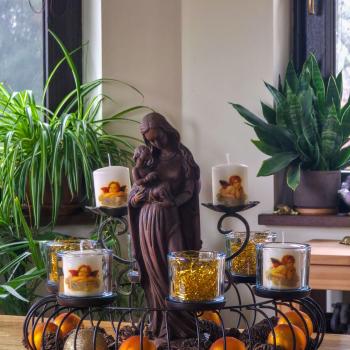
5 Design Elements Found in Spiritually Rooted Homes
Walking In The Footsteps Of Mary
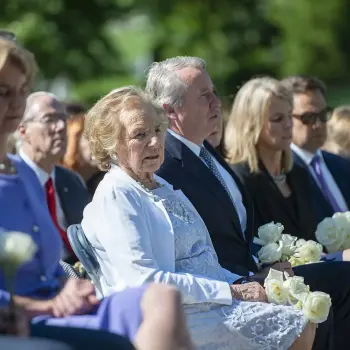
Ethel Kennedy - A Matriarch Of Strong Faith

St. Francis of Assisi's Spirituality and Global Warming
TRENDING AT PATHEOS Catholic

Rejecting Doom: Christian Hope And Human Action
Christianity is a religion of hope. We are to have hope and...

It’s What Comes From Within Which Matters
One of the most difficult things for us to understand is why...

Why I Choose the Eucharist Over the Sermon
Choose the Eucharist, Not the Sermon What are we supposed to get...

5 Design Elements Found in Spiritually Rooted Homes
Putting Spirituality Into Home Decor Our homes are more than our living...

Credo: A Story of God Told with the...
About 10 years ago, I began to imagine a personal "Credo" that...

The Anatomy of Divine Revelation in Catholic Thought
The claim that God has made Himself known to human beings is...
view all Catholic blogs
What Are Your Thoughts?leave a comment
Ad-Free & Subscriber Log-In Subscription Support
- About Us
- 2026 Calendar
- Videos
- Podcasts
- Library of World Religions
- Faith In Media Tracker
- Advertise With Us
- Write for Us
- Privacy Policy
- Terms of Service
- Do Not Sell My Data
- Contact Us
- Radiant Digital
- Manage Newsletter Subscriptions
- Unsubscribe From Notifications
- Sitemap
Copyright 2008-2026, Patheos. All rights reserved.
Subscription Support Ad-Free & Subscriber Log-In
Follow Patheos