
BuddhistCatholicContemplativeEvangelicalGeneral ChristianHinduJewishLatter-day SaintMuslimNew VisionsProgressive Christian
Beliefs
- Buddhist
- Catholic
- Contemplative
- Evangelical
- General Christian
- Hindu
- Jewish
- Latter-day Saint
- More Voices
- Muslim
- New Visions
- Pagan
- Progressive Christian
Topics
- Religion News
- Food and Religion
- Sports and Religion
- Religious Art
- Religious Music and Entertainment
- Religious Events
- History and Religion
- Style and Religion
- Politics and Religion
- Women in Religion
- Recreation Outdoors and Religion
- Business Finance and Religion
- Careers Workplace and Religion
- Education and Religion
- Family Parenting and Religion
- Health Fitness and Religion
- Home and Religion
- Relationships and Religion
- Technology and Religion
- Travel and Religion
Columnists
- Buddhist Columnists
- Business Finance and Religion Columnists
- Careers Workplace and Religion Columnists
- Catholic Columnists
- Contemplative Columnists
- Education and Religion Columnists
- Evangelists Columnists
- Family Parenting and Religion Columnists
- General Christian Columnists
- Health Fitness and Religion Columnists
- Hindu Columnists
- History and Religion Columnists
- Home and Religion Columnists
- Jewish Columnists
- More Voices Columnists
- Latter Day Columnists
- Muslim Columnists
- New Visions Columnists
- Nonreligious Columnists
- Pagan Columnists
- Politics and Religion Columnists
- Progressive Columnists
- Recreation Outdoors and Religion Columnists
- Relationships and Religion Columnists
- Religion News Columnists
- Religious Art Columnists
- Religious Events Columnists
- Religious Music and Entertainment Columnists
- Sports and Religion Columnists
- Style and Religion Columnists
- Technology and Religion Columnists
- Travel and Religion Columnists
- Women in Religion Columnists
Resource Library
- 2026 Calendar
- Library of World Religions
- The 100 Most Holy Places on Earth
- Patheos Answers
- Podcasts
- Videos
- Faith Leaders Database
- Anglican Episcopalian
- Bahai
- Baptist
- Buddhism
- Christianity
- Confucianism
- Eastern Orthodoxy
- Hinduism
- Holiness and Pentecostal
- ISKCON
- Islam
- Judaism
- Lutheran
- Methodist
- The Church of Jesus Christ of Latter-day Saints
- New Age
- Paganism
- Presbytarian and Reformed
- Protestantism
- Religion Behind the Scenes
- Roman Catholic
- Scientology
- Shia Islam
- Sikhism
- Sufism
- Sunni Islam
- Taoism
- Zen
- See all religions
Research Tools
 Ad-Free & Subscriber Log-In Subscription Support
Ad-Free & Subscriber Log-In Subscription Support
Follow Patheos 

- Trending:
- Forgiveness
- |
- Marriage
- |
- Consciousness
- |
- Death Penalty
- |
- Election
- |
- Halloween
 Teaching Nonviolent Atonement
- Home
- Progressive Christian
- Jesus Unmasked: Hate Our Families? Really?? [Video]
Jesus Unmasked: Hate Our Families? Really?? [Video]
Last updated on: September 5, 2019 at 5:20 pm by Lindsey Paris-Lopez
Jesus Unmasked: Hate Our Families? Really?? [Video] 2019-09-05T17:20:06-05:00 Lindsey Paris-Lopez
Patheos Explore the world's faith through different perspectives on religion and spirituality! Patheos has the views of the prevalent religions and spiritualities of the world.
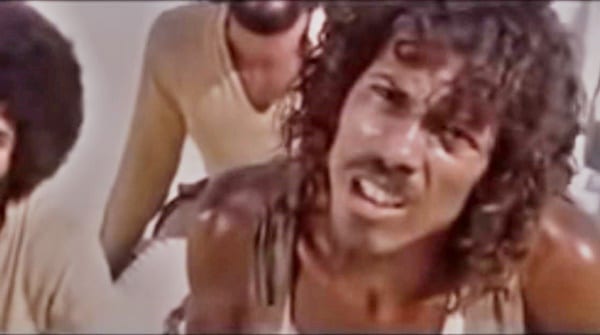
Hey, Jesus, what was that thing about hating our families?
If the words of Jesus in this upcoming Sunday’s Gospel are utterly baffling to you, you are not alone! In this week’s Jesus Unmasked, Adam Ericksen and I wrestle with some of Jesus’s most difficult teachings about family, carrying the cross, and the cost of discipleship.
The video contains insights about family, failure, and grace. In the show notes, I further examine the baffling verse about “hating our families” in the style of Lectio Divinia, asking four questions: (1) What’s going on? (2) What does it mean? (3) What connections can I make? (4) What am I called to do?
Ultimately, the conclusion to which many Christian apologists come – that Jesus is simply saying we must prioritize him above our families – is far too simple and understandably off-putting, but there is a much more radical and more hopeful message to explore and apply.
If the notes or video spark your own ideas or questions, please feel free to leave comments and join our live conversations! Adam Ericksen and I host the Jesus Unmasked Bible study every Tuesday morning at 10:00 CT on the Raven Foundation Facebook Page.
What’s Going On?
For the past several weeks, the Gospel lesson has focused on Jesus teaching about the subversive, upside-down Kingdom of God. Jesus has gone against interpretations of the Torah that forbid healing on the Sabbath in order to emphasize an interpretation of mercy and love. His outreach to the marginalized and healing of the vulnerable have put him at odds with religious leaders who have used the law sacrificially, consolidating their power at the expense of others. Yet Jesus’s teachings and actions are fully in line with those of the Jewish prophets.
Now Jesus’s teachings and actions have drawn a large crowd to him. Often, when one attracts an audience of willing followers, there is a pressure to keep those followers by trying to say what you think they want to hear. Once popularity is gained, it becomes something we like to cling to. Not for Jesus. He’s not afraid to speak the hardest, harshest truths to the crowd.
“Whoever comes to me and does not hate father and mother, wife and children, brothers and sisters, yes, and even life itself, cannot be my disciple,” he says. Yikes! He goes on to tell those who follow him that they should know what they are getting themselves into. The words “carry the cross” were not sentimental or symbolic. He’s telling the people that following him could lead to alienation and death. “Don’t think that this will be easy,” he says. “Investors make sure they have enough money before they start expensive projects. Kings make sure their armies are large enough to wage war before invading lands. Count the cost before you come aboard, or you will look ridiculous.” He concludes by saying that no one can be his disciple without giving up all possessions.
Well, that’s one way to ensure commitment! No fair-weather disciples will keep following Jesus after that! But why so extreme, so counter-cultural, so divisive? Wouldn’t it make more sense to build up a message over time, so people can adjust? Wouldn’t a gradual progression into the storm still weed out the fair-weather followers without drenching almost everyone and turning most of them away? Why “hate” our families? Why must Jesus be so polarizing?
What Does It Mean?
Jesus is thinning the crowd so drastically so quickly because his mission is so urgent. He is creating a counterculture in order to transform – ultimately – the whole world. In a world of power, greed, rivalry, and violence, many can be attracted to a charismatic healer, but fewer can do the hard work of self-examination to go against the socially-reinforced desires of greed. Fewer can condition themselves to withstand the contagion of anger that so often leads to violence that escalates out of control. Our human nature is mimetic; we influence one-another for good and for ill. Jesus knows that large crowds – where people see surface actions but don’t know one-another – can potentially be breeding grounds for our worst instincts. Movements can and do change the world for the better, but when the violent contagion spreads through them they easily become mobs.
Jesus wants his movement to start small because he wants to transform a world of violence while helping to ensure that his followers are not transformed by the violence of the world. He knows that mistakes will be made and that people will fall short over and over, but he is honest about the cost upfront. The salvation that he will accomplish will embrace us all; Jesus is not thinning the crowd in order to damn anyone to hell. Rather, we damn ourselves and each other to the hell of living and dying in violence, and Jesus is inviting us to follow him in transforming that hell. But the work is hard, countercultural, and scary. Few will embrace it and all will fall short. Even so, Jesus welcomes us all into new and abundant life, building God’s Kingdom together. But he does not mince words about it.
Hating our families?
Jesus calls us to love one-another so fully that we give ourselves to each other. Jesus wants us to find ourselves in Love so that we can live for one another instead of over-and-against one another in rivalries that tear each other apart. Jesus wants to transform rivalry into communion.
That’s why the oft-used explanation for this verse can be so misleading. “Jesus just wants us to keep perspective. We may love our families, but we must love him more. Ultimately, Jesus wants to be first in our lives,” many will say. Well, as my colleague Adam has said, that explanation “makes me want to puke.”
Jesus is not putting himself at the top of a hierarchy. Jesus is rejecting hierarchies altogether. Jesus isn’t telling us to love others less than him; he equates loving others to loving him, especially when we love the poor and the marginalized.
But Jesus rails against using family as a vehicle for identifying ourselves over and against others. The first murder – the first reference to sin in the Bible – is a fratricide. Families easily bring out our rivalries; we often compare ourselves to those to whom we are closest. And rivalry between families is also the stuff of legend. With family and position within family being so central to identity in Jesus’s time, it makes sense that Jesus would critique this institution.
Families may also serve as our chief form of security. That sounds reasonable – we feel a responsibility to our families in particular. But as far as families reaffirm a sense of “us” verses “them,” they serve a purpose contrary to the Gospel. At the largest levels, we see nation against nation. At the beginning of the video, Adam and I talked about how undocumented immigrants in this country are exploited because we don’t consider them “us” or part of the “our family.” When family is the beginning of “otherizing,” a lens through which we see the world in terms of sacrifice, then Jesus will call it out.
Jesus also recognizes that it is the people closest to us who may prevent us from following a counterculture that can be seen as foolish or dangerous. As a parent, I am wary of my daughters putting themselves at great risk for others even though it would make me proud. Jesus names the very people who might stand in our way of working for compassion and justice – mothers and fathers, sisters and brothers, spouses and children. We are to love them, but not let them stand in our way of following Jesus. But this is not because Jesus craves our adoration at their expense. It is because our loved ones naturally fear for our safety or reputation, but perfect Love casts out fear.
The same Jesus who speaks of hating our families gives us the story of the Prodigal, a father who loved his son more than the cultural understanding of fatherhood, enough to run to him with open arms after he had broken every cultural rule of honor and respect. This is the same Jesus who forges a familial bond between his beloved disciple and his mother from the cross. Jesus wants us to care for one another, regardless of societal expectations or blood. Jesus calls us to die to our ways of defining ourselves against others that we may find new and abundant life, and he wants our understanding of family to die that we may see the whole world as our family, all of us in loving connection with one another.
What Connections Can We Make?
Sadly, the first connection I can see between this Gospel and our world today is the way Jesus’s words are weaponized. Nothing in this Gospel justifies hating or disowning a family member in the name of following Jesus. If these words are used as a cloak for homophobia or transphobia or religious or political persecution, or any kind of bigotry, or justifying any kind of hate, they are being grossly twisted. Jesus calls us to do the difficult work of following him, not to push others away. People who use this passage to harm or push out someone who doesn’t follow their interpretation of Jesus’s will are inevitably misinterpreting the will of Jesus. We all fall short, but to hurt others in the name of Jesus is downright blasphemous. Jesus’s words are dangerous indeed, for they call us to radical love in a world of violence, which leaves us vulnerable. But to use them to hurt someone already vulnerable is not to follow Jesus at all.
A true example of honoring this verse may be found in Megan Phelps-Roper, who left her family’s ministry knowing that it would mean leaving her family as well. The Westboro Baptist Church is infamous for preaching wrath and damnation indiscriminately but particularly against the LGBT community. To follow Jesus, Megan had to walk away from hate. She now lives a life of repentance – a thorough transformation of heart and mind – teaching against extremism and bullying. Her enduring love for her family, like Jesus’s love, is evident, though they have disowned her.
What Am I Called To Do?
Even as I see the hope and beauty of the Gospel through some of Jesus’s hardest words, wrestling with these verses is not easy. I know I am not called to hate my family but rather to see where fear, institutional structures, or societal expectations hold me back from the full, self-giving Love that Jesus embodies and calls me to live into as a member of his body. But it requires deep, personal reflection, looking at the ways in which I fall short, and recognizing how making changes will affect not only me, but also those closest to me, those within my care.
I wonder how my use of my time, money, and abilities may impact my family. Any risks I take inevitably affect them. Anything I give comes out of the family budget. Any commitment I make must be factored into our schedule. And it is good and right to consider all of this, to count the cost and consider that I am not the only one paying it. But sometimes I take an easy way out by not taking the risk or giving the gift or making the commitment not because I have counted the cost and found my own funds short, but because I haven’t taken the time to measure the cost and just assumed that it would be too high. This verse is calling me to acknowledge when I do that, to at least listen to calls, and to count the cost with my family. Sometimes I know we may be in short supply of time or energy or resources, but sometimes we won’t be. Right now, this verse is calling me to recognize that there are times when even the idea of my responsibilities to my family hinder me from following Jesus, and it is chastising me not to use them as an excuse not to listen, even if I can’t always follow. And when I determine a cost may be too high, what can I afford instead?
I’m heartened by the reminder from my friend Adam (at 14:25 in the video) that we always fall short and we are always forgiven. Jesus’s disciples could not follow him to the end. They ran away from him when he was on the cross, and in the resurrection, Jesus embraced them with the open arms of forgiveness. So this Gospel lesson is reminding me of the completely radical nature of Jesus’s mission, the difficulty of following him and the inevitability of stumbling, and the constant mercy with which our stumbling is met. Jesus is transforming our world of competition and rivalry into a fellowship of cooperation and love. While that sounds wonderful, it takes hard work and self-giving and a complete transformation of our hearts and minds. It requires a new understanding of family, self, life… everything! This verse is a reminder that the true cost of discipleship is high, and we won’t always be able to pay it. But we keep following, with the impossible becoming more possible as Jesus continues to light our path and embrace us when we stumble. And maybe, when we recognize the high cost of discipleship, we can forgive ourselves and others when we fall short, growing in mercy and grace.
How does this scripture speak to you? What are you called to do?
Jesus Unmasked is an invitation to join a search for the presence of the living Christ in scripture. The path of Jesus leads to joy and peace, but too often we see Jesus through the masks of our own limited perspectives. Masks of exclusive theology and violent cultural lenses obscure the truth: Jesus is Unconditional Love. We see Jesus unmasked when we allow him to unmask us, lifting the blinders of bias from our eyes. In the unmasked face of Jesus, there is hope, acceptance, and forgiveness that frees us from fear, that we may live into our fullest selves as reflections of God’s love. We welcome you to join us live on the Raven Foundation Facebook page.
Previous Post

August 30, 2019
Jesus Unmasked: Humility Is Not A Competition [Video]
Browse Our Archives
Select a Category Atonement and Current Events Curriculum Faith and Families Interviews Jesus the Forgiving Victim Lent Montessori politics Reviews The Bible Explained Uncategorized Valentine's Day Wednesday Sermon Who is God?
Select a Month July 2020 November 2019 October 2019 September 2019 August 2019 July 2019 June 2019 May 2019 April 2019 March 2019 February 2019 January 2019 December 2018 November 2018 October 2018 September 2018 August 2018 July 2018 June 2018 May 2018 April 2018 March 2018 February 2018 January 2018 December 2017 November 2017 October 2017 September 2017 August 2017 July 2017 June 2017 May 2017 April 2017 March 2017 February 2017 January 2017 December 2016 November 2016 October 2016 September 2016 August 2016 June 2016 May 2016 April 2016 March 2016 February 2016 January 2016 December 2015 November 2015 October 2015 September 2015 August 2015 July 2015 June 2015 May 2015 April 2015 March 2015 February 2015 January 2015 December 2014 November 2014 October 2014 September 2014 August 2014 July 2014 June 2014 May 2014 April 2014 March 2014 January 2014 December 2013 September 2013 August 2013 July 2013
Follow Us!
TAKE THE
Religious Wisdom Quiz
Who was Hezekiah's prophet counselor?
Select your answer to see how you score.
Ezekiel Isaiah Nathan Jeremiah
Related posts from Teaching Nonviolent Atonement

Forgiveness in the Time of COVID-19 by Julia...

Reflections on Indigenous Wisdom For Healing A Wounded...

How Forgiveness Can Transform Our Violence and Build...

Jesus Unmasked: God's Economy and How to Cheat...
TRENDING AT PATHEOS Progressive Christian

What Being a Modern-Day Apostle Means to Me
In my last column, I discussed the ins and outs of modern-day...

Did Ancient China Once Worship the God of...
Across human history, a common thread weaves through the origins of the...

Love Your Neighbor – Including Earth-Kin: Lev. 19,...
God’s command to love your neighbor means acting in an ethical and...

Lead a Church Study of “Jesus and Lao...
Guest writer Jack Thomas (The Irreverent Reverend) reflects on leading his church...

Pastoral Wisdom for Responding to Sermon Pushback
Getting sermon pushback on your social justice sermon? Learn practical, Proverbs-based strategies...

Principles for Understanding the Apostolic Ministry Today
Whenever people discover that my formal ministry title is "apostle," as in...
view all Progressive Christian blogs
Ad-Free & Subscriber Log-In Subscription Support
- About Us
- 2026 Calendar
- Videos
- Podcasts
- Library of World Religions
- Faith In Media Tracker
- Advertise With Us
- Write for Us
- Privacy Policy
- Terms of Service
- Do Not Sell My Data
- Contact Us
- Radiant Digital
- Manage Newsletter Subscriptions
- Unsubscribe From Notifications
- Sitemap
Copyright 2008-2026, Patheos. All rights reserved.
Subscription Support Ad-Free & Subscriber Log-In
Follow Patheos