
BuddhistCatholicContemplativeEvangelicalGeneral ChristianHinduJewishLatter-day SaintMuslimNew VisionsProgressive Christian
Beliefs
- Buddhist
- Catholic
- Contemplative
- Evangelical
- General Christian
- Hindu
- Jewish
- Latter-day Saint
- More Voices
- Muslim
- New Visions
- Pagan
- Progressive Christian
Topics
- Religion News
- Food and Religion
- Sports and Religion
- Religious Art
- Religious Music and Entertainment
- Religious Events
- History and Religion
- Style and Religion
- Politics and Religion
- Women in Religion
- Recreation Outdoors and Religion
- Business Finance and Religion
- Careers Workplace and Religion
- Education and Religion
- Family Parenting and Religion
- Health Fitness and Religion
- Home and Religion
- Relationships and Religion
- Technology and Religion
- Travel and Religion
Columnists
- Buddhist Columnists
- Business Finance and Religion Columnists
- Careers Workplace and Religion Columnists
- Catholic Columnists
- Contemplative Columnists
- Education and Religion Columnists
- Evangelists Columnists
- Family Parenting and Religion Columnists
- General Christian Columnists
- Health Fitness and Religion Columnists
- Hindu Columnists
- History and Religion Columnists
- Home and Religion Columnists
- Jewish Columnists
- More Voices Columnists
- Latter Day Columnists
- Muslim Columnists
- New Visions Columnists
- Nonreligious Columnists
- Pagan Columnists
- Politics and Religion Columnists
- Progressive Columnists
- Recreation Outdoors and Religion Columnists
- Relationships and Religion Columnists
- Religion News Columnists
- Religious Art Columnists
- Religious Events Columnists
- Religious Music and Entertainment Columnists
- Sports and Religion Columnists
- Style and Religion Columnists
- Technology and Religion Columnists
- Travel and Religion Columnists
- Women in Religion Columnists
Resource Library
- 2026 Calendar
- Library of World Religions
- The 100 Most Holy Places on Earth
- Patheos Answers
- Podcasts
- Videos
- Faith Leaders Database
- Anglican Episcopalian
- Bahai
- Baptist
- Buddhism
- Christianity
- Confucianism
- Eastern Orthodoxy
- Hinduism
- Holiness and Pentecostal
- ISKCON
- Islam
- Judaism
- Lutheran
- Methodist
- The Church of Jesus Christ of Latter-day Saints
- New Age
- Paganism
- Presbytarian and Reformed
- Protestantism
- Religion Behind the Scenes
- Roman Catholic
- Scientology
- Shia Islam
- Sikhism
- Sufism
- Sunni Islam
- Taoism
- Zen
- See all religions
Research Tools
 Ad-Free & Subscriber Log-In Subscription Support
Ad-Free & Subscriber Log-In Subscription Support
Follow Patheos 

- Trending:
- Forgiveness
- |
- Marriage
- |
- Consciousness
- |
- Death Penalty
- |
- Election
- |
- Halloween
 Teaching Nonviolent Atonement
- Home
- Progressive Christian
- Peter, Paul, and Redemption – Girardian Virtual Bible Study
Peter, Paul, and Redemption – Girardian Virtual Bible Study
Last updated on: May 3, 2019 at 1:22 pm by Adam Ericksen
Peter, Paul, and Redemption – Girardian Virtual Bible Study 2019-05-03T13:22:53-05:00 Adam Ericksen
Patheos Explore the world's faith through different perspectives on religion and spirituality! Patheos has the views of the prevalent religions and spiritualities of the world.
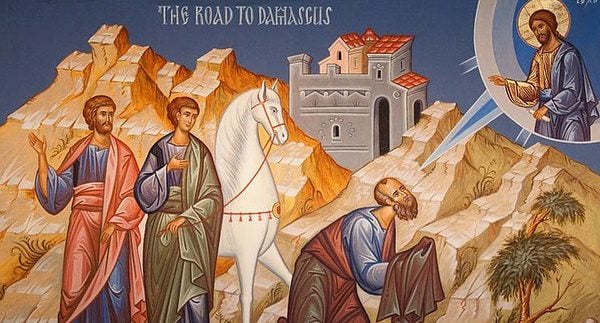
Welcome to the Girardian Virtual Bible Study! Each week we explore the lectionary passage with the help of René Girard’s insights into human relationships. The Raven Foundation will be taking a break this month from posting on the website, but you can continue to join the GVBS at 10:30 am Central on the Raven Foundation Facebook page during the month of May. This episode explores John 21:1-19 and Acts 9:1-20.
Show Notes
At 1:00 – Lindsey says these passages have a message that our world really needs.
at 1:33, Adam describes John 20:1-14. After the resurrection, the disciples go back to their old lifestyle of fishing, but they aren’t catching any fish. The resurrected Jesus comes to them. He tells them to cast their net on the other side. They do and they catch 153 fish! Why is the story so specific? There is some evidence that first century Jews thought there were 153 nations in the world. So, the disciples are symbolically catching up all the nations into the net of God’s love. But some say that the evidence for this reference to 153 is kind of weak, and the larger point is God’s abundance. That’s a lot of fish! More than the disciples needed. Another point to make is that the resurrected Jesus continues to care about the disciples, who have just abandoned him. In the resurrection account in John 20, Jesus told them to go into the world and forgive people, but here they have gone back to their old habit of fishing. They are fishing for fish and not fishing for people! And yet, Jesus feeds them breakfast. This ties in nicely with the next part of the story, where Jesus tells Peter to feed Jesus’ sheep. Jesus teaches Peter that to love Jesus means to become more like Jesus. Jesus fed the disciples, and now he, once again, sends the disciples out into the world to feed people. It’s important to note that the disciples don’t get it right. They often fail to feed Jesus’ sheep, but they often succeed in this task, too. The point is not a moralistic “You must do this or else!”. The point is that the resurrected Jesus always comes to us when we go back to our older ways of life and invites us to remember to love God and love our neighbors as we love ourselves.
At 15:30 we move into a discussion on Acts 9:1-20. This is Saul/Paul’s conversion story. Saul was riding his horse on the road to Damascus, breathing threats of murder against the early Christians. But the resurrected Jesus came to him, saying, “Saul, Saul, why do you persecute me?” But Saul was not literally persecuting Jesus – he was persecuting Jesus’ followers. So, Jesus is one with his followers. But we could extend this by saying that Jesus is one with all people who are persecuted (Matthew 25, for example.) Saul was blinded by his hatred, and so couldn’t see the divine presence in those he was persecuting. Saul fell off his horse and was blinded by the light of God and Jesus’ voice. Then the resurrected Jesus went to a disciple named Ananias. He told Ananias that Saul would come to him and Ananias would help give Saul his sight back. Ananias doubted this message, after all, Saul was persecuting them. Jesus assured Ananias that Saul was changed and will bring in the Gentiles (there is a possible connection here to the disciples catching 153 fish!). Ananias lays his hands on Saul and calls him “Brother.” This is Saul’s conversion. He was once referred to as a persecutor. He is now a brother. Ananias gives Saul a new identity. He did not continue to hold contempt or resentment for Saul. He forgave Saul and transformed him into a sibling in Christ. That forgiveness and shift in our identity what the resurrected life is all about!
Previous Post

April 29, 2019
The Resurrected Jesus and the Destruction of Hell
Browse Our Archives
Select a Category Atonement and Current Events Curriculum Faith and Families Interviews Jesus the Forgiving Victim Lent Montessori politics Reviews The Bible Explained Uncategorized Valentine's Day Wednesday Sermon Who is God?
Select a Month July 2020 November 2019 October 2019 September 2019 August 2019 July 2019 June 2019 May 2019 April 2019 March 2019 February 2019 January 2019 December 2018 November 2018 October 2018 September 2018 August 2018 July 2018 June 2018 May 2018 April 2018 March 2018 February 2018 January 2018 December 2017 November 2017 October 2017 September 2017 August 2017 July 2017 June 2017 May 2017 April 2017 March 2017 February 2017 January 2017 December 2016 November 2016 October 2016 September 2016 August 2016 June 2016 May 2016 April 2016 March 2016 February 2016 January 2016 December 2015 November 2015 October 2015 September 2015 August 2015 July 2015 June 2015 May 2015 April 2015 March 2015 February 2015 January 2015 December 2014 November 2014 October 2014 September 2014 August 2014 July 2014 June 2014 May 2014 April 2014 March 2014 January 2014 December 2013 September 2013 August 2013 July 2013
Follow Us!
TAKE THE
Religious Wisdom Quiz
What Christian tradition requires confession to a priest for forgiveness of sins?
Select your answer to see how you score.
Baptist Roman Catholic Methodist Quaker
Related posts from Teaching Nonviolent Atonement
Jesus Unmasked: Episode 2 – Pride and the...
The Resurrected Jesus and the Destruction of Hell

Ancient Resurrection Stories: How Jesus Is Transforming the...

Free Crystal Mason: Repressing the Vote Mocks Democracy
TRENDING AT PATHEOS Progressive Christian

What Being a Modern-Day Apostle Means to Me
In my last column, I discussed the ins and outs of modern-day...

Did Ancient China Once Worship the God of...
Across human history, a common thread weaves through the origins of the...

Love Your Neighbor – Including Earth-Kin: Lev. 19,...
God’s command to love your neighbor means acting in an ethical and...

Lead a Church Study of “Jesus and Lao...
Guest writer Jack Thomas (The Irreverent Reverend) reflects on leading his church...

Pastoral Wisdom for Responding to Sermon Pushback
Getting sermon pushback on your social justice sermon? Learn practical, Proverbs-based strategies...

Principles for Understanding the Apostolic Ministry Today
Whenever people discover that my formal ministry title is "apostle," as in...
view all Progressive Christian blogs
Ad-Free & Subscriber Log-In Subscription Support
- About Us
- 2026 Calendar
- Videos
- Podcasts
- Library of World Religions
- Faith In Media Tracker
- Advertise With Us
- Write for Us
- Privacy Policy
- Terms of Service
- Do Not Sell My Data
- Contact Us
- Radiant Digital
- Manage Newsletter Subscriptions
- Unsubscribe From Notifications
- Sitemap
Copyright 2008-2026, Patheos. All rights reserved.
Subscription Support Ad-Free & Subscriber Log-In
Follow Patheos