
BuddhistCatholicContemplativeEvangelicalGeneral ChristianHinduJewishLatter-day SaintMuslimNew VisionsProgressive Christian
Beliefs
- Buddhist
- Catholic
- Contemplative
- Evangelical
- General Christian
- Hindu
- Jewish
- Latter-day Saint
- More Voices
- Muslim
- New Visions
- Pagan
- Progressive Christian
Topics
- Religion News
- Food and Religion
- Sports and Religion
- Religious Art
- Religious Music and Entertainment
- Religious Events
- History and Religion
- Style and Religion
- Politics and Religion
- Women in Religion
- Recreation Outdoors and Religion
- Business Finance and Religion
- Careers Workplace and Religion
- Education and Religion
- Family Parenting and Religion
- Health Fitness and Religion
- Home and Religion
- Relationships and Religion
- Technology and Religion
- Travel and Religion
Columnists
- Buddhist Columnists
- Business Finance and Religion Columnists
- Careers Workplace and Religion Columnists
- Catholic Columnists
- Contemplative Columnists
- Education and Religion Columnists
- Evangelists Columnists
- Family Parenting and Religion Columnists
- General Christian Columnists
- Health Fitness and Religion Columnists
- Hindu Columnists
- History and Religion Columnists
- Home and Religion Columnists
- Jewish Columnists
- More Voices Columnists
- Latter Day Columnists
- Muslim Columnists
- New Visions Columnists
- Nonreligious Columnists
- Pagan Columnists
- Politics and Religion Columnists
- Progressive Columnists
- Recreation Outdoors and Religion Columnists
- Relationships and Religion Columnists
- Religion News Columnists
- Religious Art Columnists
- Religious Events Columnists
- Religious Music and Entertainment Columnists
- Sports and Religion Columnists
- Style and Religion Columnists
- Technology and Religion Columnists
- Travel and Religion Columnists
- Women in Religion Columnists
Resource Library
- 2026 Calendar
- Library of World Religions
- The 100 Most Holy Places on Earth
- Patheos Answers
- Podcasts
- Videos
- Faith Leaders Database
- Anglican Episcopalian
- Bahai
- Baptist
- Buddhism
- Christianity
- Confucianism
- Eastern Orthodoxy
- Hinduism
- Holiness and Pentecostal
- ISKCON
- Islam
- Judaism
- Lutheran
- Methodist
- The Church of Jesus Christ of Latter-day Saints
- New Age
- Paganism
- Presbytarian and Reformed
- Protestantism
- Religion Behind the Scenes
- Roman Catholic
- Scientology
- Shia Islam
- Sikhism
- Sufism
- Sunni Islam
- Taoism
- Zen
- See all religions
Research Tools
 Ad-Free & Subscriber Log-In Subscription Support
Ad-Free & Subscriber Log-In Subscription Support
Follow Patheos 

- Trending:
- Forgiveness
- |
- Marriage
- |
- Consciousness
- |
- Death Penalty
- |
- Election
- |
- Halloween
 Teaching Nonviolent Atonement
- Home
- Progressive Christian
- Doubt, Faith, And The God Who Holds Us Together: An Interfaith Prayer For Ramadan
Doubt, Faith, And The God Who Holds Us Together: An Interfaith Prayer For Ramadan
Last updated on: May 6, 2019 at 1:45 am by Lindsey Paris-Lopez
Doubt, Faith, And The God Who Holds Us Together: An Interfaith Prayer For Ramadan 2019-05-06T01:45:21-05:00 Lindsey Paris-Lopez
Patheos Explore the world's faith through different perspectives on religion and spirituality! Patheos has the views of the prevalent religions and spiritualities of the world.
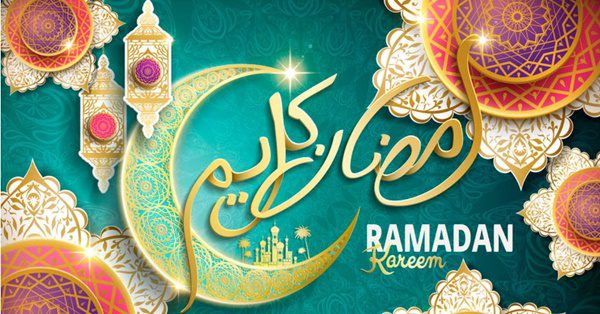
Bismillah Arrahman Arraheem. In the name of God, Most Compassionate, Most Merciful, I write to you, dear Muslim sisters and brothers, in the name of the One God who holds you and me and all peoples, all worlds, all faiths, in a single, eternal embrace. As the holy month of Ramadan begins, I pray for your strength and sustenance as you begin to undertake this month-long fast from sunrise to sunset. I pray not only for your physical endurance though the long daylight hours as spring blends into summer, but also for faith to ease the ache in your bellies and bless you with peace of mind, heart, body and spirit. I pray as someone whose faith journey has been blessed by beautiful Muslim friends and by Islam itself. My meandering spiritual path has wound its way through doubt and faith within both Christianity and Islam. While I now claim Christianity, Islam will always be a blessing to me. Learning and practicing Islam has deepened my faith in both God and humanity. It has guided me to lifelong friendships with some of the most brilliant and compassionate people I know, it has gifted me with the solace of building my life around daily communion with God, and it has helped me understand how God’s Oneness gently binds all of creation in interdependent relationship and responsibility. More on my journey to Islam and back to Christianity can be found here, here, and here. While I no longer call myself a Muslim with a capital “M,” I acknowledge that the God to whom I submit is the same God to whom Muslims prostrate daily. So I pray in thanksgiving for you, my dear Muslim friends, as your fast begins. I pray in thanksgiving for the Holy Month of Ramadan. I pray with the gentle weight of nostalgia sitting on my heart as I remember fasting with my brothers and sisters many years ago. It was back in the winter when daylight hours were shorter. The early morning breakfasts before the break of dawn — when most of the world was still asleep — and the delicious Iftar dinners in the dark of night were close enough together that I could just barely hold out. I pray knowing the joy of striving and pushing one’s self to the limit. I know the blessing of a loving community mutually engaged in the difficult but rewarding work of fasting, and I know the need for solidarity with the worldwide ummah. I hope that my prayers can be a small part of the strength you gather as you endure much longer hours than I ever did. In prayer, I also empathize with the difficulty and temptation you will face. Abstaining from food, drink, and sex during these long hours is difficult enough, but to abstain also from bitterness and short temper, from snapping irritably to losing patience and yelling at the kids, all on an empty stomach – this is difficult even for the most dedicated and devout. I pledge to strive with you in the daily struggle to curb anger for which Ramadan calls, knowing that it will be difficult on a full stomach! I know I will stumble and fall, and if you do too, I pray that we all know the infinite love and mercy of God who appreciates our struggles and sets us gently back upon our feet. I know Ramadan is a month that requires tremendous faith. I also know it is one in which struggles with doubt may become painfully acute. And, while I know it may be strange to hear this from a non-Muslim, I want you to know that as a believer in the same gracious and merciful God, I hope that, if doubt is a companion on your journey, you may come to know it as a blessing and a friend. I say this as someone who once felt weak and fearful because of doubt, but whose faith journey would have been over before it had begun had not doubt pressed me further. In fact, one of the most beautiful things about Islam is how it originated in doubt as well as faith. The Jahiliyya, or Age of Ignorance in pre-Islamic Arabia, was, as my friend Adam Ericksen explains, a time when “fate” was thought to determine the rich from the poor, the winners from the losers, leaving little incentive for compassion or generosity. It was a world in which tribal gods were invoked in violent raids of conquest, and the wealth of a few created a world of desperation and misery for the poor, particularly the widow and the orphan. Sadly, this sounds very much like our world today. Muhammad doubted the tribal gods that trampled victims in their wake. He doubted the beliefs of family members and friends, doubted the traditions that shaped the culture he lived in even as he loved and sought to serve the people. This kind of doubt – the kind that deflates idols erected by fear and greed and elevating the self at the expense of others – clears the heart and mind for the voice of the One True God, the voice of Love. Muhammad’s doubt in the way things were opened a new path for restoring the world to the peace in which it was made. The companion to doubt and struggle in a world of pain, brokenness, and injustice is faith – perhaps yet unseen – in healing, wholeness, and restoration. It was in the midst doubt and faith, both born of love, that the Qur’an was revealed to Muhammad as a mercy and a guidance. Ramadan commemorates the revelation of the Holy Qur’an. This month of fasting reminds us that we hear God most clearly when we stand in solidarity with those most in need. Going long hours without food and drink tunes the heart, mind, body and spirit to the needs of those who must go even longer, those to whom food does not always come with the setting of the sun. If Ramadan brings out your doubt, perhaps in your own ability to maintain abstinence and restraint, may that doubt be channeled as empathy toward those who must survive on less. If, in solidarity with the poor and hungry, you begin to doubt the good in a world where too many are starving and destitute, may that doubt be channeled in the direction of loving resolution to continue in the struggle for justice. And if Ramadan bolsters your faith in the God who sustains you even through long hours without food or drink, may you recognize the same God who holds you holds the whole world. In doubt and in faith, may Ramadan be a time of empathy and solidarity, drawing out the depths of human compassion. This is how we participate in the mercy that God reveals to us in so many ways, including the sacred scripture of the Holy Qur’an. I say all of this feeling the call to solidarity and empathy so acutely. I say this as a believer and a doubter, a person of faith in God and humanity. I say this as someone unprepared to fast, and yet longing to join as I am able in the practice of Ramadan, because I believe in its fundamental truth. I believe God calls us to know hunger so that we may rededicate ourselves to making hunger no more. I believe that God calls us to communal disciplines because when we share in the solidarity of humility and vulnerability, we do not strive to fill our needs at each others’ expense but rather find our mutual needs filled by the true Source. I believe that Ramadan is a time for making peace. As a non-Muslim dedicated to interfaith dialogue, I believe I have a responsibility to show my love and support for the Muslim world at all times but especially now, by speaking out against bigotry, hatred, and endless war. This Ramadan, I pledge to re-read the Holy Qur’an, as Muslims are called to do, and to interpret it through a lens of peacemaking, friendship-building, and restorative justice. Where I find difficulty in understanding, I will consult the works of Muslim peacemakers. This Ramadan and evermore, I pledge myself in solidarity with you, my Muslim sisters and brothers. We are guided along intertwining paths by the same Creator who cherishes and sustains us, called to the same tasks of justice, mercy, and peace-making, and, I believe, ultimately bound for the same destiny of a deeper connection to God and each other in everlasting Love. Ramadan Mubarak! Editor’s Note: Incidentally, as this month of fasting begins, the Raven ReView will also begin a fast… from posting articles. We are revitalizing our website, rededicating ourselves to our mission of changing views and changing the world by seeing what we can do to make Raven a more inviting and welcoming home. We’ll be working behind the scenes, and sometime after Ramadan is over we will invite you to feast your eyes — and minds and spirits — on our new site and be nourished with content old and new that provides calm in a world of chaos and facilitates community in a world of conflict. Until then, dear friends, peace be with you! Image: Stock Photo from 123rf.com.
Previous Post
May 3, 2019
Peter, Paul, and Redemption - Girardian Virtual Bible Study
Next Post

May 7, 2019 The Book of Revelation is Political: Jesus, Empire, and Immigration in the US
Browse Our Archives
Select a Category Atonement and Current Events Curriculum Faith and Families Interviews Jesus the Forgiving Victim Lent Montessori politics Reviews The Bible Explained Uncategorized Valentine's Day Wednesday Sermon Who is God?
Select a Month July 2020 November 2019 October 2019 September 2019 August 2019 July 2019 June 2019 May 2019 April 2019 March 2019 February 2019 January 2019 December 2018 November 2018 October 2018 September 2018 August 2018 July 2018 June 2018 May 2018 April 2018 March 2018 February 2018 January 2018 December 2017 November 2017 October 2017 September 2017 August 2017 July 2017 June 2017 May 2017 April 2017 March 2017 February 2017 January 2017 December 2016 November 2016 October 2016 September 2016 August 2016 June 2016 May 2016 April 2016 March 2016 February 2016 January 2016 December 2015 November 2015 October 2015 September 2015 August 2015 July 2015 June 2015 May 2015 April 2015 March 2015 February 2015 January 2015 December 2014 November 2014 October 2014 September 2014 August 2014 July 2014 June 2014 May 2014 April 2014 March 2014 January 2014 December 2013 September 2013 August 2013 July 2013
Follow Us!
TAKE THE
Religious Wisdom Quiz
Who was the Roman governor that sentenced Jesus to be crucified?
Select your answer to see how you score.
Caesar Augustus Felix Herod Pontius Pilate
Related posts from Teaching Nonviolent Atonement

The Secret of Life: An Interview with Audrey...

Jesus Unmasked: On Being Lost And Found: Sheep,...

Jesus Unmasked: Jesus Brings the Fire!

"I Do Not Give As The World Gives"...
TRENDING AT PATHEOS Progressive Christian

What Being a Modern-Day Apostle Means to Me
In my last column, I discussed the ins and outs of modern-day...

Did Ancient China Once Worship the God of...
Across human history, a common thread weaves through the origins of the...

Love Your Neighbor – Including Earth-Kin: Lev. 19,...
God’s command to love your neighbor means acting in an ethical and...

Lead a Church Study of “Jesus and Lao...
Guest writer Jack Thomas (The Irreverent Reverend) reflects on leading his church...

Pastoral Wisdom for Responding to Sermon Pushback
Getting sermon pushback on your social justice sermon? Learn practical, Proverbs-based strategies...

Principles for Understanding the Apostolic Ministry Today
Whenever people discover that my formal ministry title is "apostle," as in...
view all Progressive Christian blogs
Ad-Free & Subscriber Log-In Subscription Support
- About Us
- 2026 Calendar
- Videos
- Podcasts
- Library of World Religions
- Faith In Media Tracker
- Advertise With Us
- Write for Us
- Privacy Policy
- Terms of Service
- Do Not Sell My Data
- Contact Us
- Radiant Digital
- Manage Newsletter Subscriptions
- Unsubscribe From Notifications
- Sitemap
Copyright 2008-2026, Patheos. All rights reserved.
Subscription Support Ad-Free & Subscriber Log-In
Follow Patheos