
BuddhistCatholicContemplativeEvangelicalGeneral ChristianHinduJewishLatter-day SaintMuslimNew VisionsProgressive Christian
Beliefs
- Buddhist
- Catholic
- Contemplative
- Evangelical
- General Christian
- Hindu
- Jewish
- Latter-day Saint
- More Voices
- Muslim
- New Visions
- Pagan
- Progressive Christian
Topics
- Religion News
- Food and Religion
- Sports and Religion
- Religious Art
- Religious Music and Entertainment
- Religious Events
- History and Religion
- Style and Religion
- Politics and Religion
- Women in Religion
- Recreation Outdoors and Religion
- Business Finance and Religion
- Careers Workplace and Religion
- Education and Religion
- Family Parenting and Religion
- Health Fitness and Religion
- Home and Religion
- Relationships and Religion
- Technology and Religion
- Travel and Religion
Columnists
- Buddhist Columnists
- Business Finance and Religion Columnists
- Careers Workplace and Religion Columnists
- Catholic Columnists
- Contemplative Columnists
- Education and Religion Columnists
- Evangelists Columnists
- Family Parenting and Religion Columnists
- General Christian Columnists
- Health Fitness and Religion Columnists
- Hindu Columnists
- History and Religion Columnists
- Home and Religion Columnists
- Jewish Columnists
- More Voices Columnists
- Latter Day Columnists
- Muslim Columnists
- New Visions Columnists
- Nonreligious Columnists
- Pagan Columnists
- Politics and Religion Columnists
- Progressive Columnists
- Recreation Outdoors and Religion Columnists
- Relationships and Religion Columnists
- Religion News Columnists
- Religious Art Columnists
- Religious Events Columnists
- Religious Music and Entertainment Columnists
- Sports and Religion Columnists
- Style and Religion Columnists
- Technology and Religion Columnists
- Travel and Religion Columnists
- Women in Religion Columnists
Resource Library
- 2026 Calendar
- Library of World Religions
- The 100 Most Holy Places on Earth
- Patheos Answers
- Podcasts
- Videos
- Faith Leaders Database
- Anglican Episcopalian
- Bahai
- Baptist
- Buddhism
- Christianity
- Confucianism
- Eastern Orthodoxy
- Hinduism
- Holiness and Pentecostal
- ISKCON
- Islam
- Judaism
- Lutheran
- Methodist
- The Church of Jesus Christ of Latter-day Saints
- New Age
- Paganism
- Presbytarian and Reformed
- Protestantism
- Religion Behind the Scenes
- Roman Catholic
- Scientology
- Shia Islam
- Sikhism
- Sufism
- Sunni Islam
- Taoism
- Zen
- See all religions
Research Tools
 Ad-Free & Subscriber Log-In Subscription Support
Ad-Free & Subscriber Log-In Subscription Support
Follow Patheos 

- Trending:
- Forgiveness
- |
- Marriage
- |
- Consciousness
- |
- Death Penalty
- |
- Election
- |
- Halloween
 Teaching Nonviolent Atonement
- Home
- Progressive Christian
- The Hate That Killed Christ Keeps On Killing: A Holy Week Meditation On “Jesus And The Disinherited,” Part Four
The Hate That Killed Christ Keeps On Killing: A Holy Week Meditation On “Jesus And The Disinherited,” Part Four
Last updated on: April 20, 2019 at 6:17 am by Lindsey Paris-Lopez
The Hate That Killed Christ Keeps On Killing: A Holy Week Meditation On “Jesus And The Disinherited,” Part Four 2019-04-20T06:17:06-05:00 Lindsey Paris-Lopez
Patheos Explore the world's faith through different perspectives on religion and spirituality! Patheos has the views of the prevalent religions and spiritualities of the world.
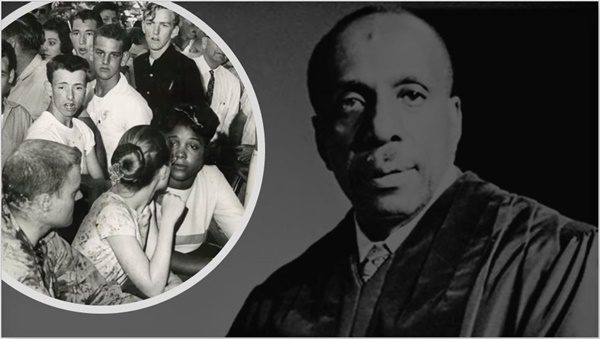
This reluctance to examine hatred has taken on the character of a superstition. It is a subject that is taboo unless there is some extraordinary social crisis – such as war – involving the mobilization of all the national resources of the common life to meet it. There is a conspiracy of silence about hatred, its function and its meaning. Jesus and the Disinherited by Howard Thurman
It is Good Friday. The time to break the silence surrounding hatred is now. Today, when we see the culmination of the world’s hatred in all times and places murder the living God, we are called to a deeper understanding of what hatred is. Clearly, hate functions through humanity, working in our hearts to make us instruments of its destruction. We know it is wrong when we feel its soul-crushing power against us and the ones we love. But we are so quick to deny the ways it works within our own hearts, or to twist it into a source of pride when we wield it against the enemies we demonize. As we justify or deny our hatred we feed this hellhound the flesh of one-another, strengthening it until it can devour us. Part of the reason we justify hatred as it consumes us is because wielding the weapon of hate makes us feel justified and righteous. We define ourselves over and against the enemy, finding our righteousness in the contrast we construct between our “goodness” and our enemy’s “evil.” Caught up in the fervor of hatred, we become ever more assured that each insult we fling, each lash of the tongue (or whip, or gun) is warranted, each blow we strike with words or fists or weapons is a moral duty. This is all the more true when our feelings are echoed in others like a hall of mirrors, as negative mimesis spreads through crowds and consolidates our hatred around an “other.” “Crucify him!” the world shouted, with complete confidence that God was on their side. But is the hatred that crucified Christ the same as the hatred to which the disinherited are tempted? After all, the hatred that crucified Christ found an outlet in Jesus as a scapegoat, where it could exercise all the violent power of the world against him. The hatred to which the disinherited are tempted does not always manifest in such an outward way, because to exercise such hatred toward the powerful can be suicidal. Instead, the hate of the disinherited manifests inwardly. As Howard Thurman writes:
Hatred, in the mind and spirit of the disinherited, is born out of great bitterness – a bitterness that is made possible by sustained resentment which is bottled up until it distills an essence of vitality, giving to the individual in whom this is happening a radical and fundament basis for self-realization.
So for the poor and marginalized, hatred offers to fill a need – for self-respect, for defying a world that has told them their lives do not matter. Building hatred for those who wield the power of injustice serves as a form of resistance to the judgment the world has heaped upon them. “If they reject the judgment,” Thurman writes, “hatred may serve as a device for rebuilding, step by perilous step, the foundation for individual significance; so that from within the intensity of their necessity they declare their right to exist, despite the judgment of the environment.” Can the hatred that destroys others be compared to the hatred that may bolster the self? For the hatred that the disinherited project toward those who mistreat them is intended as a method of self-defense, and one that may never leave a scar upon its target, at that. As an energizing, self-affirming force, hate can feel rewarding for a time. Here, I want to take a moment to consider a world that makes hate a refuge for the disinherited. A world in which the bitterness of hatred can be seen as a healing balm. I don’t think I can find the words anymore… just images of ships and chains, people working to make profits they’ll never see, buses and bruised feet from boycotts and long walks, little girls walking through jeering crowds on their way to school… I hear mocking and slurs, stereotypes and demonizations. I see the long shadow of this past still circumscribing lives today, with a wealth gap rooted in slavery, being barred from employment, pay discrimination, and the inability to build equity. Once again I see long-term prejudices influencing subconscious fears and culminating in the shootings of unarmed or nonthreatening people of color. I try to imagine myself in the position of a person of color and think of a world of hatred built on lies and fears looming all around me, threatening me. And I wonder if I could resist the temptation to hate. Whenever hate is wielded, it feels justified to the hater. But… there is no justice in and no justification in the hatred of racism. If only we could see through the justifications of all hatred. Hindsight can reveal how arbitrary and brutal hate can be. And yet not only does the hatred of racism remain, but a nation of broken relationships and disconnection from years of segregation, lingering inequities and festering prejudices is ripe for breeding more hatred. The counter-hatred with which the marginalized and oppressed may answer such cruel, naked hatred against them, however, looks reasonable, even salvific. I cannot judge it. The most I can do is do my part to create an environment in which protective hatred becomes unnecessary. Because ultimately Dr. Thurman asserts, “[H]atred destroys finally the core of the life of the hater. It is blind and nondiscriminating. Hatred cannot be controlled once it is set in motion.” The disinherited may have more sincere reason to hate, but ultimately, hatred is a weapon that turns on its wielder, no matter who that person is, no matter why it is employed. What becomes of one who is thoroughly consumed by hate? Those who wield hatred externally may engulf the world in the flames of hate, especially if their hatred is returned. When hatred erupts into violence, it escalates, and each blow by one side becomes justification for a blow by the other side. Such escalation of violence has lead to the detonation of two atomic bombs, the development of weapons that can destroy the whole world multiple times over, the deaths of millions, and a planet on the very brink of its death throes as wars enhance climate change. The disinherited who cannot lash out at those who are stronger may still lash out at those who are weaker. Even if they refrain from violence, their lives may be filled with bitterness or anger. What starts as self-protection may in the end sap the joy from life. “Above and beyond all else it must be borne in mind that hatred tends to dry up the springs of creative thought in the life of the hater, so that his resourcefulness becomes completely focused on the negative aspects of his environment.” What happens to the families of those who hate? To their children? The poison of hatred will surely affect, if not infect, them as well. The ultimate source of such hatred may trace back to injustice unfairly placed upon the disinherited, but the truth that hurt people hurt people remains. So I go back to my question: Is the hatred that crucified Christ the same as the hatred to which the disinherited are tempted? It is not for any of us with privilege to judge the hatred to which the disinherited are tempted. But again, ultimately, hatred is a force that overpowers those who wield it. While I cannot compare the damage of the hate wielded by the dominant to that of the hate that builds in the hearts of the oppressed, I believe that all hatred, in all times and places, killed Christ. He absorbed the hate of jeers and the lashes of the whip, he endured the crown of thorns and the nails. But I believe he also felt in his heart all the sorrow, pain, and injustice that build resentment and hatred in those who cannot physically fight back. He heard the jeers of the children taught to hate by lies and deceit. He heard the cries of children onto whom hate was displaced. He took all of it into himself. And he answered it in the only way that can break the vicious cycles of hate that promise protection but deliver only destruction. Jesus knew the temptation to hate. He experienced the injustice and the degradation, and perhaps more importantly, he deeply loved all who lived – and died – under the weight of oppression. And if such love could justify hate and violence to free others from suffering, Jesus may have engaged in it. But Jesus knew that hate is a death-trap. He knew the cycles it generates, the path to hell and damnation that humanity starts itself down when it defines itself over and against others in hatred. He felt it before the incarnation, and came to live and die among us to show us that God is ever the victim, never the author, of the hell we create for each other and ourselves. He came to pull us out of this hell by teaching us how to live without hatred. On Good Friday, he absorbed every ounce of hate humanity had. Time stood still in those three hours as the pain and cruelty and brutality of every generation pierced his heart, body and soul. He let hatred swallow him whole. And he answered it in Love. Image: Screenshot from Youtube: “How a Lunch Counter Sit-In Became an Iconic Civil Rights Moment — SFA,” by Eater, and “Howard Thurman” by On Being. Available on Flickr via Attribution Noncommercial 2.0 Share-Alike Creative Commons license. Editor’s Note: I originally planned to write a response to Howard Thurman’s chapter on Love today, for Good Friday. Obviously, I am behind. And now, I’d like to say I planned all along to end good Friday with this look at the three hounds of hell: fear, deception, and hate, to let us all ponder the depths of these sins that crucified our Lord in solidarity with all who have suffered violence and injustice in all times and places. I want to say I intended all along for us to ponder these thoughts in the solemnity of Good Friday and the silence of Holy Saturday before we explore Love in the light of the Risen Son. And… you know what? That sounds good. Let’s go with that. We will explore Love in the Easter season. Until then, peace, my friends.
Next Post

April 22, 2019 Ancient Resurrection Stories: How Jesus Is Transforming the World
Browse Our Archives
Select a Category Atonement and Current Events Curriculum Faith and Families Interviews Jesus the Forgiving Victim Lent Montessori politics Reviews The Bible Explained Uncategorized Valentine's Day Wednesday Sermon Who is God?
Select a Month July 2020 November 2019 October 2019 September 2019 August 2019 July 2019 June 2019 May 2019 April 2019 March 2019 February 2019 January 2019 December 2018 November 2018 October 2018 September 2018 August 2018 July 2018 June 2018 May 2018 April 2018 March 2018 February 2018 January 2018 December 2017 November 2017 October 2017 September 2017 August 2017 July 2017 June 2017 May 2017 April 2017 March 2017 February 2017 January 2017 December 2016 November 2016 October 2016 September 2016 August 2016 June 2016 May 2016 April 2016 March 2016 February 2016 January 2016 December 2015 November 2015 October 2015 September 2015 August 2015 July 2015 June 2015 May 2015 April 2015 March 2015 February 2015 January 2015 December 2014 November 2014 October 2014 September 2014 August 2014 July 2014 June 2014 May 2014 April 2014 March 2014 January 2014 December 2013 September 2013 August 2013 July 2013
Follow Us!
TAKE THE
Religious Wisdom Quiz
The sun and moon stood still at my command so Israel could defeat their enemies. Who am I?
Select your answer to see how you score.
Moses Gideon Caleb Joshua
Related posts from Teaching Nonviolent Atonement

Forgiveness in the Time of COVID-19 by Julia...

Reflections on Indigenous Wisdom For Healing A Wounded...

How Forgiveness Can Transform Our Violence and Build...

Jesus Unmasked: God's Economy and How to Cheat...
TRENDING AT PATHEOS Progressive Christian

Why Christians Have a Sacred Duty to Vote:...
The Bible offers strong support for the sacred duty to vote. Here...

What Being a Modern-Day Apostle Means to Me
In my last column, I discussed the ins and outs of modern-day...

Did Ancient China Once Worship the God of...
Across human history, a common thread weaves through the origins of the...

Love Your Neighbor – Including Earth-Kin: Lev. 19,...
God’s command to love your neighbor means acting in an ethical and...

Lead a Church Study of “Jesus and Lao...
Guest writer Jack Thomas (The Irreverent Reverend) reflects on leading his church...

Principles for Understanding the Apostolic Ministry Today
Whenever people discover that my formal ministry title is "apostle," as in...
view all Progressive Christian blogs
Ad-Free & Subscriber Log-In Subscription Support
- About Us
- 2026 Calendar
- Videos
- Podcasts
- Library of World Religions
- Faith In Media Tracker
- Advertise With Us
- Write for Us
- Privacy Policy
- Terms of Service
- Do Not Sell My Data
- Contact Us
- Radiant Digital
- Manage Newsletter Subscriptions
- Unsubscribe From Notifications
- Sitemap
Copyright 2008-2026, Patheos. All rights reserved.
Subscription Support Ad-Free & Subscriber Log-In
Follow Patheos