
BuddhistCatholicContemplativeEvangelicalGeneral ChristianHinduJewishLatter-day SaintMuslimNew VisionsProgressive Christian
Beliefs
- Buddhist
- Catholic
- Contemplative
- Evangelical
- General Christian
- Hindu
- Jewish
- Latter-day Saint
- More Voices
- Muslim
- New Visions
- Pagan
- Progressive Christian
Topics
- Religion News
- Food and Religion
- Sports and Religion
- Religious Art
- Religious Music and Entertainment
- Religious Events
- History and Religion
- Style and Religion
- Politics and Religion
- Women in Religion
- Recreation Outdoors and Religion
- Business Finance and Religion
- Careers Workplace and Religion
- Education and Religion
- Family Parenting and Religion
- Health Fitness and Religion
- Home and Religion
- Relationships and Religion
- Technology and Religion
- Travel and Religion
Columnists
- Buddhist Columnists
- Business Finance and Religion Columnists
- Careers Workplace and Religion Columnists
- Catholic Columnists
- Contemplative Columnists
- Education and Religion Columnists
- Evangelists Columnists
- Family Parenting and Religion Columnists
- General Christian Columnists
- Health Fitness and Religion Columnists
- Hindu Columnists
- History and Religion Columnists
- Home and Religion Columnists
- Jewish Columnists
- More Voices Columnists
- Latter Day Columnists
- Muslim Columnists
- New Visions Columnists
- Nonreligious Columnists
- Pagan Columnists
- Politics and Religion Columnists
- Progressive Columnists
- Recreation Outdoors and Religion Columnists
- Relationships and Religion Columnists
- Religion News Columnists
- Religious Art Columnists
- Religious Events Columnists
- Religious Music and Entertainment Columnists
- Sports and Religion Columnists
- Style and Religion Columnists
- Technology and Religion Columnists
- Travel and Religion Columnists
- Women in Religion Columnists
Resource Library
- 2026 Calendar
- Library of World Religions
- The 100 Most Holy Places on Earth
- Patheos Answers
- Podcasts
- Videos
- Faith Leaders Database
- Anglican Episcopalian
- Bahai
- Baptist
- Buddhism
- Christianity
- Confucianism
- Eastern Orthodoxy
- Hinduism
- Holiness and Pentecostal
- ISKCON
- Islam
- Judaism
- Lutheran
- Methodist
- The Church of Jesus Christ of Latter-day Saints
- New Age
- Paganism
- Presbytarian and Reformed
- Protestantism
- Religion Behind the Scenes
- Roman Catholic
- Scientology
- Shia Islam
- Sikhism
- Sufism
- Sunni Islam
- Taoism
- Zen
- See all religions
Research Tools
 Ad-Free & Subscriber Log-In Subscription Support
Follow Patheos 

- Trending:
- Advent
- |
- Forgiveness
- |
- Thanksgiving
- |
- Election
- |
- Seasonal Holidays
- |
- Marriage
 Teaching Nonviolent Atonement
- Home
- Progressive Christian
- God’s New Pattern: Why I Pick and Choose Bible Verses – and So Should You
God’s New Pattern: Why I Pick and Choose Bible Verses – and So Should You
Last updated on: April 9, 2019 at 6:37 pm by Adam Ericksen
God’s New Pattern: Why I Pick and Choose Bible Verses – and So Should You 2019-04-09T18:37:06-05:00 Adam Ericksen
Patheos Explore the world's faith through different perspectives on religion and spirituality! Patheos has the views of the prevalent religions and spiritualities of the world.
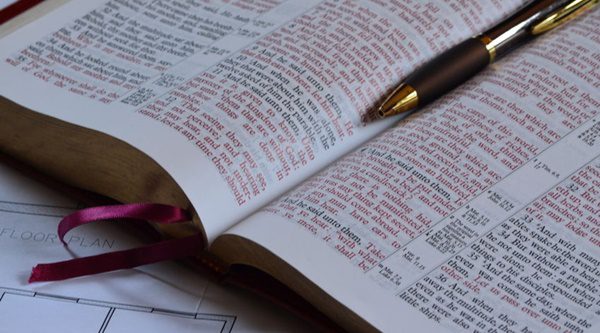
The following is a sermon I preached at Clackamas United Church of Christ, near Portland, Oregon. You can read or watch the sermon below. The primary scripture texts were Isaiah 43:16-21 and John 12:1-8.
One of the things I’ve been struggling with these days is how to live as authentically as a Christian.
As your pastor, I don’t know if I should admit that to you. But man, it’s tough.
People want authenticity. I want authenticity. But there are times when I struggle to know how to be authentically Christian.
Part of the problem is that I often hear that our culture is deeply polarized. I’m not sure how true this is, but I’ve experienced this polarization in my extended family, and I know many of you have experienced it too.
We live in a time of chaos. It feels almost tribal. Scandals run the 24-hour news media as different outlets compete for our attention. There’s an “us against them” mentality out there. But my problem is that this mentality is not just “out there.” I absorb the chaos and scandal, and so the “us against them” mentality infects me, too.
My struggle is to remain authentically Christian isn’t just about the political chaos of our times. My struggle is also real because sometimes I wonder what it even means to be “authentically Christian.” I mean, if you were to ask the pastor down the street, you might get a completely different response than what I would give. And each of us might have different answers and different nuances.
I don’t want to impose an answer upon you, but I would like to reflect a bit on our passages today because I think they provide important spiritual tools as we navigate the chaos of our times.
The Old Pattern of Uniting Against a Common Enemy
But first, it’s important to note that our chaos and tribalism is nothing new. It’s actually a very old pattern of being human. Very early in human history, families and tribes were formed. These tribes had inner conflicts that threatened their survival, but they banded together by uniting against a common enemy, often another tribe. To make it worse, each tribe had a god who was on their side, and thus against their enemies.
What we see today is this old ancient pattern of being human playing out. This pattern of uniting against a common enemy was there in the beginning and you might say that it has become part of our social DNA.
But our reading from Isaiah today tells us to not remember the things of old because God is doing something radically new. God is transforming our social DNA. If our old pattern of forming our social identity was to find unity by being against others, God’s new pattern of forming our social identity is to include more and more into the people of God.
Isaiah’s New Pattern of Being Human – Radical Inclusion
You might put it like this: The old human pattern is exclusive. The new divine pattern is inclusive. What we learn from our passage in Isaiah is that to be authentically Christian is to live into the new pattern that seeks to include all people.
Here’s how Isaiah reveals this new pattern. Isaiah wrote during a time of political chaos. The Babylonian Empire just conquered Jerusalem. The Babylonians were brutal. After the violent conquest, the Babylonians deported many of Isaiah’s people throughout their empire in what’s known as the Babylonian Exile.
It’s one of the most tragic points of Jewish history. Isaiah wanted to live authentically as a child of God during this chaotic time and he offered some advice to his people.
Isaiah reminded his people that their ancestors went through tragedy and chaos in the past. They were enslaved in Egypt and that God delivered them from slavery in the Exodus.
Isaiah reminded them that the Egyptian army pursued their ancestors as they left Egypt. God made a way through the Red Sea by parting it for the Hebrew people, and then drowning the Egyptian army, extinguishing them like a wick, allowing the Hebrews some amount of safety from the Egyptians on their way to the promised land.
But Isaiah immediately told the people to forget the things of old. Don’t remember the part of the story about the Egyptians being extinguished like a wick because God is doing something new.
You see, the old thing that Isaiah wants us to forget is the idea that certain people have to be excluded, defeated, or killed in order for us to live. That’s the old pattern and God is creating a new pattern.
Isaiah: Even the Jackals and Ostriches are Included
Isaiah described the new thing God is doing in a way that may sound strange to us. Isaiah says that the wild animals, included jackals and ostriches, are included in God’s family, in God’s universal tribe.
That’s weird. I mean, why would Isaiah say that wild animals like jackals and ostriches are being included as worshippers of God?
First, we need to know that wild animals were understood to be religiously unclean. In fact, there’s a law in the book of Leviticus that says that the ostrich is “detestable” and an “abomination.”
But Isaiah says that detesting the ostrich for being an ostrich is the old pattern, so forget about that law because God is creating a new pattern. For Isaiah and the other prophets, it doesn’t matter what particular religious law says. Because any law that divides us from them, any law that tells us to detest the ostrich and treat them as abominations, should not be remembered.
Isaiah, Jesus, and Why We Need to Pick and Choose Bible Verses
Sometimes, especially in my online ministry, people will accuse me of picking and choosing passages in the Bible. And do you know what? They are exactly right! I do pick and choose. Why? Because Isaiah picked and chose. Isaiah essentially says, “Hey, you know those passages and even laws that tell us to detest certain people and label them unclean? Forget about those passages. Don’t remember those laws because God is doing something new by including those that we once detested and those we once thought were unclean abominations.”
Because Isaiah wasn’t merely talking about wild animals. He was talking about people. The new thing that God is doing is expanding our tribalistic view of who is included and who is excluded. Who were the wild animals, the jackals and ostriches, of Isaiah’s day? The Babylonians. They were like opportunistic jackals. And I’m sure Isaiah’s people would have loved for God to extinguish the Babylonians like a wick, but for Isaiah, that’s the old way. According to Isaiah, we can no longer use God or religious laws as a justification to be against anyone, not even those you call your enemies because God is doing something new.
And so for me, to be authentically Christian is to pick and choose which Bible passages I will live by. Because, in reality, when it comes to the Bible, everyone picks and chooses. Isaiah picked and chose, Jesus picked and chose. They picked and they chose love over hate. They chose service to the poor over indifference to the poor. Why? Because God is doing a new thing. In fact, no matter what the law says, Jesus says that those people labeled by the religious elite as sinners will enter the Kingdom of God before the religious elite who were caught up in the old pattern and want to exclude others.
Mary and Judas: Jesus Says No to Scapegoating
Our Gospel passage points to this. In our passage, Jesus knew he was going to the cross and would soon be killed. Mary knew this, too. So she anointed his feet with perfume. In the ancient world, you would anoint someone for burial. By anointing Jesus with expensive perfume Mary told Jesus he was not alone in his fear and pain. In all of his humanity, Jesus needed this act of extravagant love from Mary as he journeyed to the cross.
Judas, on the other hand, shamed Mary for not selling the expensive perfume and giving the proceeds to the poor.
Judas was caught up in the old pattern of blaming and shaming others. Mary was vulnerable in this moment. Judas could have united the disciples against Mary. In this sense, Judas acted like a jackal.
And Jesus confronted Judas by saying, “Leave her alone.”
Jesus did this because shaming, blaming, and scapegoating are not part of an authentic Christian life. Sometimes, especially in our work to create a more just world, we need to confront the jackals who shame and blame the vulnerable.
Washing Judas’ Feet
Jesus said “No” to Judas as he accused Mary of being foolish with the perfume. But a few chapters later, Jesus and the 12 disciples are in an upper room. Like Mary anointed Jesus’ feet, Jesus washed his disciples feet. Jesus knew that Judas would betray him and hand him over to be killed. And yet, Jesus washed Judas’ feet. Why? Because Jesus was caught up in the new thing God is doing in the world – acts of radical love for all people, including people like Judas.
To be authentically Christian means to work for a more just world. But it also means to wash Judas’ feet.
Who are the Judases in your life, who are the wild jackals and ostriches, the people that might need a good foot washing? Or here’s a better question – Are you a Judas that needs someone to wash your feet? I know I’ve been a Judas in my life. Maybe there’s some Judas inside of all of us. Maybe to be authentically Christian means to admit that there are times when I am not authentically Christian. We don’t always get it right. And you know what? Jesus loved even Judas. Jesus washed his feet. Like Jesus, sometimes we need to say “No” to Judas, even the Judas within us, but we also need to remember to wash Judas’ feet.
And so may we continue to work for a more just and inclusive world.
May we use the law, not to divide us from them, but to love more and more.
And may we trust that God is doing a new thing by leading us from acts of exclusion to acts of embrace. Amen.
Previous Post

April 5, 2019
Jesus, Mary, and the Jackals – Everyone Belongs – GVBS: Lent 5, Year C
Next Post
April 9, 2019 A Donkey, Not A War Horse: Girardian Virtual Bible Study Preview
Browse Our Archives
Select a Category Atonement and Current Events Curriculum Faith and Families Interviews Jesus the Forgiving Victim Lent Montessori politics Reviews The Bible Explained Uncategorized Valentine's Day Wednesday Sermon Who is God?
Select a Month July 2020 November 2019 October 2019 September 2019 August 2019 July 2019 June 2019 May 2019 April 2019 March 2019 February 2019 January 2019 December 2018 November 2018 October 2018 September 2018 August 2018 July 2018 June 2018 May 2018 April 2018 March 2018 February 2018 January 2018 December 2017 November 2017 October 2017 September 2017 August 2017 July 2017 June 2017 May 2017 April 2017 March 2017 February 2017 January 2017 December 2016 November 2016 October 2016 September 2016 August 2016 June 2016 May 2016 April 2016 March 2016 February 2016 January 2016 December 2015 November 2015 October 2015 September 2015 August 2015 July 2015 June 2015 May 2015 April 2015 March 2015 February 2015 January 2015 December 2014 November 2014 October 2014 September 2014 August 2014 July 2014 June 2014 May 2014 April 2014 March 2014 January 2014 December 2013 September 2013 August 2013 July 2013
Follow Us!
TAKE THE
Religious Wisdom Quiz
True or False: The fruit of the Spirit includes love, joy, peace, and twelve other qualities.
Select your answer to see how you score.
FALSE TRUE
Related posts from Teaching Nonviolent Atonement
The Chosen One Chooses Love Over Fear [VIDEO]

Why You Should Run from Religion that Emphasizes...
Jesus, Mary, and the Jackals – Everyone Belongs...
Jesus Lights The Way To Full Inclusion –...
TRENDING AT PATHEOS Progressive Christian

Personal Devotion After Deconstruction
It’s pretty standard for progressive believers to reject aspects of their religious...

The Secret behind A Charlie Brown Thanksgiving
Where Franklin Sat at Charlie Brown's Thanksgiving Table Sparky was sticking to...

Bridging the Gap Between God and Man
From Far Off to the Ultimate Embrace “God is a Spirit: and...

Let Matthew 25 Guide You to a Greater...
With the crisp feel of fall in the air, our minds quickly...

Can a Chatbot Touch Your Soul?
Can a chatbot offer genuine spiritual counsel? One conversation brought me to...

Religion and Politics: How Should We Then Live?
Two cultural axioms get repeated in polite company. Don't mix religion and...
view all Progressive Christian blogs
Ad-Free & Subscriber Log-In Subscription Support
- About Us
- 2026 Calendar
- Videos
- Podcasts
- Library of World Religions
- Faith In Media Tracker
- Advertise With Us
- Write for Us
- Privacy Policy
- Terms of Service
- Do Not Sell My Data
- Contact Us
- Radiant Digital
- Manage Newsletter Subscriptions
- Unsubscribe From Notifications
- Sitemap
Copyright 2008-2026, Patheos, part of the Radiant Digital network of media brands. All rights reserved.
Subscription Support Ad-Free & Subscriber Log-In
Follow Patheos