
BuddhistCatholicContemplativeEvangelicalGeneral ChristianHinduJewishLatter-day SaintMuslimNew VisionsProgressive Christian
Beliefs
- Buddhist
- Catholic
- Contemplative
- Evangelical
- General Christian
- Hindu
- Jewish
- Latter-day Saint
- More Voices
- Muslim
- New Visions
- Pagan
- Progressive Christian
Topics
- Religion News
- Food and Religion
- Sports and Religion
- Religious Art
- Religious Music and Entertainment
- Religious Events
- History and Religion
- Style and Religion
- Politics and Religion
- Women in Religion
- Recreation Outdoors and Religion
- Business Finance and Religion
- Careers Workplace and Religion
- Education and Religion
- Family Parenting and Religion
- Health Fitness and Religion
- Home and Religion
- Relationships and Religion
- Technology and Religion
- Travel and Religion
Columnists
- Buddhist Columnists
- Business Finance and Religion Columnists
- Careers Workplace and Religion Columnists
- Catholic Columnists
- Contemplative Columnists
- Education and Religion Columnists
- Evangelists Columnists
- Family Parenting and Religion Columnists
- General Christian Columnists
- Health Fitness and Religion Columnists
- Hindu Columnists
- History and Religion Columnists
- Home and Religion Columnists
- Jewish Columnists
- More Voices Columnists
- Latter Day Columnists
- Muslim Columnists
- New Visions Columnists
- Nonreligious Columnists
- Pagan Columnists
- Politics and Religion Columnists
- Progressive Columnists
- Recreation Outdoors and Religion Columnists
- Relationships and Religion Columnists
- Religion News Columnists
- Religious Art Columnists
- Religious Events Columnists
- Religious Music and Entertainment Columnists
- Sports and Religion Columnists
- Style and Religion Columnists
- Technology and Religion Columnists
- Travel and Religion Columnists
- Women in Religion Columnists
Resource Library
- 2026 Calendar
- Library of World Religions
- The 100 Most Holy Places on Earth
- Patheos Answers
- Podcasts
- Videos
- Faith Leaders Database
- Anglican Episcopalian
- Bahai
- Baptist
- Buddhism
- Christianity
- Confucianism
- Eastern Orthodoxy
- Hinduism
- Holiness and Pentecostal
- ISKCON
- Islam
- Judaism
- Lutheran
- Methodist
- The Church of Jesus Christ of Latter-day Saints
- New Age
- Paganism
- Presbytarian and Reformed
- Protestantism
- Religion Behind the Scenes
- Roman Catholic
- Scientology
- Shia Islam
- Sikhism
- Sufism
- Sunni Islam
- Taoism
- Zen
- See all religions
Research Tools
 Ad-Free & Subscriber Log-In Subscription Support
Ad-Free & Subscriber Log-In Subscription Support
Follow Patheos 

- Trending:
- Forgiveness
- |
- Marriage
- |
- Consciousness
- |
- Death Penalty
- |
- Election
- |
- Halloween
 Teaching Nonviolent Atonement
- Home
- Progressive Christian
- The Christian Doctrine that Leads to Full Inclusion
The Christian Doctrine that Leads to Full Inclusion
Last updated on: March 4, 2019 at 1:34 pm by Adam Ericksen
The Christian Doctrine that Leads to Full Inclusion 2019-03-04T13:34:58-05:00 Adam Ericksen
Patheos Explore the world's faith through different perspectives on religion and spirituality! Patheos has the views of the prevalent religions and spiritualities of the world.
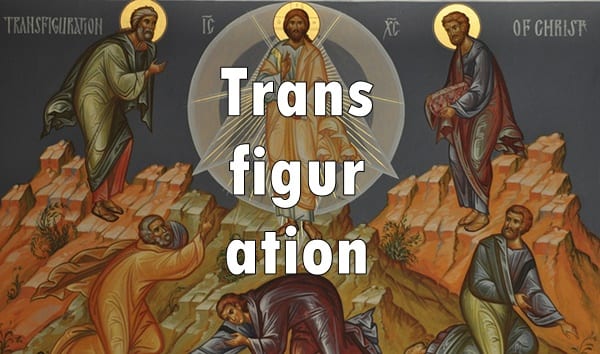
The following is a sermon I preached at Clackamas United Church of Christ, near Portland, Oregon. You can read or watch the sermon below. The primary scripture texts was Luke 9:28-36.
Today I want to do something a little different. I’m not sure if it will work. If you like it, that’s great. If you don’t like it, that’s fine. I will be in the back of the sanctuary after worship. You can come and apologize to me then…
I would like to talk with you about a Christian doctrine. I know that just hearing the word “doctrine” makes many of us want to groan. So, let’s get it out of our system. On the count of three, let’s all groan together. 1, 2, 3…
For many of us, the word doctrine feels heavy and burdensome. Many of us were taught that you must believe these doctrines or else God will hate us and send us to hell.
I want to be clear that this idea is false. It is not only false; it is harmful and goes against the whole point of doctrine. Here’s why: The word doctrine does mean teaching, but it means much more than teaching. It comes from the Latin word for “Doctor.” And what does a doctor do? A doctor heals. In fact, a doctor has to sign an oath to do no harm.
Doctrine should work in the same way. One of my favorite theologians is a woman named Diana Butler Bass. She says that Christian doctrine is meant to heal. Any doctrine that does not provide some sense of healing should not be followed. For sure, some doctrines heal us by revealing that we are loved. Other doctrines heal us by challenging us to work for justice. But if a doctrine doesn’t provide some sense of healing, then it isn’t a true Christian teaching. You can throw it away or you can set it aside and come back to it later when it might provide healing.
Today I want to explore with you the Christian doctrine of the Incarnation. Usually I only preach about this doctrine on Christmas when we celebrate Jesus born as Immanuel, or God with us. I bring it up today because we have the story of the Transfiguration – a big academic word that means transformation.
In the story, Jesus hikes mountain with three of his friends and they see him transformed and glowing with the glory of God.
And the Christian doctrine of the Incarnation claims that what the disciples saw about Jesus on that mountain had always been true about Jesus. It wasn’t so much that Jesus was transformed, but the disciples’ vision was transformed so that they could see what was true about Jesus. The human Jesus was always been imbued with the wonder and the glory of God. The human and the divine peacefully coexisted within Jesus.
The reason this matters is because throughout most of human history we have thought that there is a fundamental conflict between God and humanity. There is the holy – which is God – and there is the profane – which is the world. And so we generally have thought that God is holy and can’t go near the profane. God is excluded from creation, so God is somewhere way out there and every once in a while comes to earth to try to teach us how to live.
But the Incarnation is a healing doctrine for me because it claims that the material world is fundamentally good. It claims that there is no conflict or rivalry between God and the world. In fact, the sacred and the world co-exist, and we see this in the person of Jesus. In Jesus, the fullness of God and the fullness of humanity do not exclude one another. Rather, they dwell together in perfect harmony.
And here is where this doctrine gets really interesting and blows my mind. There was a teaching in the early church that said God became human in Jesus so that humans would become god-like. Jesus catches us up in the life of God. And it’s not because of anything we do. It’s because of what God did in Jesus. Here’s what that means: What is true about Jesus is true about you.
Jesus’ face shines with the glory of God. And so does yours. You carry within you the glory of humanity. And you carry within you the glory of God.
That’s the fundamental teaching of the doctrine of the Incarnation. The disciples glimpsed this truth while they were on top of the mountain. And I’m sure that many of us can relate. I know some of you like to hike up mountains. When we’re in nature we often have similar mystical glimpses of the divine. For me, it’s humbling to hike a mountain and look over the vastness of creation. I sense the world is so much bigger than my perspective, my conflicts, and my problems. The bigness of the world is a reminder of the glory of God – that just like Jesus was infused with the oneness of the glory of God, so God’s glory infuses all of creation in an essential oneness.
But soon I have to hike down the mountain. You can’t stay up on the mountain. You can’t stay in the mystical experience. At some point you have to come down the mountain.
Which brings up a question: How do you take that mystical experience of the glory of God with us when we come down from the mystical experience? It takes a little training, but it involves opening our eyes to seeing the glory of God shining in the face of our fellow human beings in our everyday lives.
When the disciples came down the mountain, they entered a village and met a man whose son was possessed by demons. The man begged Jesus’ disciples to cure his son, but they couldn’t. Then the man asked Jesus. Jesus rebuked the disciples for their lack of faith and then healed the boy by casting out the unclean spirit from his body.
And at this point I have a few questions. Like, demon possession? What are you going to do with that story?
We read that story at Bible study this last week. I said, First the disciples see the glory of God shining within Jesus … and then we have this really weird story about Jesus healing a boy with a demon. I told them that while I love the transfiguration story, I am not personally going around casting out demons from anyone…
Bernie looked at us and said, “Well, it’s like this: I was at the grocery a few days ago and there was this mother and her young child. Her child was screaming and in a fit. And the mother was having a very hard time. And other people were either giving her the look or awkwardly walking in the other direction.” Bernie says that something inside of her compelled her to go to the mother, put her hand on her shoulder, and say, “I’ve been there, too. I know what it’s like. You are not alone.”
What Bernie experienced with this mother was a deep connection. Like the divine and human were one in Jesus, Bernie sensed a oneness with this mother. Sometimes we have challenging moments in our lives. And we don’t necessarily want anyone to solve them, but we also don’t want to feel excluded or that people are abandoning us. We desperately want someone to come up to us and live into the oneness of being human by saying, “You are not alone. I am here with you.”
The Incarnation tells us that the glory of God and the glory of humanity coexisted in an essential oneness in Jesus. But the Incarnation also tells us that the glory of God shines within each of us. It shines within you and me. It shines within a mother and her child in the grocery store. And as Jesus teaches, it shines within those he called the least of these. Those who are often marginalized and excluded.
And here is what I feel compelled to proclaim today in the face of events in the United Methodist Church last week: the doctrine of the Incarnation teaches us that God’s grace and love and welcome have always been more inclusive and expansive than we could ever imagined.
The healing doctrine of the Incarnation says that there is no conflict or exclusion between God and humanity because God and humanity mingle together in the person Jesus. The Incarnation matters because it means that we can no longer use God as a weapon to exclude people from the body of Christ based on their gender, color, or sexual identity.
The glory of God shines in the face of all people, including our LGBTQ siblings. No matter what any church says, our LGBTQ siblings are loved and accepted just as they are. For too long churches have said LGBTQ folk are inherently sinful and so they should be excluded from full participation in church. But that’s a false teaching. The doctrine of the Incarnation teaches that the fullness of humanity is included in the divine life. The LGBTQ experience is part of the fullness of humanity. So the sin is not being LGBTQ. The sin is when churches exclude. LGBTQ folks don’t need to be transformed. A church that excludes needs to be transformed.
And that transformation starts with us. We are a place where straight and LGBTQ folk can come and know that we are all included, for we are all loved by God and by one another. We are not perfect. Every church and every denomination has baggage. I have baggage. But we can help each other carry that baggage. Why? Because like Jesus, our faces shine with the glory of God.
May our eyes be open to seeing the glory of God shining in one another today and forevermore. Amen.
Image: Flickr, Ted, Creative Commons License. Some changes made.

Browse Our Archives
Select a Category Atonement and Current Events Curriculum Faith and Families Interviews Jesus the Forgiving Victim Lent Montessori politics Reviews The Bible Explained Uncategorized Valentine's Day Wednesday Sermon Who is God?
Select a Month July 2020 November 2019 October 2019 September 2019 August 2019 July 2019 June 2019 May 2019 April 2019 March 2019 February 2019 January 2019 December 2018 November 2018 October 2018 September 2018 August 2018 July 2018 June 2018 May 2018 April 2018 March 2018 February 2018 January 2018 December 2017 November 2017 October 2017 September 2017 August 2017 July 2017 June 2017 May 2017 April 2017 March 2017 February 2017 January 2017 December 2016 November 2016 October 2016 September 2016 August 2016 June 2016 May 2016 April 2016 March 2016 February 2016 January 2016 December 2015 November 2015 October 2015 September 2015 August 2015 July 2015 June 2015 May 2015 April 2015 March 2015 February 2015 January 2015 December 2014 November 2014 October 2014 September 2014 August 2014 July 2014 June 2014 May 2014 April 2014 March 2014 January 2014 December 2013 September 2013 August 2013 July 2013
Follow Us!
TAKE THE
Religious Wisdom Quiz
What is the name of the tree whose fruit Adam and Eve were forbidden to eat?
Select your answer to see how you score.
Tree of Life Olive Tree Tree of the Knowledge of Good and Evil Fig Tree
Related posts from Teaching Nonviolent Atonement

Pride: In The Name Of Love, Living Our...

The Unity of All Things: How to Be...
We Are One: Unity in Christ with Victims,...
TRENDING AT PATHEOS Progressive Christian

What Being a Modern-Day Apostle Means to Me
In my last column, I discussed the ins and outs of modern-day...

Did Ancient China Once Worship the God of...
Across human history, a common thread weaves through the origins of the...

Love Your Neighbor – Including Earth-Kin: Lev. 19,...
God’s command to love your neighbor means acting in an ethical and...

Lead a Church Study of “Jesus and Lao...
Guest writer Jack Thomas (The Irreverent Reverend) reflects on leading his church...

Pastoral Wisdom for Responding to Sermon Pushback
Getting sermon pushback on your social justice sermon? Learn practical, Proverbs-based strategies...

Principles for Understanding the Apostolic Ministry Today
Whenever people discover that my formal ministry title is "apostle," as in...
view all Progressive Christian blogs
Ad-Free & Subscriber Log-In Subscription Support
- About Us
- 2026 Calendar
- Videos
- Podcasts
- Library of World Religions
- Faith In Media Tracker
- Advertise With Us
- Write for Us
- Privacy Policy
- Terms of Service
- Do Not Sell My Data
- Contact Us
- Radiant Digital
- Manage Newsletter Subscriptions
- Unsubscribe From Notifications
- Sitemap
Copyright 2008-2026, Patheos. All rights reserved.
Subscription Support Ad-Free & Subscriber Log-In
Follow Patheos