
BuddhistCatholicContemplativeEvangelicalGeneral ChristianHinduJewishLatter-day SaintMuslimNew VisionsProgressive Christian
Beliefs
- Buddhist
- Catholic
- Contemplative
- Evangelical
- General Christian
- Hindu
- Jewish
- Latter-day Saint
- More Voices
- Muslim
- New Visions
- Pagan
- Progressive Christian
Topics
- Religion News
- Food and Religion
- Sports and Religion
- Religious Art
- Religious Music and Entertainment
- Religious Events
- History and Religion
- Style and Religion
- Politics and Religion
- Women in Religion
- Recreation Outdoors and Religion
- Business Finance and Religion
- Careers Workplace and Religion
- Education and Religion
- Family Parenting and Religion
- Health Fitness and Religion
- Home and Religion
- Relationships and Religion
- Technology and Religion
- Travel and Religion
Columnists
- Buddhist Columnists
- Business Finance and Religion Columnists
- Careers Workplace and Religion Columnists
- Catholic Columnists
- Contemplative Columnists
- Education and Religion Columnists
- Evangelists Columnists
- Family Parenting and Religion Columnists
- General Christian Columnists
- Health Fitness and Religion Columnists
- Hindu Columnists
- History and Religion Columnists
- Home and Religion Columnists
- Jewish Columnists
- More Voices Columnists
- Latter Day Columnists
- Muslim Columnists
- New Visions Columnists
- Nonreligious Columnists
- Pagan Columnists
- Politics and Religion Columnists
- Progressive Columnists
- Recreation Outdoors and Religion Columnists
- Relationships and Religion Columnists
- Religion News Columnists
- Religious Art Columnists
- Religious Events Columnists
- Religious Music and Entertainment Columnists
- Sports and Religion Columnists
- Style and Religion Columnists
- Technology and Religion Columnists
- Travel and Religion Columnists
- Women in Religion Columnists
Resource Library
- 2026 Calendar
- Library of World Religions
- The 100 Most Holy Places on Earth
- Patheos Answers
- Podcasts
- Videos
- Faith Leaders Database
- Anglican Episcopalian
- Bahai
- Baptist
- Buddhism
- Christianity
- Confucianism
- Eastern Orthodoxy
- Hinduism
- Holiness and Pentecostal
- ISKCON
- Islam
- Judaism
- Lutheran
- Methodist
- The Church of Jesus Christ of Latter-day Saints
- New Age
- Paganism
- Presbytarian and Reformed
- Protestantism
- Religion Behind the Scenes
- Roman Catholic
- Scientology
- Shia Islam
- Sikhism
- Sufism
- Sunni Islam
- Taoism
- Zen
- See all religions
Research Tools
 Ad-Free & Subscriber Log-In Subscription Support
Ad-Free & Subscriber Log-In Subscription Support
Follow Patheos 

- Trending:
- Forgiveness
- |
- Marriage
- |
- Consciousness
- |
- Death Penalty
- |
- Election
- |
- Halloween
 Teaching Nonviolent Atonement
- Home
- Progressive Christian
- Jesus Came to Party: The Girardian Virtual Bible Study: Epiphany 2, Year C
Jesus Came to Party: The Girardian Virtual Bible Study: Epiphany 2, Year C
Last updated on: January 18, 2019 at 6:59 pm by Lindsey Paris-Lopez
Jesus Came to Party: The Girardian Virtual Bible Study: Epiphany 2, Year C 2019-01-18T18:59:14-05:00 Lindsey Paris-Lopez
Patheos Explore the world's faith through different perspectives on religion and spirituality! Patheos has the views of the prevalent religions and spiritualities of the world.
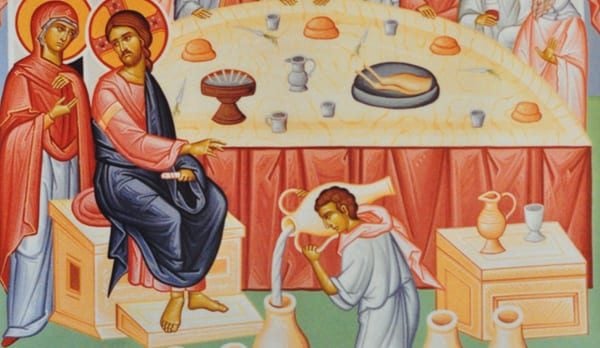 Jesus came to party! And he invites us all to join him!
This Sunday’s lectionary text is filled with the joy of celebration. And there is much to celebrate! Before we start discussing the lectionary, I (Lindsey) wish my dear friend and colleague Adam Ericksen a belated happy 40th birthday! Adam shares a birthday with Dr. Martin Luther King Jr., whose life, legacy, and inspiration will be the topic of a Ravencast in the near future. (If you see the video and fear you have missed the live chat for Martin Luther King Jr., fear not! Although we had planned to discuss him on January 17, that conversation was postponed due to illness. We will let you know when we reschedule.)
Then we dive into the lectionary, where we find God in the midst of overwhelming joy. First we turn to Isaiah 62: 1-5, where God embraces Israel like a bride and won’t rest until the whole world sees God’s love. And then keeping with the theme of marriage, we turn to John 2: 1-11, where Jesus turns water to wine to keep the party going. God’s love for us isn’t just some otherworldly sentiment; it encompasses sensory happiness and fun, not just validating our infinite worth as God’s children but relishing in our delight.
From birthdays to weddings, from graduation parties to retirement soirees, Jesus is in the midst of our celebrations. Our God is a God of joy and love who reaches out and embraces the world.
Show Notes
Isaiah 62: 1-5 – God’s Marriage to Israel
Background
Isaiah is divided into three sections. First and Second Isaiah were written to give hope to people under conquest, occupation and finally exile, first under the Assyrian Empire and then under the Babylonian Empire. By Third Isaiah, King Cyrus the Great lets the people of Israel out of exile and allows them to reclaim their homeland. Third Isaiah, then, expresses the fulfillment of the hope promised in First and Second Isaiah.
But returning to the land isn’t all the people had thought it would be. Though they are able to return to their promised land, they fight among themselves as they seek to re-establish their identity as a people. Some of the Jewish people who had remained behind during the exile had married foreigners, and when the exile ended and those who had been cast out returned to their homelands, there was the question of how to keep themselves “pure” and live out their callings as God’s people, so that the pain of occupation and exile wouldn’t happen again (they would later, of course, be conquered by Rome). Some, like Ezra, wanted to cast out the non-Jews, which would split families apart and cause great pain. So Third Isaiah is a mixture of hope and despair – the joy of freedom and the sorrow of human rivalries that keep us imprisoned in fear and loathing of each other and keep us from achieving the joy that God means for us.
God’s Eternal Love and A Better Understanding of Marriage
How do we know that God desires joy for us? These verses of the lectionary help us realize that. In Isaiah 62 1-5, God embraces Israel as a bride. The nation is joined to God in an everlasting covenant, an eternal embrace. After having been in exile, the people returning to the land are met with God’s welcome and delight, and God wants the world to know how much God loves them. Israel’s people shall no longer be deemed forsaken, and the land shall no longer be known as desolate. Instead, everyone see what God proclaims: “My delight is in her.”
Some may say that God had punished God’s bride, Israel, for unfaithfulness, and was now welcoming her back conditionally. Certainly many felt that the conquests and exiles of the past were God’s judgment, and the Bible expresses that understanding in places. That interpretation has lead to a patriarchal, hierarchical view of marriage in which women – representing Israel (or the Church) – are loved by men (representing God) but also punished or chastised or reprimanded. The idea that God’s covenant with Israel has been marked by punishment for disobedience and unfaithfulness has laid a heavy burden on the view of marriage by many throughout the centuries and still today.
But a closer reading of Isaiah’s text can lead us to a better understanding of God’s love and show us a better model for marriage. God never punished or forsook God’s bride. Israel was judged by the people to be forsaken and desolate, but God’s delight was always in her, and God’s love for her never wavered.
All the nations shall see Israel’s vindication. Israel is a crown of beauty and a royal diadem. These words of Isaiah, giving human language to God’s indescribable, unquantifiable love, go against Israel’s history. The Hebrew people, as we learn in Seven Stories by Dr. Anthony Bartlett, were the displaced, the homeless, the exiles of war and conquest. They were the people who had been brought as slaves to Egypt from various lands and were connected not by blood or homeland but by their experience of being victims of violence and oppression. The conventional wisdom of the day said that the gods were not on their side. But God liberated them and brought them out of Egypt to teach the world a lesson in love and justice. The whole world is God’s and all the people belong to God, and God is on the side of those we think forsaken: the victims, the despised.
Israel’s History: God’s Revelation of Love
Throughout Israel’s history, they would continue to know violence and conquest, but God never forsakes them. God never forsakes the oppressed or exiled. God’s love is ever faithful. The people are never rejected by God. Human ignorance and violence will bring people and nations to desolation and despair in never-ending cycles, and we will continue to project our own violence onto God. But God’s love shines through no matter what. It is stronger than human ignorance and violence.
As God reorients our thinking, helping us to understand that God’s love is always with the victims of human violence and oppression, our understanding of marriage should evolve with our understanding of God’s covenant. There is no room for hierarchy or male domination (and marriage can be the expression of unconditional love between people of any gendered expression) because marriage – covenant – is a bond not based on obedience and reward or punishment, but on eternal delight in one another. God’s love for the people of Israel – unconditional, everlasting, and joyful – is the love we are meant to have for each other.
John 2: 1-11 – Jesus Keeps the Party Going!
That joyful love is further expressed in the Gospel. Jesus came to party!
Much of Christianity emphasizes Jesus’ self-sacrificial death, which is indeed world-transforming. But Jesus didn’t come to suffer; suffering is a consequence of human violence which Jesus took into himself to expose and answer with forgiveness. A focus on Jesus’ suffering to the exclusion of his life and teaching does Christianity a great disservice, not only by missing the mark of Jesus’s message, but by stifling our joy. Jesus came to enjoy life and to teach us to do the same, not in the way of mimetic rivalry, in which we’re constantly measuring our success and happiness at the expense of others, but in the way of loving and celebrating one-another.
Often religion is seen as a wet blanket, thanks in great measure to the way it is often practiced and expressed. An emphasis on a strict moral code can suffocate the very thing such morals are meant to foster. At the heart of moral standards is respect and love for all of God’s people and all of God’s creation. A strict emphasis on always doing the right thing can overshadow the love at the heart of those commandments and breed fearful, insecure people always unsure of themselves or worse, accusatory people always trying to find fault in others. (Many of us have some of both of these extremes.) But that’s not the point! The point is to enjoy one another, and Jesus cares about our joy. He cares enough to turn water to wine to keep the celebration of love going!
A Side Lesson In Mimetic Rivalry
But he is reluctant at first. When his mother tells him that the wedding hosts have run out of wine for their guests, he answers, “Woman, what concern is that to you and to me? My time has not yet come.”
It’s important not to let our modern interpretations overly influence our understanding of this text. “Woman,” is not a term we would normally use for our mothers, and it sounds insulting. When Jesus said “Woman,” though, he meant it in a loving, compassionate way, as he did on the cross when he again calls his mother “woman” as he tells leaves her and his beloved disciple to comfort and care for one another as family. “Woman, behold your son!”
Still, Jesus seems to be arguing with Mary. Why he answers this way remains unclear, though the text gives us clues, foreshadowing the time when Jesus will pour out wine for his disciples and tell them it is his blood, just before his own blood is poured out on the cross. Interesting connections, linking the story of a human wedding to the story of God’s ultimate manifestation of love, but still why the hesitation in the moment?
What’s clear, however, is Mary’s response. She doesn’t get into a rivalry with Jesus, telling him that he’s her son and should do as she says. Instead, she turns to the servants and says, “Do whatever he tells you.” This is a summary of discipleship (“Do whatever Jesus tells us”) but it also holds a more immediate, specific lesson. Imagine Jesus in that moment. He’s probably thinking, “Geez, Mom, now they’re expecting something from me.” And in that moment, Jesus tells the servants to fill the purification jars with water which is transformed into wine. Mary avoids argument, but she gets what she wants in the end! There’s a lesson in here for us about avoiding temptations to rivalry, keeping our focus not on the rival but on the need or desire.
Jesus is Not Dionysus
When we think of Jesus turning water to wine, we can think of the Greek half-god Dionysus. Dionysus was the demigod of wine and chaos, who – in a spirit of rivalry – wanted to be recognized as a full god.
The parallels in the Gospel to mythology should not be ignored but recognized, not to dismiss the Gospel as another myth, but to show how the Gospel presents a different answer to the questions myths present. In both Christianity and Greek mythology, there is the story of a god (or God) born of a woman, stories in which wine, mobs, and a murder play prominent roles. But the messages behind these stories are worlds apart.
Dionysus – half god, half man, traveled the world and acquired for himself multitudes of worshippers, possibly through intoxication – altering the mind with exaggerations and lies. When he came back home, his cousin, Pentheus, who was the king, told the people that Dionysus was not a god. Pentheus imprisoned Dionysus. But Dionysus broke free. With wine and deception, he whipped the people into a drunken frenzy, and they seized upon Pentheus and tore him limb from limb.
Dionysus wanted the recognition and status of a god. Jesus, who was fully God, emptied himself and lived humbly. Dionysus used the crowds to savagely murder another. Jesus, in his unconditional, taboo-defying love for others, incited a mob to arrest him and bring him before Pilate to be murdered. The stories are parallel but worlds apart.
Wine – For Shame or For Celebration?
Another parallel with a dramatic difference in these stories is the use of wine. For Dionysus, wine was used to shame Penthus and turn the people against him. But Jesus uses wine to deliver the people out of shame.
In Jesus’ day, to run out of wine at a wedding was a great shame. Weddings were tremendous parties that not only united the couple, but displayed the couple’s “fabulousness” with lavish parties. (Not much has changed today.) To run out of wine was humiliating. But Jesus turned the water to wine to save the couple (and their parents) from shame.
Purification is Living Into God’s All-Embracing Love
Jesus has the ritual purification jars filled with water that is transformed into wine. How are we to understand purification?
As we saw in Isaiah, for some, purification meant exclusion. Purification meant getting rid of “others” to solidify identity over and against “them.” People who married foreigners were considered “impure.” Ideals of purity are linked to the evils of racism and prejudice.
Now, these jars are for the ritual of washing. Purifying ourselves by washing away the dirt and grime – this is a much more palatable interpretation than exclusion. And yet, don’t rituals we claim for ourselves, rituals that distinguish us from others, also exclude? We say in the ritual of baptism that God claims us and puts a sign on us. We acknowledge the washing away of our sins – all the ways we miss the mark and fall short of our destiny as children of God. But if we claim that we belong to God to the exclusion of others, do we not continue in the practice of exclusion and rivalry that inspires pride, violence, malice, and everything else from which we are supposed to be cleansed?
In transforming the water to wine for celebration, Jesus transforms our understanding of purity. Purity is not meant to isolate us from others, but to wash away our shame and rivalries so that we can enjoy each other together! Transforming water to wine at a wedding – this is a miracle meant to join people together, in a celebration of love and unification, where divisions are not highlighted but washed away.
True purity is not exclusion. It is living into God’s all-embracing love.
Conclusion
Later, Jesus will purify the world not by excluding others, but by letting himself be excluded in order to expose the impurity of exclusion and join us all together in the embrace of his all-encompassing love. He will pour out wine for his disciples just before he willingly lets himself be taken to the place of ultimate shame – the cross – and he will let his blood be poured out before the world. In the resurrection, he exposes our violence as our shame, not the shame of our victims with whom Jesus stands in ultimate solidarity. So, Jesus will reverse the mechanism of shame. And he will show us how to purify ourselves of hate and exclusion by inviting us to follow him in his self-giving, merciful love. The cup of wine he pours he refers to as his blood, and in his blood there is the covenant of forgiveness and everlasting, abundant life.
The wine for Jesus is a foretaste of the pure, abundant life to come in which shame is dissolved forever.
You can join Lindsey and Adam on the live Bible Study with your comments and questions on the Raven Foundation Facebook page every Wednesday morning at 10:00 am Central, 8:00 am Pacific. If you can’t make the live show, you can watch the recording or listen to the MP3 the following day here on the Raven Review. For more on the work of René Girard and the Bible, we highly recommend Paul Nuechterlein’s website Girardian Reflections on the Lectionary.
Image: Flickr, Ted, Wedding at Cana.
Previous Post

January 14, 2019
Christianity Is Not About Being Good
Next Post
January 21, 2019 The Christian Message of Masculinity Behind the Gillette Commercial
Browse Our Archives
Select a Category Atonement and Current Events Curriculum Faith and Families Interviews Jesus the Forgiving Victim Lent Montessori politics Reviews The Bible Explained Uncategorized Valentine's Day Wednesday Sermon Who is God?
Select a Month July 2020 November 2019 October 2019 September 2019 August 2019 July 2019 June 2019 May 2019 April 2019 March 2019 February 2019 January 2019 December 2018 November 2018 October 2018 September 2018 August 2018 July 2018 June 2018 May 2018 April 2018 March 2018 February 2018 January 2018 December 2017 November 2017 October 2017 September 2017 August 2017 July 2017 June 2017 May 2017 April 2017 March 2017 February 2017 January 2017 December 2016 November 2016 October 2016 September 2016 August 2016 June 2016 May 2016 April 2016 March 2016 February 2016 January 2016 December 2015 November 2015 October 2015 September 2015 August 2015 July 2015 June 2015 May 2015 April 2015 March 2015 February 2015 January 2015 December 2014 November 2014 October 2014 September 2014 August 2014 July 2014 June 2014 May 2014 April 2014 March 2014 January 2014 December 2013 September 2013 August 2013 July 2013
Follow Us!
TAKE THE
Religious Wisdom Quiz
What does the Greek word 'Ekklesia' mean?
Select your answer to see how you score.
Salvation Righteousness Church Resurrection
Related posts from Teaching Nonviolent Atonement

Pride: In The Name Of Love, Living Our...

How My Atheist Father Helps Me Appreciate The...

The Unity of All Things: How to Be...
We Are One: Unity in Christ with Victims,...
TRENDING AT PATHEOS Progressive Christian

What Being a Modern-Day Apostle Means to Me
In my last column, I discussed the ins and outs of modern-day...

Did Ancient China Once Worship the God of...
Across human history, a common thread weaves through the origins of the...

Love Your Neighbor – Including Earth-Kin: Lev. 19,...
God’s command to love your neighbor means acting in an ethical and...

Lead a Church Study of “Jesus and Lao...
Guest writer Jack Thomas (The Irreverent Reverend) reflects on leading his church...

Pastoral Wisdom for Responding to Sermon Pushback
Getting sermon pushback on your social justice sermon? Learn practical, Proverbs-based strategies...

Principles for Understanding the Apostolic Ministry Today
Whenever people discover that my formal ministry title is "apostle," as in...
view all Progressive Christian blogs
Ad-Free & Subscriber Log-In Subscription Support
- About Us
- 2026 Calendar
- Videos
- Podcasts
- Library of World Religions
- Faith In Media Tracker
- Advertise With Us
- Write for Us
- Privacy Policy
- Terms of Service
- Do Not Sell My Data
- Contact Us
- Radiant Digital
- Manage Newsletter Subscriptions
- Unsubscribe From Notifications
- Sitemap
Copyright 2008-2026, Patheos. All rights reserved.
Subscription Support Ad-Free & Subscriber Log-In
Follow Patheos