
BuddhistCatholicContemplativeEvangelicalGeneral ChristianHinduJewishLatter-day SaintMuslimNew VisionsProgressive Christian
Beliefs
- Buddhist
- Catholic
- Contemplative
- Evangelical
- General Christian
- Hindu
- Jewish
- Latter-day Saint
- More Voices
- Muslim
- New Visions
- Pagan
- Progressive Christian
Topics
- Religion News
- Food and Religion
- Sports and Religion
- Religious Art
- Religious Music and Entertainment
- Religious Events
- History and Religion
- Style and Religion
- Politics and Religion
- Women in Religion
- Recreation Outdoors and Religion
- Business Finance and Religion
- Careers Workplace and Religion
- Education and Religion
- Family Parenting and Religion
- Health Fitness and Religion
- Home and Religion
- Relationships and Religion
- Technology and Religion
- Travel and Religion
Columnists
- Buddhist Columnists
- Business Finance and Religion Columnists
- Careers Workplace and Religion Columnists
- Catholic Columnists
- Contemplative Columnists
- Education and Religion Columnists
- Evangelists Columnists
- Family Parenting and Religion Columnists
- General Christian Columnists
- Health Fitness and Religion Columnists
- Hindu Columnists
- History and Religion Columnists
- Home and Religion Columnists
- Jewish Columnists
- More Voices Columnists
- Latter Day Columnists
- Muslim Columnists
- New Visions Columnists
- Nonreligious Columnists
- Pagan Columnists
- Politics and Religion Columnists
- Progressive Columnists
- Recreation Outdoors and Religion Columnists
- Relationships and Religion Columnists
- Religion News Columnists
- Religious Art Columnists
- Religious Events Columnists
- Religious Music and Entertainment Columnists
- Sports and Religion Columnists
- Style and Religion Columnists
- Technology and Religion Columnists
- Travel and Religion Columnists
- Women in Religion Columnists
Resource Library
- 2026 Calendar
- Library of World Religions
- The 100 Most Holy Places on Earth
- Patheos Answers
- Podcasts
- Videos
- Faith Leaders Database
- Anglican Episcopalian
- Bahai
- Baptist
- Buddhism
- Christianity
- Confucianism
- Eastern Orthodoxy
- Hinduism
- Holiness and Pentecostal
- ISKCON
- Islam
- Judaism
- Lutheran
- Methodist
- The Church of Jesus Christ of Latter-day Saints
- New Age
- Paganism
- Presbytarian and Reformed
- Protestantism
- Religion Behind the Scenes
- Roman Catholic
- Scientology
- Shia Islam
- Sikhism
- Sufism
- Sunni Islam
- Taoism
- Zen
- See all religions
Research Tools
 Ad-Free & Subscriber Log-In Subscription Support
Ad-Free & Subscriber Log-In Subscription Support
Follow Patheos 

- Trending:
- Forgiveness
- |
- Marriage
- |
- Consciousness
- |
- Death Penalty
- |
- Election
- |
- Halloween
 Teaching Nonviolent Atonement
- Home
- Progressive Christian
- Good Friendships Make Good Neighbors: Immigration, Shutdown, and Robert Frost
Good Friendships Make Good Neighbors: Immigration, Shutdown, and Robert Frost
Last updated on: January 14, 2019 at 11:05 am by Lindsey Paris-Lopez
Good Friendships Make Good Neighbors: Immigration, Shutdown, and Robert Frost 2019-01-14T11:05:49-05:00 Lindsey Paris-Lopez
Patheos Explore the world's faith through different perspectives on religion and spirituality! Patheos has the views of the prevalent religions and spiritualities of the world.
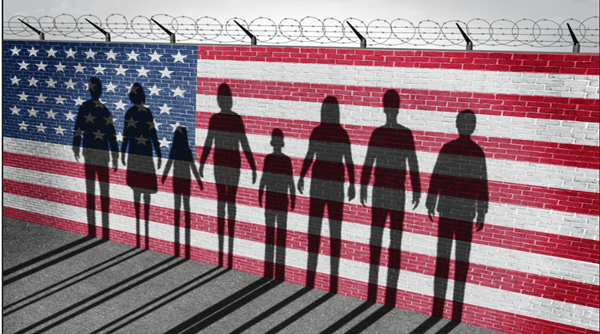
It’s time to tell the truth about the Wall:
Impossible, immoral, inhumane…
It won’t stop drugs or overstays at all…
What is Trump thinking? This is just insane!
The wisdom of Robert Frost’s “Mending Wall,” has been on my mind for days as I’ve contemplated the complicated issues of immigration and the manufactured crisis of the government shutdown. “Before I built a wall, I’d want to know / what I was walling in or walling out/ and to whom I was like to give offence.” Indeed. With all of this talk of a wall, what would we be walling in or out? Do good fences really make good neighbors? With these questions swirling through my mind, I tried to write a modern parody of “Mending Wall.” I tried but failed. The harsh truth requires prose.
The Early Years of the Wall
The harsh truth doesn’t begin with Trump. The “wall” doesn’t begin with Trump either. There are over 600 miles of fence along our southern border. It started during the Clinton years, when NAFTA devastated the economy in Mexico. Overnight, Mexico went from a corn-exporting country to a corn-importing country, according to journalist Margaret Regan, author of The Death of Josselin. Farmers could not compete and could no longer make a living. Poverty pushed some of the migration we still see today. Yes, there was migration to and from Mexico before NAFTA, but around the time NAFTA was passed and desperation increased, something else happened. The Clinton administration built fencing to close urban crossings, pushing migration further into the desert. “We did believe that geography would be an ally to us,” Doris Meissner, INS commissioner under Clinton, said. The Clinton administration believed that once the urban areas were closed, unauthorized immigration would dwindle to a trickle. They were wrong.
The wall did not solve unauthorized immigration, but it did make it much harder. For some already here, particularly men sending money back to their families, the closing of urban crossings disincentivized going back to Mexico as they once did. Some, instead, sent for their families (likely underestimating the risks), making the fencing – in those situations at least – counterproductive. Those who tried to come into the country for economic opportunity were highly motivated by the desire to provide for themselves and their family and were undeterred by fencing, vehicle barriers, and surveillance. As each new mile of security measures crept up along the border, routes for migrants became increasingly circuitous – and deadly. Long journeys through harsh, rocky desert terrain often resulted in injury or death by dehydration or hyperthermia in the summer or hypothermia in the winter. Since 2000, about 7,216 deaths along the border have been reported. This fails, of course, to include untold numbers of migrants who died and were never found.
The Longstanding Tragedies of US Border Policy
The lonely, painful deaths in the desert may be the biggest tragedy of our nation’s immigration policies, but they are not the only tragedy. The failure to recognize the strong incentive for migration in the first place, and the role the United States played in undermining economies and governments south of our border, are tragedies that precipitated these deaths. Xenophobia and scapegoating – misappropriating the blame for economic stagnation at home onto immigrants – are tragedies that precipitated these deaths. The redefining of undocumented immigrants as potential terrorists after 9/11 further exacerbated the tragedy of failing to see the humanity and desperation of those who would leave their homes hundreds or thousands of miles behind just to try to survive or provide for their loved ones. And the treatment of undocumented immigrants – from freezing detention centers and windowless cells to deliberate disorientation (releasing migrants far from their entry points to deter re-entry) – is a moral tragedy that precedes and was continued under the Trump administration.
When spokespeople on either side of the political divide speak of border security, neither talk about the deaths our security measures have wrought. Leadership from both major parties speak of commitment to border security, with one party emphasizing the need for more physical barriers and the other speaking of those that already exist and promising to balance the need for more security with other national needs. But the moral catastrophe of pushing migrants into the desert where they may grow ill, suffer injury, or die, is not a part of our national discourse. The rivalry over how best to secure our borders is based on a fundamentally immoral premise that is rarely acknowledged.
A quick point must be made to say that while I criticize our border security policies, I acknowledge the good work of people who enforce them. Customs and Border Protection agents save the lives of migrants in the desert. But they would not have to do that so often if urban crossings were open and our policies allowed for more legal immigration.
Changing Migration Patterns Require Changing Policies
Today, as economic opportunities are growing in Mexico, patterns of migration are shifting. Unauthorized immigration is waning while more refugees from El Salvador, Guatemala and Honduras seek legal asylum. These nations have been devastated by violence and oppression that the United States has had a key role in instigating or supporting for decades. Migrants who come by the thousands now seek safety in the very nation that has had a key role in making their own nations unsafe. They are not climbing, cutting, or tunneling fences (all of which are possible to do) but coming to legal ports of entry, finding safety in numbers as they travel together. A wall does not address the situation of these migrants who seek entry into our nation, and therefore fails to adequately acknowledge the current immigration situation on our southern border.
Two additional points must be noted. The first point is that there may be those who seek asylum who are not part of these groups and who may be in so much danger that prolonging their routes to find legal ports of entry could prove deadly. Under international law, those seeking asylum can legally enter a nation anywhere as long as they present themselves to authorities as soon as possible. A wall inhibiting them from doing so is cruel, and considering the role the United States has played in destabilizing their nations, it increases the blood already on our hands. The second point is that money going to the wall would be better spent on opening more ports of entry as well as providing the facilities needed to aid migrants: shelters and cafeterias, hospitals for treating the sick and injured from their long journeys, and courts to process asylum claims.
Shutdowns and Solidarity
Now, in a further twist of irony, our government is shut down over an inability to agree to a wall that would further deny our nation’s responsibility to our neighbors and compound our inhumanity. As is so often the case in rivalries, the very thing for which people claim to fight is sacrificed for a “win.” President Trump claims to be fighting for the security of the nation, but our nation is less secure as 800,000 federal employees go without paychecks, including TSA and, ironically, CBP. We are less secure as families struggle to pay bills, making children go hungry. We are less secure as food goes untested because the FDA is unfunded. We are less secure as those who rely on food stamps may not receive them in the near future. We are less secure as those who rely on public housing are facing evictions. Our fundamental duty as citizens – to share a degree of responsibility for the welfare of one another through our tax dollars – is undermined by this shutdown. Immigrants – whether documented or undocumented – contribute to our economy and our communities without receiving the same benefits as citizens. Yet in an effort to keep undocumented immigrants from our nation, fundamental necessities are being withheld from everyone. A cynical ploy ostensibly to secure funding for security has left our nation less secure.
The insecurity reaped by the shutdown will be blamed, by some, on the president’s political rivals and on immigrants themselves. The shutdown will exacerbate real problems of economic insecurity for which immigrants are often blamed and feed the narrative of anti-immigrant sentiment. But we can change that narrative.
We should use this time of national insecurity due to the shutdown to empathize with migrants who seek security – physical, political, or economic – in our country. And then we should tell the truth – walls and weapons of war do not build security; they dismantle it. True security will come from broadening legal immigration and opening urban crossings so that migrants will not seek deadly desert routes that may cut through private property. True security will come from trade policies that seek the prosperity of all nations involved. True security will come from reparations to nations devastated by US greed, imperialism and the war on drugs, so that people who wish to stay in their own nations are able and those who wish to come can afford to go through the legal process. True security will come through policies that value the ability of every person to live in dignity rather than poverty. True security for our souls as well as our bodies will come when we live into our own humanity by acknowledging the humanity of our neighbors. True security comes from building relationships, not walls.
Good Friendships Make Good Neighbors
My mind returns to Frost: “What are we walling in or out?” A wall would circumscribe our own consciences, our imaginations, our ability to know – and therefore love – our neighbors. It would wall out people seeking safety or economic security, but it would not wall out our prejudice, ignorance, or fear. Rather, it would compound them. Oceans haven’t made our nation feel safe from the peoples overseas who live under the rain of our bombs; a wall that could be breached and won’t stop drugs or overstays would exacerbate, not calm, xenophobia and dehumanization.
And as Frost says, “Something there is that doesn’t love a wall.” Nature itself would rebel. The damage to our ecosystems a wall would cause would be devastating to humanity and all of nature and exacerbate all the other problems fencing along our border has already created. A wall would exacerbate the damage of climate change and impede us from working with our neighbors when the time comes – sooner than we realize – to work together to restore our planet and ensure our survival.
Because the time is coming – indeed is here – when we must work together as a human race to ameliorate problems that have no regard for borders. The planet cannot survive our enmity, hatred, and violence, and will become uninhabitable and expel us all unless we come together as a human community to care for her. Walls cut us off from our own future, which must be cooperation if we don’t want it to be extinction.
It’s time to tell the truth about the Wall,
And then tear down the fences that we have.
Walls deny our duty to each other;
In building them we do ourselves no favors.
Here’s the truth: Good friendships make good neighbors.
Image: Stock Photo by lightwise via 123rf.com.
Next Post

January 14, 2019 Christianity Is Not About Being Good
Browse Our Archives
Select a Category Atonement and Current Events Curriculum Faith and Families Interviews Jesus the Forgiving Victim Lent Montessori politics Reviews The Bible Explained Uncategorized Valentine's Day Wednesday Sermon Who is God?
Select a Month July 2020 November 2019 October 2019 September 2019 August 2019 July 2019 June 2019 May 2019 April 2019 March 2019 February 2019 January 2019 December 2018 November 2018 October 2018 September 2018 August 2018 July 2018 June 2018 May 2018 April 2018 March 2018 February 2018 January 2018 December 2017 November 2017 October 2017 September 2017 August 2017 July 2017 June 2017 May 2017 April 2017 March 2017 February 2017 January 2017 December 2016 November 2016 October 2016 September 2016 August 2016 June 2016 May 2016 April 2016 March 2016 February 2016 January 2016 December 2015 November 2015 October 2015 September 2015 August 2015 July 2015 June 2015 May 2015 April 2015 March 2015 February 2015 January 2015 December 2014 November 2014 October 2014 September 2014 August 2014 July 2014 June 2014 May 2014 April 2014 March 2014 January 2014 December 2013 September 2013 August 2013 July 2013
Follow Us!
TAKE THE
Religious Wisdom Quiz
The light shines in the darkness, and the darkness has not ____ it.
Select your answer to see how you score.
Extinguished Comprehended Understood Accepted
Related posts from Teaching Nonviolent Atonement

How Forgiveness Can Transform Our Violence and Build...

The Chosen One Chooses Love Over Fear [VIDEO]

Jesus Unmasked: Jesus Brings the Fire!
Strippers Will Lead Us Into the Kingdom of...
TRENDING AT PATHEOS Progressive Christian

What Being a Modern-Day Apostle Means to Me
In my last column, I discussed the ins and outs of modern-day...

Did Ancient China Once Worship the God of...
Across human history, a common thread weaves through the origins of the...

Love Your Neighbor – Including Earth-Kin: Lev. 19,...
God’s command to love your neighbor means acting in an ethical and...

Lead a Church Study of “Jesus and Lao...
Guest writer Jack Thomas (The Irreverent Reverend) reflects on leading his church...

Pastoral Wisdom for Responding to Sermon Pushback
Getting sermon pushback on your social justice sermon? Learn practical, Proverbs-based strategies...

Principles for Understanding the Apostolic Ministry Today
Whenever people discover that my formal ministry title is "apostle," as in...
view all Progressive Christian blogs
Ad-Free & Subscriber Log-In Subscription Support
- About Us
- 2026 Calendar
- Videos
- Podcasts
- Library of World Religions
- Faith In Media Tracker
- Advertise With Us
- Write for Us
- Privacy Policy
- Terms of Service
- Do Not Sell My Data
- Contact Us
- Radiant Digital
- Manage Newsletter Subscriptions
- Unsubscribe From Notifications
- Sitemap
Copyright 2008-2026, Patheos. All rights reserved.
Subscription Support Ad-Free & Subscriber Log-In
Follow Patheos