
BuddhistCatholicContemplativeEvangelicalGeneral ChristianHinduJewishLatter-day SaintMuslimNew VisionsProgressive Christian
Beliefs
- Buddhist
- Catholic
- Contemplative
- Evangelical
- General Christian
- Hindu
- Jewish
- Latter-day Saint
- More Voices
- Muslim
- New Visions
- Pagan
- Progressive Christian
Topics
- Religion News
- Food and Religion
- Sports and Religion
- Religious Art
- Religious Music and Entertainment
- Religious Events
- History and Religion
- Style and Religion
- Politics and Religion
- Women in Religion
- Recreation Outdoors and Religion
- Business Finance and Religion
- Careers Workplace and Religion
- Education and Religion
- Family Parenting and Religion
- Health Fitness and Religion
- Home and Religion
- Relationships and Religion
- Technology and Religion
- Travel and Religion
Columnists
- Buddhist Columnists
- Business Finance and Religion Columnists
- Careers Workplace and Religion Columnists
- Catholic Columnists
- Contemplative Columnists
- Education and Religion Columnists
- Evangelists Columnists
- Family Parenting and Religion Columnists
- General Christian Columnists
- Health Fitness and Religion Columnists
- Hindu Columnists
- History and Religion Columnists
- Home and Religion Columnists
- Jewish Columnists
- More Voices Columnists
- Latter Day Columnists
- Muslim Columnists
- New Visions Columnists
- Nonreligious Columnists
- Pagan Columnists
- Politics and Religion Columnists
- Progressive Columnists
- Recreation Outdoors and Religion Columnists
- Relationships and Religion Columnists
- Religion News Columnists
- Religious Art Columnists
- Religious Events Columnists
- Religious Music and Entertainment Columnists
- Sports and Religion Columnists
- Style and Religion Columnists
- Technology and Religion Columnists
- Travel and Religion Columnists
- Women in Religion Columnists
Resource Library
- 2026 Calendar
- Library of World Religions
- The 100 Most Holy Places on Earth
- Patheos Answers
- Podcasts
- Videos
- Faith Leaders Database
- Anglican Episcopalian
- Bahai
- Baptist
- Buddhism
- Christianity
- Confucianism
- Eastern Orthodoxy
- Hinduism
- Holiness and Pentecostal
- ISKCON
- Islam
- Judaism
- Lutheran
- Methodist
- The Church of Jesus Christ of Latter-day Saints
- New Age
- Paganism
- Presbytarian and Reformed
- Protestantism
- Religion Behind the Scenes
- Roman Catholic
- Scientology
- Shia Islam
- Sikhism
- Sufism
- Sunni Islam
- Taoism
- Zen
- See all religions
Research Tools
 Ad-Free & Subscriber Log-In Subscription Support
Ad-Free & Subscriber Log-In Subscription Support
Follow Patheos 

- Trending:
- Forgiveness
- |
- Marriage
- |
- Consciousness
- |
- Death Penalty
- |
- Election
- |
- Halloween
 Teaching Nonviolent Atonement
- Home
- Progressive Christian
- For All The Saints Who Our Asylum Seek: Eternal Life Starts With Welcoming Refugees
For All The Saints Who Our Asylum Seek: Eternal Life Starts With Welcoming Refugees
Last updated on: November 4, 2018 at 5:27 pm by Lindsey Paris-Lopez
For All The Saints Who Our Asylum Seek: Eternal Life Starts With Welcoming Refugees 2018-11-04T17:27:13-05:00 Lindsey Paris-Lopez
Patheos Explore the world's faith through different perspectives on religion and spirituality! Patheos has the views of the prevalent religions and spiritualities of the world.
Yet all are one in Thee for all are Thine. Alleluia! Alleluia!
All are one in Thee for all are Thine.
In other words, all are one in Love, for all are Loved.
It really is that simple. All means all.
It is All Saints Sunday, the day Christians around the world remember the faithful departed. But as I reflect on the meaning of eternal life, and the Love that dissolves the chasm of death, my mind turns not only to the deceased loved ones we honor on this day. The divisions across humanity – the hate and fear and prejudice and bigotry that separate and blind and kill – are also swallowed up in Love. Eternal life is not a future beyond the veil of mortality. It is embracing our human destiny to embody the Love in which we were made and extending that Love to all of humanity. To live in hate and fear is to live in the shadow of death. Eternal life embraces us when we embrace each other.
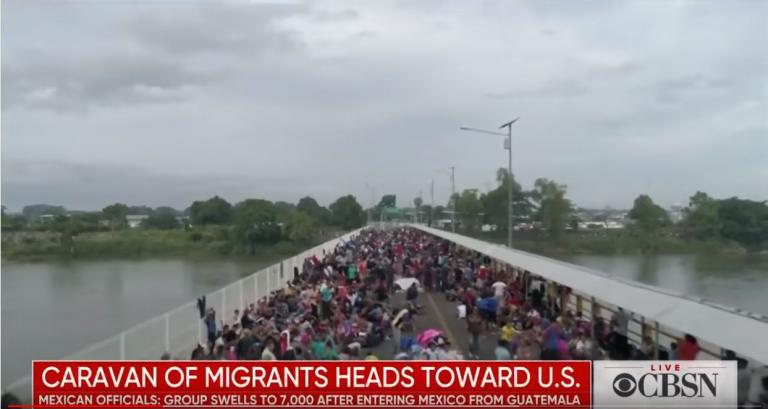
On All Saints Sunday, we cannot acknowledge that Jesus has broken down the barrier between life and death while we erect barriers around each other. Right now, the United States is fighting wars in Afghanistan, Iraq, Syria, Yemen, Somalia, Libya and Niger. Drones are killing more civilians than ever before. And at least 5,200 soldiers, a number that could grow up to 15,000, are heading to our southern border to turn thousands of asylum-seekers – still hundreds of miles and several weeks away – back to the hell of violence and persecution, in large part created by the United States, that they flee.
President Trump’s rhetoric, painting some of the world’s most vulnerable refugees of violence as enemies and invaders, all but guarantees that these asylum-seekers may be met with some deadly violence, especially when he has implied that he would authorize soldiers to fire on refugees who throw rocks. While members of the military may be disciplined to avoid excessive force, vigilante militias without such training are also headed toward the border. And the climate of fear has already taken innocent lives. Robert Bowers, who recently shot and killed eleven people at the Tree of Life Synagogue in Pittsburgh, PA, cited Jewish aid for refugees and immigrants as his motive. Fear-mongering rhetoric includes claims of Middle Easterners among the migrants and funding by “globalists” – coded anti-Semitic and Islamophobic language designed to foment anxiety and xenophobia and solidify distinctions between “us” and “them.” And even if no more shots are fired, simply turning asylum-seekers, who arrive in need of food, water, shelter and often medical treatment, away at the border and back to the violence from which they have fled violates national and international law and often amounts to a de-facto death sentence.
All are one in Thee for all are Thine…
These refugees are united to us. They are members of our own body; we are incomplete without them. This is what it means to be united in Christ, in God, in Love. Humanity is united, regardless of our personal beliefs, by an interdependence at the heart of being human. Many people, regardless of religion, understand this. But sadly, religion itself is often used to defy our interconnection and interdependence, to deny the humanity of others, to erect walls between the “saved” and “condemned.” And thus, on a day when Christians are called to recognize the dissolution of the final barrier – death – and thus the dissolution of all the deadly barriers that divide us, some celebrate the ultimate division. Some celebrate the salvation of believers, the reward of heaven for the faithful, at the expense of those who believe differently. Deadly us-verses-them ideology is often rooted in or exacerbated by deadly theology.
Life-affirming theology recognizes that we are bound one to another in Love across all times and places. It is this full connection, this intertwining of all hearts and souls and destinies in Love, that pulls life from the shadow of death. It is this Love that Jesus embodied when he raised Lazarus from the dead, and in this Love he himself was risen.
Before Jesus raises Lazarus, he asks Mary, “Did I not tell you that if you believed, you would see the glory of God?” He was not asking for an assent to doctrine or an abstract faith in his “name.” He was calling on Mary, and all of us, to recognize God in each other. He was calling upon us to see each other as reflections of Love, through the eyes of Love given to us by Love. To recognize God in Jesus is to recognize God in the poor, the outcast, the refugee, the persecuted, the condemned. That is who Jesus was when he embodied God on earth, and that is what the body of Christ is on earth today. In revealing to us that God is Love, Jesus reveals that God is in solidarity with all whom humanity has deemed unlovable. And when we recognize that it is Love in whom we live and move and have our being, we are moved to see and act and live in love. This is the life that endures beyond our last breath.
When we live in hatred, bigotry and fear, our lives are ruled by the power of death. When we measure ourselves over and against others, or see the prosperity of others as a threat to our own, we dismember ourselves. And when we are indifferent to the forces of greed and power and privilege that exploit the vulnerable and create conditions of insecurity that breed hatred and violence, when we wittingly or unwittingly participate in these forces, our souls begin to decay. The refugees headed toward our border are the collective body of Christ – God clothed in bruised and battered flesh, God in the rumbling bellies of hungry children and the stress of parents pushing through their pain. When we push them away, we crucify Christ anew.
What must we believe in order to see the glory of God, otherwise known as Love at work? We are called to believe in nothing more or less than the infinite worth and dignity of every human being, and to exercise our own humanity by embracing them in love.
It is not merely outright bigotry that makes some people apprehensive about the refugees heading toward our border. Some are afraid that we do not have the resources necessary to take care of citizens, many of whom are poor, hungry, and homeless. We live in a nation dominated by militarism – spending more on fighting others abroad than social uplift at home. Militarized police and weapons fill our streets, and lifespans are declining from substance abuse and despair. The human response to an atmosphere of anxiety and instability is often to coalesce in order to find strength over and against a scapegoat, a vulnerable person or group.
Those beyond our borders seeking help from a population already living in fear are easily scapegoated right now. In heeding our call to love the refugee, the scapegoat of an anxious and insecure people, we must not wield hate and anger toward scapegoaters (of whom we all unwittingly are at various points in our lives), thus deepening the cycle of violence. We must instead exercise an ever-expansive love that transcends and transforms fears. A love that leaves anyone behind is imperfect and falls short of the life-giving, world-transforming power in which we are called to participate as children of Love.
We do this by affirming that enmity itself is more devastating and damaging than any potential enemy. We do this by calling out the forces of death and destruction and calling on the reallocation of our resources toward reparation and social welfare. We do this by creating spaces in which people can meet and come to know one-another, and by forcing ourselves beyond our own comfort zones. We do this by learning and speaking and listening to the truth in as much love as we can muster.
The lectionary text for All Saints Day includes Revelation 21:1 -6. “Then I saw a new heaven and a new earth; for the first heaven and the first earth had passed away…” The new heaven is the recognition of Love – not violence, or wrath, or punitive justice (all mistaken for God) – as the ultimate creator and sustainer of the universe, and the new earth is a world founded on love instead of violence. We build this new world when we open ourselves to a love that breaks down defenses and barriers and borders. This is the love that not only welcomes refugees, but creates a world in which there are no more refugees, because there is no violence to flee. It is a world in which no spaces are claimed exclusively and defended with weapons, because we are all stewards of an undivided, shared space. It is the world where death, mourning and pain are no more.
This is the eternal life which we are invited to live now It starts when we remember that all are one in Love, for all are Loved. May we live into this life-giving Love forever.
Image: Screenshot from Youtube: “Caravan of migrants heads toward U.S. as Trump threatens to close southern border,” by CBS News
Previous Post

November 2, 2018
The RavenCast - Politics and Apocalypse
Next Post
November 5, 2018 The Gospel, Election Day, and the Risk of Love
Browse Our Archives
Select a Category Atonement and Current Events Curriculum Faith and Families Interviews Jesus the Forgiving Victim Lent Montessori politics Reviews The Bible Explained Uncategorized Valentine's Day Wednesday Sermon Who is God?
Select a Month July 2020 November 2019 October 2019 September 2019 August 2019 July 2019 June 2019 May 2019 April 2019 March 2019 February 2019 January 2019 December 2018 November 2018 October 2018 September 2018 August 2018 July 2018 June 2018 May 2018 April 2018 March 2018 February 2018 January 2018 December 2017 November 2017 October 2017 September 2017 August 2017 July 2017 June 2017 May 2017 April 2017 March 2017 February 2017 January 2017 December 2016 November 2016 October 2016 September 2016 August 2016 June 2016 May 2016 April 2016 March 2016 February 2016 January 2016 December 2015 November 2015 October 2015 September 2015 August 2015 July 2015 June 2015 May 2015 April 2015 March 2015 February 2015 January 2015 December 2014 November 2014 October 2014 September 2014 August 2014 July 2014 June 2014 May 2014 April 2014 March 2014 January 2014 December 2013 September 2013 August 2013 July 2013
Follow Us!
TAKE THE
Religious Wisdom Quiz
What happened when Peter tried to walk on water?
Select your answer to see how you score.
He ran ahead of Jesus He sank when he doubted The Spirit descended upon him He led other disciples out
Related posts from Teaching Nonviolent Atonement

Forgiveness in the Time of COVID-19 by Julia...

Reflections on Indigenous Wisdom For Healing A Wounded...

How Forgiveness Can Transform Our Violence and Build...

Jesus Unmasked: God's Economy and How to Cheat...
TRENDING AT PATHEOS Progressive Christian

What Being a Modern-Day Apostle Means to Me
In my last column, I discussed the ins and outs of modern-day...

Did Ancient China Once Worship the God of...
Across human history, a common thread weaves through the origins of the...

Love Your Neighbor – Including Earth-Kin: Lev. 19,...
God’s command to love your neighbor means acting in an ethical and...

Lead a Church Study of “Jesus and Lao...
Guest writer Jack Thomas (The Irreverent Reverend) reflects on leading his church...

Pastoral Wisdom for Responding to Sermon Pushback
Getting sermon pushback on your social justice sermon? Learn practical, Proverbs-based strategies...

Principles for Understanding the Apostolic Ministry Today
Whenever people discover that my formal ministry title is "apostle," as in...
view all Progressive Christian blogs
Ad-Free & Subscriber Log-In Subscription Support
- About Us
- 2026 Calendar
- Videos
- Podcasts
- Library of World Religions
- Faith In Media Tracker
- Advertise With Us
- Write for Us
- Privacy Policy
- Terms of Service
- Do Not Sell My Data
- Contact Us
- Radiant Digital
- Manage Newsletter Subscriptions
- Unsubscribe From Notifications
- Sitemap
Copyright 2008-2026, Patheos. All rights reserved.
Subscription Support Ad-Free & Subscriber Log-In
Follow Patheos