
BuddhistCatholicContemplativeEvangelicalGeneral ChristianHinduJewishLatter-day SaintMuslimNew VisionsProgressive Christian
Beliefs
- Buddhist
- Catholic
- Contemplative
- Evangelical
- General Christian
- Hindu
- Jewish
- Latter-day Saint
- More Voices
- Muslim
- New Visions
- Pagan
- Progressive Christian
Topics
- Religion News
- Food and Religion
- Sports and Religion
- Religious Art
- Religious Music and Entertainment
- Religious Events
- History and Religion
- Style and Religion
- Politics and Religion
- Women in Religion
- Recreation Outdoors and Religion
- Business Finance and Religion
- Careers Workplace and Religion
- Education and Religion
- Family Parenting and Religion
- Health Fitness and Religion
- Home and Religion
- Relationships and Religion
- Technology and Religion
- Travel and Religion
Columnists
- Buddhist Columnists
- Business Finance and Religion Columnists
- Careers Workplace and Religion Columnists
- Catholic Columnists
- Contemplative Columnists
- Education and Religion Columnists
- Evangelists Columnists
- Family Parenting and Religion Columnists
- General Christian Columnists
- Health Fitness and Religion Columnists
- Hindu Columnists
- History and Religion Columnists
- Home and Religion Columnists
- Jewish Columnists
- More Voices Columnists
- Latter Day Columnists
- Muslim Columnists
- New Visions Columnists
- Nonreligious Columnists
- Pagan Columnists
- Politics and Religion Columnists
- Progressive Columnists
- Recreation Outdoors and Religion Columnists
- Relationships and Religion Columnists
- Religion News Columnists
- Religious Art Columnists
- Religious Events Columnists
- Religious Music and Entertainment Columnists
- Sports and Religion Columnists
- Style and Religion Columnists
- Technology and Religion Columnists
- Travel and Religion Columnists
- Women in Religion Columnists
Resource Library
- 2026 Calendar
- Library of World Religions
- The 100 Most Holy Places on Earth
- Patheos Answers
- Podcasts
- Videos
- Faith Leaders Database
- Anglican Episcopalian
- Bahai
- Baptist
- Buddhism
- Christianity
- Confucianism
- Eastern Orthodoxy
- Hinduism
- Holiness and Pentecostal
- ISKCON
- Islam
- Judaism
- Lutheran
- Methodist
- The Church of Jesus Christ of Latter-day Saints
- New Age
- Paganism
- Presbytarian and Reformed
- Protestantism
- Religion Behind the Scenes
- Roman Catholic
- Scientology
- Shia Islam
- Sikhism
- Sufism
- Sunni Islam
- Taoism
- Zen
- See all religions
Research Tools
 Ad-Free & Subscriber Log-In Subscription Support
Ad-Free & Subscriber Log-In Subscription Support
Follow Patheos 

- Trending:
- Forgiveness
- |
- Marriage
- |
- Consciousness
- |
- Death Penalty
- |
- Election
- |
- Halloween
 Teaching Nonviolent Atonement
- Home
- Progressive Christian
- Christ The King Sunday: Living In Allegiance To Love
Christ The King Sunday: Living In Allegiance To Love
Last updated on: November 26, 2018 at 11:49 am by Lindsey Paris-Lopez
Christ The King Sunday: Living In Allegiance To Love 2018-11-26T11:49:14-05:00 Lindsey Paris-Lopez
Patheos Explore the world's faith through different perspectives on religion and spirituality! Patheos has the views of the prevalent religions and spiritualities of the world.
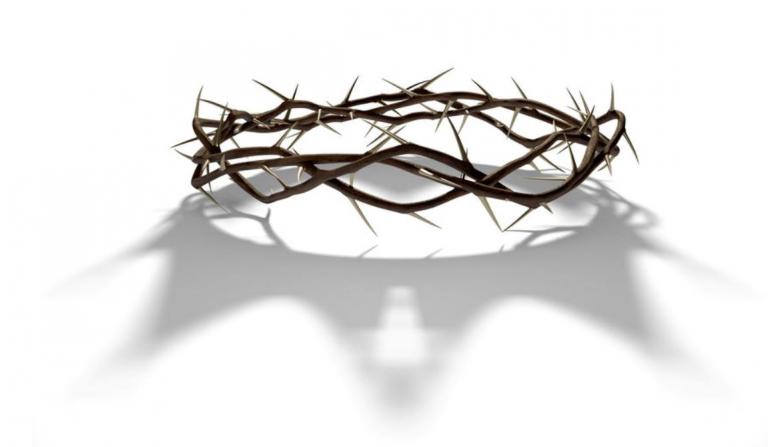
Proclaiming Christ Our King
Yesterday was Christ the King Sunday.
The liturgical year has come around full circle. Beginning, as we will again next week, with a whisper in the darkness telling us to “Prepare the way of the Lord,” we start in anticipation of power and glory, only to have our expectations subverted. The One who forms us and guides us and redeems us and carries us through our days comes to us in the form of an infant, born in a stable when his parents were denied shelter. From this point on we learn what it means to find God in the unexpected – in the weak and vulnerable – the marginalized, the refugee, the condemned. Throughout the liturgical year we watch and listen and practice what Jesus, our model, teaches us in his life, death, and resurrection. We learn from Love embodied how to embody love ourselves. And in the end, we pledge our whole selves to the Love in and for whom we were created – the relational, incarnational love that has been planted within us reaching out to the world – as we declare Christ our king.
Christ the King Sunday has been among my favorite Sundays for a while now, though it is not a particularly well-known liturgical landmark. I appreciate acknowledging Christ as King because it means that the powers of greed, fear, violence, conquest and domination are not king. I want my heart, mind, body and soul to be guided by Love as manifested and modeled by Jesus, and it is in this sense that I rejoice in declaring Christ my king.
Christ the King and Thanksgiving: The Beautiful Parallels… and the Disturbing Ones
Recently, I’ve been contemplating the proximity of Christ the King Sunday to Thanksgiving, and considering that it is an appropriate liturgical counterpart to this secular but faith-filled holiday. The liturgical year that begins in mystery ends in the gratitude that spills over from Thanksgiving. Gratitude is the joyful response to the beauty and wonder and love we discover when we seek God in the midst of a flawed and violent world and find God in the people and places we might least expect. Gratitude lovingly calls us to service as we remember all worth struggling for and all that makes the struggles worthwhile. It is the state of heart that characterizes the worship of our actions as we give of ourselves for others in Jesus’ name.
But the same shadow that falls over Thanksgiving falls over Christ the King Sunday – the shadow of colonialism and imperialism. At Thanksgiving, true gratitude for all that we have is incomplete without repentance from the greed, violence, and dehumanization that shaped the United States out of the destruction of indigenous peoples and lands and the exploitation of chattel slavery. The evils of Native genocide and slavery can both be traced, in large part, to a triumphalist interpretation of Christianity that sought to spread Christ’s reign via the sword. To interpret the claim that Christ is King through a lens of exclusion, supremacy, and triumphalism – all of which Jesus’ own life and ministry subverted – is to engage in a deadly deception. And so, just as a true practice, beyond nominal celebration, of Thanksgiving should include repentance from violence toward Native tribes coupled, when possible, with acts of giving back, true allegiance to Christ as King should include repentance from the violent spread of a perverted Christendom which has left in its wake the very death and destruction from which Jesus came to free us all.
Christ’s Nonviolent Kingdom
The revelation of Christ’s incarnation is that God is universal, unconditional, nonviolent Love. The world had perceived God’s salvation in the violent defeat of enemies and God’s wrath in the experience of being conquered by enemies. But Jesus’s revelation shows that violence and enmity are nowhere to be found in God. Humanity has been so deceived by the catharsis of collectively uniting against enemies that we have found a sense of the divine in something that is utterly human in origin – scapegoating violence. And humanity’s false perception of violence in God has reinforced violence against each other as we make exclusive claims to the truth and find false righteousness in imitating the violent god we create in our own image. The belief that salvation is granted exclusively to those who put their faith in a soteriological formula, in which Jesus died to appease his angry Father, creates people who feel justified in dehumanizing and devaluing others. If God only loves, and only saves, a precious few, then those who are “saved” can feel superior to those who are “not”, resulting in condescension at best and genocide at worst. Failure to understand the utter nonviolence of God, failure to recognize the cross as the appeasement of human, rather than divine, wrath, has resulted in a bloody history of a conquering and colonizing Christianity that is far from the Kingdom of Christ.
But Jesus reveals to us that God is with those we condemn, even as God forgives our condemnation. The wrath and violence destroying the world are human – or rather, the failure of humanity to live into our true destiny as image-bearers of Love. In a world of terror and tragedy, God is not the author of aggression and anguish, but the one who stands with and comforts the victims. God’s mercy also extends to those who hurt and oppress others, but such mercy is not gentle complacency with sin but a severe command to be better – and the grace to make better possible. Throughout our lifetimes we will experience both the comfort and the severity of the God –the hand wipes away our tears and the hand that pushes us to repent and repair when we cause harm. Such is the power of universal, unconditional, healing, restorative, redemptive Love.
Jesus is not a king by rivalry or conquest over and against others. In the Gospel reading, he says that his kingdom is “not from this world” and explains exactly what that means. “If my kingdom were from this world, my followers would be fighting to keep me from being handed over…” “My followers would be fighting.” But Jesus has explicitly told his followers to “put away [their] swords.” Jesus’s kingdom is not an other-worldly realm – he came to this earth to be with us – but it is from another world of understanding, a world not enthralled by violent rivalries or conquering might. Jesus’s call to nonviolence is more than a directive of non-retaliation; it is a call to recognize relational, communal, service-oriented love as the structural foundation of all of creation, for all of creation originates from and is bound together in Love. Whereas a world of violence tears itself apart, a world of love has enduring structural integrity continually fortified when we live into the truth of who we are.
Living in Allegiance to Love
The truth is that we are all, without exception, infinitely loved, and we are made to love and be loved by others. That love is active, risky, self-giving, and also humble, interdependent, accepting the gifts of others. Jesus is the model of this Love that defies boundaries. Following Jesus entails not only giving this love, but also humbling ourselves to recognize it when it comes from sources we least expect. This love will come to us not only through friends and family, but also through people of different faiths, backgrounds, and ideologies. Opening our eyes to the love around us enhances the love within us. When Love is the lens through which we see the world, when Love is the power that initiates and guides our actions, then Christ is our King. And Christ’s kingdom comes not when we try to bring God to others, but when we find God in each other.
When Christ is our King, we live not to convert, exploit, or impose ourselves over and against others, but to help others and – as importantly – to open ourselves to transformation. We examine our blind spots and watch out for our scapegoats. And we work to end violence, welcome the marginalized and vulnerable, find redemption in the condemned, and gently care for a planet that needs revitalization. We embody love, with Love as the head of our body, and as we undergo the process of being transformed we become the building blocks of a world transformed by love.
May we live in allegiance to this transformative Love. Come, Prince of Peace, and reign.
Image: Stock photo from 123rf.com.
Previous Post

November 20, 2018
Surprise! Apocalypse Does Not Mean What You Think it Means
Next Post
November 27, 2018 3 Reasons Why You Should Not Be a “God-Fearing Christian”
Browse Our Archives
Select a Category Atonement and Current Events Curriculum Faith and Families Interviews Jesus the Forgiving Victim Lent Montessori politics Reviews The Bible Explained Uncategorized Valentine's Day Wednesday Sermon Who is God?
Select a Month July 2020 November 2019 October 2019 September 2019 August 2019 July 2019 June 2019 May 2019 April 2019 March 2019 February 2019 January 2019 December 2018 November 2018 October 2018 September 2018 August 2018 July 2018 June 2018 May 2018 April 2018 March 2018 February 2018 January 2018 December 2017 November 2017 October 2017 September 2017 August 2017 July 2017 June 2017 May 2017 April 2017 March 2017 February 2017 January 2017 December 2016 November 2016 October 2016 September 2016 August 2016 June 2016 May 2016 April 2016 March 2016 February 2016 January 2016 December 2015 November 2015 October 2015 September 2015 August 2015 July 2015 June 2015 May 2015 April 2015 March 2015 February 2015 January 2015 December 2014 November 2014 October 2014 September 2014 August 2014 July 2014 June 2014 May 2014 April 2014 March 2014 January 2014 December 2013 September 2013 August 2013 July 2013
Follow Us!
TAKE THE
Religious Wisdom Quiz
Who wore a coat of many colors?
Select your answer to see how you score.
Moses Abel Joseph Jacob
Related posts from Teaching Nonviolent Atonement

Forgiveness in the Time of COVID-19 by Julia...

Reflections on Indigenous Wisdom For Healing A Wounded...

How Forgiveness Can Transform Our Violence and Build...

Jesus Unmasked: God's Economy and How to Cheat...
TRENDING AT PATHEOS Progressive Christian

What Being a Modern-Day Apostle Means to Me
In my last column, I discussed the ins and outs of modern-day...

Did Ancient China Once Worship the God of...
Across human history, a common thread weaves through the origins of the...

Love Your Neighbor – Including Earth-Kin: Lev. 19,...
God’s command to love your neighbor means acting in an ethical and...

Lead a Church Study of “Jesus and Lao...
Guest writer Jack Thomas (The Irreverent Reverend) reflects on leading his church...

Pastoral Wisdom for Responding to Sermon Pushback
Getting sermon pushback on your social justice sermon? Learn practical, Proverbs-based strategies...

Principles for Understanding the Apostolic Ministry Today
Whenever people discover that my formal ministry title is "apostle," as in...
view all Progressive Christian blogs
Ad-Free & Subscriber Log-In Subscription Support
- About Us
- 2026 Calendar
- Videos
- Podcasts
- Library of World Religions
- Faith In Media Tracker
- Advertise With Us
- Write for Us
- Privacy Policy
- Terms of Service
- Do Not Sell My Data
- Contact Us
- Radiant Digital
- Manage Newsletter Subscriptions
- Unsubscribe From Notifications
- Sitemap
Copyright 2008-2026, Patheos. All rights reserved.
Subscription Support Ad-Free & Subscriber Log-In
Follow Patheos