
BuddhistCatholicContemplativeEvangelicalGeneral ChristianHinduJewishLatter-day SaintMuslimNew VisionsProgressive Christian
Beliefs
- Buddhist
- Catholic
- Contemplative
- Evangelical
- General Christian
- Hindu
- Jewish
- Latter-day Saint
- More Voices
- Muslim
- New Visions
- Pagan
- Progressive Christian
Topics
- Religion News
- Food and Religion
- Sports and Religion
- Religious Art
- Religious Music and Entertainment
- Religious Events
- History and Religion
- Style and Religion
- Politics and Religion
- Women in Religion
- Recreation Outdoors and Religion
- Business Finance and Religion
- Careers Workplace and Religion
- Education and Religion
- Family Parenting and Religion
- Health Fitness and Religion
- Home and Religion
- Relationships and Religion
- Technology and Religion
- Travel and Religion
Columnists
- Buddhist Columnists
- Business Finance and Religion Columnists
- Careers Workplace and Religion Columnists
- Catholic Columnists
- Contemplative Columnists
- Education and Religion Columnists
- Evangelists Columnists
- Family Parenting and Religion Columnists
- General Christian Columnists
- Health Fitness and Religion Columnists
- Hindu Columnists
- History and Religion Columnists
- Home and Religion Columnists
- Jewish Columnists
- More Voices Columnists
- Latter Day Columnists
- Muslim Columnists
- New Visions Columnists
- Nonreligious Columnists
- Pagan Columnists
- Politics and Religion Columnists
- Progressive Columnists
- Recreation Outdoors and Religion Columnists
- Relationships and Religion Columnists
- Religion News Columnists
- Religious Art Columnists
- Religious Events Columnists
- Religious Music and Entertainment Columnists
- Sports and Religion Columnists
- Style and Religion Columnists
- Technology and Religion Columnists
- Travel and Religion Columnists
- Women in Religion Columnists
Resource Library
- 2026 Calendar
- Library of World Religions
- The 100 Most Holy Places on Earth
- Patheos Answers
- Podcasts
- Videos
- Faith Leaders Database
- Anglican Episcopalian
- Bahai
- Baptist
- Buddhism
- Christianity
- Confucianism
- Eastern Orthodoxy
- Hinduism
- Holiness and Pentecostal
- ISKCON
- Islam
- Judaism
- Lutheran
- Methodist
- The Church of Jesus Christ of Latter-day Saints
- New Age
- Paganism
- Presbytarian and Reformed
- Protestantism
- Religion Behind the Scenes
- Roman Catholic
- Scientology
- Shia Islam
- Sikhism
- Sufism
- Sunni Islam
- Taoism
- Zen
- See all religions
Research Tools
 Ad-Free & Subscriber Log-In Subscription Support
Follow Patheos 

- Trending:
- Advent
- |
- Forgiveness
- |
- Thanksgiving
- |
- Election
- |
- Seasonal Holidays
- |
- Marriage
 Teaching Nonviolent Atonement
- Home
- Progressive Christian
- From Scandal To Solidarity: Putting Native Voices Above Partisanship, Overcoming Blindspots, And Healing Our Nation
From Scandal To Solidarity: Putting Native Voices Above Partisanship, Overcoming Blindspots, And Healing Our Nation
Last updated on: October 31, 2018 at 2:34 pm by Lindsey Paris-Lopez
From Scandal To Solidarity: Putting Native Voices Above Partisanship, Overcoming Blindspots, And Healing Our Nation 2018-10-31T14:34:48-05:00 Lindsey Paris-Lopez
Patheos Explore the world's faith through different perspectives on religion and spirituality! Patheos has the views of the prevalent religions and spiritualities of the world.
Native American Issues and Representation
Deb Haaland. Sharice Davids. Paulette Jordan. Peggy Flanagan. Donna Bergstrom. I could go on…
Unprecedented numbers of Native Americans, particularly Native American women, are running for office this year. These leaders are particularly positioned to promote recognition and understanding of the issues that most directly affect Native Americans – but truly affect us all – into the consciousness of their broader constituencies. Native Americans around the country have been at the forefront of the struggle against climate change. Native Americans in North Dakota are setting a model for pushing back against laws designed to disenfranchise marginalized or impoverished communities. Native American children continue today to be under surveillance and threat of removal from their families. The international crisis of the disappearance of and violence against Indigenous women is finally coming to light after decades of documentation, and Native American women are poised to continue exposing this tragedy along with the systemic racism that fuels it and the legal complications surrounding the clash between US and tribal sovereignty that compound it.
Issues of social, economic, and environmental justice, sovereignty and empowerment, health, wellbeing, peace, and life itself are at stake in unique ways for Native Americans and for all of us as interdividuals and as a nation. We are at a potential historic and cultural crossroads when so many Native Americans are set to take positions of leadership in a nation that was built on the genocide and land theft that decimated and marginalized this land’s First Peoples. With the near-eradication and marginalization of Native American cultures being such a calculated and systemic process for the sake of building US identity over the lives and bodies of others, such representation could catalyze a deep and necessary national repentance and healing that could be vital to the future survival of us all.
DNA Scandal: Racist Taunts and Taking the Bait
But over the past week, the national conversation around Native American issues has largely focused on the scandal of Senator Elizabeth Warren’s follow-through on President Trump’s taunting DNA challenge. This is sad but not surprising, as the invisibility of Native Americans themselves is an issue that compounds all others. Native American invisibility is the culmination of systemic racism and violence that further exacerbates all other crises and misconceptions facing Native Americans today. Therefore, the fact that the national conversation about Native American issues has focused on a rivalry between two white Americans is understandably frustrating and upsetting to prominent Native American leaders. Many of them have given as much criticism to Senator Warren’s claims of and endeavors to prove Native American ancestry as they have to President Trump’s overtly racist slurs.
I do not want further scrutiny of this issue to continue to detract from the urgent issues facing Native American communities. Yet there are lessons I have learned in this last week – in humility, empathy, and transcending conflict – that are worth exploring. Therefore I want to explore the controversy surrounding Elizabeth Warren’s DNA test only insofar as doing so will help transform scandal and conflict into understanding and cooperation.
Briefly, Elizabeth Warren has claimed Native American ancestry as part of her heritage. Stories passed down through generations in her family speak of a connection to the Cherokee and Delaware tribes. Warren maintains that she never used this heritage to give herself an advantage on job applications, and colleagues from the universities where she taught confirm that information. However, she did list herself as a Native American in an Association of American Law Schools directory. This action could have caused real harm to Native American communities by bolstering Harvard Law School’s dubious claims to diversity, undermining the purpose of affirmative action, and possibly disincentivizing the search for more diverse professors. Even if Warren meant no harm, she still claimed Native identity on her own terms while the Native communities to which she was connected did not claim her.
Warren’s political opponents have painted her depiction of her ancestry as dishonest and opportunistic, with prominent attacks coming from President Trump, who mockingly refers to her as “Pocahontas.” At a rally this past July, Trump cynically invited Warren to prove “that she’s an Indian” with a DNA test, offering her one million dollars if the tests affirmed her claim to Native Ancestry. Depending on one’s perspective, Senator Warren either rose to the challenge or took the bait.
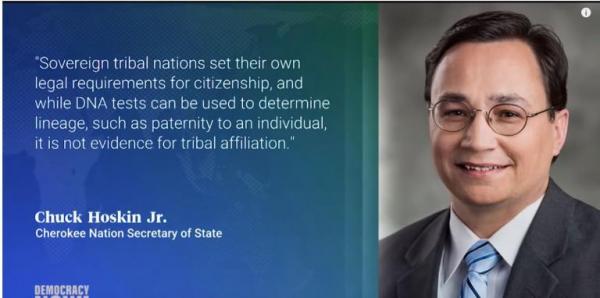
While Warren’s DNA does indicate Native American ancestry several generations back, some Native Americans have been quick to say that this is not enough. One is Brandon Scott, editor of the oldest Native newspaper in the country, the “Cherokee Phoenix”, who writes:
Native identity is not just about tracing a distant ancestor back to our tribe. It’s about cultural heritage, our shared experiences, and participating in our community. … A DNA test will not explain the struggle or plight your ancestors had to go though to make it to a rough patch of dusty earth in exchange for their ancestral homelands. … Propagating the notion that a DNA test is all a person needs to be Native American is damaging to tribes and the sovereignty they have earned through years of struggle and strife.
Rivalry Tramples the Vulnerable
The negative reaction from members of Native American tribes may be surprising to those who see Warren’s DNA test as a vindication or a wise strategy for highlighting Trump’s racism and hypocrisy. I was more ambivalent about it, because I originally saw it as Warren’s descension into a mimetic rivalry with Trump. But I didn’t see the harm in it until I listened to Native American voices. And if we want to bring true healing from this situation, we should continue to listen to them, and encourage our politicians to do the same.
To say that Senator Warren and President Trump are caught up in a mimetic rivalry is not to say that their positions or characters are the same. It is not to make a moral equivalency or erase their distinctions. It is, however, to suggest that in President Trump’s racist taunts and Warren’s taking of the DNA test, they on some level shared the same goal: to appeal to their own supporters and advance their own careers.
In taking the DNA test, a move she contends she made for the sake of transparency and public trust in government, Warren also reinforced a narrative that is imposed on Native Americans from a white supremacist culture: that DNA is a major determining factor in identity. Senator Warren bears some responsibility for the that repercussions her actions – not only in taking the test, but in claiming Native American heritage – have had on Native American communities. The test may have confirmed Native ancestry, but it also answered a racist taunt on racist terms rather than reaching out to listen to and help Native Americans, who may then have affirmed her solidarity with them on their terms.
In demeaning Warren, Trump and others also demeaned Native American peoples… and Warren gave him fuel. Warren’s representation in both academia and the United States Senate is no substitute for real Native American representation, though some have confused it as such. So while taking a DNA test may be harmless for personal discovery, using its results publicly suggests that Warren was more interested in proving her heritage to the outside world than in forging solidarity with the community with which she claims to have connections.
When politicians eschew vigorous policy debate for a game of one-upmanship, constituents suffer. This is how mimetic rivalries harm not just the participants, but those to whom they are responsible. Vulnerable people can suffer when politicians work for political victory without considering the harm they may do. Warren and Trump are both using Warren’s claims of Native American heritage to rally support, and supporters on both sides point to the other as racist while ignorantly or disingenuously ignoring their own racism.
Trump’s followers contend that they are only making fun of Warren’s opportunism, while turning Native American historical figures into insults and exacerbating vicious stereotypes. (See Senator Lindsey Graham’scontention that he thinks he can “beat” Warren’s DNA percentage and would like a casino if he is proven correct.) Some of Warren’s supporters, on the other hand, are downplaying her appropriation, further marginalizing and dismissing the voices of Native Americans. Cherokee columnist Rebecca Nagle explains how Native American communities are caught up in the crossfire between overt racism and appropriation that sidelines real people and real issues.
Healing Our Blindspots; Healing Our Culture
I take this criticism of Elizabeth Warren to heart because it could have been a criticism of me. Like Warren, I was told I had Native American ancestry. I felt proud of the heritage I thought I had, but I rarely took the time to study and learn about Native American history or its many, many cultures.
It turns out, my parents’ DNA tests showed no Native blood. But this incident has made me recognize that DNA results don’t matter to the Cherokee Nation to which I once thought I could claim a connection. Even if I could verify some Native ancestry, that would mean nothing. I would still know very little about the different branches of the Cherokee Nation or any other Native tribe. I would still have the lived experience of a white woman from suburbia.
So my instinct, upon hearing Elizabeth Warren’s story, is to see something of myself in her and give her every benefit of the doubt. She grew up hearing about her Native heritage. She did not intend to use it to her advantage. She started listing herself as Native American when members of her family began to die and she wanted to maintain a connection to them. I understand all of that and see so much of myself in that story. There are many others who have grown up with stories of Native American ancestry, whether based in myth or fact, who can relate. And yet… if the communities to which Warren claims connection say that her actions have harmed them, she needs to listen. We all need to listen.
All that time I took pride in my family mythology with only vague knowledge, I could have been learning. I could have been studying history and culture and current issues that are important to Native Americans. I could have been raising my voice for issues that impact Native communities, for sovereignty and protection against violence and land rights and resources for communities so children can stay with their families and maintain ties to their cultural heritage. Of course, I still can do all of this. I can make an intentional effort toward real solidarity regardless of my bloodline. So can Elizabeth Warren… and all of us.
In our polarized nation, this incident can be a lesson in humility and putting the needs and desires of vulnerable communities over partisanship and political expediency. Admitting mistakes is becoming increasingly anathema in politics, particularly when the president sets a tone of hyper-confidence and denying responsibility. If Warren meets that tone not by doubling-down on her reasoning for taking a DNA test but rather by confessing that that test further exacerbated complicated issues over how the American people understand Native American identity, she can show that she has learned from this incident. If she takes this opportunity to express her pride in her Native heritage by listening to the criticism of Native American communities and pledging her support to their issues and candidates, she can help change the tone of the conversation and promote a politics of public service to contrast with a politics of self-promotion. Such service, empowering vulnerable communities and following their leads, would foster the trust and cooperation that could revive our world.
Critiquing Warren is not about refusing her support, but about recognizing where not only she, but all of us, can do better. We scapegoat Elizabeth Warren and do nothing to help Native Americans if we don’t let the light shining on her mistakes illuminate to us our own mistakes. We could all do more to create a culture of listening to those who are marginalized. And we must listen to and follow the lead of Native peoples in order to repent of the theft of lives, land, and culture our nation is built upon and begin to heal this long-festering wound.
Image: Screenshot from Youtube: “Native Americans React to Elizabeth Warren’s DNA Test: Stop Making Native People ‘Political Fodder,’” by Democracy Now!
We want to know what you think about the upcoming midterm elections. Vote in our poll below!
Native American women candidates
Previous Post

October 23, 2018
Sermon: A New Hope - Isaiah, Jesus, and Star Wars
Browse Our Archives
Select a Category Atonement and Current Events Curriculum Faith and Families Interviews Jesus the Forgiving Victim Lent Montessori politics Reviews The Bible Explained Uncategorized Valentine's Day Wednesday Sermon Who is God?
Select a Month July 2020 November 2019 October 2019 September 2019 August 2019 July 2019 June 2019 May 2019 April 2019 March 2019 February 2019 January 2019 December 2018 November 2018 October 2018 September 2018 August 2018 July 2018 June 2018 May 2018 April 2018 March 2018 February 2018 January 2018 December 2017 November 2017 October 2017 September 2017 August 2017 July 2017 June 2017 May 2017 April 2017 March 2017 February 2017 January 2017 December 2016 November 2016 October 2016 September 2016 August 2016 June 2016 May 2016 April 2016 March 2016 February 2016 January 2016 December 2015 November 2015 October 2015 September 2015 August 2015 July 2015 June 2015 May 2015 April 2015 March 2015 February 2015 January 2015 December 2014 November 2014 October 2014 September 2014 August 2014 July 2014 June 2014 May 2014 April 2014 March 2014 January 2014 December 2013 September 2013 August 2013 July 2013
Follow Us!
TAKE THE
Religious Wisdom Quiz
What was the primary trade route in Biblical times?
Select your answer to see how you score.
Royal Road Mediterranean Route Spice Route Silk Road
Related posts from Teaching Nonviolent Atonement

Perfect Love Casts Out Fear, But Can It...
Racism: Survivors and Perpetrators Find Healing in Africa

The One Thing: My Dad, City Slickers, and...
TRENDING AT PATHEOS Progressive Christian

The Secret behind A Charlie Brown Thanksgiving
Where Franklin Sat at Charlie Brown's Thanksgiving Table Sparky was sticking to...

Bridging the Gap Between God and Man
From Far Off to the Ultimate Embrace “God is a Spirit: and...

Let Matthew 25 Guide You to a Greater...
With the crisp feel of fall in the air, our minds quickly...

Can a Chatbot Touch Your Soul?
Can a chatbot offer genuine spiritual counsel? One conversation brought me to...

Religion and Politics: How Should We Then Live?
Two cultural axioms get repeated in polite company. Don't mix religion and...

7 Things We Get Wrong About Giving Thanks
It's a time of year when many of us turn to the...
view all Progressive Christian blogs
Ad-Free & Subscriber Log-In Subscription Support
- About Us
- 2026 Calendar
- Videos
- Podcasts
- Library of World Religions
- Faith In Media Tracker
- Advertise With Us
- Write for Us
- Privacy Policy
- Terms of Service
- Do Not Sell My Data
- Contact Us
- Radiant Digital
- Manage Newsletter Subscriptions
- Unsubscribe From Notifications
- Sitemap
Copyright 2008-2026, Patheos, part of the Radiant Digital network of media brands. All rights reserved.
Subscription Support Ad-Free & Subscriber Log-In
Follow Patheos