
BuddhistCatholicContemplativeEvangelicalGeneral ChristianHinduJewishLatter-day SaintMuslimNew VisionsProgressive Christian
Beliefs
- Buddhist
- Catholic
- Contemplative
- Evangelical
- General Christian
- Hindu
- Jewish
- Latter-day Saint
- More Voices
- Muslim
- New Visions
- Pagan
- Progressive Christian
Topics
- Religion News
- Food and Religion
- Sports and Religion
- Religious Art
- Religious Music and Entertainment
- Religious Events
- History and Religion
- Style and Religion
- Politics and Religion
- Women in Religion
- Recreation Outdoors and Religion
- Business Finance and Religion
- Careers Workplace and Religion
- Education and Religion
- Family Parenting and Religion
- Health Fitness and Religion
- Home and Religion
- Relationships and Religion
- Technology and Religion
- Travel and Religion
Columnists
- Buddhist Columnists
- Business Finance and Religion Columnists
- Careers Workplace and Religion Columnists
- Catholic Columnists
- Contemplative Columnists
- Education and Religion Columnists
- Evangelists Columnists
- Family Parenting and Religion Columnists
- General Christian Columnists
- Health Fitness and Religion Columnists
- Hindu Columnists
- History and Religion Columnists
- Home and Religion Columnists
- Jewish Columnists
- More Voices Columnists
- Latter Day Columnists
- Muslim Columnists
- New Visions Columnists
- Nonreligious Columnists
- Pagan Columnists
- Politics and Religion Columnists
- Progressive Columnists
- Recreation Outdoors and Religion Columnists
- Relationships and Religion Columnists
- Religion News Columnists
- Religious Art Columnists
- Religious Events Columnists
- Religious Music and Entertainment Columnists
- Sports and Religion Columnists
- Style and Religion Columnists
- Technology and Religion Columnists
- Travel and Religion Columnists
- Women in Religion Columnists
Resource Library
- 2026 Calendar
- Library of World Religions
- The 100 Most Holy Places on Earth
- Patheos Answers
- Podcasts
- Videos
- Faith Leaders Database
- Anglican Episcopalian
- Bahai
- Baptist
- Buddhism
- Christianity
- Confucianism
- Eastern Orthodoxy
- Hinduism
- Holiness and Pentecostal
- ISKCON
- Islam
- Judaism
- Lutheran
- Methodist
- The Church of Jesus Christ of Latter-day Saints
- New Age
- Paganism
- Presbytarian and Reformed
- Protestantism
- Religion Behind the Scenes
- Roman Catholic
- Scientology
- Shia Islam
- Sikhism
- Sufism
- Sunni Islam
- Taoism
- Zen
- See all religions
Research Tools
 Ad-Free & Subscriber Log-In Subscription Support
Ad-Free & Subscriber Log-In Subscription Support
Follow Patheos 

- Trending:
- Forgiveness
- |
- Marriage
- |
- Consciousness
- |
- Death Penalty
- |
- Election
- |
- Halloween
 Teaching Nonviolent Atonement
- Home
- Progressive Christian
- Blood Sport in “The Lonesome West”
Blood Sport in “The Lonesome West”
Last updated on: October 22, 2018 at 2:33 pm by Suzanne Ross
Blood Sport in “The Lonesome West” 2018-10-22T14:33:13-05:00 Suzanne Ross
Patheos Explore the world's faith through different perspectives on religion and spirituality! Patheos has the views of the prevalent religions and spiritualities of the world.
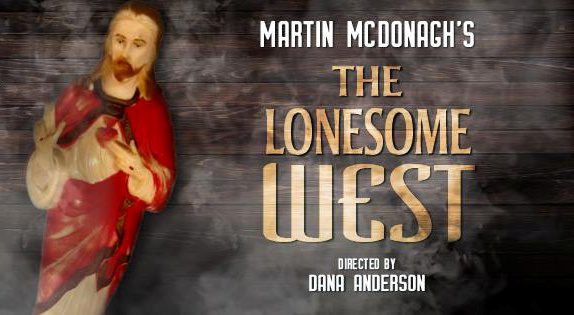
AstonRep Theatre Company’s production of The Lonesome West, a dark comedy by award winning playwright Martin McDonagh, is a timely treat for Chicago audiences. Set in a disturbingly violent town in Western Ireland called Leenane, the “lonesome west” of the play’s title, Leenane is the lead character, the silent star of the show. Most critics focus on the depravity, cruelty and violence of the characters but that is to miss McDonagh’s point. This play is less about the individuals and much more about the disintegration of a town in which the moral center no longer holds. Though first produced in 1997, this Irish play has surprising resonance with the current cultural climate in the US. American audiences may laugh out loud at some of the more outlandish pettiness, cruelty and violence, as they should. But accompanying the laughter is an unsettling recognition of our own cultural moment, laced as it is with anger, accusations and self-justifications that mask our own cruelty to one another.
A Crisis of Faith
Early in The Lonesome West, Father Welsh is visiting the home of two brothers, Valene and Coleman, immediately after their father’s funeral. He tells Coleman, “I’m a terrible priest” and Valene quips, “He’s not having another crisis of faith?” and we learn that this may be Father Welsh’s twelfth faith crisis this week. Given the alarmingly violent parish that the poor man has been assigned to, prone as it is to outbreaks of petty resentments, cruelty, shouting matches, alcoholism, rumor mongering and murder, it’s no wonder that he has doubts about his effectiveness. Folks carry on without confessing or repenting or even offering the feeblest of apologies. Father Welsh wonders how they can attend mass, listen to his sermons and yet continue to sin without ever doubting their own goodness.
His conclusion is that he is not a very good priest, which may be true. But Father Welsh’s problem is bigger than just one man; it’s the problem faced by every man or woman who commits themselves to love not hate, to mercy and not violence. The problem is this: love cannot be coerced or punished into existence. Love can only bear witness to itself in hope that it will be noticed amid the loud, angry tantrums that hate is prone to.
Coleman and Valene pose a particularly vexing problem for Father Welsh. They live together, alone now without their father, left to petty squabbles and the nursing of old resentments. They fight figuratively and literally and have no sympathy for one another, can summon no ounce of compassion. Tension builds as the audience learns the horrifying truth about their father’s death, a revelation that pushes Father Welsh to make a dramatic, last ditch effort to draw Coleman and Valene into a more loving relationship.
Is Forgiveness Even an Option?
Father Welsh’s demonstration of love is accompanied by a letter in which he exhorts the boys to tell each other “the wrongs the other has done all down through the years that you still hold against him… and then be forgiving each other them wrongs, no matter what they be.” He asks that they do it for him, “for a friend of yeres, who cares about ye, who doesn’t want to see ye blowing your brains out of each other, who never achieved anything as a priest in Leenane, in fact the opposite, and who’d see ye two becoming true brothers again as the greatest achievement of his whole time here… I have faith in ye. You wouldn’t be letting me down now, would ye?”
This exhortation might well be read as a direct appeal to those of us today who are caught up in our own political bickering over past wrongs. In the wake of the Kavanaugh confirmation fight and heading into midterm elections, we must ask ourselves whether it is worth holding on to the past. What passes for political discourse is Republicans and Democrats playing the “you started it” game over important things like holding up judicial appointments, excusing the moral failings of our politicians, or claiming to be on the side of the real victim in any given situation. I could not help but see the end of the play as a portrait of American civic life as the brothers turn apology into a competitive blood sport. Is there anyone today with the authority to exhort us to really forgive one another? Who could write a letter that would prompt us to genuinely apologize?
Finding Hope
In 2017, twenty years after The Lonesome West, McDonagh released his film, Three Billboards Outside Ebbing, Missouri. There is a lone Catholic priest in this story, too, but he is lectured into silence by the Frances McDormand character. She condemns him for his complicity in the abuse of children by the fact of his being part of the clergy, or the gang, as she puts it. So much for the church’s moral authority.
With priests silenced by their own moral failures, McDonagh needs to find another character to be the voice of forgiveness in Three Billboards. This time it’s a secular voice, the town’s sheriff. The last bastion of moral authority in the US does appear to be the military and though law enforcement has been rightly called to account for violence against African-Americans, somehow an armed authority figure still commands our respect. McDonagh’s sheriff is a man who wears a gun but he counsels his most violent deputy to choose love and abandon violence. Perhaps advice McDonagh hopes all armed forces will take to heart.
Writing a century ago about the proper exercise of parental authority, Dr. Maria Montessori made this observation about abusive parents and human nature in general: “We would rather make a mistake than admit it.” And so when our faults are pointed out to us, she writes, “we find it easy to excuse them… And little by little we convince ourselves of the truth of what our conscience knows to be patently false and which becomes daily more difficult to correct.” Dr. Montessori’s life was animated by hope that parents could face the truth about themselves and put their children’s need ahead of their own selfish motives. Both The Lonesome West and Three Billboards end with very faint flickers of hope that the characters who receive the letters will be able to change their ways. Whether they will find a way from blood sport to genuine forgiveness is left to our imaginations. If we can imagine it for them, maybe we can imagine it for ourselves.
Sunday, October 28 – 3:30 p.m. matinee and talk back with Suzanne Ross
Attend the 3:30 p.m. matinee of AstonRep’s The Lonesome West at the Raven Theatre, 6157 N Clark St, in Chicago then join Suzanne Ross and members of the cast for an engaging and enlightening post-show talkback. Purchase your tickets today.
Previous Post

October 18, 2018
Sermon: The Eleventh Commandment
Next Post
October 23, 2018 Sermon: A New Hope - Isaiah, Jesus, and Star Wars
Browse Our Archives
Select a Category Atonement and Current Events Curriculum Faith and Families Interviews Jesus the Forgiving Victim Lent Montessori politics Reviews The Bible Explained Uncategorized Valentine's Day Wednesday Sermon Who is God?
Select a Month July 2020 November 2019 October 2019 September 2019 August 2019 July 2019 June 2019 May 2019 April 2019 March 2019 February 2019 January 2019 December 2018 November 2018 October 2018 September 2018 August 2018 July 2018 June 2018 May 2018 April 2018 March 2018 February 2018 January 2018 December 2017 November 2017 October 2017 September 2017 August 2017 July 2017 June 2017 May 2017 April 2017 March 2017 February 2017 January 2017 December 2016 November 2016 October 2016 September 2016 August 2016 June 2016 May 2016 April 2016 March 2016 February 2016 January 2016 December 2015 November 2015 October 2015 September 2015 August 2015 July 2015 June 2015 May 2015 April 2015 March 2015 February 2015 January 2015 December 2014 November 2014 October 2014 September 2014 August 2014 July 2014 June 2014 May 2014 April 2014 March 2014 January 2014 December 2013 September 2013 August 2013 July 2013
Follow Us!
TAKE THE
Religious Wisdom Quiz
What is the name of the tree whose fruit Adam and Eve were forbidden to eat?
Select your answer to see how you score.
Tree of Life Olive Tree Tree of the Knowledge of Good and Evil Fig Tree
Related posts from Teaching Nonviolent Atonement

Forgiveness in the Time of COVID-19 by Julia...

How Forgiveness Can Transform Our Violence and Build...

Jesus Unmasked: On Being Lost And Found: Sheep,...

Jesus Unmasked: Humility Is Not A Competition [Video]
TRENDING AT PATHEOS Progressive Christian

What Being a Modern-Day Apostle Means to Me
In my last column, I discussed the ins and outs of modern-day...

Did Ancient China Once Worship the God of...
Across human history, a common thread weaves through the origins of the...

Love Your Neighbor – Including Earth-Kin: Lev. 19,...
God’s command to love your neighbor means acting in an ethical and...

Lead a Church Study of “Jesus and Lao...
Guest writer Jack Thomas (The Irreverent Reverend) reflects on leading his church...

Pastoral Wisdom for Responding to Sermon Pushback
Getting sermon pushback on your social justice sermon? Learn practical, Proverbs-based strategies...

Principles for Understanding the Apostolic Ministry Today
Whenever people discover that my formal ministry title is "apostle," as in...
view all Progressive Christian blogs
Ad-Free & Subscriber Log-In Subscription Support
- About Us
- 2026 Calendar
- Videos
- Podcasts
- Library of World Religions
- Faith In Media Tracker
- Advertise With Us
- Write for Us
- Privacy Policy
- Terms of Service
- Do Not Sell My Data
- Contact Us
- Radiant Digital
- Manage Newsletter Subscriptions
- Unsubscribe From Notifications
- Sitemap
Copyright 2008-2026, Patheos. All rights reserved.
Subscription Support Ad-Free & Subscriber Log-In
Follow Patheos