
BuddhistCatholicContemplativeEvangelicalGeneral ChristianHinduJewishLatter-day SaintMuslimNew VisionsProgressive Christian
Beliefs
- Buddhist
- Catholic
- Contemplative
- Evangelical
- General Christian
- Hindu
- Jewish
- Latter-day Saint
- More Voices
- Muslim
- New Visions
- Pagan
- Progressive Christian
Topics
- Religion News
- Food and Religion
- Sports and Religion
- Religious Art
- Religious Music and Entertainment
- Religious Events
- History and Religion
- Style and Religion
- Politics and Religion
- Women in Religion
- Recreation Outdoors and Religion
- Business Finance and Religion
- Careers Workplace and Religion
- Education and Religion
- Family Parenting and Religion
- Health Fitness and Religion
- Home and Religion
- Relationships and Religion
- Technology and Religion
- Travel and Religion
Columnists
- Buddhist Columnists
- Business Finance and Religion Columnists
- Careers Workplace and Religion Columnists
- Catholic Columnists
- Contemplative Columnists
- Education and Religion Columnists
- Evangelists Columnists
- Family Parenting and Religion Columnists
- General Christian Columnists
- Health Fitness and Religion Columnists
- Hindu Columnists
- History and Religion Columnists
- Home and Religion Columnists
- Jewish Columnists
- More Voices Columnists
- Latter Day Columnists
- Muslim Columnists
- New Visions Columnists
- Nonreligious Columnists
- Pagan Columnists
- Politics and Religion Columnists
- Progressive Columnists
- Recreation Outdoors and Religion Columnists
- Relationships and Religion Columnists
- Religion News Columnists
- Religious Art Columnists
- Religious Events Columnists
- Religious Music and Entertainment Columnists
- Sports and Religion Columnists
- Style and Religion Columnists
- Technology and Religion Columnists
- Travel and Religion Columnists
- Women in Religion Columnists
Resource Library
- 2026 Calendar
- Library of World Religions
- The 100 Most Holy Places on Earth
- Patheos Answers
- Podcasts
- Videos
- Faith Leaders Database
- Anglican Episcopalian
- Bahai
- Baptist
- Buddhism
- Christianity
- Confucianism
- Eastern Orthodoxy
- Hinduism
- Holiness and Pentecostal
- ISKCON
- Islam
- Judaism
- Lutheran
- Methodist
- The Church of Jesus Christ of Latter-day Saints
- New Age
- Paganism
- Presbytarian and Reformed
- Protestantism
- Religion Behind the Scenes
- Roman Catholic
- Scientology
- Shia Islam
- Sikhism
- Sufism
- Sunni Islam
- Taoism
- Zen
- See all religions
Research Tools
 Ad-Free & Subscriber Log-In Subscription Support
Ad-Free & Subscriber Log-In Subscription Support
Follow Patheos 

- Trending:
- Forgiveness
- |
- Marriage
- |
- Consciousness
- |
- Death Penalty
- |
- Election
- |
- Halloween
 Teaching Nonviolent Atonement
- Home
- Progressive Christian
- Battling From The Beginning: From Columbus To Afghanistan
Battling From The Beginning: From Columbus To Afghanistan
Last updated on: October 5, 2018 at 2:51 pm by Lindsey Paris-Lopez
Battling From The Beginning: From Columbus To Afghanistan 2018-10-05T14:51:07-05:00 Lindsey Paris-Lopez
Patheos Explore the world's faith through different perspectives on religion and spirituality! Patheos has the views of the prevalent religions and spiritualities of the world.
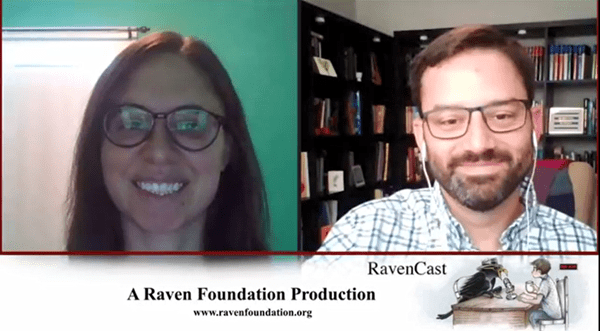
In this episode of the RavenCast, Lindsey Paris-Lopez and Adam Ericksen talk about Columbus Day/Indiginous People’s Day and the War in Afghanistan in relation to mimetic theory. Watch the video or read the show notes below. Never miss an episode by subscribing to the RavenCast on iTunes, Stitcher Radio, or Podbean.
Show Notes
Monday, October 8th, is the holiday that was first known as Columbus Day but is becoming increasingly known as Indigenous Peoples’ Day.
Sunday, October 7th, marks the 17-year anniversary of the beginning of the war in Afghanistan. Besides the Korean war, which culminated in an armistice but never formally ended, the war in Afghanistan has been the longest war in US history.
Violence is the connecting thread. The United States, before its birth, was conceived in violence. Over the course of this long weekend, we should remember our wars and their victims, on the soil where we reside and far away. We should remember the humanity and dignity of those who have died and those whose lives have been circumscribed by US violence. We must remember, repent, and repair.
Girard’s last book was called Battling to the End. The United States has been battling from the beginning.
Girard posits that all human culture was born in violence. Human nature is imitative, causing us to compete for our desires, which leads to conflicts that spread out of control until we are united against a scapegoat, an enemy. Throughout US history, from colonial times until now, social cohesion among people has been built from enmity against others. (Editor’s Note: While our video focused on war, racism – which is inextricably bound up in US wars but takes on other forms as well – is another form of violent cohesion that is a tragic part of US culture of forming cohesion over and against others).
Lies My Teacher Told Me by James W. Loewen is a book that underscores the way wars are taught in US classrooms. There is a glorification, a mythologization, of war and the US’s role in it, in US culture taught not only in the classroom but all around us. The United States has cultivated a glorified, warrior image. We talk about ourselves as heroes without regard to our victims.
Certainly for most of the history of the United States, we have hero-icized Columbus.
Girard helps us understand how, when violence is used as a tool of social cohesion against enemy others, those who wield it don’t recognize it as violence. Violence is what others do to us; not what we do. So we don’t recognize our violence as violence nor our victims as victims.
(Editor’s Note: From about 6 to 8 minutes into the video, Lindsey Paris-Lopez tries to articulate how, in the United States, we have a history of seeing ourselves in the best light, of glorifying ourselves. There was a time when seeing ourselves as conquerors meant seeing ourselves as noble heroes. Over time, we have become more aware of the humanity of the indigenous people who were enslaved and killed upon the arrival of the first Europeans whose descendants would go on to establish the United States. The word “conqueror” is no longer acceptable – and we at Raven don’t like it either – because we understand that people who are conquered, overpowered by force, are people. Even as the idea of “conquering” went out of style, we in the United States have never repented of our violence. Instead, we justify it as humanitarian. We view ourselves as exceptional and our violence as justified, without regard to our victims, in the past or today. This is the message Lindsey Paris-Lopez was trying, imperfectly, to convey.)
Colonizers came to this land and enslaved, mutilated, and murdered indigenous populations. Diseases killed many, many more. And from pre-US history up until today, Native Americans have been pushed from their land and more and more tribal land has been taken or exploited. There is a greater understanding now that all of this is wrong, and yet we in the United States still glorify our history by leaving out or glossing over what was done to indigenous populations, and we largely still deny what is done today. But renaming Columbus Day Indigenous Peoples’ Day doesn’t let us forget the victims of violence or their humanity, or the indigenous people who continue to bless and enrich this land.
To say that Europeans introduced violence into North America would be wrong. There was violence in indigenous cultures, including, in some cultures, human sacrifice. Some Girardians have pointed this out as pushback against changing the name “Columbus Day,” to “Indigenous Peoples’ Day,” saying we have to recognize violence in all human cultures and we shouldn’t think US culture or European cultures are uniquely violent. However, colonizing, white European culture that took over what became the United States all but annihilated many peoples, and we need to remember our own violence. Whether or not the people harmed or the cultures that were destroyed or devastated were perfect is not the point. We should never downplay our own violence, so Indigenous Peoples’ Day should be a day to remember the people who were here first and harmed by the violence of our European ancestors. It’s better to remember the people harmed than the people who did the harm (and all but wrote their victims out of history.)
Also, we must remember and honor the beauty and good indigenous cultures teach us. Right now, especially, is a time to learn from Native American stewardship for the earth. In “Reflections on the Anthropocene”, Robert Koehler explains how people in indigenous cultures have helped the environment to thrive. This relationship with the earth is something that those of us living in a culture of taking and exploiting land must learn.
From our violent beginnings, we have had a history of violence that continues. Since the founding of the United States, only a handful of years have been peaceful.
In the “War on Terror” era, we launch wars and forget about them in the United States, but they continue. The nations we invade cannot forget because the wars have never ended. Our troops (and contracted mercenaries) and weapons keep killing.
The war on terror has only increased terror. Violence is mimetic and self-perpetuating.
US General Philip Sheridan said of Native Americans, during wars between the indigenous people and US citizens of European descent: “We took away their country and their means of support and it was for this and against this that they made war. Could anyone expect less?”
“Those who live by the sword die by the sword.” – Jesus.
In the United States, we are far more threatened by our own violence than the violence of any other nation. We make war all over the world, and it makes us less safe by sewing enmity, but we are not as threatened by “outside others” as the powers that be would like us to believe. And we would be much safer if, instead of focusing on war, we focused on reparations.
Afghanistan is particularly dear to Lindsey Paris-Lopez’s heart because it is the birthplace of the mother of one of her dearest friends. When she thinks about Afghanistan, she thinks about the land that nurtured a smart, professional woman, mother to four smart, successful, independent daughters. Afghanistan today is plagued by poverty and violence, but most people in Afghanistan want peace. The fundamentalism and intolerance that we hear about in the United States is best understood as a product of decades of war. People at war often dig into a strict, hardline interpretation of their religion to distinguish themselves over and against an invading, enemy other. In the case of Afghanistan right now, that invading enemy other is the United States.
17 years of US-led war in Afghanistan has made Afghanistan more dangerous.
We will never again see the Afghanistan of tolerance and prosperity (at least more than there is today) that nurtured Lindsey’s friend’s mother until we stop our violence.
Popular culture in the United States has demonized Islam, Muslims, and Muslim-majority countries.
So many people in Afghanistan want peace. At the Raven ReView, we have published the stories of Afghan Peace Volunteers, and there are more stories at Voices For Creative Nonviolence. Read some on October 7th, the 17-year anniversary of the launching of “Operation Enduring Freedom.” For the people of Afghanistan, it has been more like “Operation Enduring Hell.”
The best way for freedom to flourish is for us to stop our violence.
Question for our listeners: Does anyone have suggestions for good stories, especially children’s stories, to read for Indigenous People’s Day?
Previous Post

October 4, 2018
Uprooted: A Reflection on the Lectionary in Light of Current Events
Next Post
October 8, 2018 Living Boldly in a World of Shame
Browse Our Archives
Select a Category Atonement and Current Events Curriculum Faith and Families Interviews Jesus the Forgiving Victim Lent Montessori politics Reviews The Bible Explained Uncategorized Valentine's Day Wednesday Sermon Who is God?
Select a Month July 2020 November 2019 October 2019 September 2019 August 2019 July 2019 June 2019 May 2019 April 2019 March 2019 February 2019 January 2019 December 2018 November 2018 October 2018 September 2018 August 2018 July 2018 June 2018 May 2018 April 2018 March 2018 February 2018 January 2018 December 2017 November 2017 October 2017 September 2017 August 2017 July 2017 June 2017 May 2017 April 2017 March 2017 February 2017 January 2017 December 2016 November 2016 October 2016 September 2016 August 2016 June 2016 May 2016 April 2016 March 2016 February 2016 January 2016 December 2015 November 2015 October 2015 September 2015 August 2015 July 2015 June 2015 May 2015 April 2015 March 2015 February 2015 January 2015 December 2014 November 2014 October 2014 September 2014 August 2014 July 2014 June 2014 May 2014 April 2014 March 2014 January 2014 December 2013 September 2013 August 2013 July 2013
Follow Us!
TAKE THE
Religious Wisdom Quiz
I refused to bow to a high official and sat at the king's gate, sparking a genocidal plot. Who am I?
Select your answer to see how you score.
Nehemiah Haman Daniel Mordecai
Related posts from Teaching Nonviolent Atonement

How Forgiveness Can Transform Our Violence and Build...

Pride: In The Name Of Love, Living Our...

How My Atheist Father Helps Me Appreciate The...

The Unity of All Things: How to Be...
TRENDING AT PATHEOS Progressive Christian

What Being a Modern-Day Apostle Means to Me
In my last column, I discussed the ins and outs of modern-day...

Did Ancient China Once Worship the God of...
Across human history, a common thread weaves through the origins of the...

Love Your Neighbor – Including Earth-Kin: Lev. 19,...
God’s command to love your neighbor means acting in an ethical and...

Lead a Church Study of “Jesus and Lao...
Guest writer Jack Thomas (The Irreverent Reverend) reflects on leading his church...

Pastoral Wisdom for Responding to Sermon Pushback
Getting sermon pushback on your social justice sermon? Learn practical, Proverbs-based strategies...

Principles for Understanding the Apostolic Ministry Today
Whenever people discover that my formal ministry title is "apostle," as in...
view all Progressive Christian blogs
Ad-Free & Subscriber Log-In Subscription Support
- About Us
- 2026 Calendar
- Videos
- Podcasts
- Library of World Religions
- Faith In Media Tracker
- Advertise With Us
- Write for Us
- Privacy Policy
- Terms of Service
- Do Not Sell My Data
- Contact Us
- Radiant Digital
- Manage Newsletter Subscriptions
- Unsubscribe From Notifications
- Sitemap
Copyright 2008-2026, Patheos. All rights reserved.
Subscription Support Ad-Free & Subscriber Log-In
Follow Patheos