
BuddhistCatholicContemplativeEvangelicalGeneral ChristianHinduJewishLatter-day SaintMuslimNew VisionsProgressive Christian
Beliefs
- Buddhist
- Catholic
- Contemplative
- Evangelical
- General Christian
- Hindu
- Jewish
- Latter-day Saint
- More Voices
- Muslim
- New Visions
- Pagan
- Progressive Christian
Topics
- Religion News
- Food and Religion
- Sports and Religion
- Religious Art
- Religious Music and Entertainment
- Religious Events
- History and Religion
- Style and Religion
- Politics and Religion
- Women in Religion
- Recreation Outdoors and Religion
- Business Finance and Religion
- Careers Workplace and Religion
- Education and Religion
- Family Parenting and Religion
- Health Fitness and Religion
- Home and Religion
- Relationships and Religion
- Technology and Religion
- Travel and Religion
Columnists
- Buddhist Columnists
- Business Finance and Religion Columnists
- Careers Workplace and Religion Columnists
- Catholic Columnists
- Contemplative Columnists
- Education and Religion Columnists
- Evangelists Columnists
- Family Parenting and Religion Columnists
- General Christian Columnists
- Health Fitness and Religion Columnists
- Hindu Columnists
- History and Religion Columnists
- Home and Religion Columnists
- Jewish Columnists
- More Voices Columnists
- Latter Day Columnists
- Muslim Columnists
- New Visions Columnists
- Nonreligious Columnists
- Pagan Columnists
- Politics and Religion Columnists
- Progressive Columnists
- Recreation Outdoors and Religion Columnists
- Relationships and Religion Columnists
- Religion News Columnists
- Religious Art Columnists
- Religious Events Columnists
- Religious Music and Entertainment Columnists
- Sports and Religion Columnists
- Style and Religion Columnists
- Technology and Religion Columnists
- Travel and Religion Columnists
- Women in Religion Columnists
Resource Library
- 2026 Calendar
- Library of World Religions
- The 100 Most Holy Places on Earth
- Patheos Answers
- Podcasts
- Videos
- Faith Leaders Database
- Anglican Episcopalian
- Bahai
- Baptist
- Buddhism
- Christianity
- Confucianism
- Eastern Orthodoxy
- Hinduism
- Holiness and Pentecostal
- ISKCON
- Islam
- Judaism
- Lutheran
- Methodist
- The Church of Jesus Christ of Latter-day Saints
- New Age
- Paganism
- Presbytarian and Reformed
- Protestantism
- Religion Behind the Scenes
- Roman Catholic
- Scientology
- Shia Islam
- Sikhism
- Sufism
- Sunni Islam
- Taoism
- Zen
- See all religions
Research Tools
 Ad-Free & Subscriber Log-In Subscription Support
Ad-Free & Subscriber Log-In Subscription Support
Follow Patheos 

- Trending:
- Forgiveness
- |
- Marriage
- |
- Consciousness
- |
- Death Penalty
- |
- Election
- |
- Halloween
 Teaching Nonviolent Atonement
- Home
- Progressive Christian
- Remembering 9/11 with Jesus
Remembering 9/11 with Jesus
Last updated on: September 17, 2018 at 12:08 pm by Adam Ericksen
Remembering 9/11 with Jesus 2018-09-17T12:08:11-05:00 Adam Ericksen
Patheos Explore the world's faith through different perspectives on religion and spirituality! Patheos has the views of the prevalent religions and spiritualities of the world.
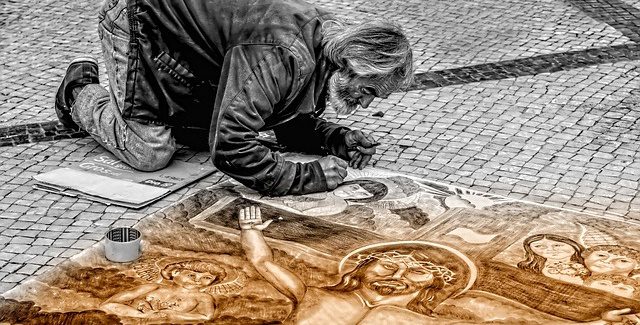
The following is a sermon I preached at Clackamas United Church of Christ, near Portland, Oregon. The scripture text were Proverbs 1:20-33 and Mark 8:27-38.
When I was growing up in the mid-1990s, my dad told me that there were a few moments in his young life that were formative for him. He could never forget where he was when they happened. There were some personal events, but also big cultural events – the Beatles and the moon landing. But the biggest event he once told me was the assassination of John Kennedy.
There are cultural events within each generation that almost define that generation. I remember the event that defined my generation. It happened during my senior year of college. I woke up later than my three roommates on that mid-September day in 2001. When I walked to the living room of my apartment, they were sitting on our chairs with blank faces and their eyes glued to the television. Something was definitely different about this morning. When I asked “Hey guys, what’s going on?” they totally ignored me and soon my eyes were glued to the television, too.
Everyone on campus that day was numb. We went to the student union and watched the events of the day unfold on a big screen television. The next day the President of the college and the Dean of Students invited the students to an open forum. The Dean said that our generation would be known as the 9/11 generation.
How could we forget that day? I couldn’t forget it if I wanted to. But every year at around this time, people post on social media and hang banners and sign on roads and bridges that say, “We will never forget.” Or the alternative, “We will always remember.”
As if we could ever forget what happened on 9/11. Those images are seared into our minds. The question isn’t whether we remember what happened on 9/11. I think the question is, “What can we learn about ourselves from 9/11?”
I think this is the more important question because our culture hasn’t healed. And we haven’t healed in part because of our reaction to those horrific events.
We got hit, and for the most part, American culture wanted a leader who would hit back. The Bush Administration hit back with “Shock and Awe,” which was meant to cause overwhelming destruction against our enemies so that they and nobody else would ever think of messing with the United States again. And I’ll be honest with you, at that point in my life, I wanted to hit back. I got caught up in our cultural desire for revenge, only we called it justice. I thought that of course Saddam Hussein was involved and of course he had weapons of mass destruction and of course he was lying to us. I wasn’t a fan of George W Bush. I didn’t vote for him. But I thought Colin Powell was trustworthy. So when he said Saddam had weapons of mass destruction, I believed him.
And besides, it seemed that after 9/11, the United States was actually united. And if felt good to belong to something bigger than myself.
I didn’t realize it at the time, but that sense of unity and belonging came by uniting against a common enemy. While it might feel good, it is spiritually toxic for us as individuals or as a nation to unite against an enemy.. It is unhealthy and it never leads to true healing.
When I see signs and banners saying we will never forget, I wonder if we are just scratching old wounds and so we will never heal. Even worse, I wonder if many in our culture like scratching those wounds. Many of us like to remind ourselves of 9/11 to remind ourselves that we are victims. Because it’s as victims that we are able to unite against and kill our enemies in the name of freedom, justice, and peace. That’s what we claim to want, right? We want freedom, justice and peace, but I think if we were more honest, we’d realize that a large part of America’s response to 9/11 was revenge. And that’s why we haven’t healed.
Of course, we in the United States are not alone in this response. When historians write their books, it’s usually about wars. Tragically, it seems human history is filled with them. “Shock and awe” didn’t start with the United States. It’s been the pattern of human behavior from the beginning. On a personal and national level, the human default position has often been, if you hit me, I get to hit you back. Only I’m going to hit you harder so that you don’t hit me back. But human history shows this is foolish thinking, because people always hit back. This creates a cycle of violence where everyone accuses the other of hitting first. Thus, everyone claims they are acting in self-defense against the aggressor.
We’re not just talking about wars at this point. We’re also talking about the way we talk to one another. There’s such a hostility in our culture. And it’s easy to absorb that hostility within ourselves. I must admit that I’ve done this more often than I’d like to admit. It’s easy to respond to comments that I perceive as simple or foolish by being negative, dismissive and rude. This rudeness and dismissiveness cannot be contained. When I start down that path with political opponents, it infects other areas, such as my relationship with my family members, colleagues at work, and can infect my relationships here at church.
In our passage today from Proverbs, we see that Wisdom cries out to offer us a better way. Proverbs personifies Wisdom as a divine woman. Wisdom is the feminine aspect of God. She cries out for us to resist the cycles of violence and negativity. But this divine resistance isn’t primarily about being against those we deem as our enemies. It’s much more about us.
Divine wisdom asks, “How long will scoffers delight in their scoffing”? And that’s when I realize that this is about me. I delight in my scoffing. I love it! Because I can build a whole sense of identity by scoffing at others. “Oh, how stupid that person is! How could anyone believe that!” This makes me feel good about myself as I think I’m right and the other person is wrong.
But as Proverbs says, being right does not necessarily make one wise. It might just make our ego bigger. If our rightness depends upon scoffing at another, or making another person wrong so that we can seem right, then as Proverbs says, we will only bring calamity upon ourselves. Because insisting on being “right” is toxic and will destroy our relationships.
The first Christians claimed that the Wisdom of Christ seemed like foolishness to the world. To a world stuck in exchanging violence back and forth, a world that thinks might makes right, the way of Jesus is utter weakness and foolishness. This is why I find Jesus so fascinating. In our reading this morning, Jesus asks his disciples who people thought he was. Some people thought Jesus was John the Baptist come back to life, or the great prophet Elijah, or maybe a different prophet. Then Jesus asked his disciples, “But who do you say that I am?”
Peter, one of Jesus’ closest disciples, answered, “You are the Messiah.”
The word Messiah means the “Anointed One.” It was a title for someone who was anointed as King and Savior of the people. Peter thought Jesus was the one he and his people were waiting for. You see, the Jews were conquered by many empires. At the time of Jesus, they were under Roman rule and oppression. The Jewish king at the time worked in collaboration with Rome. The King was viewed by the masses as a traitor, but without an alternative king to lead a rebellion, there was nothing they could do.
So Peter called Jesus the Messiah. The Anointed One who would save the people from Roman rule and corrupt kings. Israel got hit by Rome and Peter wanted a leader who would hit back. He expected Jesus to bring the masses together and successfully lead a violent army of the people against the enemies of Israel.
But Jesus knew that war would not lead to healing. Before he was arrested, some of Jesus’ disciples tried to protect him with swords. Jesus scolded them by saying that he could bring an overwhelming force of angels to destroy Rome, but “shock and awe” is not that way of God. It only leads to more destruction. Rather, Jesus resisted the powers of domination, but not by adding more violence into the world. He resisted them through nonviolence. Jesus worked for justice by calling people “out” for their oppressive ways, but he also called people “in” by healing and feeding and welcoming all people into the realm of God’s love.
Make no mistake, Jesus led a radical resistance. Jesus wasn’t crucified simply because he taught people to love their enemies. He was crucified because he led a resistance movement. Indeed, it was a nonviolent resistance movement, but Jesus resisted the powers that thwarted the emergence of the kingdom of God. That’s why he was killed.
Jesus said “no” to the ways of violence, the ways of revenge. Jesus came to change our human pattern of violent “shock and awe” into the divine pattern that shocks us into radical love. He said that if you wanted to follow him you’d have to give up the desires to win, to scoff, to demean, and to dominate. You’d have to take up your cross and follow him.
Wisdom still cries out. And at one point in his life, Jesus looked over the city of Jerusalem before he was murdered on the cross and he wept. He cried out, “If you, even you, had only recognized on this day the things that make for peace! But now they are hidden from your eyes.”
The rulers and the people of Jerusalem missed an opportunity to recognize the things that make for peace. The things that make for true peace were clearly shown in the way of Jesus.
The day Jesus was crucified was a day his followers would never forget. And as the Messiah, as he ate his last supper with his disciples, Jesus told them to always remember him and the life he poured out for them. But they didn’t remember in a way that led them to retaliate against their enemies. They remember the cross as a symbol of God’s radical love, forgiveness, and desire for a more just world.
Jerusalem missed an opportunity for peace during Jesus’ day, and the United States missed an opportunity for peace following 9/11. We continue to miss that opportunity for peace on a personal level when we respond to hostility with hostility. We miss that opportunity on a national level when we legislate policies that exclude and scapegoat immigrants, Muslims, and lead to racial profiling. That is not the way of Jesus.
But here’s the hope: Wisdom continues to cry out. And Jesus continues to come to us today and ask us an important question – “Who do you say that I am?” Like Peter, we might answer that Jesus is the Messiah. But Jesus is not the violent Messiah who will kill our enemies. He is the nonviolent Messiah who calls us to rise up for justice while also participating in radical love that embraces even our enemies.
May we participate in that radical love.
May we choose the ways of peace.
May we follow Jesus no matter where he may lead. Amen.
Image: Pixaby
Stay in the loop! Like Teaching Nonviolent Atonement on Facebook!
Previous Post

September 14, 2018
New Subscriber Extras Starting September 17!
Browse Our Archives
Select a Category Atonement and Current Events Curriculum Faith and Families Interviews Jesus the Forgiving Victim Lent Montessori politics Reviews The Bible Explained Uncategorized Valentine's Day Wednesday Sermon Who is God?
Select a Month July 2020 November 2019 October 2019 September 2019 August 2019 July 2019 June 2019 May 2019 April 2019 March 2019 February 2019 January 2019 December 2018 November 2018 October 2018 September 2018 August 2018 July 2018 June 2018 May 2018 April 2018 March 2018 February 2018 January 2018 December 2017 November 2017 October 2017 September 2017 August 2017 July 2017 June 2017 May 2017 April 2017 March 2017 February 2017 January 2017 December 2016 November 2016 October 2016 September 2016 August 2016 June 2016 May 2016 April 2016 March 2016 February 2016 January 2016 December 2015 November 2015 October 2015 September 2015 August 2015 July 2015 June 2015 May 2015 April 2015 March 2015 February 2015 January 2015 December 2014 November 2014 October 2014 September 2014 August 2014 July 2014 June 2014 May 2014 April 2014 March 2014 January 2014 December 2013 September 2013 August 2013 July 2013
Follow Us!
TAKE THE
Religious Wisdom Quiz
Who was the Amalekite king spared by Saul, contrary to God's command?
Select your answer to see how you score.
Abner Agag Goliath Ish-bosheth
Related posts from Teaching Nonviolent Atonement

Forgiveness in the Time of COVID-19 by Julia...

Reflections on Indigenous Wisdom For Healing A Wounded...

How Forgiveness Can Transform Our Violence and Build...

Jesus Unmasked: God's Economy and How to Cheat...
TRENDING AT PATHEOS Progressive Christian

What Being a Modern-Day Apostle Means to Me
In my last column, I discussed the ins and outs of modern-day...

Did Ancient China Once Worship the God of...
Across human history, a common thread weaves through the origins of the...

Love Your Neighbor – Including Earth-Kin: Lev. 19,...
God’s command to love your neighbor means acting in an ethical and...

Lead a Church Study of “Jesus and Lao...
Guest writer Jack Thomas (The Irreverent Reverend) reflects on leading his church...

Pastoral Wisdom for Responding to Sermon Pushback
Getting sermon pushback on your social justice sermon? Learn practical, Proverbs-based strategies...

Principles for Understanding the Apostolic Ministry Today
Whenever people discover that my formal ministry title is "apostle," as in...
view all Progressive Christian blogs
Ad-Free & Subscriber Log-In Subscription Support
- About Us
- 2026 Calendar
- Videos
- Podcasts
- Library of World Religions
- Faith In Media Tracker
- Advertise With Us
- Write for Us
- Privacy Policy
- Terms of Service
- Do Not Sell My Data
- Contact Us
- Radiant Digital
- Manage Newsletter Subscriptions
- Unsubscribe From Notifications
- Sitemap
Copyright 2008-2026, Patheos. All rights reserved.
Subscription Support Ad-Free & Subscriber Log-In
Follow Patheos