
BuddhistCatholicContemplativeEvangelicalGeneral ChristianHinduJewishLatter-day SaintMuslimNew VisionsProgressive Christian
Beliefs
- Buddhist
- Catholic
- Contemplative
- Evangelical
- General Christian
- Hindu
- Jewish
- Latter-day Saint
- More Voices
- Muslim
- New Visions
- Pagan
- Progressive Christian
Topics
- Religion News
- Food and Religion
- Sports and Religion
- Religious Art
- Religious Music and Entertainment
- Religious Events
- History and Religion
- Style and Religion
- Politics and Religion
- Women in Religion
- Recreation Outdoors and Religion
- Business Finance and Religion
- Careers Workplace and Religion
- Education and Religion
- Family Parenting and Religion
- Health Fitness and Religion
- Home and Religion
- Relationships and Religion
- Technology and Religion
- Travel and Religion
Columnists
- Buddhist Columnists
- Business Finance and Religion Columnists
- Careers Workplace and Religion Columnists
- Catholic Columnists
- Contemplative Columnists
- Education and Religion Columnists
- Evangelists Columnists
- Family Parenting and Religion Columnists
- General Christian Columnists
- Health Fitness and Religion Columnists
- Hindu Columnists
- History and Religion Columnists
- Home and Religion Columnists
- Jewish Columnists
- More Voices Columnists
- Latter Day Columnists
- Muslim Columnists
- New Visions Columnists
- Nonreligious Columnists
- Pagan Columnists
- Politics and Religion Columnists
- Progressive Columnists
- Recreation Outdoors and Religion Columnists
- Relationships and Religion Columnists
- Religion News Columnists
- Religious Art Columnists
- Religious Events Columnists
- Religious Music and Entertainment Columnists
- Sports and Religion Columnists
- Style and Religion Columnists
- Technology and Religion Columnists
- Travel and Religion Columnists
- Women in Religion Columnists
Resource Library
- 2026 Calendar
- Library of World Religions
- The 100 Most Holy Places on Earth
- Patheos Answers
- Podcasts
- Videos
- Faith Leaders Database
- Anglican Episcopalian
- Bahai
- Baptist
- Buddhism
- Christianity
- Confucianism
- Eastern Orthodoxy
- Hinduism
- Holiness and Pentecostal
- ISKCON
- Islam
- Judaism
- Lutheran
- Methodist
- The Church of Jesus Christ of Latter-day Saints
- New Age
- Paganism
- Presbytarian and Reformed
- Protestantism
- Religion Behind the Scenes
- Roman Catholic
- Scientology
- Shia Islam
- Sikhism
- Sufism
- Sunni Islam
- Taoism
- Zen
- See all religions
Research Tools
 Ad-Free & Subscriber Log-In Subscription Support
Ad-Free & Subscriber Log-In Subscription Support
Follow Patheos 

- Trending:
- Forgiveness
- |
- Marriage
- |
- Consciousness
- |
- Death Penalty
- |
- Election
- |
- Halloween
 Teaching Nonviolent Atonement
- Home
- Progressive Christian
- Jesus Beyond Religion: Anti-Sacrifice, New Atheism, and the Idol of White Supremacy
Jesus Beyond Religion: Anti-Sacrifice, New Atheism, and the Idol of White Supremacy
Last updated on: August 21, 2018 at 10:06 am by Adam Ericksen
Jesus Beyond Religion: Anti-Sacrifice, New Atheism, and the Idol of White Supremacy 2018-08-21T10:06:29-05:00 Adam Ericksen
Patheos Explore the world's faith through different perspectives on religion and spirituality! Patheos has the views of the prevalent religions and spiritualities of the world.
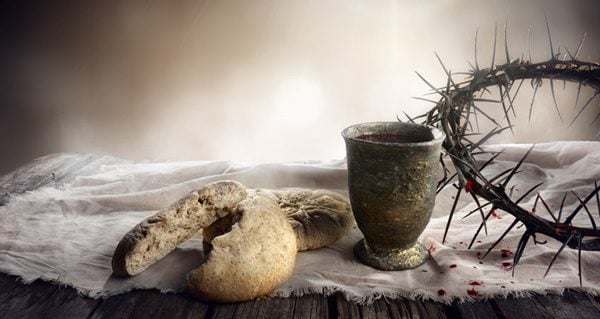
The following is a sermon I preached at Clackamas United Church of Christ, near Portland, Oregon. The texts were 1 Kings 3:3-14 and John 6: 51-58. You can read the sermon or watch the video below.
I’d like to start today by telling you a story from Bible Study last week.
After we read the New Testament passage where Jesus says that you must eat his flesh and drink his blood to have eternal life, there was an awkward pause.
And then Bernie said, “Well, Adam, I look forward to hearing what you have to say about this on Sunday.”
Then Jeff said, “Maybe you should save this passage for the following week when we have our barbecue.”
Indeed, these are pretty weird passages to our modern ears. In our Hebrew Bible readings, King David just died and his son Solomon is now the king. The story tells us that in his early days as king, Solomon did many of the good things that his father did, “only, he sacrificed and offered incense at the high places.” Solomon apparently offered a thousand burnt offerings on the altar at the high places up on mountains. When the story says Solomon did many good things, only he sacrificed at high places, it’s meant to be a criticism. Solomon shouldn’t have sacrificed at these high places.
And then we have the bizarre and frankly squeamish sacrificial saying from Jesus in the Gospel of John, “Very truly I tell you, unless you eat the flesh of the Son of Man and drink his blood, you have no life in you.”
Our New Atheists friends like Richard Dawkins and Sam Harris claim that these kinds of ancient religious fables are the problem with the modern world and religious people should just grow up and leave the religious worldview behind.
As you can imagine, I beg to differ. But in order to make sense of this religious and sacrificial language, we need to do a bit of history and a bit of anthropology.
Ancient Religion and the Social Function of Sacrifice
One of my favorite anthropologists is a man named René Girard. Girard looks at the historical and archeological evidence of the ancient past and claims that religion and sacrificial violence emerged virtually at the same time, so that violence and the sacred are intermixed.
He postulated that our ancient human ancestors had a major problem – violent conflict. Individuals fought with one another over resources that were either limited or, more likely, that they refused to share. This fight turned into a war of all against all that consumed the group. Many of the ancient groups were destroyed by the chaotic violence that ensued.
But Girard says that over time, something happened that allowed some ancient groups to survive. They still suffered from violent conflict that threatened their survival, but soon one person in the group pointed the finger of accusation against an individual. And other people began pointing their fingers against that same person. Soon, everyone was united in blaming an individual for the problems that threatened the community. The war of all against all turned into a war of all against one.
That person who was blamed became the scapegoat. All of the violence and hostility within the group was channeled against this one individual. Girard states that this individual was sacrificed or banished from the group. This created the distinction between “us and them,” or “we good guys” and “those bad guys.” The act of violence against the scapegoat brought a sense of peace to the group. Where there was once conflict, there was now cooperation. Where there was once the threat of all-consuming violence, this act of sacrifice brought a sense of miraculous peace.
One thing that might help in understanding this theory is how prevalent the basic act of ancient sacrifice remains today. It’s still true that the easiest way to manage conflict is to not actually deal with the conflict, but to unite against a common enemy. Instead of dealing with conflict, it seems that it’s much easier to find a sense of unity by blaming another for our problems.
That’s what the ancient human groups did, too. And when they experienced this miraculous sense of peace, they thought it was a gift from the gods. But these gods can give peace and they can take it away. Whenever the community experienced conflict again, they thought the gods were mad at them. How do you make peace with the gods? The same way you make peace with one another – by uniting against and sacrificing a common enemy.
The angry gods demanded more and more from the people – which often came in the form of child sacrifice. In fact, many cultures, including those in the surrounding Jewish world, practiced child sacrifice. How many of you are first born sons? Those of us with our hands up would be in trouble.
What’s important to know is that in the ancient world, religion wasn’t simply about myth and superstitions. The sacrificial rite had a real social function. It brought a sense of peace and cooperation, but did so through acts of violence against a scapegoat. And our New Atheist friends are right to criticize that religious violence. The problem is that the Jewish and Christian tradition has been criticizing sacrificial violence for nearly three thousand years.
The Bible’s Critique of Sacrifice
This history of religion and sacrifice is important to understand as we read the Bible, and especially our texts today. Our Hebrew Bible passage tells us that Solomon did many good things, but he went to the high places to perform sacrifices. Why is offering sacrifices at the high places a problem? Because that’s where many ancient Hebrews went to sacrifice to the gods, especially to a god named Baal. Baal’s favorite sacrifice was child sacrifice.
Solomon could have offered a human or even child sacrifice when he offered his thousands of sacrifices at the high places. And the Bible says that Solomon’s act of religious sacrifice was wrong.
In fact, the prophets also condemned religious sacrificial violence. The prophet Hosea, for example, said that God desires merciful love, not sacrifice. The true God doesn’t want us to divide the world into us, the good guys, and them, the bad guys that we can sacrifice. God wants us to treat all people with merciful love.
Our New Testament passage now begins to make sense. You see, from the beginning of human history, we have thought the gods were angry at us. So we thought we had to perform some kind of human sacrifice in order to appease the gods. We had to blame some person or group for our problems and sacrifice them in order to appease the gods and give us peace. The sacrifice was a violent offering that people gave to the gods, and it seemed as if the gods loved to taste the blood of the victims.
Jesus reversed this whole dynamic. Jesus provides us with an anti-religious and anti-sacrificial world-view. In Jesus we find that we don’t have to make peace with God, because God has already made peace with us. The true God doesn’t desire sacrificial violence or the death or exclusion of a scapegoat. We do not have to give an offering of sacrificial violence to God. In fact, Jesus reveals that God already gives everything of God’s self to us. That’s what Jesus means when he says, “This is my body and my blood, given for you.” We don’t have to sacrifice or give anything to God because God already gives us everything. In the bread and in the wine, God gives us the divine life. When we consume the bread and the wine, we take into our bodies the fully alive God of Jesus, the one who has nothing to do with sacrificial violence that leads to death. Rather, over time we become more and more like the true God who has every to do with merciful love that leads to eternal life.
Donald Trump, Fox News, and White Supremacy
This history matters because sacrificial violence is deeply rooted in our social DNA. Whether religious or atheist, liberal or conservative, we continue to scapegoat individuals and groups in the name of either God or peace or security. When politicians blame brown immigrants for the economic problems of our day, when they label them as gang members, terrorists, and rapists, we know that they are under the spell of sacrificial violence. When conservative commentators on Fox News show images of migrant farm workers while warning us about the dangerous “changing demographics” of the United States, you know that they have a sacrificial worldview of white nationalism. This even though these brown immigrants have no political or economic power at all.
And many of these politicians and political commentators make these sacrificial claims in the name of Christianity. Well, I’m here to tell you that they are wrong. Their fear and hatred and sacrificial mentality have nothing to do with Jesus.
Here I want to remind us that while these politicians and political commentators are caught in the ancient trap of sacrificial violence, they are not the enemy. As St. Paul put it, the real enemy is not flesh and blood, but the powers and principalities of violence and sacrifice.
What We Can Do
So what can we do? I’m convinced now more than ever that the world needs progressive Christians to speak up and be bold. This November we Oregonians will vote on ballot measure 105. This measure seeks to repeal a 30-year law that protects people from racial profiling. The measure seeks to sacrifice our black and brown brothers and sisters to the god of white nationalism. This law, commonly known as the Oregon Sanctuary Law, has only become controversial during the last two years as the Trump administration seeks to scapegoat immigrants. Like Solomon went to the high places to sacrifice to Baal, Trump goes to his idolatrous high place to sacrifice to the god of white nationalism.
Now, I can’t tell you how to vote in November. But I can tell you that any measure that tries to solve real or perceived problems by blaming anyone, but especially by blaming vulnerable minority groups who have no political or economic power, is rooted in ancient and violent sacrificial logic that will lead our country further into the spirit of exclusion and death. Jesus came to save us from the sacrificial logic of violence and lead us into the divine way of mercy, love, and inclusion. When we follow Jesus in this way, when we consume his life as our own, we as individuals and as a community are given eternal life.
May we participate in that eternal life now and forever. Amen.
Image Copyright: solerf / 123RF Stock Photo
Previous Post

August 20, 2018
Clerical Abuse, Maria Montessori and the Call to Universal Motherhood
Next Post
August 22, 2018 Being Careful to Live Wisely: Faith and Climate Change
Browse Our Archives
Select a Category Atonement and Current Events Curriculum Faith and Families Interviews Jesus the Forgiving Victim Lent Montessori politics Reviews The Bible Explained Uncategorized Valentine's Day Wednesday Sermon Who is God?
Select a Month July 2020 November 2019 October 2019 September 2019 August 2019 July 2019 June 2019 May 2019 April 2019 March 2019 February 2019 January 2019 December 2018 November 2018 October 2018 September 2018 August 2018 July 2018 June 2018 May 2018 April 2018 March 2018 February 2018 January 2018 December 2017 November 2017 October 2017 September 2017 August 2017 July 2017 June 2017 May 2017 April 2017 March 2017 February 2017 January 2017 December 2016 November 2016 October 2016 September 2016 August 2016 June 2016 May 2016 April 2016 March 2016 February 2016 January 2016 December 2015 November 2015 October 2015 September 2015 August 2015 July 2015 June 2015 May 2015 April 2015 March 2015 February 2015 January 2015 December 2014 November 2014 October 2014 September 2014 August 2014 July 2014 June 2014 May 2014 April 2014 March 2014 January 2014 December 2013 September 2013 August 2013 July 2013
Follow Us!
TAKE THE
Religious Wisdom Quiz
Though your sins are like scarlet, they shall be as white as what?
Select your answer to see how you score.
Light Wool Snow A lamb
Related posts from Teaching Nonviolent Atonement

Forgiveness in the Time of COVID-19 by Julia...

Reflections on Indigenous Wisdom For Healing A Wounded...

How Forgiveness Can Transform Our Violence and Build...

Jesus Unmasked: God's Economy and How to Cheat...
TRENDING AT PATHEOS Progressive Christian

What Being a Modern-Day Apostle Means to Me
In my last column, I discussed the ins and outs of modern-day...

Did Ancient China Once Worship the God of...
Across human history, a common thread weaves through the origins of the...

Love Your Neighbor – Including Earth-Kin: Lev. 19,...
God’s command to love your neighbor means acting in an ethical and...

Lead a Church Study of “Jesus and Lao...
Guest writer Jack Thomas (The Irreverent Reverend) reflects on leading his church...

Pastoral Wisdom for Responding to Sermon Pushback
Getting sermon pushback on your social justice sermon? Learn practical, Proverbs-based strategies...

Principles for Understanding the Apostolic Ministry Today
Whenever people discover that my formal ministry title is "apostle," as in...
view all Progressive Christian blogs
Ad-Free & Subscriber Log-In Subscription Support
- About Us
- 2026 Calendar
- Videos
- Podcasts
- Library of World Religions
- Faith In Media Tracker
- Advertise With Us
- Write for Us
- Privacy Policy
- Terms of Service
- Do Not Sell My Data
- Contact Us
- Radiant Digital
- Manage Newsletter Subscriptions
- Unsubscribe From Notifications
- Sitemap
Copyright 2008-2026, Patheos. All rights reserved.
Subscription Support Ad-Free & Subscriber Log-In
Follow Patheos