
BuddhistCatholicContemplativeEvangelicalGeneral ChristianHinduJewishLatter-day SaintMuslimNew VisionsProgressive Christian
Beliefs
- Buddhist
- Catholic
- Contemplative
- Evangelical
- General Christian
- Hindu
- Jewish
- Latter-day Saint
- More Voices
- Muslim
- New Visions
- Pagan
- Progressive Christian
Topics
- Religion News
- Food and Religion
- Sports and Religion
- Religious Art
- Religious Music and Entertainment
- Religious Events
- History and Religion
- Style and Religion
- Politics and Religion
- Women in Religion
- Recreation Outdoors and Religion
- Business Finance and Religion
- Careers Workplace and Religion
- Education and Religion
- Family Parenting and Religion
- Health Fitness and Religion
- Home and Religion
- Relationships and Religion
- Technology and Religion
- Travel and Religion
Columnists
- Buddhist Columnists
- Business Finance and Religion Columnists
- Careers Workplace and Religion Columnists
- Catholic Columnists
- Contemplative Columnists
- Education and Religion Columnists
- Evangelists Columnists
- Family Parenting and Religion Columnists
- General Christian Columnists
- Health Fitness and Religion Columnists
- Hindu Columnists
- History and Religion Columnists
- Home and Religion Columnists
- Jewish Columnists
- More Voices Columnists
- Latter Day Columnists
- Muslim Columnists
- New Visions Columnists
- Nonreligious Columnists
- Pagan Columnists
- Politics and Religion Columnists
- Progressive Columnists
- Recreation Outdoors and Religion Columnists
- Relationships and Religion Columnists
- Religion News Columnists
- Religious Art Columnists
- Religious Events Columnists
- Religious Music and Entertainment Columnists
- Sports and Religion Columnists
- Style and Religion Columnists
- Technology and Religion Columnists
- Travel and Religion Columnists
- Women in Religion Columnists
Resource Library
- 2026 Calendar
- Library of World Religions
- The 100 Most Holy Places on Earth
- Patheos Answers
- Podcasts
- Videos
- Faith Leaders Database
- Anglican Episcopalian
- Bahai
- Baptist
- Buddhism
- Christianity
- Confucianism
- Eastern Orthodoxy
- Hinduism
- Holiness and Pentecostal
- ISKCON
- Islam
- Judaism
- Lutheran
- Methodist
- The Church of Jesus Christ of Latter-day Saints
- New Age
- Paganism
- Presbytarian and Reformed
- Protestantism
- Religion Behind the Scenes
- Roman Catholic
- Scientology
- Shia Islam
- Sikhism
- Sufism
- Sunni Islam
- Taoism
- Zen
- See all religions
Research Tools
 Ad-Free & Subscriber Log-In Subscription Support
Ad-Free & Subscriber Log-In Subscription Support
Follow Patheos 

- Trending:
- Forgiveness
- |
- Marriage
- |
- Consciousness
- |
- Death Penalty
- |
- Election
- |
- Halloween
 Teaching Nonviolent Atonement
- Home
- Progressive Christian
- Clerical Abuse, Maria Montessori and the Call to Universal Motherhood
Clerical Abuse, Maria Montessori and the Call to Universal Motherhood
Last updated on: August 20, 2018 at 3:16 pm by Suzanne Ross
Clerical Abuse, Maria Montessori and the Call to Universal Motherhood 2018-08-20T15:16:41-05:00 Suzanne Ross
Patheos Explore the world's faith through different perspectives on religion and spirituality! Patheos has the views of the prevalent religions and spiritualities of the world.
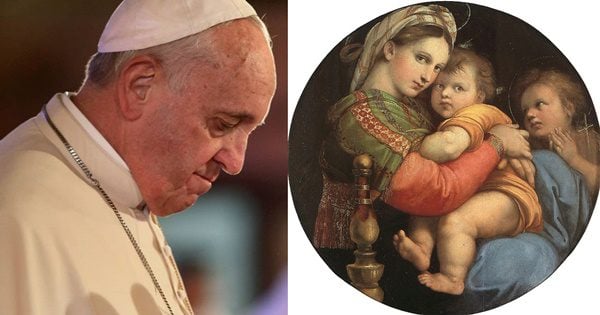
In the wake of the devasting report from the Pittsburg Grand Jury documenting the abuse of 1,000 children by 300 priests in Pennsylvania over seven decades, Pope Francis released a letter on August 20. In it he called the entire Church to repentance for the sins of the past and conversion from a “culture of death” which caused “heart-wrenching pain of these victims, which cries out to heaven”. The Holy Father wrote, “Looking ahead to the future, no effort must be spared to create a culture able to prevent such situations from happening.” Rightly, as he concludes the letter, Pope Francis turns our gaze toward Mary as the best guide for creating a culture of life. “She, the first of the disciples, teaches all of us as disciples how we are to halt before the sufferings of the innocent, without excuses or cowardice. To look to Mary is to discover the model of a true follower of Christ.”
Following Mary
I can think of no better role model for what it looks like in practice to be a disciple of Mary than that provided by the great Italian educator, Dr. Maria Montessori (1870—1952). Today she is known around the world as the author of a method of education for young children. But she insisted throughout her lifetime that she was not the author of a method of education, but rather that in 1907 she had discovered a way to “help children to live”. For her that meant liberating children from what she saw as abusive child-rearing practices dominated by now discredited ideas such as “children should be seen and not heard” and “spare the rod, spoil the child”. She called on all adults to stop silencing and punishing children for being children and instead to create home and learning environments that catered to the unique spiritual and psychological needs of childhood. As a pointed reminder that to succeed in this we must imitate Mary, Montessori wanted the image of Madonna and child by Rafael (known in Italian as Madonna della Seggiola, “Madonna in chair”) to adorn all Montessori classrooms.
Many of us raised in the Catholic faith have devoted some imaginative space to pondering what type of mother Mary was. I, for one, cannot imagine her silencing her Son. Scripture recalls that she was upset not that boy Jesus was teaching in the Temple, but that she did not know where he was. And it is even harder to imagine her inflicting physical harm on Jesus no matter his transgression. The boy who grew up to be a man who gave his life to demonstrate the centrality of mercy and love to his heavenly Father, must have been schooled in those virtues by his earthly parents as well.
Montessori would agree. In imitation of Mary, she called parents and teachers to practice what she called “universal motherhood”, a practice not limited by gender or even by the act of giving birth. Montessori believed that not only parents and teachers but also the unmarried and the celibate, whether male or female, gay or straight, clergy or lay, were all called to fulfill God’s command to care for the least and the last among us. Pope Francis issued his own pointed reminder in his letter when he called our attention to Matthew 18. There Jesus’ harshest reprimands are directed at the disciples who, in the throes of rivalry, risk putting a stumbling block in the way of children. “Take care,” Jesus warns, “that you do not despise one of these little ones” for it is “not the will of your Father in heaven that one of these little ones be lost.” To the Church’s shame as Francis put it, “We showed no care for the little ones; we abandoned them.”
Practicing Universal Motherhood
Such a failure on the part of the Church is all the more tragic given the Church’s embrace of Dr. Montessori’s reforms a century ago. In 1910, Pope Pius X, who promoted communion for children, encouraged Dr. Montessori to create materials to help the child understand the mystery of the Mass. By 1910 she had developed such a curriculum, known as the Atrium. And before his death in 1922, Pope Benedict XV was so impressed by his conversation and correspondence with Dr. Montessori that he had her books placed in the Vatican library.
Pope Francis has called the entire church to repent of the hunger for power and privilege that led so many to despise the little ones and sacrifice them to their fears. As we strive to answer that call, we would be well served by recovering the tremendous resource provided by Dr. Montessori. Her work allows us to see that the ongoing clerical abuse of children is the result of the failure of men to practice universal motherhood. Before God became flesh, a mother was chosen. Which is why the church has always understood that motherhood is a sacred calling, a divine responsibility if God is to have any chance of being present in the human experience.
A practical way for the Church to leave behind the culture of death that has so enthralled it would be to require Montessori to be taught in seminaries. In fact, all clergy, present and future, should be required to read Maria Montessori’s original writings, especially The Secret of Childhood and her gem, The Child in the Church. Clergy should be trained in the Catechesis of the Good Shepherd and become adept at “following the child”, the essential practice for all Montessori educators. Dr. Montessori believed to be a follower of Christ one must be free of shame at being a follower. That shame, manifested as a thirst for power and privilege, is the sin that causes us all to stumble. Children are unabashed followers, openly imitating adult models. To follow children is to learn from them how to be joyful followers, like the ninety-nine sheep who wait patiently in the sheepfold for the return of the Shepherd. When we wander off, the Good Shepherd will come to find us. Perhaps he searches for each lost child because he learned well from Mary how to be a very good mother.
Images: Pope Francis, Wikimedia, Public Domain. Raphael’s Madonna della Seggiola, Wikimedia, Public Domain.



Browse Our Archives
Select a Category Atonement and Current Events Curriculum Faith and Families Interviews Jesus the Forgiving Victim Lent Montessori politics Reviews The Bible Explained Uncategorized Valentine's Day Wednesday Sermon Who is God?
Select a Month July 2020 November 2019 October 2019 September 2019 August 2019 July 2019 June 2019 May 2019 April 2019 March 2019 February 2019 January 2019 December 2018 November 2018 October 2018 September 2018 August 2018 July 2018 June 2018 May 2018 April 2018 March 2018 February 2018 January 2018 December 2017 November 2017 October 2017 September 2017 August 2017 July 2017 June 2017 May 2017 April 2017 March 2017 February 2017 January 2017 December 2016 November 2016 October 2016 September 2016 August 2016 June 2016 May 2016 April 2016 March 2016 February 2016 January 2016 December 2015 November 2015 October 2015 September 2015 August 2015 July 2015 June 2015 May 2015 April 2015 March 2015 February 2015 January 2015 December 2014 November 2014 October 2014 September 2014 August 2014 July 2014 June 2014 May 2014 April 2014 March 2014 January 2014 December 2013 September 2013 August 2013 July 2013
Follow Us!
TAKE THE
Religious Wisdom Quiz
Who was the wife of Isaac?
Select your answer to see how you score.
Leah Rachel Rebekah Sarah
Related posts from Teaching Nonviolent Atonement

The Chosen One Chooses Love Over Fear [VIDEO]
"My Sheep Hear My Voice" - Mother's Day...
Should Religion and Politics Mix? - The RavenCast

The Truth Shall Set You Free: Giuliani, Trump,...
TRENDING AT PATHEOS Progressive Christian

What Being a Modern-Day Apostle Means to Me
In my last column, I discussed the ins and outs of modern-day...

Did Ancient China Once Worship the God of...
Across human history, a common thread weaves through the origins of the...

Love Your Neighbor – Including Earth-Kin: Lev. 19,...
God’s command to love your neighbor means acting in an ethical and...

Lead a Church Study of “Jesus and Lao...
Guest writer Jack Thomas (The Irreverent Reverend) reflects on leading his church...

Pastoral Wisdom for Responding to Sermon Pushback
Getting sermon pushback on your social justice sermon? Learn practical, Proverbs-based strategies...

Principles for Understanding the Apostolic Ministry Today
Whenever people discover that my formal ministry title is "apostle," as in...
view all Progressive Christian blogs
Ad-Free & Subscriber Log-In Subscription Support
- About Us
- 2026 Calendar
- Videos
- Podcasts
- Library of World Religions
- Faith In Media Tracker
- Advertise With Us
- Write for Us
- Privacy Policy
- Terms of Service
- Do Not Sell My Data
- Contact Us
- Radiant Digital
- Manage Newsletter Subscriptions
- Unsubscribe From Notifications
- Sitemap
Copyright 2008-2026, Patheos. All rights reserved.
Subscription Support Ad-Free & Subscriber Log-In
Follow Patheos