
BuddhistCatholicContemplativeEvangelicalGeneral ChristianHinduJewishLatter-day SaintMuslimNew VisionsProgressive Christian
Beliefs
- Buddhist
- Catholic
- Contemplative
- Evangelical
- General Christian
- Hindu
- Jewish
- Latter-day Saint
- More Voices
- Muslim
- New Visions
- Pagan
- Progressive Christian
Topics
- Religion News
- Food and Religion
- Sports and Religion
- Religious Art
- Religious Music and Entertainment
- Religious Events
- History and Religion
- Style and Religion
- Politics and Religion
- Women in Religion
- Recreation Outdoors and Religion
- Business Finance and Religion
- Careers Workplace and Religion
- Education and Religion
- Family Parenting and Religion
- Health Fitness and Religion
- Home and Religion
- Relationships and Religion
- Technology and Religion
- Travel and Religion
Columnists
- Buddhist Columnists
- Business Finance and Religion Columnists
- Careers Workplace and Religion Columnists
- Catholic Columnists
- Contemplative Columnists
- Education and Religion Columnists
- Evangelists Columnists
- Family Parenting and Religion Columnists
- General Christian Columnists
- Health Fitness and Religion Columnists
- Hindu Columnists
- History and Religion Columnists
- Home and Religion Columnists
- Jewish Columnists
- More Voices Columnists
- Latter Day Columnists
- Muslim Columnists
- New Visions Columnists
- Nonreligious Columnists
- Pagan Columnists
- Politics and Religion Columnists
- Progressive Columnists
- Recreation Outdoors and Religion Columnists
- Relationships and Religion Columnists
- Religion News Columnists
- Religious Art Columnists
- Religious Events Columnists
- Religious Music and Entertainment Columnists
- Sports and Religion Columnists
- Style and Religion Columnists
- Technology and Religion Columnists
- Travel and Religion Columnists
- Women in Religion Columnists
Resource Library
- 2026 Calendar
- Library of World Religions
- The 100 Most Holy Places on Earth
- Patheos Answers
- Podcasts
- Videos
- Faith Leaders Database
- Anglican Episcopalian
- Bahai
- Baptist
- Buddhism
- Christianity
- Confucianism
- Eastern Orthodoxy
- Hinduism
- Holiness and Pentecostal
- ISKCON
- Islam
- Judaism
- Lutheran
- Methodist
- The Church of Jesus Christ of Latter-day Saints
- New Age
- Paganism
- Presbytarian and Reformed
- Protestantism
- Religion Behind the Scenes
- Roman Catholic
- Scientology
- Shia Islam
- Sikhism
- Sufism
- Sunni Islam
- Taoism
- Zen
- See all religions
Research Tools
 Ad-Free & Subscriber Log-In Subscription Support
Ad-Free & Subscriber Log-In Subscription Support
Follow Patheos 

- Trending:
- Forgiveness
- |
- Marriage
- |
- Consciousness
- |
- Death Penalty
- |
- Election
- |
- Halloween
 Teaching Nonviolent Atonement
- Home
- Progressive Christian
- From Fear to Hope: Those Red MAGA Hats, Jon Meacham, and the Soul of America
From Fear to Hope: Those Red MAGA Hats, Jon Meacham, and the Soul of America
Last updated on: July 16, 2018 at 2:55 pm by Adam Ericksen
From Fear to Hope: Those Red MAGA Hats, Jon Meacham, and the Soul of America 2018-07-16T14:55:18-05:00 Adam Ericksen
Patheos Explore the world's faith through different perspectives on religion and spirituality! Patheos has the views of the prevalent religions and spiritualities of the world.
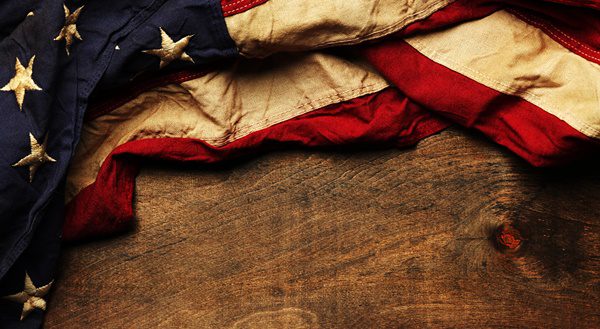
“The opposite of fear is hope,” writes Jon Meacham in his latest book, The Soul of America: The Battle for Our Better Angels. He explains that, “Fear feeds anxiety and produces anger; hope, particularly in the political sense, breeds optimism and feelings of well-being … Fear points at others, assigning blame; hope points ahead, working for a common good. Fear pushes away; hope pulls others closer. Fear divides; hope unifies.”
Last week I traveled with my family to Washington, D.C. I took Meacham’s book with me, which proved to be an indispensable guide to the soul of that great city and to my own soul.
No matter where you stand on the political spectrum, odds are that you feel some fear and anxiety about the current state of American politics. We are a nation that seems to become more polarized by the day. I experienced this polarization on our family trip as I walked through the White House and the Capitol. I’m not necessarily proud of this, but I admit that whenever I saw one of those red “Make America Great Again” hats, I wanted to puke.
Which is a sign that I’m caught up in the polarization that is damaging our country.
Meacham’s book provided a boost of hope as my family and I explored those two great buildings, along with the Lincoln Memorial, the African American Museum, and the Martin Luther King memorial. Indeed, fear has polarized us in the past, but we have survived. Or as Meacham puts it, “History … shows us that we are frequently vulnerable to fear, bitterness, and strife. The good news is that we have come through such darkness before.”
My greatest anxiety is that the United States is currently being run by the politics of fear, not the politics of hope. We live in an age of scapegoating where we divide the people of the world into good and evil. This Manichaean worldview is based of fear – fear of Muslims, Jews, immigrants, Latinos, journalists, politicians, the poor, the rich, Democrat, Republican – you name the group and someone has likely made them into an enemy of the people.
Meacham doesn’t provide a hagiography of American history. He brings to light the long history of the politics of fear that continue to infect the U.S. He provides detailed accounts of racists like Strom Thurmond, fear mongers like Joseph McCarthy, and drivers of populist resentment like Huey Long.
He tells the truth about those men and their movements, but he doesn’t allow us to scapegoat the individuals. For the politics of fear is bigger than any one individual, including any one president. Meacham quotes the great CBS journalist Edward R. Murrow, who spoke about the dangers of McCarthyism. Murrow’s words resonated as I sat reading them in my D.C. hotel room,
The actions of the junior Senator from Wisconsin (Joseph McCarthy) have caused alarm and dismay amongst our allies abroad, and given considerable comfort to our enemies. And whose fault is that? Not really his. He didn’t create this situation of fear; he merely exploited it—and rather successfully. Cassius was right. “The fault, dear Brutus, is not in our stars, but in ourselves.”
But the hope lies in ourselves, too. I found hope in the words of Harry Truman that Meacham quotes. While we must resist the temptation to mimic the politics of fear, thus scapegoating our opponents for being scapegoaters, we must also tell the truth about divisive action and rhetoric. Truman did just that when he ran against the segregationist Strom Thurmond in the 1948 presidential election.
You can’t divide the country up into sections and have one rule for one section and one rule for another, and you can’t encourage people’s prejudices. You have to appeal to the people’s best instincts, not their worst ones. You may win an election or so by doing the other, but it does a lot of harm to the country.
While hope lies in ourselves, a more honest reading of Meacham’s book recognizes that hope is bigger than ourselves. He quotes Martin Luther King, Jr’s Lenten sermon at the National Cathedral. As with all of King’s sermons, he pointed beyond the polarization of fear and hatred of his time. He inspired hope with these words about human interconnectedness,
We are tied together in the single garment of destiny, caught in an inescapable network of mutuality. And whatever affects one directly affects all indirectly. For some strange reason I can never be what I ought to be until you are what you ought to be. And you can never be what you ought to be until I am what I ought to be. This is the way God’s universe is made; this is the way it is structured.
King and the other great leaders of American history knew that the American motto, e pluribus unum, out of many one, means that we are interconnected. We are all in this together. But one of our greatest struggles has always been between hope that unites and fear that divides. Good leadership, Meacham writes, “is the art of the possible, and possibility is determined by whether generosity can triumph over selfishness in the American soul.”
That is the question I wrestled with inside of my own soul as I walked through the White House and the Capitol, side by side with people wearing red “Make America Great” hats. My instant reaction was to fear those wearing the hat. Then I move to anger because, damn it, it’s easy to criticize America, but this nation has been great and our greatest leaders have inspired us to be even greater – to progressively form an even more perfect union.
But my fear led to anger, which led to scapegoating and polarization. And then I simply became part of the problem.
The truth that Meacham claims is that we don’t need any more fear and scapegoating when dealing with the issues before us. We need to resist tribalism and the pull toward polarization. As with those of our past, we need to be bold as we come face to face with the crises of the moment. We need to realize that no matter what hat we wear, we are all bound up in a single garment of destiny. And above all, we need to move from fear to hope.
Copyright: ssilver / 123RF Stock Photo
Stay in the loop! Like Teaching Nonviolent Atonement on Facebook!
Previous Post

July 13, 2018
Reuniting Families Is Not Enough. Now, Let's Let Them Stay.
Next Post
July 19, 2018 Embrace the Fake: When Fake News is Good for the Soul
Browse Our Archives
Select a Category Atonement and Current Events Curriculum Faith and Families Interviews Jesus the Forgiving Victim Lent Montessori politics Reviews The Bible Explained Uncategorized Valentine's Day Wednesday Sermon Who is God?
Select a Month July 2020 November 2019 October 2019 September 2019 August 2019 July 2019 June 2019 May 2019 April 2019 March 2019 February 2019 January 2019 December 2018 November 2018 October 2018 September 2018 August 2018 July 2018 June 2018 May 2018 April 2018 March 2018 February 2018 January 2018 December 2017 November 2017 October 2017 September 2017 August 2017 July 2017 June 2017 May 2017 April 2017 March 2017 February 2017 January 2017 December 2016 November 2016 October 2016 September 2016 August 2016 June 2016 May 2016 April 2016 March 2016 February 2016 January 2016 December 2015 November 2015 October 2015 September 2015 August 2015 July 2015 June 2015 May 2015 April 2015 March 2015 February 2015 January 2015 December 2014 November 2014 October 2014 September 2014 August 2014 July 2014 June 2014 May 2014 April 2014 March 2014 January 2014 December 2013 September 2013 August 2013 July 2013
Follow Us!
TAKE THE
Religious Wisdom Quiz
Who was the wife of Isaac?
Select your answer to see how you score.
Leah Rachel Rebekah Sarah
Related posts from Teaching Nonviolent Atonement

How Forgiveness Can Transform Our Violence and Build...

The Chosen One Chooses Love Over Fear [VIDEO]

Jesus Unmasked: Jesus Brings the Fire!
Jesus, Mary, and the Jackals – Everyone Belongs...
TRENDING AT PATHEOS Progressive Christian

What Being a Modern-Day Apostle Means to Me
In my last column, I discussed the ins and outs of modern-day...

Did Ancient China Once Worship the God of...
Across human history, a common thread weaves through the origins of the...

Love Your Neighbor – Including Earth-Kin: Lev. 19,...
God’s command to love your neighbor means acting in an ethical and...

Lead a Church Study of “Jesus and Lao...
Guest writer Jack Thomas (The Irreverent Reverend) reflects on leading his church...

Pastoral Wisdom for Responding to Sermon Pushback
Getting sermon pushback on your social justice sermon? Learn practical, Proverbs-based strategies...

Principles for Understanding the Apostolic Ministry Today
Whenever people discover that my formal ministry title is "apostle," as in...
view all Progressive Christian blogs
Ad-Free & Subscriber Log-In Subscription Support
- About Us
- 2026 Calendar
- Videos
- Podcasts
- Library of World Religions
- Faith In Media Tracker
- Advertise With Us
- Write for Us
- Privacy Policy
- Terms of Service
- Do Not Sell My Data
- Contact Us
- Radiant Digital
- Manage Newsletter Subscriptions
- Unsubscribe From Notifications
- Sitemap
Copyright 2008-2026, Patheos. All rights reserved.
Subscription Support Ad-Free & Subscriber Log-In
Follow Patheos