
BuddhistCatholicContemplativeEvangelicalGeneral ChristianHinduJewishLatter-day SaintMuslimNew VisionsProgressive Christian
Beliefs
- Buddhist
- Catholic
- Contemplative
- Evangelical
- General Christian
- Hindu
- Jewish
- Latter-day Saint
- More Voices
- Muslim
- New Visions
- Pagan
- Progressive Christian
Topics
- Religion News
- Food and Religion
- Sports and Religion
- Religious Art
- Religious Music and Entertainment
- Religious Events
- History and Religion
- Style and Religion
- Politics and Religion
- Women in Religion
- Recreation Outdoors and Religion
- Business Finance and Religion
- Careers Workplace and Religion
- Education and Religion
- Family Parenting and Religion
- Health Fitness and Religion
- Home and Religion
- Relationships and Religion
- Technology and Religion
- Travel and Religion
Columnists
- Buddhist Columnists
- Business Finance and Religion Columnists
- Careers Workplace and Religion Columnists
- Catholic Columnists
- Contemplative Columnists
- Education and Religion Columnists
- Evangelists Columnists
- Family Parenting and Religion Columnists
- General Christian Columnists
- Health Fitness and Religion Columnists
- Hindu Columnists
- History and Religion Columnists
- Home and Religion Columnists
- Jewish Columnists
- More Voices Columnists
- Latter Day Columnists
- Muslim Columnists
- New Visions Columnists
- Nonreligious Columnists
- Pagan Columnists
- Politics and Religion Columnists
- Progressive Columnists
- Recreation Outdoors and Religion Columnists
- Relationships and Religion Columnists
- Religion News Columnists
- Religious Art Columnists
- Religious Events Columnists
- Religious Music and Entertainment Columnists
- Sports and Religion Columnists
- Style and Religion Columnists
- Technology and Religion Columnists
- Travel and Religion Columnists
- Women in Religion Columnists
Resource Library
- 2026 Calendar
- Library of World Religions
- The 100 Most Holy Places on Earth
- Patheos Answers
- Podcasts
- Videos
- Faith Leaders Database
- Anglican Episcopalian
- Bahai
- Baptist
- Buddhism
- Christianity
- Confucianism
- Eastern Orthodoxy
- Hinduism
- Holiness and Pentecostal
- ISKCON
- Islam
- Judaism
- Lutheran
- Methodist
- The Church of Jesus Christ of Latter-day Saints
- New Age
- Paganism
- Presbytarian and Reformed
- Protestantism
- Religion Behind the Scenes
- Roman Catholic
- Scientology
- Shia Islam
- Sikhism
- Sufism
- Sunni Islam
- Taoism
- Zen
- See all religions
Research Tools
 Ad-Free & Subscriber Log-In Subscription Support
Ad-Free & Subscriber Log-In Subscription Support
Follow Patheos 

- Trending:
- Forgiveness
- |
- Marriage
- |
- Consciousness
- |
- Death Penalty
- |
- Election
- |
- Halloween
 Teaching Nonviolent Atonement
- Home
- Progressive Christian
- To Be Able to Love from Above
To Be Able to Love from Above
Last updated on: June 1, 2018 at 10:50 am by Tom Truby
To Be Able to Love from Above 2018-06-01T10:50:40-05:00 Tom Truby
Patheos Explore the world's faith through different perspectives on religion and spirituality! Patheos has the views of the prevalent religions and spiritualities of the world.
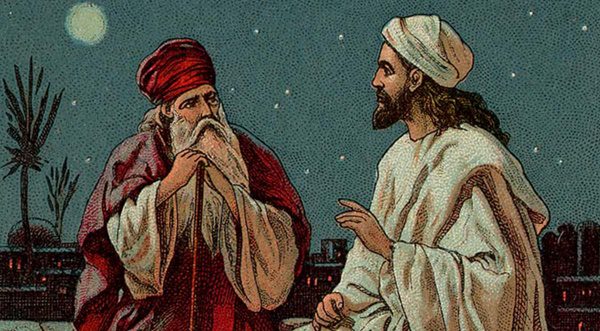
The reference to being born of water is not a coded reference to baptism. It is about accepting our humanness; a humanness that includes constant rivalry and the violence that goes with that.
-Rev. Tom Truby
Pastors have a frequent question when they begin to discover mimetic theory. “That’s great. But how does it preach?”
Reverend Tom Truby shows that mimetic theory is a powerful tool that enables pastors to preach the Gospel in a way that is meaningful and refreshing to the modern world. Each week, Teaching Nonviolent Atonement will highlight his sermons as examples of preaching the Gospel through mimetic theory.
Year B, Trinity Sunday
May 27th, 2018
Thomas L. Truby
John 3:1-17
To Be Able to Love from Above
Nicodemus longs for something that has eluded him his entire life, a sense of wholeness, completion and all being well. Even though his peers are skeptical, Nicodemus thinks there is something special happening with Jesus that may help him. He wants to know more but aware of the rivalry and envy that swirls within his group, he comes at night. No use giving his enemies fodder to fuel their campaign to push him aside.
Being a Pharisee, Nicodemus earnestly wants to bring true religion and faithful piety back to the people. The Pharisees strongly believe the religious establishment in Jerusalem is corrupt, illegitimate and the reason God is not blessing them. In our modern idiom, they are the leaders of the populists.
Nicodemus very respectfully approaches Jesus. Already he exhibits a rare wisdom. “Rabbi, we know that you are a teacher who has come from God; for no one can do these signs that you do apart from the presence of God.”
Jesus knows that Nicodemus is open and teachable because he called him “Rabbi.” Pushing aside conversational preliminaries, Jesus addresses the heart of Nicodemus’ dilemma. “‘Very truly, I tell you, no one can see the kingdom of God without being born from above.”
Nicodemus has organized his life around being good and keeping all the rules so as to feel safe and connected to God but it hasn’t worked. Now Jesus says if he wants that he must be born from above. What did he mean? How do you do that? “How can anyone be born after having grown old?” Jesus seems to be saying you can have a new life but it must come from beyond yourself.
Jesus then says, “No one can enter the kingdom of God without being born of water, (step number one) and Spirit (step number two).” To be born of water means to accept yourself as flesh and blood, born into human community the way all humans are and to know that you are no different than other humans. We are all born of water. Accept that and give up the quest to be extraordinary, better than your neighbor, and exceptional so as to prove your worth and quell your emptiness.
Remember, the Pharisees believed that when every Jew lived the Godly life like they did, then the kingdom would come. They didn’t accept that they were as subject to rivalry and violence as everyone else. They thought the coming of God’s kingdom depended on everyone being as pure as they thought they were.
The reference to being born of water is not a coded reference to baptism. It is about accepting our humanness; a humanness that includes constant rivalry and the violence that goes with that. If Nicodemus wants to enter the Kingdom of God, that place where there is no rivalry, he must give up his quest to be better than his neighbor. Accepting that he is a sinner (in rivalry) like everyone else is step number one and must happen before step number two is possible.
Jesus says, “What is born of flesh is flesh and what is born of spirit is spirit.” There is a separation and you can’t move from the flesh to the Spirit on your own. Paul Neuchterlein says the term “flesh” is simply rivalrous mimetic desire. It’s that restlessness for more that says “I want it because they want it. It must be valuable because they want it. When I have it too, I will be complete and my restlessness will go away.”
We must model ourselves after someone not caught in rivalry to escape it and that can only come from above, since all humans born of water are caught in rivalry—that might even be the deeper meaning of original sin.
Nicodemus must have been astonished. He had spent his life anxiously trying to rise above his own humanness and now Jesus tells him to accept himself as human so that he can be born from above.
This “being born from above” happens as we accept ourselves as God’s beloved recipients of his forgiving grace. God knows we are mimetic. It’s part of our humanity, a component of being born of water. But when we accept that and cease to fight it, trusting ourselves to God’s grace we find ourselves changing. The changing-power appears invisible like the wind but we see the undeniable result. “So it is with everyone who is born of the Spirit.”
I think we can even understand how this works. We each are formed by imitating others—other persons, other ideas, other cultural value—but we forget who we imitate and think it’s all coming from within us; that we are self-made.
When I was a child I would share an idea. My dad made no comment. Three weeks later he would announce the exact same idea only it was coming from him. He had forgotten it had come from me. I suspect I have done the same thing.
As we fall under the influence of Jesus’ Spirit from above, some of those old connections and attachments to specific but forgotten others, begin to unravel. Our imitation that binds us to their thoughts, feelings and actions loosen, and we find ourselves less caught than we had been. Consequently, we find ourselves thinking things we had never thought before, feeling things we have never felt before and doing things that before we could not have dreamed of. Since we have forgotten where the debilitating cords that bind us came from, this unraveling happens in secret. It’s like the wind we can’t see but we see the changes the wind produces.
Can you see how this is not some mystical thing happening magically but a fully explainable, psychological and social phenomena? If we begin with an accurate anthropology, an insightful understanding and acceptance of our humanity and a new understanding of the way God acts to rescue us in the world, we have the basis for a new psychology, sociology and theology. It’s all there and has been there all along.
Nicodemus, deeply attuned to his culture’s unfulfilled longings, exclaims, “How can these things be?” How can this all be true and we have not seen it before? “Jesus answered; ‘Are you a teacher of Israel, and yet you do not understand these things?” These are basic truths. This is how we humans are put together. These are things you need to know if you are to lead.
Why are we so resistant to seeing the truth? Jesus speaks to this when he says, “Very truly, I tell you, we speak of what we know and testify to what we have seen; yet you do not receive our testimony.” The non-rivalrous Trinity of Jesus, God, and the Holy Spirit looks at the world and sees what we have done to each other in our rivalry. They, the Trinity, know about the lynching in the south and throughout our country, about ethnic cleansing of indigenous people and about the deplorable ways we have treated women. They testify to what they have seen, the very thing we prefer to keep hidden, and so we don’t believe them.
Remember the Holy Spirit, third party to the Trinity, is the defense attorney come from God who advocates for all those the world casts out. The Advocate knows what is going on beneath the surface and works to reveal the truth we want to hide. It will take the Son of Man lifted up on a cross to expose the truth and keep it from being hidden again. Our believing in him opens our eyes to what is going on in the world and our forgiveness by God’s grace enables us to be born from above. If we can’t accept that we build our unity through exclusion like all human’s born of water, we will not be able to be born from above for we won’t see the need.
When God sent Jesus to this earth, he wanted the whole world to see what we don’t like seeing about ourselves. It’s only when we see what we don’t want to see that we experience the full power of his forgiveness. Believing what Jesus revealed about humanity and God’s provision for it through the cross and resurrection points toward God’s infinite and astounding compassion. It’s a compassion that converts our hearts and moves us toward being able to love from above. Amen.
Image: Jesus and Nicodemus via Wikimedia. Public Domain. Some changes made.
Stay in the loop! Like Teaching Nonviolent Atonement on Facebook!


Next Post

June 1, 2018 America, Let's Take An Honest Look At Ourselves
Browse Our Archives
Select a Category Atonement and Current Events Curriculum Faith and Families Interviews Jesus the Forgiving Victim Lent Montessori politics Reviews The Bible Explained Uncategorized Valentine's Day Wednesday Sermon Who is God?
Select a Month July 2020 November 2019 October 2019 September 2019 August 2019 July 2019 June 2019 May 2019 April 2019 March 2019 February 2019 January 2019 December 2018 November 2018 October 2018 September 2018 August 2018 July 2018 June 2018 May 2018 April 2018 March 2018 February 2018 January 2018 December 2017 November 2017 October 2017 September 2017 August 2017 July 2017 June 2017 May 2017 April 2017 March 2017 February 2017 January 2017 December 2016 November 2016 October 2016 September 2016 August 2016 June 2016 May 2016 April 2016 March 2016 February 2016 January 2016 December 2015 November 2015 October 2015 September 2015 August 2015 July 2015 June 2015 May 2015 April 2015 March 2015 February 2015 January 2015 December 2014 November 2014 October 2014 September 2014 August 2014 July 2014 June 2014 May 2014 April 2014 March 2014 January 2014 December 2013 September 2013 August 2013 July 2013
Follow Us!
TAKE THE
Religious Wisdom Quiz
What sign does Paul give in 2 Thessalonians as his authentic mark in every letter?
Select your answer to see how you score.
His seal His signature A special blessing His greeting in his own handwriting
Related posts from Teaching Nonviolent Atonement

Forgiveness in the Time of COVID-19 by Julia...

Reflections on Indigenous Wisdom For Healing A Wounded...

How Forgiveness Can Transform Our Violence and Build...

Jesus Unmasked: God's Economy and How to Cheat...
TRENDING AT PATHEOS Progressive Christian

What Being a Modern-Day Apostle Means to Me
In my last column, I discussed the ins and outs of modern-day...

Did Ancient China Once Worship the God of...
Across human history, a common thread weaves through the origins of the...

Love Your Neighbor – Including Earth-Kin: Lev. 19,...
God’s command to love your neighbor means acting in an ethical and...

Lead a Church Study of “Jesus and Lao...
Guest writer Jack Thomas (The Irreverent Reverend) reflects on leading his church...

Pastoral Wisdom for Responding to Sermon Pushback
Getting sermon pushback on your social justice sermon? Learn practical, Proverbs-based strategies...

Principles for Understanding the Apostolic Ministry Today
Whenever people discover that my formal ministry title is "apostle," as in...
view all Progressive Christian blogs
Ad-Free & Subscriber Log-In Subscription Support
- About Us
- 2026 Calendar
- Videos
- Podcasts
- Library of World Religions
- Faith In Media Tracker
- Advertise With Us
- Write for Us
- Privacy Policy
- Terms of Service
- Do Not Sell My Data
- Contact Us
- Radiant Digital
- Manage Newsletter Subscriptions
- Unsubscribe From Notifications
- Sitemap
Copyright 2008-2026, Patheos. All rights reserved.
Subscription Support Ad-Free & Subscriber Log-In
Follow Patheos