
BuddhistCatholicContemplativeEvangelicalGeneral ChristianHinduJewishLatter-day SaintMuslimNew VisionsProgressive Christian
Beliefs
- Buddhist
- Catholic
- Contemplative
- Evangelical
- General Christian
- Hindu
- Jewish
- Latter-day Saint
- More Voices
- Muslim
- New Visions
- Pagan
- Progressive Christian
Topics
- Religion News
- Food and Religion
- Sports and Religion
- Religious Art
- Religious Music and Entertainment
- Religious Events
- History and Religion
- Style and Religion
- Politics and Religion
- Women in Religion
- Recreation Outdoors and Religion
- Business Finance and Religion
- Careers Workplace and Religion
- Education and Religion
- Family Parenting and Religion
- Health Fitness and Religion
- Home and Religion
- Relationships and Religion
- Technology and Religion
- Travel and Religion
Columnists
- Buddhist Columnists
- Business Finance and Religion Columnists
- Careers Workplace and Religion Columnists
- Catholic Columnists
- Contemplative Columnists
- Education and Religion Columnists
- Evangelists Columnists
- Family Parenting and Religion Columnists
- General Christian Columnists
- Health Fitness and Religion Columnists
- Hindu Columnists
- History and Religion Columnists
- Home and Religion Columnists
- Jewish Columnists
- More Voices Columnists
- Latter Day Columnists
- Muslim Columnists
- New Visions Columnists
- Nonreligious Columnists
- Pagan Columnists
- Politics and Religion Columnists
- Progressive Columnists
- Recreation Outdoors and Religion Columnists
- Relationships and Religion Columnists
- Religion News Columnists
- Religious Art Columnists
- Religious Events Columnists
- Religious Music and Entertainment Columnists
- Sports and Religion Columnists
- Style and Religion Columnists
- Technology and Religion Columnists
- Travel and Religion Columnists
- Women in Religion Columnists
Resource Library
- 2026 Calendar
- Library of World Religions
- The 100 Most Holy Places on Earth
- Patheos Answers
- Podcasts
- Videos
- Faith Leaders Database
- Anglican Episcopalian
- Bahai
- Baptist
- Buddhism
- Christianity
- Confucianism
- Eastern Orthodoxy
- Hinduism
- Holiness and Pentecostal
- ISKCON
- Islam
- Judaism
- Lutheran
- Methodist
- The Church of Jesus Christ of Latter-day Saints
- New Age
- Paganism
- Presbytarian and Reformed
- Protestantism
- Religion Behind the Scenes
- Roman Catholic
- Scientology
- Shia Islam
- Sikhism
- Sufism
- Sunni Islam
- Taoism
- Zen
- See all religions
Research Tools
 Ad-Free & Subscriber Log-In Subscription Support
Ad-Free & Subscriber Log-In Subscription Support
Follow Patheos 

- Trending:
- Forgiveness
- |
- Marriage
- |
- Consciousness
- |
- Death Penalty
- |
- Election
- |
- Halloween
 Teaching Nonviolent Atonement
- Home
- Progressive Christian
- The Politics of the Ascension
The Politics of the Ascension
Last updated on: May 10, 2018 at 5:22 pm by Adam Ericksen
The Politics of the Ascension 2018-05-10T17:22:59-05:00 Adam Ericksen
Patheos Explore the world's faith through different perspectives on religion and spirituality! Patheos has the views of the prevalent religions and spiritualities of the world.
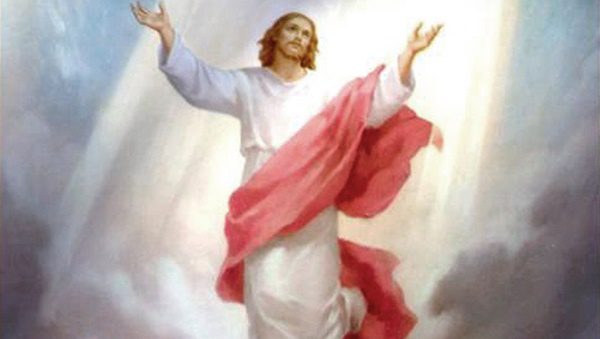
Today is Ascension Day!
Hooray! Let’s celebrate by exchanging gifts. Or let’s at least hide plastic eggs filled with candy. But don’t put in any of those Peeps. I believe God created and called all of creation good, except for Peeps. Those things are not good. At all. They are disgusting.
According to Scot McKnight, one of the most important Christian theologians ever thought the Ascension was crucially important. “St Augustine thought Ascension Day gave meaning to all other days in the church calendar…”
According to Augustine, the Ascension of Jesus gave meaning to Christmas and to Easter. Yet, our culture doesn’t celebrate the Ascension nearly as much as the birth and resurrection of Jesus.
Why is that? I’m not exactly sure, but I think it’s time we reclaim the Ascension.
Clearing Up the Ascension
Let me clear some things up about the Ascension. In the Acts of the Apostles, the resurrected Jesus hangs out with his disciples for 40 days. They ask him when he will restore the kingdom. He tells them that it’s not for them to know, but that he’s going to the Father. Then he ascends to heaven.
Okay. That’s weird. Part of the weirdness is that Jesus flies up to heaven. Look! It’s a a bird…it’s a plane…no, it’s Jesus!
Off he goes…Into the wild blue yonder…
Okay. I’m done.
This story is weird if we take it literally. If we think this is a literal story, then Jesus traveled up to outer space and if we just had a telescope that was strong enough, we could see Jesus’ feet dangling from heaven.
But we moderns know that’s silly. And you know what? Luke, who wrote acts, would have thought that idea was silly, too. For the early Christians, heaven was not somewhere way up in the sky. Heaven and earth intertwined. Jesus said that the Kingdom of Heaven in among you. So, Jesus wasn’t literally lifted up to another location up in the sky that we call heaven. It’s more like he was lifted up into another dimension. Another reality. One that we call heaven that isn’t somewhere way out there. Rather, it’s here, present among us.
The Politics of the Ascension
The Ascension has political implications. Ephesians claims that after the Ascension, Jesus was seated at the right hand of the Father “far above all rule and authority and power and dominion, and above every name that is named, not only in this age but in the age to come.”
Interestingly, in the first century Roman world, if you told a story about someone ascending to heaven and seated in a position of power, you would think of the Caesars. But the Ascension of Jesus makes a bold claim that Jesus is the true Lord who ascended unto heaven, not the Caesars.
The Ascension means that all political authority is relative to Jesus. Jesus is our lord. Caesar is not. Donald Trump is not. The Democratic Party is not. The Republican Party is not. But if Jesus is Lord, that means we follow the way of Jesus.
In Acts, when Jesus ascended the disciples stared into the heavens. Two men in robes came to them and asked, “Why are you standing here staring into heaven?”
The point of the Ascension is not to stare into heaven. The point of the Ascension is that Jesus is still Lord. I know “Lord” language has been abused and many people reject it. And for good reason. But I want to reclaim it. Jesus is not an abusive Lord. He’s Lord in the most un-Lord like way. He’s not a Lord like the Caesars who gained power through violence. Jesus is Lord in that he orients our lives toward relationships of love, forgiveness, and nonviolence.
Why Did Jesus Have to Leave?
The Gospel of John also talks about the Ascension. There, Jesus says he had to leave in order for the Holy Spirit to come. That’s weird. I mean, hasn’t the Holy Spirit been here the whole time? Wasn’t it the Holy Spirit who hovered over the waters at creation? And wasn’t it the Holy Spirit who spoke through the prophets? Wasn’t the Holy Spirit active in Jesus’ ministry? So why did Jesus need to leave in order for the Holy Spirit to come?
Commentators usually give a circular argument that makes no sense to me. Jesus had to leave so the Spirit could come, and the Spirit could only come if Jesus left.
What? I don’t get it.
But here in John, Jesus talks about the spirit in a new way. He uses the word “Paraclete.” I think Jesus had to leave so that we could understand this new dimension of the Holy Spirit. The word Paraclete means to stand alongside someone and cry out. In other words, the Holy Spirit is our Advocate. Like an attorney for the defense, the Holy Spirit stands with those who are being accused by the forces that stand against Jesus. The Ascension makes room for this new understanding of the Holy Spirit.
Jesus says that the Paraclete proves the world wrong about sin. You see, the “world” thinks it uses violence for a good purpose. Caiaphas justified killing Jesus because, “It is better for one man to die than for the nation to perish.” The Holy Spirit reveals that idea for the scapegoating lie that it is. It is not better that one man die than for the whole nation to perish. It is better for us to find better ways to manage our sin, or our violence, than to crucify and otherwise kill people.
Jesus had to leave in order to make room for the Holy Spirit to do her slow and steady work of convincing the world to follow in the ways of Jesus’s way of love and nonviolence.
Reclaiming the Ascension
So I believe we need to reclaim the Ascension. It means that Jesus is still Lord of our lives. And it means that the Holy Spirit guides us into all truth about our scapegoating practices. The Holy Spirit reveals our tendency to scapegoat, but she also leads us in a different direction as we imitate the nonviolent love of our true Lord, Jesus.
Image: Flickr.
Stay in the loop! Like Teaching Nonviolent Atonement on Facebook!
Previous Post

May 8, 2018
Seven Stories Book Review, Part 6: The Temple and Its Deconstruction
Next Post
May 11, 2018 Mimetic Reflections on the Death of a Loved One
Browse Our Archives
Select a Category Atonement and Current Events Curriculum Faith and Families Interviews Jesus the Forgiving Victim Lent Montessori politics Reviews The Bible Explained Uncategorized Valentine's Day Wednesday Sermon Who is God?
Select a Month July 2020 November 2019 October 2019 September 2019 August 2019 July 2019 June 2019 May 2019 April 2019 March 2019 February 2019 January 2019 December 2018 November 2018 October 2018 September 2018 August 2018 July 2018 June 2018 May 2018 April 2018 March 2018 February 2018 January 2018 December 2017 November 2017 October 2017 September 2017 August 2017 July 2017 June 2017 May 2017 April 2017 March 2017 February 2017 January 2017 December 2016 November 2016 October 2016 September 2016 August 2016 June 2016 May 2016 April 2016 March 2016 February 2016 January 2016 December 2015 November 2015 October 2015 September 2015 August 2015 July 2015 June 2015 May 2015 April 2015 March 2015 February 2015 January 2015 December 2014 November 2014 October 2014 September 2014 August 2014 July 2014 June 2014 May 2014 April 2014 March 2014 January 2014 December 2013 September 2013 August 2013 July 2013
Follow Us!
TAKE THE
Religious Wisdom Quiz
Who pleaded with Joseph for Benjamin's release?
Select your answer to see how you score.
Reuben Judah Naphtali Levi
Related posts from Teaching Nonviolent Atonement

Forgiveness in the Time of COVID-19 by Julia...

Reflections on Indigenous Wisdom For Healing A Wounded...

How Forgiveness Can Transform Our Violence and Build...

Jesus Unmasked: God's Economy and How to Cheat...
TRENDING AT PATHEOS Progressive Christian

What Being a Modern-Day Apostle Means to Me
In my last column, I discussed the ins and outs of modern-day...

Did Ancient China Once Worship the God of...
Across human history, a common thread weaves through the origins of the...

Love Your Neighbor – Including Earth-Kin: Lev. 19,...
God’s command to love your neighbor means acting in an ethical and...

Lead a Church Study of “Jesus and Lao...
Guest writer Jack Thomas (The Irreverent Reverend) reflects on leading his church...

Pastoral Wisdom for Responding to Sermon Pushback
Getting sermon pushback on your social justice sermon? Learn practical, Proverbs-based strategies...

Principles for Understanding the Apostolic Ministry Today
Whenever people discover that my formal ministry title is "apostle," as in...
view all Progressive Christian blogs
Ad-Free & Subscriber Log-In Subscription Support
- About Us
- 2026 Calendar
- Videos
- Podcasts
- Library of World Religions
- Faith In Media Tracker
- Advertise With Us
- Write for Us
- Privacy Policy
- Terms of Service
- Do Not Sell My Data
- Contact Us
- Radiant Digital
- Manage Newsletter Subscriptions
- Unsubscribe From Notifications
- Sitemap
Copyright 2008-2026, Patheos. All rights reserved.
Subscription Support Ad-Free & Subscriber Log-In
Follow Patheos