
BuddhistCatholicContemplativeEvangelicalGeneral ChristianHinduJewishLatter-day SaintMuslimNew VisionsProgressive Christian
Beliefs
- Buddhist
- Catholic
- Contemplative
- Evangelical
- General Christian
- Hindu
- Jewish
- Latter-day Saint
- More Voices
- Muslim
- New Visions
- Pagan
- Progressive Christian
Topics
- Religion News
- Food and Religion
- Sports and Religion
- Religious Art
- Religious Music and Entertainment
- Religious Events
- History and Religion
- Style and Religion
- Politics and Religion
- Women in Religion
- Recreation Outdoors and Religion
- Business Finance and Religion
- Careers Workplace and Religion
- Education and Religion
- Family Parenting and Religion
- Health Fitness and Religion
- Home and Religion
- Relationships and Religion
- Technology and Religion
- Travel and Religion
Columnists
- Buddhist Columnists
- Business Finance and Religion Columnists
- Careers Workplace and Religion Columnists
- Catholic Columnists
- Contemplative Columnists
- Education and Religion Columnists
- Evangelists Columnists
- Family Parenting and Religion Columnists
- General Christian Columnists
- Health Fitness and Religion Columnists
- Hindu Columnists
- History and Religion Columnists
- Home and Religion Columnists
- Jewish Columnists
- More Voices Columnists
- Latter Day Columnists
- Muslim Columnists
- New Visions Columnists
- Nonreligious Columnists
- Pagan Columnists
- Politics and Religion Columnists
- Progressive Columnists
- Recreation Outdoors and Religion Columnists
- Relationships and Religion Columnists
- Religion News Columnists
- Religious Art Columnists
- Religious Events Columnists
- Religious Music and Entertainment Columnists
- Sports and Religion Columnists
- Style and Religion Columnists
- Technology and Religion Columnists
- Travel and Religion Columnists
- Women in Religion Columnists
Resource Library
- 2026 Calendar
- Library of World Religions
- The 100 Most Holy Places on Earth
- Patheos Answers
- Podcasts
- Videos
- Faith Leaders Database
- Anglican Episcopalian
- Bahai
- Baptist
- Buddhism
- Christianity
- Confucianism
- Eastern Orthodoxy
- Hinduism
- Holiness and Pentecostal
- ISKCON
- Islam
- Judaism
- Lutheran
- Methodist
- The Church of Jesus Christ of Latter-day Saints
- New Age
- Paganism
- Presbytarian and Reformed
- Protestantism
- Religion Behind the Scenes
- Roman Catholic
- Scientology
- Shia Islam
- Sikhism
- Sufism
- Sunni Islam
- Taoism
- Zen
- See all religions
Research Tools
 Ad-Free & Subscriber Log-In Subscription Support
Ad-Free & Subscriber Log-In Subscription Support
Follow Patheos 

- Trending:
- Forgiveness
- |
- Marriage
- |
- Consciousness
- |
- Death Penalty
- |
- Election
- |
- Halloween
 Teaching Nonviolent Atonement
- Home
- Progressive Christian
- Seven Stories Book Review, Part 6: The Temple and Its Deconstruction
Seven Stories Book Review, Part 6: The Temple and Its Deconstruction
Last updated on: May 8, 2018 at 8:33 am by Adam Ericksen
Seven Stories Book Review, Part 6: The Temple and Its Deconstruction 2018-05-08T08:33:58-05:00 Adam Ericksen
Patheos Explore the world's faith through different perspectives on religion and spirituality! Patheos has the views of the prevalent religions and spiritualities of the world.
In this episode of the RavenCast, Lindsey Paris-Lopez and I discuss the sixth chapter of Anthony Bartlett’s latest book Seven Stories: How to Study and Teach the Nonviolent Bible. You can watch the video of the conversation below, or you can also subscribe and listen to the RavenCast on iTunes, Stitcher Radio, or Podbean.
Show Notes
Introduction
Last week we talked with our two special guests, Tony and Linda Bartlett. We talked with them about the process of writing Seven Stories and about chapter 5, Victim to Vindication. Click here to watch that video or listen to the podcast.
The Temple and Its Deconstruction
The Temple and national politics were always connected in ancient Israel and there are different views within the Bible when it comes to the Temple. In Second Samuel and First Kings, there’s a critique of the Temple and of national politics. The people demand a king. The prophet warns them that a king will force their sons into his wars and they will become just like every other nation. But the people insist, so the prophet relents.
There’s also a critique of the Temple in Second Samuel and First Kings. The ideal time for God’s relationship with Israel was when there was no Temple and God roamed freely with the people. David wasn’t allowed to build the Temple. His son Solomon built it.
First and Second Chronicles tells the story differently. It promotes the Temple and the Kingship from the beginning. David doesn’t build the Temple, but he drafts that plans for it while Solomon builds it.
What is the Function of the Temple?
René Girard helps us see that the function of temples throughout the world was to manage our mimetic rivalries. People are mimetic, that is, we learn what to desire from one another. When we desire the same object and are unwilling or unable to share it, there will be conflict. Sacrifice formed out of this problem as the conflicts were channeled against a scapegoat who was blamed for the conflicts that threatened the people.
On a strictly human level, temples throughout the world were constructed to manage these conflicts. Sacrifice was ritualized and temples were built to discharge conflicts onto a sacrificial victim – whether another person or an animal.
Prophetic Critique of Sacrifice
Many parts of the Psalms and the prophets, including Hosea, Jeremiah, Amos, and Isaiah, critique the practice of sacrifice.
Psalm 50 claims that God doesn’t want a blood sacrifice, but a sacrifice of thanksgiving and a sacrifice that follows through on our promises.
Hosea 6:6 claims that God wants mercy, not sacrifice.
Jeremiah 7 states that God never ordained sacrifice in the first place.
Isaiah 66 states that “Whoever slaughters an Ox is like one who kills a human being. Whoever sacrifices a lamb is like one who breaks a dog’s neck.”
Jesus’ Deconstruction of the Temple
Jesus went to the Temple, not to cleanse it, but to stop its sacrificial function. Jesus’ ministry was about repentance and divine forgiveness of sins. Those were the stated theological functions of the Temple, but Jesus rendered it obsolete by freely forgiving people without them needing to perform blood sacrifice.
Conclusion
Join us next Monday at 10 am Central on AnyMeeting as we discuss the final chapter in Seven Stories: History to Its End.
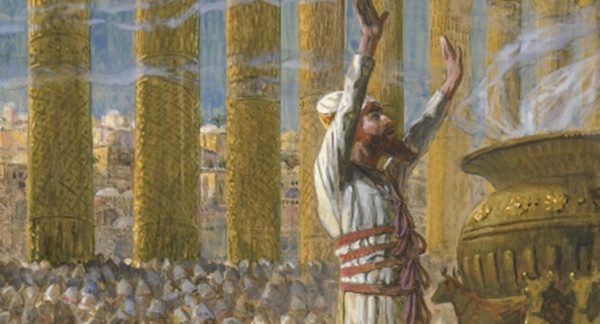
Image: Solomon Dedicates the Temple, Wikimedia.

Stay in the loop! Like Teaching Nonviolent Atonement on Facebook!
Previous Post

May 7, 2018
Christianity, Buddhism, and the Spirituality of Joy
Next Post
May 10, 2018 The Politics of the Ascension
Browse Our Archives
Select a Category Atonement and Current Events Curriculum Faith and Families Interviews Jesus the Forgiving Victim Lent Montessori politics Reviews The Bible Explained Uncategorized Valentine's Day Wednesday Sermon Who is God?
Select a Month July 2020 November 2019 October 2019 September 2019 August 2019 July 2019 June 2019 May 2019 April 2019 March 2019 February 2019 January 2019 December 2018 November 2018 October 2018 September 2018 August 2018 July 2018 June 2018 May 2018 April 2018 March 2018 February 2018 January 2018 December 2017 November 2017 October 2017 September 2017 August 2017 July 2017 June 2017 May 2017 April 2017 March 2017 February 2017 January 2017 December 2016 November 2016 October 2016 September 2016 August 2016 June 2016 May 2016 April 2016 March 2016 February 2016 January 2016 December 2015 November 2015 October 2015 September 2015 August 2015 July 2015 June 2015 May 2015 April 2015 March 2015 February 2015 January 2015 December 2014 November 2014 October 2014 September 2014 August 2014 July 2014 June 2014 May 2014 April 2014 March 2014 January 2014 December 2013 September 2013 August 2013 July 2013
Follow Us!
TAKE THE
Religious Wisdom Quiz
Who pleaded with Joseph for Benjamin's release?
Select your answer to see how you score.
Reuben Judah Naphtali Levi
Related posts from Teaching Nonviolent Atonement

Forgiveness in the Time of COVID-19 by Julia...

Reflections on Indigenous Wisdom For Healing A Wounded...

How Forgiveness Can Transform Our Violence and Build...

Jesus Unmasked: God's Economy and How to Cheat...
TRENDING AT PATHEOS Progressive Christian

What Being a Modern-Day Apostle Means to Me
In my last column, I discussed the ins and outs of modern-day...

Did Ancient China Once Worship the God of...
Across human history, a common thread weaves through the origins of the...

Love Your Neighbor – Including Earth-Kin: Lev. 19,...
God’s command to love your neighbor means acting in an ethical and...

Lead a Church Study of “Jesus and Lao...
Guest writer Jack Thomas (The Irreverent Reverend) reflects on leading his church...

Pastoral Wisdom for Responding to Sermon Pushback
Getting sermon pushback on your social justice sermon? Learn practical, Proverbs-based strategies...

Principles for Understanding the Apostolic Ministry Today
Whenever people discover that my formal ministry title is "apostle," as in...
view all Progressive Christian blogs
Ad-Free & Subscriber Log-In Subscription Support
- About Us
- 2026 Calendar
- Videos
- Podcasts
- Library of World Religions
- Faith In Media Tracker
- Advertise With Us
- Write for Us
- Privacy Policy
- Terms of Service
- Do Not Sell My Data
- Contact Us
- Radiant Digital
- Manage Newsletter Subscriptions
- Unsubscribe From Notifications
- Sitemap
Copyright 2008-2026, Patheos. All rights reserved.
Subscription Support Ad-Free & Subscriber Log-In
Follow Patheos