
BuddhistCatholicContemplativeEvangelicalGeneral ChristianHinduJewishLatter-day SaintMuslimNew VisionsProgressive Christian
Beliefs
- Buddhist
- Catholic
- Contemplative
- Evangelical
- General Christian
- Hindu
- Jewish
- Latter-day Saint
- More Voices
- Muslim
- New Visions
- Pagan
- Progressive Christian
Topics
- Religion News
- Food and Religion
- Sports and Religion
- Religious Art
- Religious Music and Entertainment
- Religious Events
- History and Religion
- Style and Religion
- Politics and Religion
- Women in Religion
- Recreation Outdoors and Religion
- Business Finance and Religion
- Careers Workplace and Religion
- Education and Religion
- Family Parenting and Religion
- Health Fitness and Religion
- Home and Religion
- Relationships and Religion
- Technology and Religion
- Travel and Religion
Columnists
- Buddhist Columnists
- Business Finance and Religion Columnists
- Careers Workplace and Religion Columnists
- Catholic Columnists
- Contemplative Columnists
- Education and Religion Columnists
- Evangelists Columnists
- Family Parenting and Religion Columnists
- General Christian Columnists
- Health Fitness and Religion Columnists
- Hindu Columnists
- History and Religion Columnists
- Home and Religion Columnists
- Jewish Columnists
- More Voices Columnists
- Latter Day Columnists
- Muslim Columnists
- New Visions Columnists
- Nonreligious Columnists
- Pagan Columnists
- Politics and Religion Columnists
- Progressive Columnists
- Recreation Outdoors and Religion Columnists
- Relationships and Religion Columnists
- Religion News Columnists
- Religious Art Columnists
- Religious Events Columnists
- Religious Music and Entertainment Columnists
- Sports and Religion Columnists
- Style and Religion Columnists
- Technology and Religion Columnists
- Travel and Religion Columnists
- Women in Religion Columnists
Resource Library
- 2026 Calendar
- Library of World Religions
- The 100 Most Holy Places on Earth
- Patheos Answers
- Podcasts
- Videos
- Faith Leaders Database
- Anglican Episcopalian
- Bahai
- Baptist
- Buddhism
- Christianity
- Confucianism
- Eastern Orthodoxy
- Hinduism
- Holiness and Pentecostal
- ISKCON
- Islam
- Judaism
- Lutheran
- Methodist
- The Church of Jesus Christ of Latter-day Saints
- New Age
- Paganism
- Presbytarian and Reformed
- Protestantism
- Religion Behind the Scenes
- Roman Catholic
- Scientology
- Shia Islam
- Sikhism
- Sufism
- Sunni Islam
- Taoism
- Zen
- See all religions
Research Tools
 Ad-Free & Subscriber Log-In Subscription Support
Ad-Free & Subscriber Log-In Subscription Support
Follow Patheos 

- Trending:
- Forgiveness
- |
- Marriage
- |
- Consciousness
- |
- Death Penalty
- |
- Election
- |
- Halloween
 Teaching Nonviolent Atonement
- Home
- Progressive Christian
- Islam, Nonviolence, and Mimetic Theory – The RavenCast
Islam, Nonviolence, and Mimetic Theory – The RavenCast
Last updated on: May 18, 2018 at 11:08 am by Adam Ericksen
Islam, Nonviolence, and Mimetic Theory – The RavenCast 2018-05-18T11:08:06-05:00 Adam Ericksen
Patheos Explore the world's faith through different perspectives on religion and spirituality! Patheos has the views of the prevalent religions and spiritualities of the world.
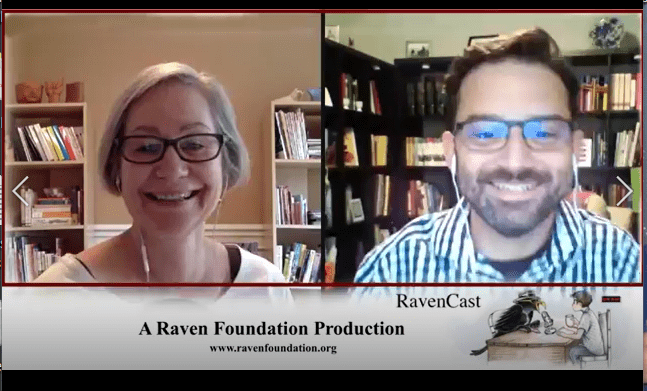 In this episode of the RavenCast, Suzanne Ross and I discuss Islamic holy month of Ramadan, Islam, and mimetic theory. You can watch the video of the conversation below, or you can subscribe to the RavenCast on iTunes, Stitcher Radio, or Podbean.
Show Notes:
What is Ramadan?
Ramadan is a holy month of the Islamic year. The Quran was delivered throughout the Prophet Muhammad’s ministry during the month of Ramadan. There is an Islamic tradition that claims all holy scriptures, including the Hebrew Bible and Christian Testament, were delivered during the month of Ramadan. This is part of what makes Ramadan the holiest month for Muslims.
During Ramandan, Muslims who are physically able fast from dusk to sunset. The fast is to help Muslims get closer to God and closer to those who are vulnerable from lack of food. This identification with the vulnerable is to lead Muslims to identify with and care for those on the margins of culture.
The Time of Muhammad
The time before Muhammad is known as the Jahiliyyah, or the Age of Ignorance. People were ignorant about God. During the Jahiliyyah, people believed in a high god, named Allah, that lived far away and didn’t care much about world affairs. There were intermediaries between the world and the high god. People could pray to these intermediaries, who would then send prayers to the high god. But the high god remained uncaring.
This theological system supported the status quo. One of the intermediaries was known as Time. Time set up the world the way it is. So, if you were poor or oppressed, Time set it up that way. If you were rich and successful, Time set it up that way. And there was nothing you could do about it.
Muhammad saw the oppression that this theological system caused. Soon, he received revelations from Allah. Part of the revelation was that Allah is not somewhere else far away and indifferent to world affairs. Rather, Allah is present in the world and cares deeply about the poor, weak, and oppressed.
Muhammad’s Mission
Muhammad’s mission was to transform a theological system that supported the status quo. He was born into the Quraysh tribe, which was the most powerful tribe in Arabia. When he confronted the leaders, they tried to kill him. But during his time in Mecca, Muhammad responded to the violence against him with nonviolence. Many Muslims, including Abdul Ghaffar Khan, Rabia Haris, and many others, claim that Islam calls Muslims to nonviolence.
Islam and Mimetic Theory: A Return to the Archaic?
In his book Battling to the End, René Girard stated that Islam might be a return to archaic religions. For Girard, an “archaic religion” is one that formed from ancient sacrifice. Mimetic theory states that ancient human groups suffered from internal conflicts, a war of all against all, that destroyed many ancient communities. The war of all against all eventually turned into a war of all against one. The community united in accusation against a single victim who was blamed for all the community’s problems and then sacrificed.
The sacrifice brought a temporary sense of peace. The victim, who was seen as the source of all their problems, was now seen as the source of peace. Girard postulates that the community divinized their victim, who was now a god. Because the victim is seen as the source of violence and the source of peace, the god is seen as the source of violence and the source of peace.
In contrast, revealed religions do have elements of the archaic sacred within their sacred texts, but what makes them a revelation is that they have the elements only to deconstruct them with the true God who is only love, mercy, and who only desires peace.
When it comes to Islam, those involved with mimetic theory shouldn’t be surprised if there are elements of the archaic sacred within Islam. The question is whether those elements are deconstructed by a revelation of the true God who only desires love, mercy, and peace.
Islam and Tawhid
Islam does deconstruct the archaic sacred through its fundamental theological concept, Tawhid. Tawhid refers to the “Oneness” of God. Islam scholar Michael Sells states that Tawhid means that God has internal consistency. God oneness means that there can be no conflicting wills within God, otherwise the Tawhid of God is broken.
God’s Tawhid is Mercy. 113 of the 114 chapters of the Qur’an begin with the phrase, “In the name of God, the most Merciful, the most Compassionate.” These are the reading instruction that the Qur’an gives to us in order to interpret the Qur’an. The Qur’an tells us to read it through the lens of mercy and compassion. That’s because God is Mercy and Compassion.
Conclusion
Far from being a return to archaic religions, Islam is a critique of archaic religions. The opposite of archaic religions are revealed religions. For Girard, Judaism and Christianity are revealed religions. Islam, especially because of the theological concept of Tawhid, is also a revealed religion. Theologically, it reveals that God’s oneness is based on mercy and compassion. Anthropologically, it calls us to a life of mercy and compassion for all people, and especially for those who are scapegoated by the dominant culture.
Stay in the loop! Like Teaching Nonviolent Atonement on Facebook!
Previous Post

May 16, 2018
The Day My Mother Introduced Me to Jesus
Next Post
May 21, 2018 A Terrible Theory About the Terrible Twos: Countering the Idea of Counterwill
Browse Our Archives
Select a Category Atonement and Current Events Curriculum Faith and Families Interviews Jesus the Forgiving Victim Lent Montessori politics Reviews The Bible Explained Uncategorized Valentine's Day Wednesday Sermon Who is God?
Select a Month July 2020 November 2019 October 2019 September 2019 August 2019 July 2019 June 2019 May 2019 April 2019 March 2019 February 2019 January 2019 December 2018 November 2018 October 2018 September 2018 August 2018 July 2018 June 2018 May 2018 April 2018 March 2018 February 2018 January 2018 December 2017 November 2017 October 2017 September 2017 August 2017 July 2017 June 2017 May 2017 April 2017 March 2017 February 2017 January 2017 December 2016 November 2016 October 2016 September 2016 August 2016 June 2016 May 2016 April 2016 March 2016 February 2016 January 2016 December 2015 November 2015 October 2015 September 2015 August 2015 July 2015 June 2015 May 2015 April 2015 March 2015 February 2015 January 2015 December 2014 November 2014 October 2014 September 2014 August 2014 July 2014 June 2014 May 2014 April 2014 March 2014 January 2014 December 2013 September 2013 August 2013 July 2013
Follow Us!
TAKE THE
Religious Wisdom Quiz
I refused to bow to a high official and sat at the king's gate, sparking a genocidal plot. Who am I?
Select your answer to see how you score.
Nehemiah Haman Daniel Mordecai
Related posts from Teaching Nonviolent Atonement


How Forgiveness Can Transform Our Violence and Build...

Jesus Unmasked: Jesus Brings the Fire!

St. Francis Preaches on Violence
TRENDING AT PATHEOS Progressive Christian

What Being a Modern-Day Apostle Means to Me
In my last column, I discussed the ins and outs of modern-day...

Did Ancient China Once Worship the God of...
Across human history, a common thread weaves through the origins of the...

Love Your Neighbor – Including Earth-Kin: Lev. 19,...
God’s command to love your neighbor means acting in an ethical and...

Lead a Church Study of “Jesus and Lao...
Guest writer Jack Thomas (The Irreverent Reverend) reflects on leading his church...

Pastoral Wisdom for Responding to Sermon Pushback
Getting sermon pushback on your social justice sermon? Learn practical, Proverbs-based strategies...

Principles for Understanding the Apostolic Ministry Today
Whenever people discover that my formal ministry title is "apostle," as in...
view all Progressive Christian blogs
Ad-Free & Subscriber Log-In Subscription Support
- About Us
- 2026 Calendar
- Videos
- Podcasts
- Library of World Religions
- Faith In Media Tracker
- Advertise With Us
- Write for Us
- Privacy Policy
- Terms of Service
- Do Not Sell My Data
- Contact Us
- Radiant Digital
- Manage Newsletter Subscriptions
- Unsubscribe From Notifications
- Sitemap
Copyright 2008-2026, Patheos. All rights reserved.
Subscription Support Ad-Free & Subscriber Log-In
Follow Patheos