
BuddhistCatholicContemplativeEvangelicalGeneral ChristianHinduJewishLatter-day SaintMuslimNew VisionsProgressive Christian
Beliefs
- Buddhist
- Catholic
- Contemplative
- Evangelical
- General Christian
- Hindu
- Jewish
- Latter-day Saint
- More Voices
- Muslim
- New Visions
- Pagan
- Progressive Christian
Topics
- Religion News
- Food and Religion
- Sports and Religion
- Religious Art
- Religious Music and Entertainment
- Religious Events
- History and Religion
- Style and Religion
- Politics and Religion
- Women in Religion
- Recreation Outdoors and Religion
- Business Finance and Religion
- Careers Workplace and Religion
- Education and Religion
- Family Parenting and Religion
- Health Fitness and Religion
- Home and Religion
- Relationships and Religion
- Technology and Religion
- Travel and Religion
Columnists
- Buddhist Columnists
- Business Finance and Religion Columnists
- Careers Workplace and Religion Columnists
- Catholic Columnists
- Contemplative Columnists
- Education and Religion Columnists
- Evangelists Columnists
- Family Parenting and Religion Columnists
- General Christian Columnists
- Health Fitness and Religion Columnists
- Hindu Columnists
- History and Religion Columnists
- Home and Religion Columnists
- Jewish Columnists
- More Voices Columnists
- Latter Day Columnists
- Muslim Columnists
- New Visions Columnists
- Nonreligious Columnists
- Pagan Columnists
- Politics and Religion Columnists
- Progressive Columnists
- Recreation Outdoors and Religion Columnists
- Relationships and Religion Columnists
- Religion News Columnists
- Religious Art Columnists
- Religious Events Columnists
- Religious Music and Entertainment Columnists
- Sports and Religion Columnists
- Style and Religion Columnists
- Technology and Religion Columnists
- Travel and Religion Columnists
- Women in Religion Columnists
Resource Library
- 2026 Calendar
- Library of World Religions
- The 100 Most Holy Places on Earth
- Patheos Answers
- Podcasts
- Videos
- Faith Leaders Database
- Anglican Episcopalian
- Bahai
- Baptist
- Buddhism
- Christianity
- Confucianism
- Eastern Orthodoxy
- Hinduism
- Holiness and Pentecostal
- ISKCON
- Islam
- Judaism
- Lutheran
- Methodist
- The Church of Jesus Christ of Latter-day Saints
- New Age
- Paganism
- Presbytarian and Reformed
- Protestantism
- Religion Behind the Scenes
- Roman Catholic
- Scientology
- Shia Islam
- Sikhism
- Sufism
- Sunni Islam
- Taoism
- Zen
- See all religions
Research Tools
 Ad-Free & Subscriber Log-In Subscription Support
Ad-Free & Subscriber Log-In Subscription Support
Follow Patheos 

- Trending:
- Forgiveness
- |
- Marriage
- |
- Consciousness
- |
- Death Penalty
- |
- Election
- |
- Halloween
 Teaching Nonviolent Atonement
- Home
- Progressive Christian
- Spiritual Pruning: Racism in the United States
Spiritual Pruning: Racism in the United States
Last updated on: April 30, 2018 at 1:02 pm by Adam Ericksen
Spiritual Pruning: Racism in the United States 2018-04-30T13:02:44-05:00 Adam Ericksen
Patheos Explore the world's faith through different perspectives on religion and spirituality! Patheos has the views of the prevalent religions and spiritualities of the world.
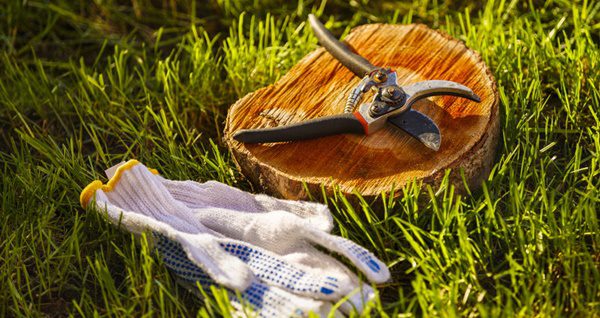
The following is a sermon I preached at Clackamas United Church of Christ, near Portland, Oregon. The text was John 15:1-8 and Acts 8:26-40. The video recording of the sermon is below, along with the text.
When I was training as a hospital chaplain a few years ago, my mentor taught me to explore the metaphor.
He said that we all frequently speak in metaphors that are rich and deep, but these metaphors usually go unexplored. So, he told me to explore the metaphors that patients bring up.
Well, I was excited to get my chance to explore the metaphor, so I quickly went to a patient who had requested a chaplain. After a little research on the patient’s history, I discovered that she was in her early 40s. Her story was complicated, but she was essentially abandoned by her family and was attempting to medicate the pain of her relationships with drugs.
After some small talk, I asked her what God was like for her. She replied, “I’ve always thought of God as a gardener. Isn’t there some place in the Bible where God is a gardener?”
I was in luck because I recently read Rob Bell’s book Love Wins. In that book, Bell talks about the Bible’s descriptions of God as a Gardener. In the resurrection, Mary thinks Jesus was the gardener of the cemetery where Jesus was buried. I think this is so interesting. Jesus was buried and left for dead in a cemetery that was also a garden bursting forth with new life. In the midst of death, there was new life exploding forth in the flowers of the garden that we call resurrection.
The book Love Wins was helpful for this particular conversation because it has a section that talks about a parable Jesus told of God as a Gardener who prunes “the branches of a plant so that it can flourish.”
Only the branches are metaphors. Jesus was talking about the plants in our hearts that need to be pruned so that we can flourish.
So when this patient asked about God the Gardener, I was excited to explore the metaphor! Yes, I told her. God is often described as a gardener in the Bible. We talked about how a gardener prunes withered branches and waters the plants of a garden so they can flourish.
And then I invited her to close her eyes and image Jesus the Gardener entering her soul to prune some branches that were in her way of spiritual growth. Then she imagined Jesus planting and watering new seeds of love and compassion.
I will never know the impact that discussion had on this patient, but exploring the metaphor had a big impact on me. One of my spiritual practices is to periodically check in with myself throughout the day. I’ll close my eyes and check to see if there are dried up branches within myself that God needs to come prune.
I don’t know about you, but those branches inside of me that need to be pruned are usually built up anger, resentment, and prejudices. This I think is what Jesus means in our Gospel passage this morning when he says that God prunes “every branch in me that bears no fruit.”
I love this image of God as the Gardener who comes and prunes our dried up and withered branches that don’t bear fruit. But there’s a bit of a rub. In my experience, this spiritual pruning doesn’t feel good.
It doesn’t feel good because pruning can be painful. It can leave a scar. For me to invite God into my life to do some spiritual pruning, I have to admit that there are some things inside of me that aren’t healthy. I have to admit that I’m not perfect. I have to admit that there are withered branches inside of me.
And here’s the thing I’ll admit to you: sometimes I like my withered branches. Jesus says that he’s the true vine and the branches gain life by abiding in him. But there are times I’d rather abide not with the love of Jesus, but with my anger, bitterness, and resentments.
I’d often rather abide in my anger, bitterness, and resentments because they give me a big dose of self-righteousness. As long as I can be angry and bitter and resentful towards someone else, I can label them as the bad person. And if they are a bad person, that means I am a good person.
But when I define my goodness in opposition to someone else, I might get a quick sense of righteousness, but my spiritual life becomes withered because I no longer abide in Christ and Christ no longer abides in me.
Defining our goodness in opposition to another is a problem in all human culture. For example, there were some laws in the Hebrew Bible that said certain people were not allowed to go into the Temple. In other words, they were cut off from full participation in worship. One law in Deuteronomy states this rather awkward for a Sunday morning sermon. Without much care for being delicate, it stated, “No one whose testicles are crushed or whose penis is cut off shall be admitted to the assembly of the Lord.”
I want to be very careful here, for multiple reasons. One reason is obvious for all of us of the male variety. But another reason I want to be careful is that I don’t want you to hear that the Hebrew Bible is bad because it has these kinds of laws that separate people and create an “us” and “them” mentality. The Hebrew Bible doesn’t have this “us” and “them” because it’s bad. It has it because the Bible was written by people who were trying to figure out what God was like. Sometimes the authors of the Bible think God desires this kind of separation.
But other authors of the Bible claim that God doesn’t desire this separation between “us” and “them.” Rather, God desires all people to come to God’s Temple to worship. The prophet Isaiah spoke against this law in Deuteronomy by claiming that God did not want Eunuchs to be cut off from full inclusion, but wanted to prune that law our of his tradition. God desires Eunuchs to be fully included as members of God’s family, without any distinction.
And so, in our second reading from Acts this morning, we find Philip, one of Jesus’ disciples. Philip meets an Ethiopian Eunuch who wants to learn about God and then be baptized.
The Ethiopian Eunuch had at least three things going against him that could have marked him as “other.” He was a foreigner, a black man, and he was a eunuch. Philip was left with a choice. There were some passages in his tradition that said the Eunuch shouldn’t be fully accepted and there were other passages that said he should be.
Philip chose inclusion. Philip knew that those laws that exclude certain people from God’s family were like old withered branches that need to be pruned away because God our great Gardener doesn’t desire exclusion. Rather, God wants a diversity of flowers and plants in God’s great garden.
These stories leave each of us with at least two questions. First, do you have any withered branches that need to be pruned and thrown out? And second, does our culture have laws, institutions, or traditions that are like withered branches that need to be pruned and thrown out?
Personally, I’ve found that these two questions are connected. For better and for worse, I have been formed by my culture, including those parts of my culture that divide the world into us and them.
For me, one of the biggest withered branches in our culture is racism. We’ve seen examples of this recently at a Starbucks in Philadelphia and Waffle Houses in Tennessee and Alabama. In Philadelphia, two black men arrived at the Starbucks, one was denied access to the bathroom. They sat at a table, waiting for a business partner to arrive. The manager told them they had to purchase something or leave. Within two minutes of their arrival, the manager called the police, who arrested the black men and “detained them for eight hours without charging them with anything.”
Two black men were arrested for being black in Starbucks. There were other people at that Starbucks location. As one reporter noted, “Several of the nonblack patrons at the Starbucks location … reported that they had been there for a long time without purchasing anything and without recriminations.”
At one Waffle House last week, a deranged white man killed four people of color with an AR-15 style weapon and then fled the scene. When the police found him the next day, they arrested him and took him to a hospital for an evaluation. I think this was a good and caring thing for the police to do.
Contrast that with a black woman this last week at another Waffle House. After making her order, she was charged for a plastic fork, something that had never happened to her before. She asked why she was being charged, then asked for the contact info for the regional manager. Soon a few police officers came and tackled this black woman while threatening to break her arms as they arrested her. She was armed with a plastic fork.
Now it would be easy for me to accuse Starbucks or the Waffle House or some police officers of racism. But that would be too easy. I was watching a segment on Good Morning America where they interviewed the two men arrested at Starbucks. The hosts of GMA reminded me that this issue goes far beyond Starbucks, Waffle House, or some police officers. Racism in America is a societal problem that has withered our branches. And our society needs a good pruning.
And it’s in the pruning that I find hope. It’s in acknowledging that racism infects me and our society that I find hope. Because only when I acknowledge my withered branches can I invite the Gardner in to prune them and then plant and water new seeds of love and inclusion in my soul.
May the great Gardener prune our withered branches within our souls and within our culture so that new branches of love can flourish. Amen.
Image Copyright: czamfir / 123RF Stock Photo
Stay in the loop! Like Teaching Nonviolent Atonement on Facebook!
Previous Post

April 27, 2018
Does Facebook Fuel Revenge? - The RavenCast
Browse Our Archives
Select a Category Atonement and Current Events Curriculum Faith and Families Interviews Jesus the Forgiving Victim Lent Montessori politics Reviews The Bible Explained Uncategorized Valentine's Day Wednesday Sermon Who is God?
Select a Month July 2020 November 2019 October 2019 September 2019 August 2019 July 2019 June 2019 May 2019 April 2019 March 2019 February 2019 January 2019 December 2018 November 2018 October 2018 September 2018 August 2018 July 2018 June 2018 May 2018 April 2018 March 2018 February 2018 January 2018 December 2017 November 2017 October 2017 September 2017 August 2017 July 2017 June 2017 May 2017 April 2017 March 2017 February 2017 January 2017 December 2016 November 2016 October 2016 September 2016 August 2016 June 2016 May 2016 April 2016 March 2016 February 2016 January 2016 December 2015 November 2015 October 2015 September 2015 August 2015 July 2015 June 2015 May 2015 April 2015 March 2015 February 2015 January 2015 December 2014 November 2014 October 2014 September 2014 August 2014 July 2014 June 2014 May 2014 April 2014 March 2014 January 2014 December 2013 September 2013 August 2013 July 2013
Follow Us!
TAKE THE
Religious Wisdom Quiz
How many times did Peter deny Jesus?
Select your answer to see how you score.
4 2 5 3
Related posts from Teaching Nonviolent Atonement

Forgiveness in the Time of COVID-19 by Julia...

Reflections on Indigenous Wisdom For Healing A Wounded...

How Forgiveness Can Transform Our Violence and Build...

Jesus Unmasked: God's Economy and How to Cheat...
TRENDING AT PATHEOS Progressive Christian

Why Christians Have a Sacred Duty to Vote:...
The Bible offers strong support for the sacred duty to vote. Here...

What Being a Modern-Day Apostle Means to Me
In my last column, I discussed the ins and outs of modern-day...

Did Ancient China Once Worship the God of...
Across human history, a common thread weaves through the origins of the...

Love Your Neighbor – Including Earth-Kin: Lev. 19,...
God’s command to love your neighbor means acting in an ethical and...

Lead a Church Study of “Jesus and Lao...
Guest writer Jack Thomas (The Irreverent Reverend) reflects on leading his church...

Principles for Understanding the Apostolic Ministry Today
Whenever people discover that my formal ministry title is "apostle," as in...
view all Progressive Christian blogs
Ad-Free & Subscriber Log-In Subscription Support
- About Us
- 2026 Calendar
- Videos
- Podcasts
- Library of World Religions
- Faith In Media Tracker
- Advertise With Us
- Write for Us
- Privacy Policy
- Terms of Service
- Do Not Sell My Data
- Contact Us
- Radiant Digital
- Manage Newsletter Subscriptions
- Unsubscribe From Notifications
- Sitemap
Copyright 2008-2026, Patheos. All rights reserved.
Subscription Support Ad-Free & Subscriber Log-In
Follow Patheos