
BuddhistCatholicContemplativeEvangelicalGeneral ChristianHinduJewishLatter-day SaintMuslimNew VisionsProgressive Christian
Beliefs
- Buddhist
- Catholic
- Contemplative
- Evangelical
- General Christian
- Hindu
- Jewish
- Latter-day Saint
- More Voices
- Muslim
- New Visions
- Pagan
- Progressive Christian
Topics
- Religion News
- Food and Religion
- Sports and Religion
- Religious Art
- Religious Music and Entertainment
- Religious Events
- History and Religion
- Style and Religion
- Politics and Religion
- Women in Religion
- Recreation Outdoors and Religion
- Business Finance and Religion
- Careers Workplace and Religion
- Education and Religion
- Family Parenting and Religion
- Health Fitness and Religion
- Home and Religion
- Relationships and Religion
- Technology and Religion
- Travel and Religion
Columnists
- Buddhist Columnists
- Business Finance and Religion Columnists
- Careers Workplace and Religion Columnists
- Catholic Columnists
- Contemplative Columnists
- Education and Religion Columnists
- Evangelists Columnists
- Family Parenting and Religion Columnists
- General Christian Columnists
- Health Fitness and Religion Columnists
- Hindu Columnists
- History and Religion Columnists
- Home and Religion Columnists
- Jewish Columnists
- More Voices Columnists
- Latter Day Columnists
- Muslim Columnists
- New Visions Columnists
- Nonreligious Columnists
- Pagan Columnists
- Politics and Religion Columnists
- Progressive Columnists
- Recreation Outdoors and Religion Columnists
- Relationships and Religion Columnists
- Religion News Columnists
- Religious Art Columnists
- Religious Events Columnists
- Religious Music and Entertainment Columnists
- Sports and Religion Columnists
- Style and Religion Columnists
- Technology and Religion Columnists
- Travel and Religion Columnists
- Women in Religion Columnists
Resource Library
- 2026 Calendar
- Library of World Religions
- The 100 Most Holy Places on Earth
- Patheos Answers
- Podcasts
- Videos
- Faith Leaders Database
- Anglican Episcopalian
- Bahai
- Baptist
- Buddhism
- Christianity
- Confucianism
- Eastern Orthodoxy
- Hinduism
- Holiness and Pentecostal
- ISKCON
- Islam
- Judaism
- Lutheran
- Methodist
- The Church of Jesus Christ of Latter-day Saints
- New Age
- Paganism
- Presbytarian and Reformed
- Protestantism
- Religion Behind the Scenes
- Roman Catholic
- Scientology
- Shia Islam
- Sikhism
- Sufism
- Sunni Islam
- Taoism
- Zen
- See all religions
Research Tools
 Ad-Free & Subscriber Log-In Subscription Support
Ad-Free & Subscriber Log-In Subscription Support
Follow Patheos 

- Trending:
- Forgiveness
- |
- Marriage
- |
- Consciousness
- |
- Death Penalty
- |
- Election
- |
- Halloween
 Teaching Nonviolent Atonement
- Home
- Progressive Christian
- Sermon: Was Jesus Mumbling or Responding?
Sermon: Was Jesus Mumbling or Responding?
Last updated on: March 21, 2018 at 7:32 pm by Tom Truby
Sermon: Was Jesus Mumbling or Responding? 2018-03-21T19:32:04-05:00 Tom Truby
Patheos Explore the world's faith through different perspectives on religion and spirituality! Patheos has the views of the prevalent religions and spiritualities of the world.
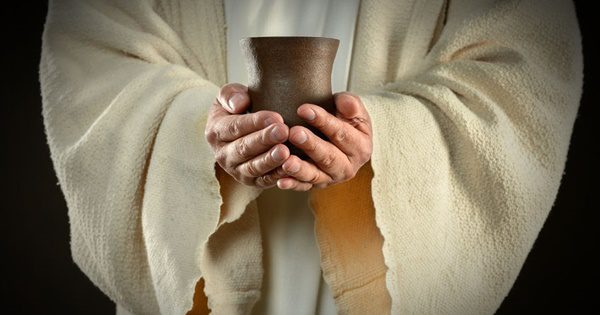
This is not empty philosophical speculation, endless and going nowhere. This is about life and death, history unfolding and it is all in real time.
-Rev. Tom Truby
Pastors have a frequent question when they begin to discover mimetic theory. “That’s great. But how does it preach?”
Reverend Tom Truby shows that mimetic theory is a powerful tool that enables pastors to preach the Gospel in a way that is meaningful and refreshing to the modern world. Each week, Teaching Nonviolent Atonement will highlight his sermons as examples of preaching the Gospel through mimetic theory.
Lent 5, Year B
March 18th, 2018
Thomas L. Truby
John 12:20-26
Was Jesus Mumbling or Responding?
Some Greeks have been to the Jewish Temple and now they want to see Jesus. They approach Philip of Bethsaida of Galilee with their request and he goes to Andrew, the brother of Peter, also from Bethsaida and then the two of them go to Jesus. Apparently going to Jesus with a request for an audience with some Greeks stirred up discussion and neither Philip nor Andrew wanted to approach Jesus alone.
Jesus’ response to the Greeks seems on the surface to be a non-sequitur. “Jesus answered them ‘The hour has come for the Son of Man to be glorified….’ That’s no answer, that’s changing the subject. They say “Sir, we wish to see Jesus,” and he replies “The hour has come. Very truly I tell you, unless a grain of wheat falls into the earth and dies, it remains just a single grain; bit if it dies, it bears much fruit.”
The Greeks want to talk about ideas, philosophies, thoughts and abstractions—the world of the mind, the intellect, but it is a world that is disembodied, lived outside of time and space, cold, sterile and antiseptic safe, where people of privilege can afford to speculate about life because they don’t have to pay their own rent. These Greeks have been on a field trip to the Jewish Temple. Now they want an interview with Jesus to ask a few questions, and engage him in some cool speculations about the nature of reality. It is the kind of thing you have time for when someone else washes your dishes and makes your bed.
Is reality the chair you sit on or is reality the idea of a perfect chair outside time and space? That’s Greek philosophy. Participants in such discussions score points for clever answers and enjoy the competition to determine who is the smartest of them all.
There had been a long cultural dispute between Greek culture and the more traditional and conservative Jewish culture. When Greek culture, philosophy and life-style swept in with Alexander the Great in 164 B.C.E. it either swept other cultures up in it or put them into a defensive posture as they attempted to maintain their identity. The Jews had a successful war to resist it, led by the Maccabee brothers, but 150 years later, with the coming of the Romans who supported Greek culture, traditional Jewish culture was again under threat.
All through Galilee there were new, “modern” Greek cities being built with places for the performance of plays and gymnasiums for the men, all in the “modern” Greek style. We think Jesus knew about Greek culture and when he was in the carpenter business may have been one of the workers who built those cities in Galilee. This history of Greek and Jewish relations may explain Philip and Andrew’s hesitancy in setting up a meeting between the Greeks and Jesus.
When Andrew and Philip asked Jesus if he wants to meet the Greeks he replied, “The hour has come for the Son of Man to be glorified” Is Jesus just muttering or is this his response? At first I saw no connection but the more I thought about it, the more convinced I became that his muttering was his response.
Instead of entering the false world of abstraction, speculation and empty debate, Jesus responds with what is happening now in the real world. The time has come for the Son of Humanity to be glorified. His response is personal, in history, self-revealing and gives them something substantive to chew on. This is not empty philosophical speculation, endless and going nowhere. This is about life and death, history unfolding and it is all in real time.
Often when people get together to debate and speculate about things you can’t really settle, they are all hoping their reflections will bring them glory when the others in the group say, “Wow, he is so smart. Look at him. I would never have thought of that.” That’s what every one of these debaters would like; to have Jesus acknowledge they are right and so win the debate and receive the glory. But we know that to be glorified in John’s gospel is to be lifted up on the cross like the bronze snake lifted up on a pole. To be lifted up like that is not the usual understanding of glorification and certainly not one any debater would welcome.
These Greek intellectuals, who live in their minds and in an imaginary world beyond time and space, flesh and blood, hunger and thirst, have just encountered Jesus who lives in the world of time, history and movement toward an end. Jesus’ real world contains deadlines and bosses and carpenter’s measurements that have to be precise. When he announces that the hour has come for the Son of Man to be glorified, his announcement is already a critique of the unreal world they prefer. In fact, he must be glorified to reveal the anthropological truth that is the real world that their philosophy attempts to keep hidden. And to make their philosophy work they have had to sacrifice many real relationships and especially the real relationship between the privileged and those who serve privilege. It’s the required collateral damage. But the time has come for all of this to be revealed when Christ is “glorified” on the cross.
Jesus’ world is gritty and hands on. Could this grittiness, in contrast to the ethereal reality-hiding world of the Greeks, be the reason this text was chosen for the fifth Sunday of Lent? The glorification of Jesus shows all humanity the human connection that Greek philosophy was attempting to hide. Jesus on the cross shows us what we do to one another. It reveals our shameful connection.
Since they had just visited the Jewish Temple maybe the Greeks were looking for something solid to build their lives on. How about, “Very truly, I tell you, unless a grain of wheat falls into the earth and dies, it remains just a single grain; but if it dies, it bears much fruit.” All of this is Jesus’ answer to them. Get real, real wheat, real germination, real death and real fruit. Greek philosophy said the real was in universal forms outside time and space – mathematical formulas, aloof, and abstract. Jesus on the other hand, lived in his body, lived in time and most importantly, lived in relationship with people he loved.
It’s easier to understand Jesus when you understand the audience to whom he was speaking. To Greeks, used to privilege and life viewed from a safe distance Jesus says, “Those who love their life (privileged, insulated and minimally related to the real) shall lose it, and those who hate their life in this world will keep it for eternal life.”
If “Those who hate their life in this world” means those who hate the rivalry, violence, and meanness they feel forced to live in, I feel that too. And if the writer who used “eternal life” means “to have a share in the life of God’s new age” as N.T. Wright says it means, I find it life giving. Otherwise, “eternal life” gets read through the lens of Greek philosophy, the very thing Jesus is countering in this conversation with the Greeks.
In contrast to the aloofness and emotional non-involvement the Greek world-view assumes, Jesus offers a hands-on, full bodied, and personal alternative. “Whoever serves me must follow me and where I am, there will my servants be also.” No separation into the elites and the common run. Servants and masters occupy the same plain and engage in the same project—working toward the promised arrival of God’s new age.
“Whoever serves me, the Father will honor,” Jesus says. It’s not whoever serves me the Father will tolerate, or the Father will let-off the hook. No, it’s whoever serves me, the Father will honor. Honor is a relational term and non-rivalrous. Our Father wants to honor us. Could there be anything less aloof than that? Friends, because God wants to be in relationship with us all, we have a bright future. Thanks be to God.
Copyright: ginosphotos / 123RF Stock Photo
Stay in the loop! Like Teaching Nonviolent Atonement on Facebook!
Next Post

March 23, 2018 The Spirituality of Pope Francis, Fake News, and Holy Week – The RavenCast
Browse Our Archives
Select a Category Atonement and Current Events Curriculum Faith and Families Interviews Jesus the Forgiving Victim Lent Montessori politics Reviews The Bible Explained Uncategorized Valentine's Day Wednesday Sermon Who is God?
Select a Month July 2020 November 2019 October 2019 September 2019 August 2019 July 2019 June 2019 May 2019 April 2019 March 2019 February 2019 January 2019 December 2018 November 2018 October 2018 September 2018 August 2018 July 2018 June 2018 May 2018 April 2018 March 2018 February 2018 January 2018 December 2017 November 2017 October 2017 September 2017 August 2017 July 2017 June 2017 May 2017 April 2017 March 2017 February 2017 January 2017 December 2016 November 2016 October 2016 September 2016 August 2016 June 2016 May 2016 April 2016 March 2016 February 2016 January 2016 December 2015 November 2015 October 2015 September 2015 August 2015 July 2015 June 2015 May 2015 April 2015 March 2015 February 2015 January 2015 December 2014 November 2014 October 2014 September 2014 August 2014 July 2014 June 2014 May 2014 April 2014 March 2014 January 2014 December 2013 September 2013 August 2013 July 2013
Follow Us!
TAKE THE
Religious Wisdom Quiz
Which Gospel contains the "Sermon on the Mount"?
Select your answer to see how you score.
Matthew Mark Luke John
Related posts from Teaching Nonviolent Atonement
Sermon: The Eleventh Commandment

Being Careful to Live Wisely: Faith and Climate...


Let Light Shine Out of Darkness
TRENDING AT PATHEOS Progressive Christian

What Being a Modern-Day Apostle Means to Me
In my last column, I discussed the ins and outs of modern-day...

Did Ancient China Once Worship the God of...
Across human history, a common thread weaves through the origins of the...

Love Your Neighbor – Including Earth-Kin: Lev. 19,...
God’s command to love your neighbor means acting in an ethical and...

Lead a Church Study of “Jesus and Lao...
Guest writer Jack Thomas (The Irreverent Reverend) reflects on leading his church...

Pastoral Wisdom for Responding to Sermon Pushback
Getting sermon pushback on your social justice sermon? Learn practical, Proverbs-based strategies...

Principles for Understanding the Apostolic Ministry Today
Whenever people discover that my formal ministry title is "apostle," as in...
view all Progressive Christian blogs
Ad-Free & Subscriber Log-In Subscription Support
- About Us
- 2026 Calendar
- Videos
- Podcasts
- Library of World Religions
- Faith In Media Tracker
- Advertise With Us
- Write for Us
- Privacy Policy
- Terms of Service
- Do Not Sell My Data
- Contact Us
- Radiant Digital
- Manage Newsletter Subscriptions
- Unsubscribe From Notifications
- Sitemap
Copyright 2008-2026, Patheos. All rights reserved.
Subscription Support Ad-Free & Subscriber Log-In
Follow Patheos