
BuddhistCatholicContemplativeEvangelicalGeneral ChristianHinduJewishLatter-day SaintMuslimNew VisionsProgressive Christian
Beliefs
- Buddhist
- Catholic
- Contemplative
- Evangelical
- General Christian
- Hindu
- Jewish
- Latter-day Saint
- More Voices
- Muslim
- New Visions
- Pagan
- Progressive Christian
Topics
- Religion News
- Food and Religion
- Sports and Religion
- Religious Art
- Religious Music and Entertainment
- Religious Events
- History and Religion
- Style and Religion
- Politics and Religion
- Women in Religion
- Recreation Outdoors and Religion
- Business Finance and Religion
- Careers Workplace and Religion
- Education and Religion
- Family Parenting and Religion
- Health Fitness and Religion
- Home and Religion
- Relationships and Religion
- Technology and Religion
- Travel and Religion
Columnists
- Buddhist Columnists
- Business Finance and Religion Columnists
- Careers Workplace and Religion Columnists
- Catholic Columnists
- Contemplative Columnists
- Education and Religion Columnists
- Evangelists Columnists
- Family Parenting and Religion Columnists
- General Christian Columnists
- Health Fitness and Religion Columnists
- Hindu Columnists
- History and Religion Columnists
- Home and Religion Columnists
- Jewish Columnists
- More Voices Columnists
- Latter Day Columnists
- Muslim Columnists
- New Visions Columnists
- Nonreligious Columnists
- Pagan Columnists
- Politics and Religion Columnists
- Progressive Columnists
- Recreation Outdoors and Religion Columnists
- Relationships and Religion Columnists
- Religion News Columnists
- Religious Art Columnists
- Religious Events Columnists
- Religious Music and Entertainment Columnists
- Sports and Religion Columnists
- Style and Religion Columnists
- Technology and Religion Columnists
- Travel and Religion Columnists
- Women in Religion Columnists
Resource Library
- 2026 Calendar
- Library of World Religions
- The 100 Most Holy Places on Earth
- Patheos Answers
- Podcasts
- Videos
- Faith Leaders Database
- Anglican Episcopalian
- Bahai
- Baptist
- Buddhism
- Christianity
- Confucianism
- Eastern Orthodoxy
- Hinduism
- Holiness and Pentecostal
- ISKCON
- Islam
- Judaism
- Lutheran
- Methodist
- The Church of Jesus Christ of Latter-day Saints
- New Age
- Paganism
- Presbytarian and Reformed
- Protestantism
- Religion Behind the Scenes
- Roman Catholic
- Scientology
- Shia Islam
- Sikhism
- Sufism
- Sunni Islam
- Taoism
- Zen
- See all religions
Research Tools
 Ad-Free & Subscriber Log-In Subscription Support
Ad-Free & Subscriber Log-In Subscription Support
Follow Patheos 

- Trending:
- Forgiveness
- |
- Marriage
- |
- Consciousness
- |
- Death Penalty
- |
- Election
- |
- Halloween
 Teaching Nonviolent Atonement
- Home
- Progressive Christian
- Palm Sunday: Marching for Our Lives
Palm Sunday: Marching for Our Lives
Last updated on: March 26, 2018 at 9:53 am by Adam Ericksen
Palm Sunday: Marching for Our Lives 2018-03-26T09:53:13-05:00 Adam Ericksen
Patheos Explore the world's faith through different perspectives on religion and spirituality! Patheos has the views of the prevalent religions and spiritualities of the world.
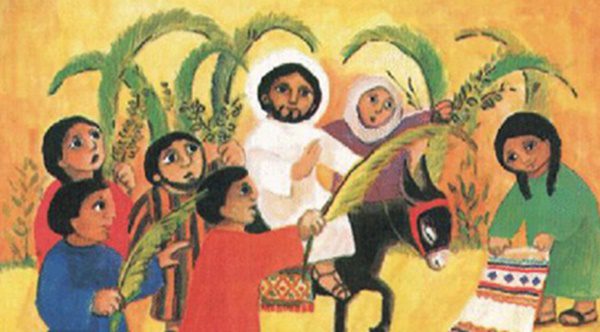
The following is a monologue sermon I preached at Clackamas United Church of Christ, near Portland, Oregon. It compares the March for Our Lives with the march on the first Palm Sunday. The text was Mark 11:1-11. The video recording of the sermon is below, along with the text.
We marched on that day. Oh did we march!
We marched for our lives because the Romans only gave us death.
Many of my friends were killed. My children lived in fear because the Romans came and if they felt that we were doing anything wrong, they killed us. They took out their swords and they murdered us.
But it didn’t really matter if we did anything “wrong.” All that mattered was that the Romans kept the “peace.”
And do you know the way that they kept the “peace.” Violence. Murder. That’s how the Roman Empire kept the “peace.” Once the Romans killed 2,000 of my fellow Jews in one day. And do you know what message they tried to send? You mess with Rome, and this is how we will keep the “peace.”
They had a slogan. “Peace through strength.”
It didn’t work then. It has never worked in the history of humankind.
We had a technical term for that phrase. Bull…oney. Yeah. That’s what we called it. We Jews, we didn’t eat bologna. Because that stuff is made of pigs. But we could smell it from a mile away.
And so we marched.
We didn’t care signs. But we carried palm branches. You may wonder, “Why palm branches?”
In the ancient world, palm branches were a sign of victory. They were a sign of strength. Ancient Roman Empire. Ancient Egyptian Empire. They would all wave palms whenever they were victorious.
And so when Jesus came into our city, we marched. We marched. And we welcomed him by carrying palms. And we said, “This is the way to true peace! This is the way to solve our problems!”
And so we waved the palms as a subversive political statement.
And you know what else we did? We took off our cloaks and we laid them before Jesus. He rode in and we laid our cloaks before him as he road in on that donkey. And we did this because the road was dirty and we wanted to keep him clean. But you would never put your cloak on the dirty road for just anyone.
You would put your cloak on a dirty road for a leader, for a king. And so we chanted, “Hosanna! Hosanna!” The word isn’t simply a form of praise. For Hosanna literally means, “Save us!” Save us from the violence that’s all around us. Save us from the Roman Empire. Save us from the corruption of the religious authorities. Come and save us from our own hatred and desire for revenge. Come and save us!
Peace through strength? No. Jesus came in riding on that donkey and he said, “Peace I leave with you. But I do not give peace as the world gives peace.” And do you know what the peace of Christ looks like?
Sometimes you may find yourself on the other side of a sword. And sometimes you may find yourself up on a cross. That’s where Palm Sunday is leading. To Good Friday.
Sometimes in a world that’s hell-bent on violence, you may need to take that violence upon yourself and offer divine love in return. That’s the way that Jesus brings peace. That’s the way to true peace. Not as the world gives. But as God gives.
We marched that day. And when we marched, it was a political rally with a radical spiritual message. You see, Caesar called himself the “Son of God,” “Prince of Peace,” “King of Kings.”
The political and the theological came together in the Roman Empire. And it was a theology and a political ideology that lead to conquest.
Another slogan of Caesar’s was “I came. I saw. I conquered.”
Well congratulations Caesar. But we Jews had hope in our God. Our God is the true God of the Exodus. And so when we got to Palm Sunday, we were marching for the Passover. 200,000 of us were there for Passover every year, celebrating the God of the Exodus.
Our ancestors were enslaved to the Egyptian Empire and they cried out to God and God delivered them. That’s how God works. The one true God is the God who hears the cry of the oppressed. God is the God who works for their deliverance.
God gives us freedom. But the freedom isn’t just for ourselves. It’s the freedom to share God’s love with the world.
After all, Jesus said if you want to be first in the kingdom of God, you need to be last in the eyes of this world. If you want to be first in the kingdom of God, be the one who serves others, not the one who lords it over others.
And so when he came in on that donkey, we chanted, “Blessed is the one who comes in the name of the Lord! Blessed is coming kingdom of our ancestor David!”
David was our greatest king. Jesus was the one who would come and be like David. He would lead us into a greater future.
But Jesus always had this way of flipping things upside down. You see, Jesus was different from David. This new son of David would not be like any of the kings of old. David fought his wars to keep the peace. Caesars fought his wars to keep the peace.
But Jesus said, “Put your sword back in its place. For all who live by the sword die by the sword.”
You could say that about any weapon. Put it back in its place. That’s what Jesus said. That’s the way toward peace.
Because there are primarily two ways to live in this world.
One way is the way of the Roman Empire. Peace through strength. Peace through violence. That way is a myth. It’s a lie.
The other is the way of Jesus. Peace through love. Peace that may cause you to give something up. Jesus says follow me to the cross. Sometimes that’s literal. But sometimes it means you may have to die to your ego. Sometimes it means you may have to die to a desire to being right.
And I’ll get very personal about this. Sometimes it means that when you are in a fight with your brother, you let it go. Sometimes it means that when you are in a fight with your spouse, you let it go. Sometimes it means that when you are in a fight with a coworker, you let it go. Sometimes it means when you are in a conflict with a fellow church member, you let it go.
Sometimes it means that you realize there’s something more important than the desire to be right. Sometimes realizing this “something greater” means that we need to die to winning the argument. And it may mean that we need to live towards a resurrected life that works for justice and at the same time loves all people. Including those we call our enemies.
And so as we begin this holy week, may we come to know the difference between the way of Caesar and the way of Christ. And may we choose the way of Christ. Amen.
Image: Flickr, Waiting for the Word, Palm Sunday 11. Creative Commons License. Some changes made.
Stay in the loop! Like Teaching Nonviolent Atonement on Facebook!
Previous Post

March 23, 2018
Following Jesus: Emigrating from Violence into Love
Next Post
March 27, 2018 Passion Sunday Meditation
Browse Our Archives
Select a Category Atonement and Current Events Curriculum Faith and Families Interviews Jesus the Forgiving Victim Lent Montessori politics Reviews The Bible Explained Uncategorized Valentine's Day Wednesday Sermon Who is God?
Select a Month July 2020 November 2019 October 2019 September 2019 August 2019 July 2019 June 2019 May 2019 April 2019 March 2019 February 2019 January 2019 December 2018 November 2018 October 2018 September 2018 August 2018 July 2018 June 2018 May 2018 April 2018 March 2018 February 2018 January 2018 December 2017 November 2017 October 2017 September 2017 August 2017 July 2017 June 2017 May 2017 April 2017 March 2017 February 2017 January 2017 December 2016 November 2016 October 2016 September 2016 August 2016 June 2016 May 2016 April 2016 March 2016 February 2016 January 2016 December 2015 November 2015 October 2015 September 2015 August 2015 July 2015 June 2015 May 2015 April 2015 March 2015 February 2015 January 2015 December 2014 November 2014 October 2014 September 2014 August 2014 July 2014 June 2014 May 2014 April 2014 March 2014 January 2014 December 2013 September 2013 August 2013 July 2013
Follow Us!
TAKE THE
Religious Wisdom Quiz
What material was the Ark of the Covenant made from?
Select your answer to see how you score.
Acacia wood Cypress Gold Silver
Related posts from Teaching Nonviolent Atonement

How Forgiveness Can Transform Our Violence and Build...

Jesus Unmasked: Jesus Brings the Fire!

Strippers Will Lead Us Into the Kingdom of...

St. Francis Preaches on Violence
TRENDING AT PATHEOS Progressive Christian

What Being a Modern-Day Apostle Means to Me
In my last column, I discussed the ins and outs of modern-day...

Did Ancient China Once Worship the God of...
Across human history, a common thread weaves through the origins of the...

Love Your Neighbor – Including Earth-Kin: Lev. 19,...
God’s command to love your neighbor means acting in an ethical and...

Lead a Church Study of “Jesus and Lao...
Guest writer Jack Thomas (The Irreverent Reverend) reflects on leading his church...

Pastoral Wisdom for Responding to Sermon Pushback
Getting sermon pushback on your social justice sermon? Learn practical, Proverbs-based strategies...

Principles for Understanding the Apostolic Ministry Today
Whenever people discover that my formal ministry title is "apostle," as in...
view all Progressive Christian blogs
Ad-Free & Subscriber Log-In Subscription Support
- About Us
- 2026 Calendar
- Videos
- Podcasts
- Library of World Religions
- Faith In Media Tracker
- Advertise With Us
- Write for Us
- Privacy Policy
- Terms of Service
- Do Not Sell My Data
- Contact Us
- Radiant Digital
- Manage Newsletter Subscriptions
- Unsubscribe From Notifications
- Sitemap
Copyright 2008-2026, Patheos. All rights reserved.
Subscription Support Ad-Free & Subscriber Log-In
Follow Patheos